

 App Store

COIN VALUE GUIDES · QUARTERS
1990 Quarter Value:P and D Circulation Strikes and the S Proof
Find the value of a normal 1990 Washington quarter, recognize P, D and S, and compare Mint State, Prooflike and Proof examples.
 HeriBase Editorial TeamPublished
In this article
Quick answer
A normally worn 1990-P or 1990-D quarter is generally worth 25 cents. P and D are normal circulation mint marks. The 1990-S is a clad Proof, with its own collector pricing.
PCGS lists ordinary Mint State 65 coins at $7 for both Philadelphia and Denver in its grade guide. A certified Prooflike Philadelphia strike is a separate designation and can merit a different comparison.
Coin photos
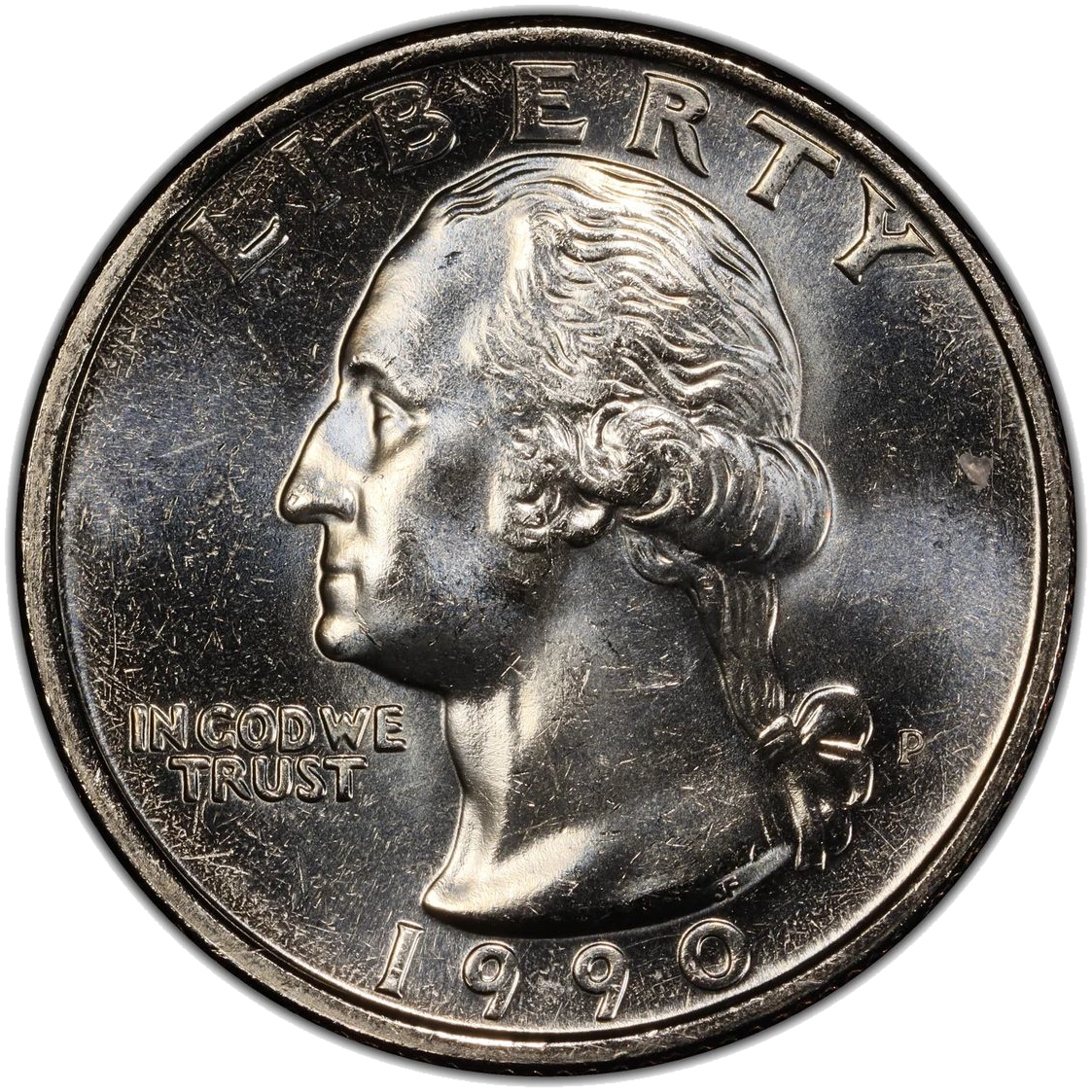
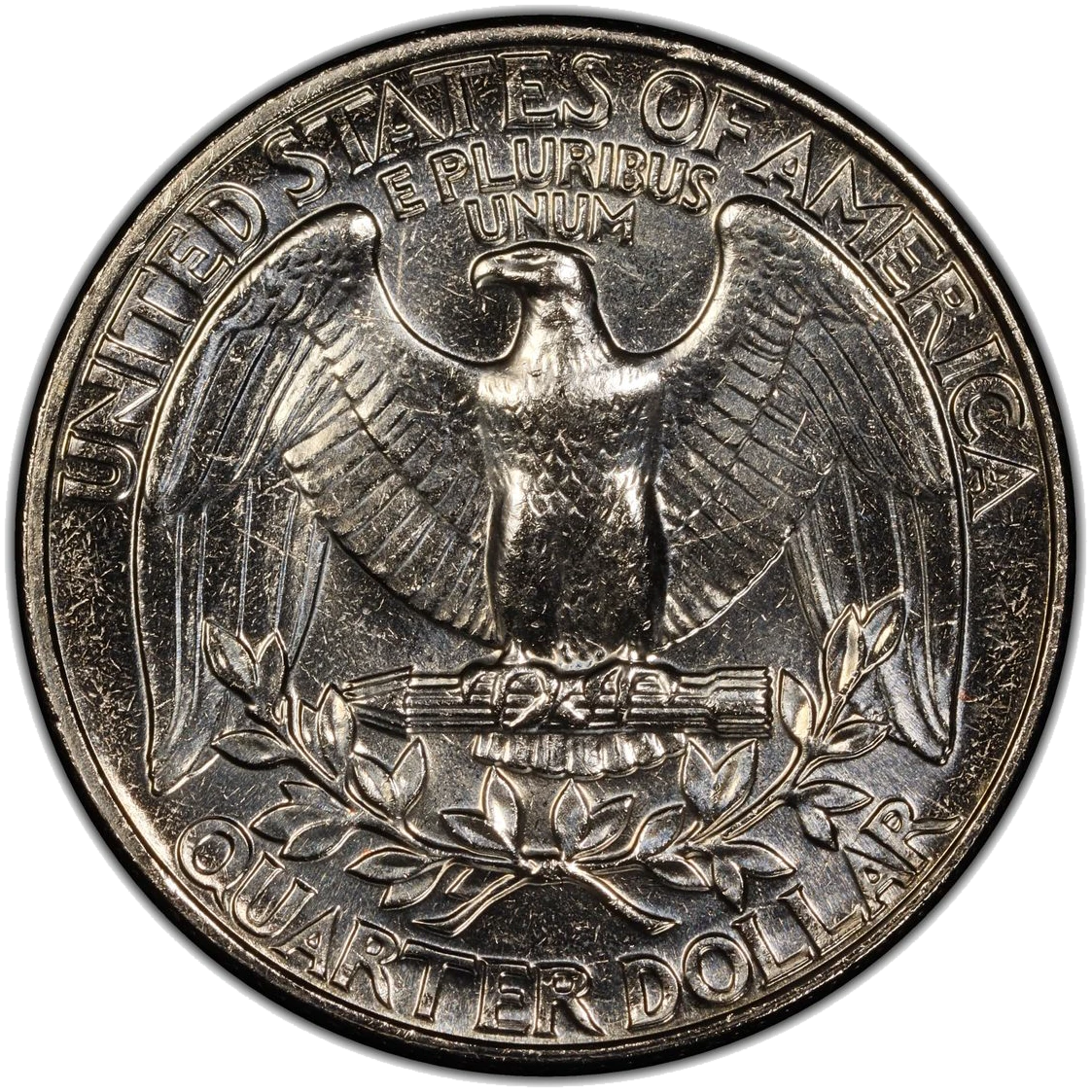
Basics & coin story
The 1990 issue was part of the last decade of the classic Washington portrait and eagle design. Philadelphia struck 613,792,000 and Denver 927,638,181. The 50 State Quarters program arrived in 1999, so those reverse designs belong to a different series.
The ordinary 1990 coins and the San Francisco Proof all use clad construction. The silver Proof Washington quarters near this period begin in 1992. The visible S identifies the mint, while the date and issue determine the metal.
| Feature | What to check |
|---|---|
| Mint letter | Obverse beside Washington’s hair ribbon |
| P and D | Circulation strikes |
| S | Clad Proof |
| Normal dimensions | 5.67 g nominal; 24.30 mm |
Identification
Check that the letter is in the expected field
Find the mint mark beside the ribbon. From 1980 onward, Philadelphia regularly used the P on Washington quarters. If the area looks blank on a 1990 circulation coin, use good light to check for wear, filling or an abrasion there before drawing a conclusion.
Inspect lustrous coins for rub and contact marks
Check Washington’s cheek and the fields around the head, then the eagle and rim. Rotate the quarter under a light. A break in luster over high points can indicate circulation, while an untouched field and fewer marks support a higher-grade comparison.
Compare Prooflike and Proof using the mint and finish
PCGS has a Prooflike designation for qualifying 1990-P circulation strikes. A bright coin in change is still a regular strike unless its finish meets the designation. S coins use a separate Proof grading scale. If the concern is a shifted design, use the Washington quarter error checks to compare the physical diagnostics.
Condition & value
Amounts are in U.S. dollars. Retail guide values are estimates for the stated grade, mint and designation. A dated sale is a record of one coin. Neither is a guaranteed purchase offer.
| Issue | Grade / condition | Value or reference | Basis | Important condition |
|---|---|---|---|---|
| 1990-P or D | Ordinary circulated | $0.25 | Face value | Both are copper-nickel clad |
| 1990-P / D | MS65 | $7 / $7 | PCGS retail guide, November 2026 | Regular strike at the same numeric grade |
| 1990-P Prooflike | Certified MSPL | Compare documented Prooflike examples | Designation-specific market | Do not compare against S Proof prices |
| 1990-S | Clad Proof | Same PR grade and contrast | Proof market | Keep Proof packaging when present |
Summary
Start with the mint letter and use a quarter-dollar baseline for worn regular strikes. Price an attractive uncirculated coin by the same mint and grade, with separate checks for Prooflike and Proof finish.
Frequently asked questions
Is a 1990 quarter with a P rare?
No. P is the expected Philadelphia mark on a 1990 quarter.
Are 1990-S quarters silver?
A standard 1990-S Proof is clad. The later silver Proof program began in 1992.
What does Prooflike mean on a 1990-P quarter?
It is a reflectivity designation for a qualifying circulation strike.
Where do I find the mint mark?
On the obverse, to the right of Washington’s hair ribbon.
Is a worn 1990-D generally worth more than 25 cents?
Ordinary worn 1990-D quarters generally trade at face value. A certified grade or genuine error can change the comparison.