

 App Store

COIN VALUE GUIDES · HALF DOLLARS
1990 Half Dollar Value:P and D Kennedy Coins versus S Proofs
Identify a 1990 Kennedy half dollar and compare ordinary Philadelphia clad coins separately from Denver, San Francisco Proofs and unsupported missing-mark claims.
 HeriBase TeamPublished
In this article
Quick answer
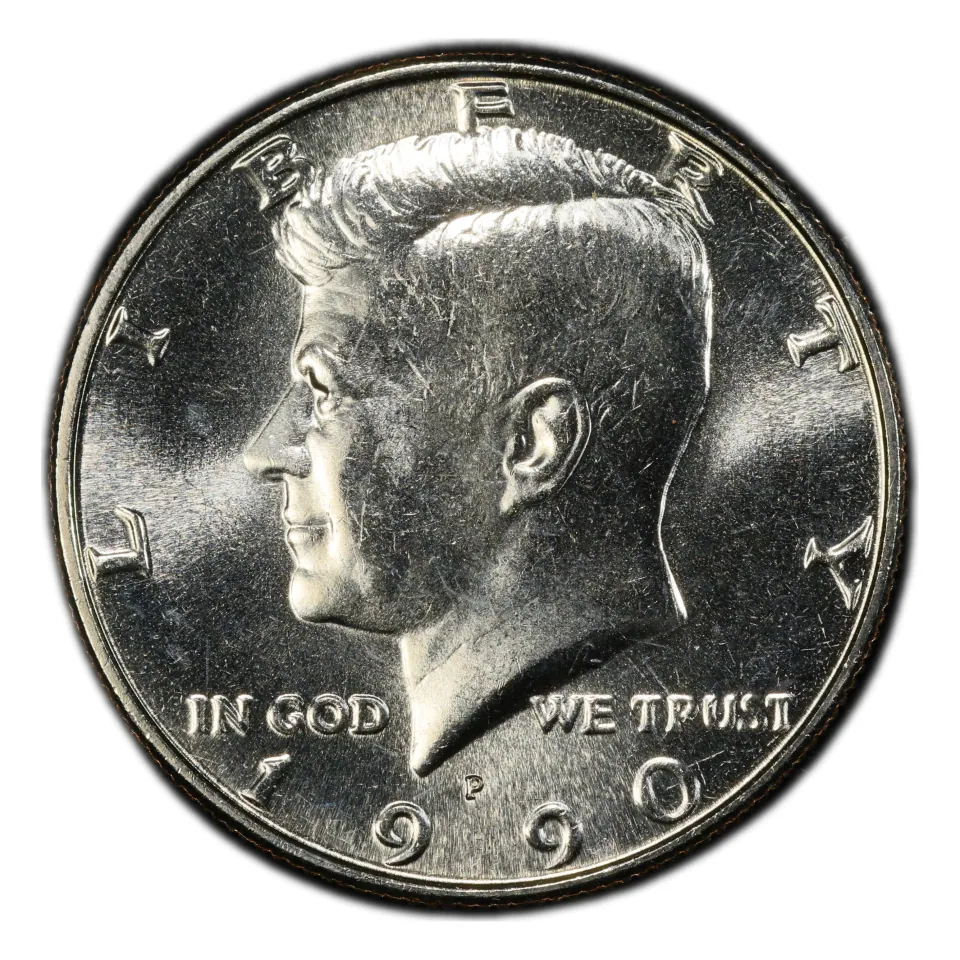
A standard 1990 Kennedy half dollar is copper-nickel clad, with no silver. An ordinary circulated example has a 50-cent face-value baseline. Unlike earlier Philadelphia halves, the regular Philadelphia coin bears P; Denver has D and the collector Proof has S.
The PCGS retail guide checked October 23, 2026 lists 1990-P regular strikes at $9 in MS63, $22 in MS65 and $30 in MS66. These figures apply to the stated uncirculated grades, not all pocket-change examples.
Coin photos
Basics & coin story
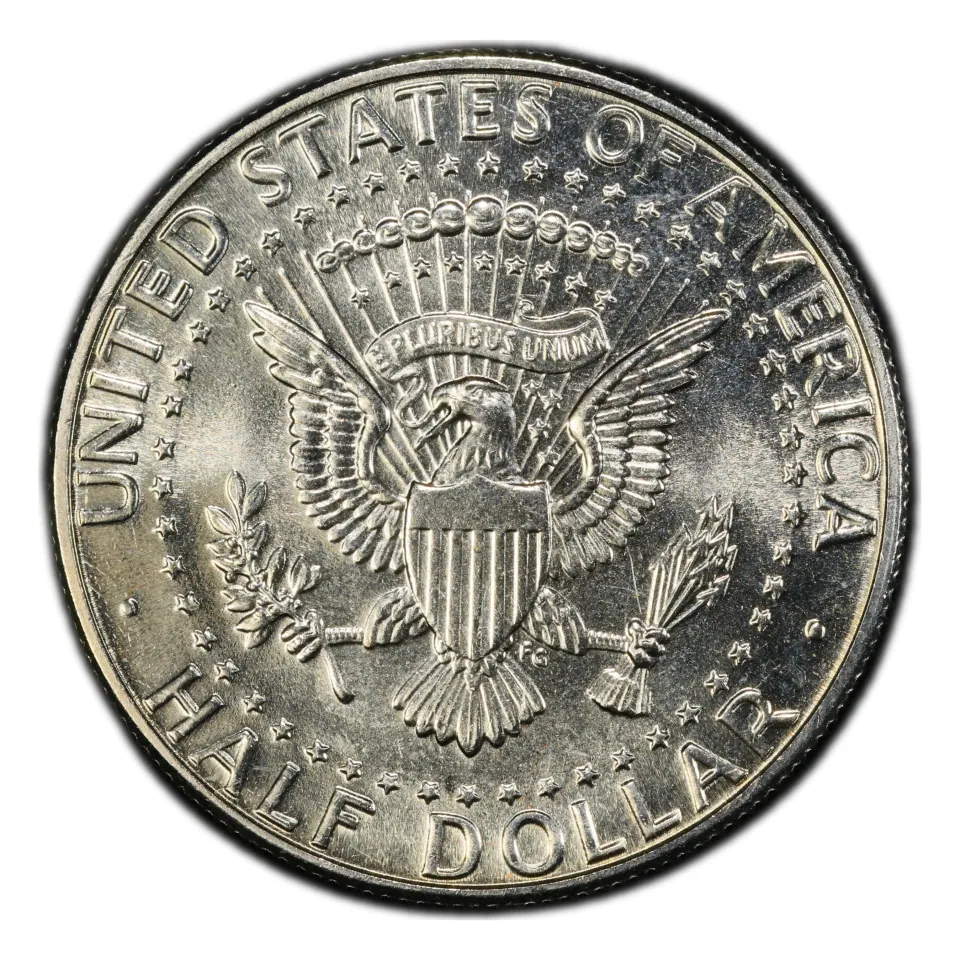
The 1990 coin retains Gilroy Roberts’s Kennedy portrait and Frank Gasparro’s eagle reverse. It belongs well after the series’ silver-to-clad transition. Similarity to a 1964 or 1960s half cannot establish its alloy: date and issue identify the normal composition.
Philadelphia had begun using P on half dollars in 1980. That makes a missing-letter question different from a 1974 Philadelphia half, where no P was expected. Before claiming an error on a 1990 coin, inspect for wear, damage or an indistinct strike in the mint-mark area.
PCGS records 22,278,000 Philadelphia regular strikes. A date collection can include P and D examples and a separately manufactured S Proof. The ordinary-issue count is not a survival estimate for a top numerical grade, and this guide does not repeat historical claims about the finest coin known.
| Feature | What to check |
|---|---|
| Type / denomination | Kennedy half dollar / 50 cents |
| Designers | Gilroy Roberts / Frank Gasparro |
| Standard construction | Copper-nickel outer layers over a copper core |
| Silver in standard 1990 issues | None |
| Nominal weight / diameter | 11.34 g / approximately 30.61 mm |
| Edge | Reeded |
| Regular mints | Philadelphia: P; Denver: D |
| Collector issue | 1990-S clad Proof |
Identification
Find P, D or S above the date
The mint letter is on the portrait side below the neck. P and D identify regular issues for Philadelphia and Denver. S identifies the separate Proof. If the letter cannot be read in a photograph, describe it as uncertain rather than automatically declaring a missing-mark rarity.
An S Proof does not imply silver
The normal 1990-S Proof is clad. Silver Proof Kennedy halves belong to a later resumed collector program beginning in 1992, so those composition rules should not be applied backward. A reflective surface identifies neither silver nor a particular contrast grade by itself.
Assess the broad fields and portrait
Look for friction on Kennedy’s cheek and hair, then contact marks, haze and hairlines. A coin may be uncirculated yet too marked for the grade assumed in an expensive comparison. For Proofs, manufacturing category and surface condition both matter.
Condition & value
Amounts are in U.S. dollars. PCGS retail-guide examples were checked October 23, 2026 and apply only to the stated issue, grade and designation. They are not guaranteed purchase offers; current market conditions and selling costs can change the amount received.
| Issue | Grade / condition | Value or reference | Basis | Important condition |
|---|---|---|---|---|
| Ordinary circulated P or D | Worn | 50¢ face-value baseline | Denomination | No normal silver premium |
| 1990-P, regular | MS63 | $9 | PCGS retail guide | Uncirculated |
| 1990-P, regular | MS65 | $22 | PCGS retail guide | Problem-free grade reference |
| 1990-P, regular | MS66 | $30 | PCGS retail guide | Exact preservation must match |
| 1990-D / S Proof / authenticated error | Exact issue and grade | Compare separately | Different entries | No P regular price transferred |
The PCGS VF20 guide reference is $1 for the P issue in this check, but a retail guide is not a guaranteed dealer offer. Small collector premiums can be absorbed by shipping and selling costs. A roll or a complete set is also a different transaction from one loose coin.
For an uncirculated comparison, match the actual numerical grade rather than choosing a high price because the coin looks new. The guide difference between MS65 and MS66 is modest enough that grading costs deserve attention. The grading scale explains the general standards.
Use completed sales of the same mint, finish and grade, including contrast designation for Proofs. Preserve the surfaces and avoid polishing. An unusual mint-mark claim needs physical evidence before an error premium can be considered.
Summary
A 1990 half is normally clad and Philadelphia normally has P. Match the letter, regular-versus-Proof manufacture and actual condition before choosing a collector price.
FAQ
Is a 1990 half dollar silver?
The standard P and D regular issues and S Proof are clad, with no silver.
Should a 1990 Philadelphia half dollar have P?
Yes. The regular 1990 Philadelphia issue bears P below the neck and above the date.
Is a 1990-S Proof half dollar silver?
No. The standard 1990-S Kennedy Proof is clad; the later silver Proof program should not be applied backward.
Are ordinary circulated 1990 halves rare?
A date alone does not establish rarity. Ordinary worn examples have a 50-cent face-value baseline; premiums require condition or other specific evidence.
References
References and further reading
- PCGS CoinFacts: exact issue, specifications and available guide evidence
- U.S. Mint: half-dollar history and specifications
- U.S. Mint: historical timeline and silver Proof program
Sources and quoted guide evidence checked October 23, 2026. Guide estimates, historical sales, face value and metal-content calculations are identified separately.