

 App Store

COIN VALUE GUIDES · QUARTERS
1982 Quarter Value:P, D, Proof and Error Checks
Check the P, D or S on a 1982 quarter, understand why high-grade examples matter, and separate actual mint errors from damaged clad coins.
 HeriBase Editorial TeamPublished
In this article
Quick answer
A normal worn 1982-P or 1982-D quarter is generally worth 25 cents. Strongly preserved examples attract more interest because the Mint offered no regular nationwide Uncirculated Coin Set for 1982. The PCGS guide lists $45 and $28 in Mint State 65 (MS65) for Philadelphia and Denver respectively. The 1982-S is a separate clad Proof.
For a possible mint error, record the complete rim, both faces and the weight. A genuine off-center strike or missing clad layer needs supporting physical evidence. Color alone cannot establish either an error or a silver planchet.
Coin photos
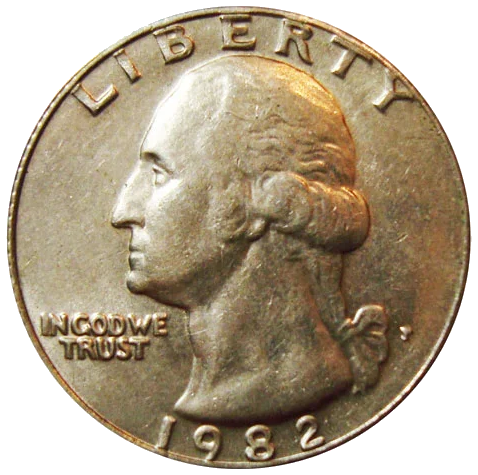
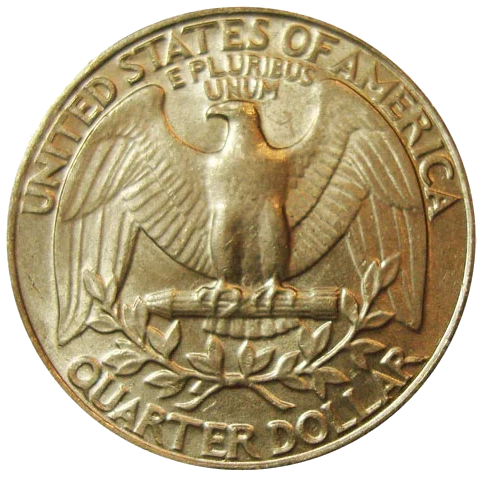
Basics & coin story
The Washington quarter already used a P for Philadelphia by 1982. Collectors normally find the date and mint on the portrait side. The absence of a regular national Mint Set affected how some examples were saved. Coins also survived in rolls and regional souvenir sets, and circulation wear remains common.
The usual 1982 quarter is clad, like the 1980 Washington quarter. The quarter and cent had different alloy histories. Do not apply the 1982 cent’s copper-to-zinc transition to the quarter.
| Feature | What to check |
|---|---|
| Regular issues | 1982-P and 1982-D |
| Collector issue | 1982-S clad Proof |
| Nominal weight / diameter | 5.67 g / 24.3 mm |
| Edge | Reeded, usually showing a copper-colored core |
Identification
Check P or D before comparing condition
Look beside the hair ribbon. Use diffuse light to inspect cheek and open fields, then rotate the quarter to check whether luster crosses the highest points. A glossy reflection across hairlines can indicate prior cleaning.
Look for evidence of die misalignment versus an off-center strike
A wide rim on one side can occur when one die is misaligned. An off-center strike should have a coherent unstruck area and design displacement on both sides. Photograph the rims with the same orientation.
Investigate missing clad with weight and surface
A genuine missing outer layer changes both the visual structure and the weight. Toning, chemical exposure and plating can change color without giving the same evidence. Weigh on a calibrated scale and compare the whole coin with a documented example.
Condition & value
Amounts are in U.S. dollars. Retail guide values are estimates for the stated grade, mint and designation. A dated sale is a record of one coin. Neither is a guaranteed purchase offer.
| Issue | Grade / condition | Value or reference | Basis | Important condition |
|---|---|---|---|---|
| 1982-P or D | Ordinary circulated | $0.25 | Face value | Standard weight and design |
| 1982-P / 1982-D | MS65 | $45 / $28 | PCGS retail guide, Nov 2026 | Separate mints at the same numeric grade |
| 1982-S | Proof | Match PR grade and contrast | Proof market | Separate from circulated P and D |
| Possible mint error | Authenticated | Compare the same error and retained design | Sold comparables | Document weight and edge first |
Summary
Read the mint letter and inspect luster or wear. Use grade-specific prices for preserved coins and require physical evidence before valuing any error.
Frequently asked questions
Is a 1982 quarter rare?
A worn ordinary quarter is common. The market distinguishes sharply preserved coins and attributed mint errors.
Why are Mint State 1982 quarters collected?
No regular nationwide Uncirculated Coin Set was issued in 1982, so sources of preserved coins differ from many nearby dates.
Where is the mint mark?
It is on the obverse just to the right of Washington’s hair ribbon.
Is a copper-colored 1982 quarter a missing-clad error?
Color raises a question but also occurs from exposure, toning or plating. Check weight, edge and surfaces together.
Is a standard 1982 quarter silver?
No. Regular P, D and S Proof issues use the normal clad composition.