

 App Store

COIN VALUE GUIDES · QUARTERS
1980 Quarter Value:P, D and S Proof
Find the mint mark on a 1980 Washington quarter, confirm its clad composition and compare Philadelphia, Denver and San Francisco Proof values.
 HeriBase Editorial TeamUpdated
In this article
Quick answer
An ordinary worn 1980 Washington quarter is generally worth 25 cents. The standard issues are copper-nickel clad. Philadelphia and Denver made regular strikes. San Francisco issued Proofs for collectors.
PCGS lists $20 and $20 in Mint State 65 (MS65) for the Philadelphia and Denver issues respectively. Its MS66 quotes are $32 and $25. Compare coins of the same mint and grade before using either figure.
Coin photos
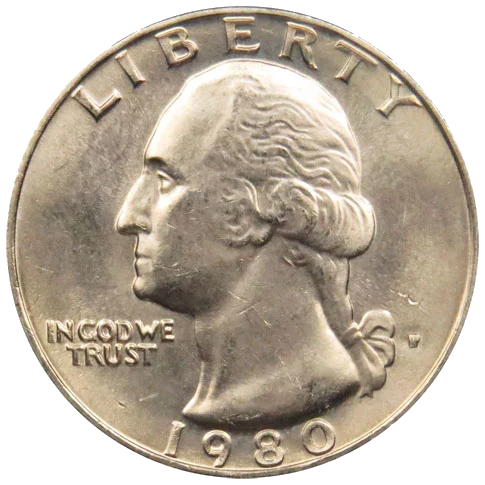
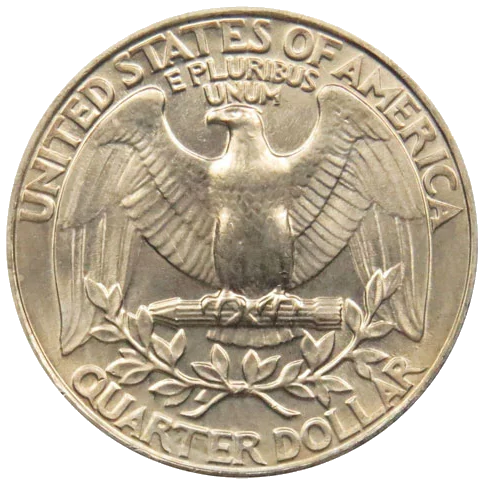
Basics & coin story
Philadelphia began using a visible P on Washington quarters in 1980. Earlier clad quarters from the same mint generally have a blank mint-mark field. That makes a clear P the expected feature for a 1980 Philadelphia regular strike.
Both sides use John Flanagan’s design. The Washington quarter series guide shows the earlier reverse mint-mark position and the switch to clad coinage.
| Feature | What to check |
|---|---|
| Alloy | Copper-nickel outer layers over a copper core |
| Nominal weight / diameter | 5.67 g / 24.30 mm |
| Regular strikes | Philadelphia (P) and Denver (D) |
| Collector strike | San Francisco S Proof |
| Mint-mark position | Obverse, beside the hair ribbon |
Identification
Read the small field beside the ribbon
Philadelphia normally has P, while Denver has D. On a piece that looks blank, examine the field for abrasion, wear or an obstruction. Document both sides before deciding the mint mark was absent at manufacture.
Check whether the high points are worn
Tilt the coin under one lamp. Compare the sheen on Washington’s cheek and temple with the protected area by the ribbon. Do the same on the eagle’s breast. Localized dullness can show circulation friction. Scratches and contact marks can also lower the grade.
Check a possible Proof or mint error
Look for the S, rim definition and finish together when checking a Proof. For a suspected off-center strike, look for a blank arc and missing design. A scraped rim or unusual shine alone offers little evidence.
Condition & value
Amounts are in U.S. dollars. Retail guide values are estimates for the stated grade, mint and designation. A dated sale is a record of one coin. Neither is a guaranteed purchase offer.
| Issue | Grade / condition | Value or reference | Basis | Important condition |
|---|---|---|---|---|
| Philadelphia or Denver | Ordinary worn | $0.25 | Face value | Normal circulation strike |
| Philadelphia | MS65 / MS66 | $20 / $32 | PCGS Price Guide, checked Nov. 24, 2026 | Certified regular strike |
| Denver | MS65 / MS66 | $20 / $25 | PCGS Price Guide, checked Nov. 24, 2026 | Certified regular strike |
| 1980-S | Proof | Compare like PR grade and contrast | Proof issue | Separate collector strike |
Summary
Identify the mint beside the ribbon. If your 1980 quarter has original luster and no wear, compare the exact mint and grade. Use a Proof or error comparison only after confirming the issue.
Frequently asked questions
Is a 1980 quarter silver?
The regular and normal Proof issues use copper-nickel clad over a copper core.
Where is the mint mark on a 1980 quarter?
Look on the portrait side just to the right of Washington’s hair ribbon.
Is a 1980 quarter without a visible mint mark automatically rare?
The expected Philadelphia mark is P, but worn or damaged surfaces can obscure it. Confirm the date, field and condition before claiming a mint error.
What makes a 1980 quarter worth over face value?
Uncirculated condition, an attributed mint error or a collector Proof can support a different comparison. Match the exact issue and condition.