

 App Store

COIN VALUE GUIDES · HALF DOLLARS
1979 Half Dollar Value:No Mint Mark, D and S Proof Types
Identify a 1979 Kennedy half dollar, compare Philadelphia values, confirm the standard clad composition and separate S Proof mint-mark types from circulation coins.
 HeriBase TeamPublished
In this article
Quick answer
An ordinary worn 1979 Kennedy half dollar has a 50-cent face-value baseline and contains no silver in its standard composition. Philadelphia regular strikes have no mint mark, Denver coins have D, and the San Francisco S issue is a separate clad Proof. The special silver rules for earlier Kennedy years do not transfer to 1979.
The PCGS guide checked October 22, 2026 lists Philadelphia regular strikes at $9 in Mint State 63, $20 in Mint State 65 and $35 in Mint State 66. These are grade-specific retail estimates for problem-free uncirculated coins. A worn find, a Denver coin or an S Proof needs a different comparison.
Coin photos
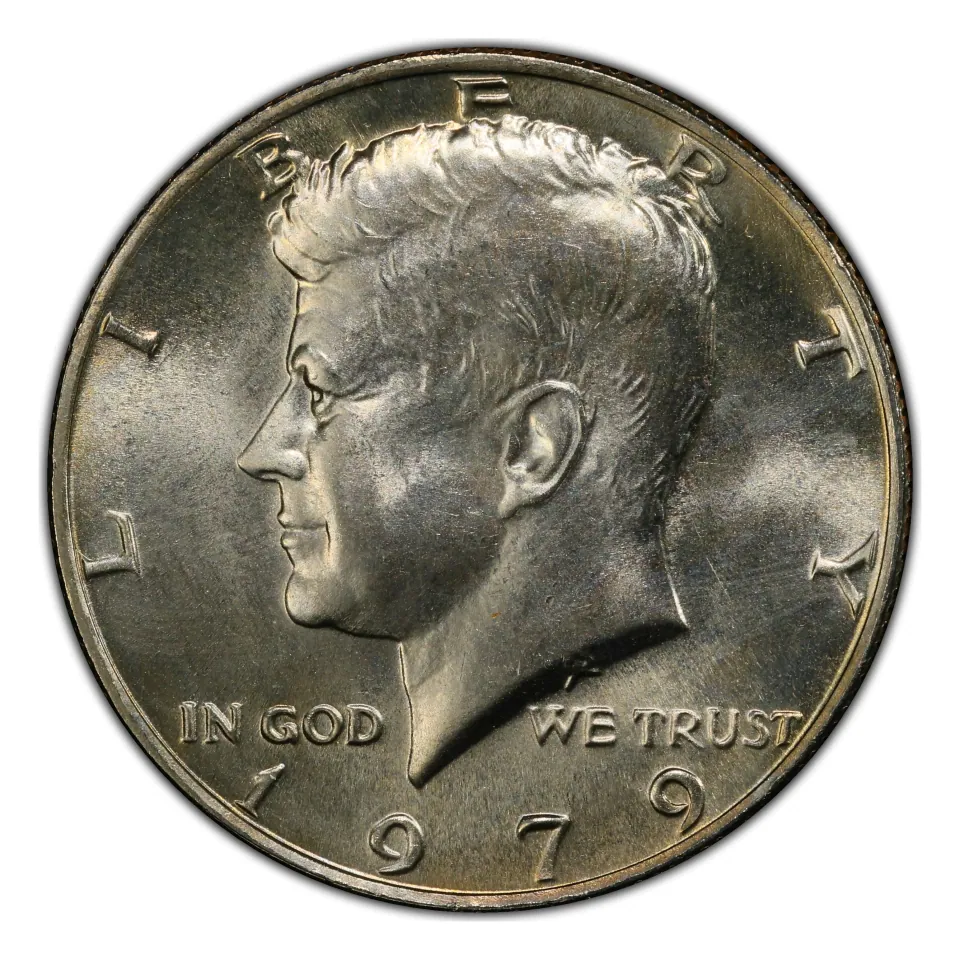
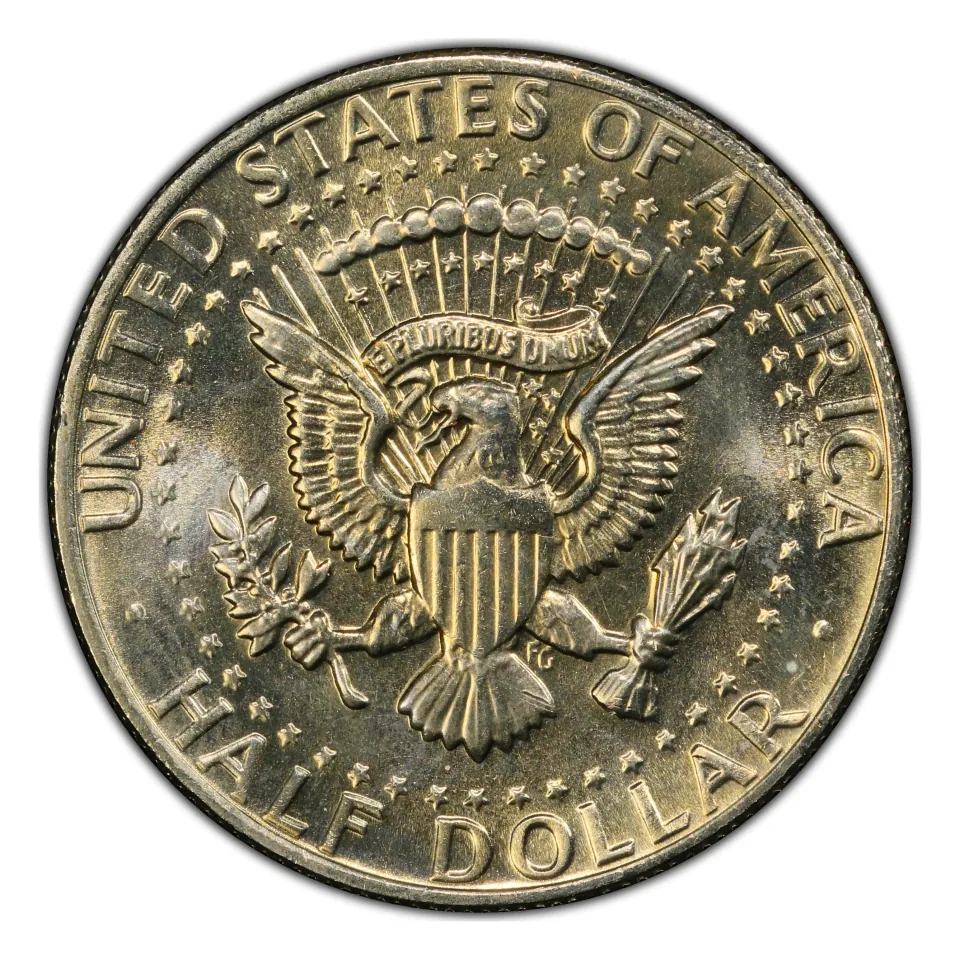
Basics & coin story
By 1979 the regular Kennedy half dollar used copper-nickel cladding over a copper core, following the removal of silver from ordinary production in 1971. The presidential-seal eagle had also returned after the temporary Bicentennial Independence Hall reverse. The single 1979 date and eagle are therefore the expected combination.
Gilroy Roberts designed the portrait and Frank Gasparro the reverse. PCGS records 68,312,000 Philadelphia regular strikes for 1979. Large production makes an ordinary circulated coin a different proposition from a scarce top-grade survivor. Use the Kennedy half-dollar overview to sort metal periods before comparing individual dates.
| Feature | What to check |
|---|---|
| Type / denomination | Kennedy half dollar / 50 cents |
| Standard composition | Copper-nickel outer layers over a copper core; no silver |
| Nominal weight / diameter | Approximately 11.34 g / 30.61 mm |
| Edge | Reeded |
| Regular issues | Philadelphia: no mark; Denver: D |
| Proof issue | 1979-S clad Proof, Type 1 or Type 2 |
| Mint-mark location | Obverse, below Kennedy’s neck and above the date |
| Designers | Gilroy Roberts / Frank Gasparro |
Identification
No mark is normal for Philadelphia
Inspect below Kennedy’s neck and above 1979. No letter identifies the Philadelphia regular issue; a D identifies Denver. Do not mistake the normal absence of P for an error or apply the all-mint omission rule of 1965–1967 to this later date.
An S identifies a separate Proof issue
The 1979-S Proof has two recognized S mint-mark types. Type 1 is commonly called Filled S and Type 2 Clear S. Those distinctions concern the S punch, not a different alloy or a changed eagle. Compare the exact mint-mark shape with authoritative images; dirt, reflections and a blurred opening are not enough for attribution.
Do not carry silver rules forward from earlier dates
Standard 1964 Kennedy halves are 90% silver and regular 1965–1970 issues are 40% silver. The normal 1979 coin is clad, including the S Proof. A silvery surface does not prove silver content, and the presence of S does not make this year a silver collector issue.
Condition & value
Amounts are in U.S. dollars. PCGS retail-guide examples were checked October 22, 2026 and apply only to the stated issue, grade and designation. They are not guaranteed purchase offers; current market conditions and selling costs can change the amount received.
| Issue | Grade / condition | Value or reference | Basis | Important condition |
|---|---|---|---|---|
| Ordinary worn Philadelphia or Denver | Circulated | 50¢ face-value baseline | Denomination | No silver premium for the normal coin |
| 1979 Philadelphia regular | MS63 | $9 | PCGS retail guide | Problem-free uncirculated example |
| 1979 Philadelphia regular | MS65 | $20 | PCGS retail guide | Correct mint and grade |
| 1979 Philadelphia regular | MS66 | $35 | PCGS retail guide | Not a price for a worn coin |
| 1979-D / S Proof Type 1 or Type 2 | Exact issue, grade and type | Use matching evidence | Separate entries | Philadelphia MS prices do not apply |
Mint State (MS) means uncirculated. Inspect Kennedy’s cheek and neck for friction, the open fields for contact marks, and the eagle side for handling damage. A coin can be sharp but marked, or weakly struck without circulation wear. Grade should not be assigned from brightness alone.
Proof grading commonly uses PR. Cameo or Deep Cameo contrast is separate from the S-punch type, so both distinctions must match a premium comparison. Haze, hairlines and handling can impair a Proof without changing its manufacturing identity. Use grade definitions and cleaning-identification guidance before paying for certification or comparing a loose coin with an exceptional auction example.
Summary
Find no mark, D or S, establish regular strike versus Proof, and use the standard clad specification. A missing P is normal and an S does not mean silver in 1979. Match numerical grade, Proof type and any contrast designation before using a collector price.
FAQ
Does a 1979 half dollar contain silver?
No. Standard 1979 Philadelphia and Denver regular strikes and the San Francisco Proof are copper-nickel clad without silver in their normal composition.
Is no mint mark on a 1979 half dollar an error?
No. The Philadelphia regular issue normally has no mint mark. The letter area is below Kennedy’s neck and above the date.
What are the 1979-S half-dollar Type 1 and Type 2 issues?
They are Proofs with different S mint-mark punches, commonly called Filled S and Clear S. The types do not change the normal clad composition.
Can a worn 1979 half dollar use an MS65 price?
No. Mint State means uncirculated. A worn coin needs its own condition assessment and should not inherit the price of a problem-free MS65 example.
References
References and further reading
- PCGS CoinFacts: exact issue, specifications and available guide evidence
- U.S. Mint: half-dollar design history and removal of silver in 1971
- PCGS: 1979-S Type 1 Proof entry
- NGC: 1979 half-dollar specifications
Sources and quoted guide evidence checked October 22, 2026. Guide estimates, historical sales, face value and metal-content calculations are identified separately.