

 App Store

COIN VALUE GUIDES · PENNIES
1976 Penny Value:No Mint Mark, D, S Proofs and Bicentennial Claims
Learn why a normal 1976 penny has the Memorial reverse, compare Red Philadelphia values, and separate S Proofs and private counterstamps from Bicentennial mint issues.
 HeriBase TeamPublished
In this article
Quick answer
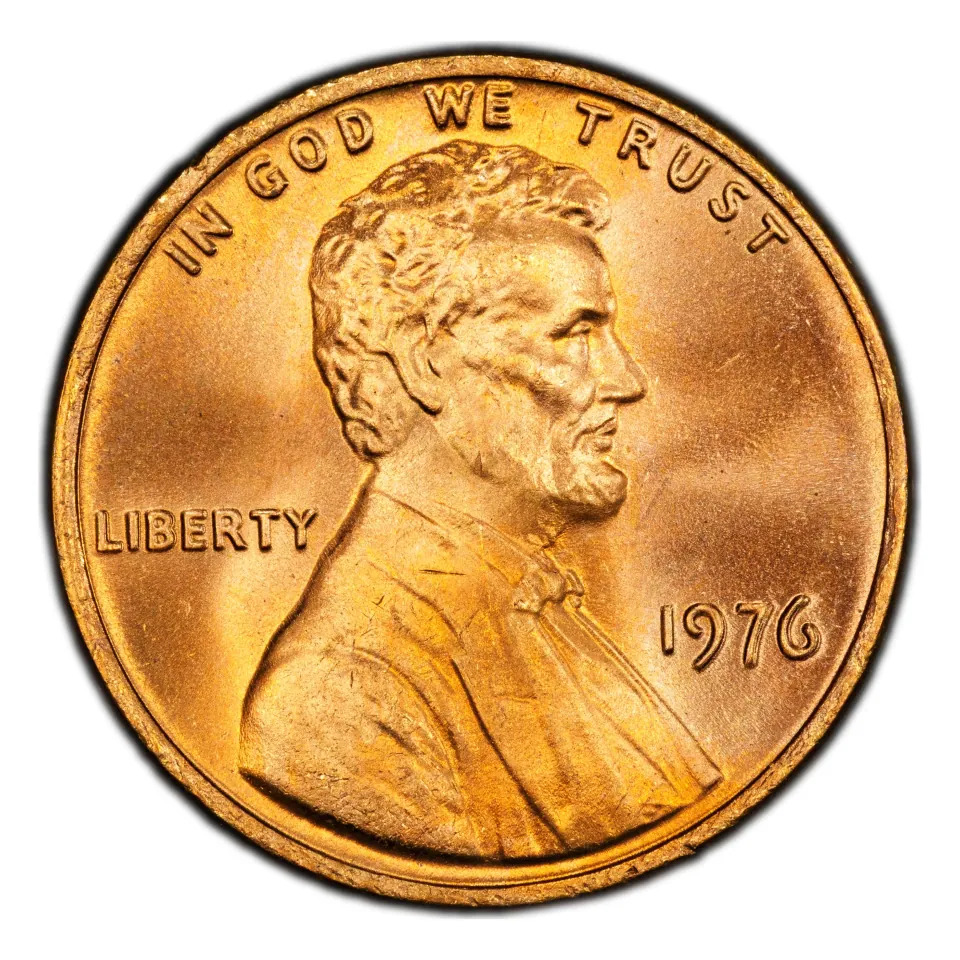
A normal 1976 penny is a Lincoln Memorial cent, not a dual-dated Bicentennial commemorative. An ordinary worn example has a one-cent face value. No mint mark identifies Philadelphia, D identifies Denver, and the S issue is a separate San Francisco Proof.
For Philadelphia regular strikes designated Red (RD), the PCGS guide checked October 22, 2026 lists $3 in Mint State 63, $14 in Mint State 65 and $26 in Mint State 66. These are grade-specific retail comparisons for uncirculated coins, not prices for every cent saved during America’s Bicentennial year.
Coin photos
Basics & coin story
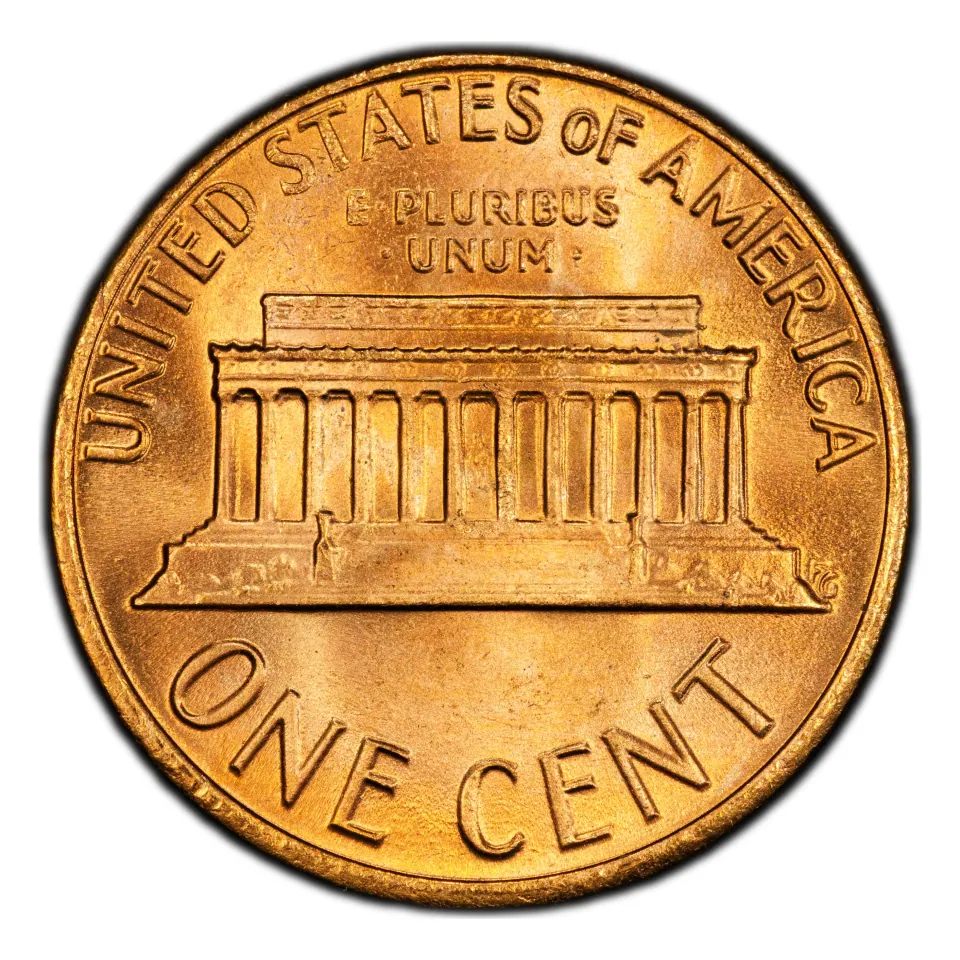
The Bicentennial celebration changed the circulating quarter, half dollar and dollar, which received special reverses and the date 1776–1976. It did not produce an equivalent regular U.S. cent. A normal 1976 penny retains the single date and the Memorial reverse introduced in 1959.
Philadelphia produced 4,674,292,426 regular 1976 cents according to PCGS. That large output makes the date widely available, although preserving original copper color without spots or contact marks is a different challenge. A souvenir penny bearing a small Liberty Bell or map punch can be interesting as a privately modified object; that added image is not evidence that the U.S. Mint issued a special Bicentennial penny.
| Feature | What to check |
|---|---|
| Type / denomination | Lincoln Memorial cent / 1 cent |
| Normal date | 1976, not 1776–1976 |
| Metal | 95% copper, 5% zinc |
| Nominal weight / diameter | 3.11 g / 19 mm |
| Edge | Plain |
| Regular issues | No mark: Philadelphia; D: Denver |
| Collector issue | 1976-S Proof, separate from P and D regular strikes |
Identification
Expect the Memorial on the reverse
A normal coin shows Lincoln on the front and the Memorial on the back. The absence of a drummer, Independence Hall or Liberty Bell is not a missing-design error. Those Bicentennial themes belong to other denominations. Compare the date and denomination before identifying a coin from a search result showing a different design.
Read P, D and S conventions correctly
Philadelphia regular cents of this year have no P. Denver uses D below the date. An S belongs to the Proof issue and should be checked against Proof evidence rather than a Philadelphia Mint State price. A reflective D coin has not become an S Proof merely because it looks mirrorlike.
Separate private punches from mint errors
A small additional Liberty Bell, state outline or other symbol may be a post-mint counterstamp. Such alterations are different from an off-center strike or a planchet problem created during manufacture. A dealer may sell a counterstamped souvenir, but its asking price does not establish a recognized mint-error premium. Photograph the entire coin and the added mark before describing what you have.
Condition & value
Amounts are in U.S. dollars. PCGS retail-guide examples were checked October 22, 2026 and apply only to the stated issue, grade and designation. They are not guaranteed purchase offers; current market conditions and selling costs can change the amount received.
| Issue | Grade / condition | Value or reference | Basis | Important condition |
|---|---|---|---|---|
| Ordinary worn P or D | Circulated | 1¢ face-value baseline | Denomination | Bicentennial year alone adds no guaranteed premium |
| 1976 Philadelphia, RD | MS63 | $3 | PCGS retail guide | Regular strike with original Red color |
| 1976 Philadelphia, RD | MS65 | $14 | PCGS retail guide | Not a price for a counterstamped souvenir |
| 1976 Philadelphia, RD | MS66 | $26 | PCGS retail guide | Correct numerical grade required |
| 1976-D / 1976-S Proof | Exact issue and grade | Use matching entry | Separate markets | No P-mint price transferred |
| Privately counterstamped cent | Altered souvenir | Compare matching souvenir sales | Not a U.S. Mint issue | No blanket mint-error value assigned |
Mint State (MS) means uncirculated. Inspect Lincoln’s cheek and jaw for rub, the fields for handling marks, and the copper for spots or altered color. Red, Red and Brown, and Brown are distinct designations. A clean-looking circulated coin is not automatically worth the Red MS65 reference.
The normal 1976 cent is the heavier copper-alloy type, with a nominal weight of 3.11 grams, rather than the later copper-plated zinc cent. Do not turn contained copper into a promised cash offer: collector value and transaction costs are separate questions. For a loose penny, start with identification and condition through the penny hub. For a saved coin from the neighboring year, use the 1973 guide as a separate date comparison.
Summary
A single 1976 date and a Memorial reverse are correct for the regular cent. Find no mark, D or S, identify regular strike versus Proof, and assess original color and wear. Treat added souvenir symbols separately from mint errors, and compare only matching issue and grade evidence.
FAQ
Is there a regular 1776–1976 Bicentennial penny?
No. The regular 1976 cent retains a single 1976 date and the Memorial reverse. Bicentennial circulating designs were issued for the quarter, half dollar and dollar.
Is a 1976 penny with no mint mark an error?
No. Philadelphia normally issued this cent without a mint mark. The absent P alone does not establish a premium.
What is a 1976 penny with a Liberty Bell stamp?
An added small Liberty Bell punch can be a private counterstamp or souvenir alteration. It is not the normal U.S. Mint Bicentennial cent design and needs its own identification.
Is a 1976-S penny the same as a Philadelphia coin?
No. The S issue is a San Francisco Proof. Its value should be compared with the same Proof grade and designation rather than Philadelphia regular-strike prices.
References
References and further reading
- PCGS CoinFacts: exact issue, specifications and available guide evidence
- PCGS: separate Denver regular issue
- U.S. Mint: Bicentennial denominations and designs
- U.S. Mint: Lincoln Memorial cent history
Sources and quoted guide evidence checked October 22, 2026. Guide estimates, historical sales, face value and metal-content calculations are identified separately.