

 App Store

COIN VALUE GUIDES · PENNIES
1963 Penny Value:D Mint Mark, No Mark, Proofs and Error Checks
Identify Philadelphia and Denver 1963 pennies, compare 1963-D Red values by grade, and distinguish normal Memorial details, Proofs and genuine mint errors.
 HeriBase TeamPublished
In this article
Quick answer
A normal circulated 1963 penny is a common Lincoln Memorial cent with a one-cent face value. Philadelphia regular strikes have no mint mark; Denver coins have D below the date. Both are copper-alloy cents, and neither missing lettering in a photograph nor an old date alone proves an error.
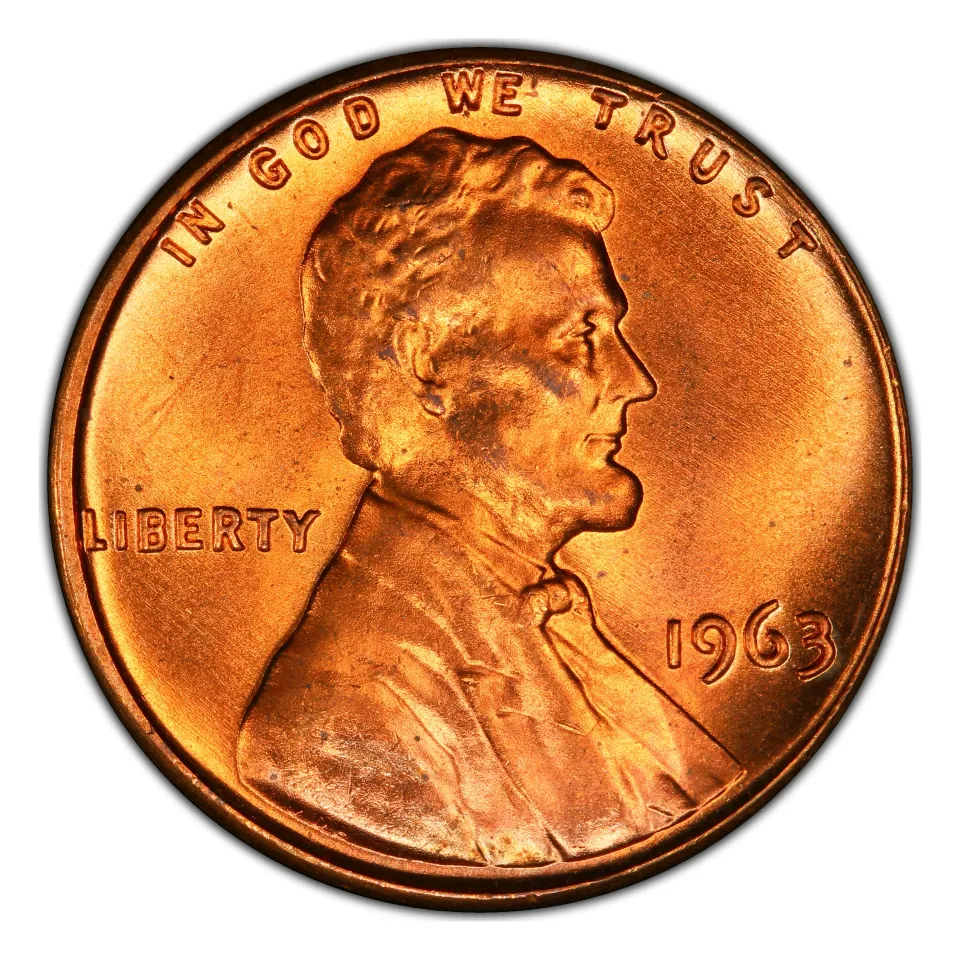
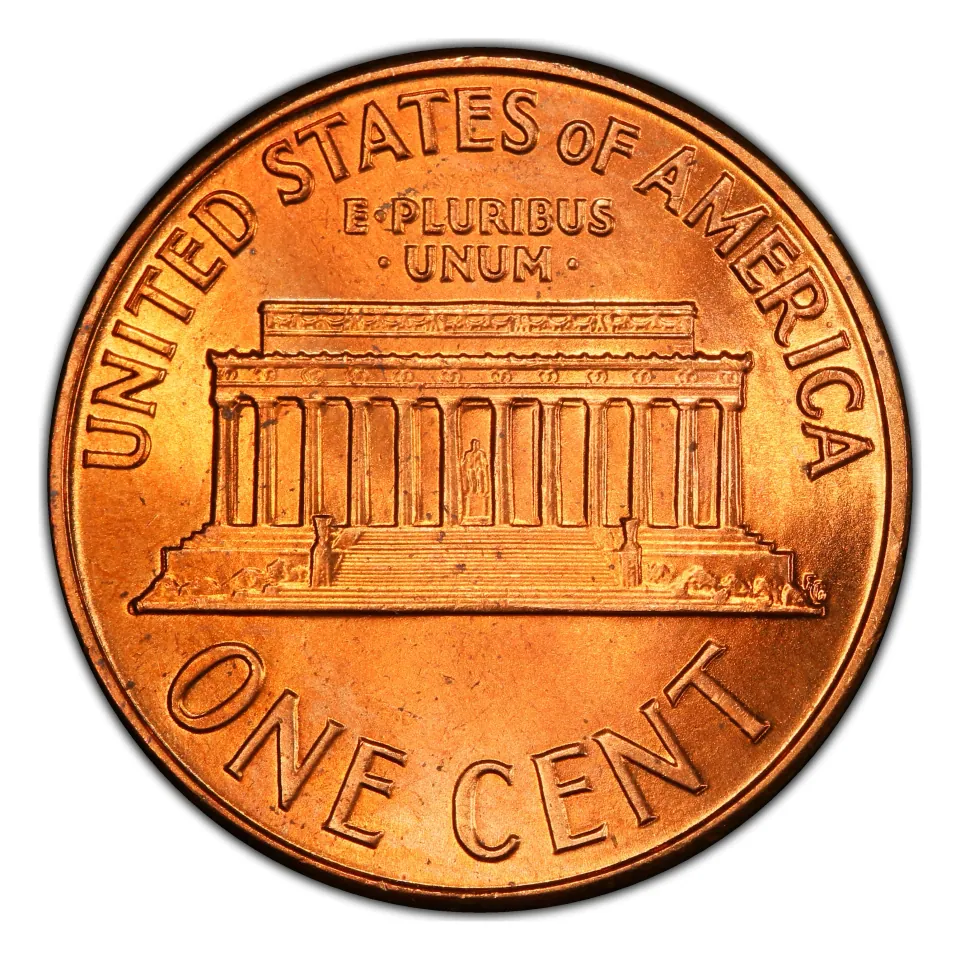
For 1963-D Red coins, the PCGS guide checked October 22, 2026 lists $3 at Mint State 63, $20 at Mint State 65 and $80 at Mint State 66. These are Denver-specific retail estimates for uncirculated coins with the Red (RD) color designation. The Philadelphia coin illustrated below is a design reference, not the issue priced in those Denver rows.
Coin photos
Basics & coin story
By 1963 the Memorial reverse had been used for five dated issues, beginning in 1959. Brenner’s Lincoln portrait remained on the front; Gasparro’s building design occupied the reverse. The date therefore belongs to the Memorial series, not the wheat-cent series that ended in 1958.
PCGS lists 754,110,000 Philadelphia regular strikes and 1,774,020,400 Denver regular strikes. Original mintage does not tell us how many spot-free high-grade Red coins survive, but it does explain why a circulated example is not scarce simply because it was made decades ago. The adjacent 1962 guide explains similar identification steps without supplying interchangeable prices.
| Feature | What to check |
|---|---|
| Type | Lincoln Memorial cent |
| Metal | 95% copper, 5% zinc |
| Nominal weight / diameter | 3.11 g / 19 mm |
| Regular marks | No letter: Philadelphia; D: Denver |
| Edge | Plain |
| Philadelphia Proof | Separate collector issue, without a mint mark |
| Designers | Victor David Brenner / Frank Gasparro |
Identification
Check the D before comparing prices
Inspect just below 1963. The small D selects the Denver issue; no letter is expected for Philadelphia. The pictures show the no-mark coin so that its normal layout is clear. A Denver coin should match that basic design while adding D beneath the date. Do not confuse a stain or a contact mark in that area with a letter.
Separate Proof from a shiny circulation coin
Philadelphia made 1963 Proof cents as well as regular strikes. Both lack a mint mark. A Proof was produced for collectors using prepared dies and planchets, so its identity is not established by being bright or by having a high numerical grade. Haze, hairlines and handling can affect a Proof’s value without turning it into an ordinary circulation strike.
Check alleged doubling against the exact issue
A claimed doubled die needs matching diagnostics on the correct mint and finish. A 1963 Proof reverse listing cannot authenticate a Denver circulation coin. Flat shelf-like edges from mechanical effects, scratches and reflections are not enough to assign a premium. Record which letters or design elements repeat, and photograph them at consistent angles before seeking an attribution.
Condition & value
Amounts are in U.S. dollars. PCGS retail-guide examples were checked October 22, 2026 and apply only to the stated issue, grade and designation. They are not guaranteed purchase offers; current market conditions and selling costs can change the amount received.
| Issue | Grade / condition | Value or reference | Basis | Important condition |
|---|---|---|---|---|
| Ordinary worn P or D | Circulated | 1¢ face-value baseline | Denomination | No automatic rarity premium |
| 1963-D, RD | MS63 | $3 | PCGS retail guide | Denver, regular strike, original Red |
| 1963-D, RD | MS65 | $20 | PCGS retail guide | Problem-free uncirculated example |
| 1963-D, RD | MS66 | $80 | PCGS retail guide | Do not infer this grade from brightness |
| Philadelphia / Proof / attributed variety | Exact issue and designation | Use matching evidence | Separate entries | The D guide is not a universal 1963 price |
The difference between the MS65 and MS66 references shows why small surface differences can have a large effect on price. Examine Lincoln’s cheek and the fields for contact marks and spots, and look for friction on the high points. Mint State (MS) means uncirculated; a lightly worn coin does not qualify just because the Memorial remains detailed.
For copper, compare the same numerical grade and color category: Brown, Red and Brown, or Red. Photographic white balance can make a brown coin look orange, while cleaning can expose an unnatural surface. An ordinary raw cent needs realistic grading before certification costs are considered. Use the grading-scale guide and the penny identification hub for the general process, then return to the exact 1963 issue.
Summary
Read no mark or D, identify the finish, and compare the same copper color and grade. Denver Red prices are not Philadelphia prices and do not value an ordinary brown cent. Investigate a suspected doubled die only after matching the issue and diagnostics; preserve original surfaces while doing so.
FAQ
What is a 1963 penny worth with no mint mark?
No mint mark is normal for Philadelphia. An ordinary worn coin has a one-cent face value; an additional premium depends on its grade, color, finish or authenticated variety.
Where is the mint mark on a 1963-D penny?
The D appears on the obverse below the date. The reverse has the Lincoln Memorial design.
Is a 1963 penny mostly copper?
Yes. The normal coin is 95% copper and 5% zinc, with a nominal weight of 3.11 grams. It is not the later copper-plated zinc type.
Can a 1963 Proof price be used for a 1963-D penny?
No. Philadelphia Proofs and Denver regular strikes are separate issues. Match mint, manufacturing method, grade and designation before using a price.
References
References and further reading
- PCGS CoinFacts: exact issue, specifications and available guide evidence
- PCGS: 1963-D specifications and Red guide evidence
- PCGS: 1963 Philadelphia Proof issue
- U.S. Mint: Memorial cent design history
Sources and quoted guide evidence checked October 22, 2026. Guide estimates, historical sales, face value and metal-content calculations are identified separately.