

 App Store

COIN VALUE GUIDES · PENNIES
1961 Penny Value:No Mint Mark, D, Proofs and Original Red Color
Check a 1961 Lincoln Memorial penny by mint mark, finish and copper color. Compare graded Philadelphia values and avoid confusing plated cents with silver errors.
 HeriBase TeamPublished
In this article
Quick answer
An ordinary worn 1961 penny is a common copper-alloy Lincoln Memorial cent with a one-cent face value. No mint mark is normal for Philadelphia, while a D below the date identifies Denver. Neither the date nor the absence of a letter establishes a rare error.
The PCGS retail guide checked October 22, 2026 lists Philadelphia examples with the Red designation at $8 in Mint State 63, $18 in Mint State 65 and $28 in Mint State 66. Mint State (MS) means uncirculated; Red (RD) describes preserved copper color. These figures do not apply to a brown, worn cent or to a separate Proof issue.
Coin photos
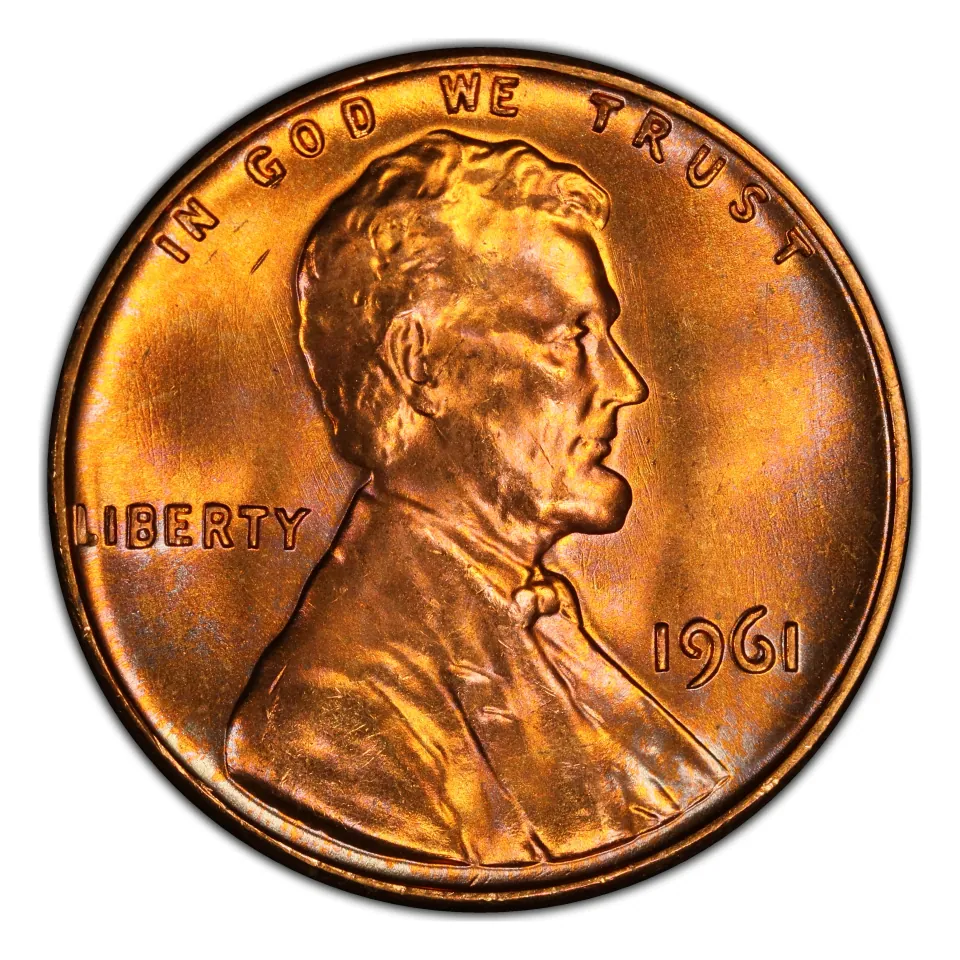
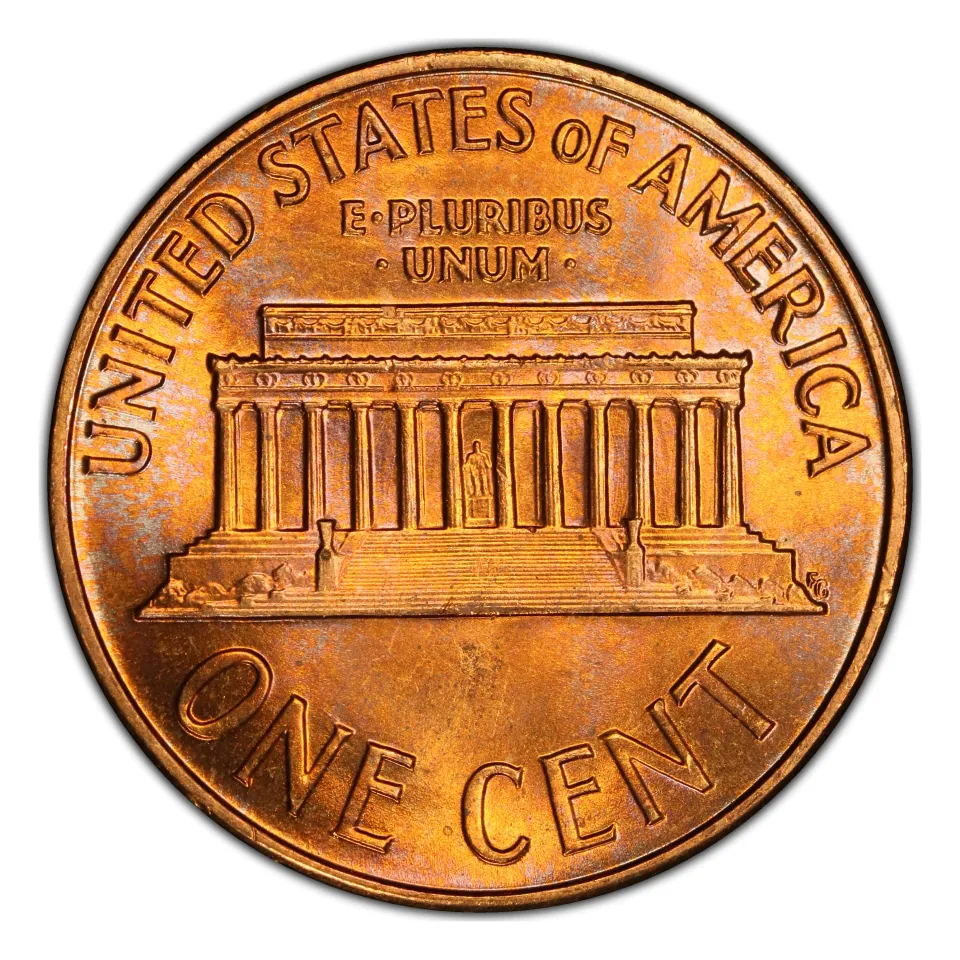
Basics & coin story
The 1961 cent combines Victor David Brenner’s Lincoln portrait with Frank Gasparro’s Lincoln Memorial reverse, introduced in 1959. The building design makes it easy to separate this issue from the earlier wheat cent without relying on color. A dark brown Memorial cent has not become a different type because its copper has toned.
PCGS records 753,345,000 Philadelphia regular strikes and 1,753,266,700 Denver regular strikes. Those large original production totals explain why an early-1960s date can remain common. Surviving surface quality matters more than age alone: a carefully stored uncirculated coin and a cent that spent decades in a drawer are different comparisons. For the preceding design change, see the 1959 penny guide.
| Feature | What to check |
|---|---|
| Type / denomination | Lincoln Memorial cent / 1 cent |
| Designers | Victor David Brenner / Frank Gasparro |
| Composition | 95% copper; 5% tin and zinc |
| Nominal weight / diameter | 3.11 g / 19 mm |
| Edge | Plain |
| Regular issues | Philadelphia: no letter; Denver: D |
| Proof issue | Philadelphia, also without a mint mark |
Identification
Read the area below 1961
The mint mark belongs below the date on the obverse, not beside the Memorial. Look for a complete D under clear light. A weak photograph can hide a small letter, so record both the date and mark before selecting a price entry. Philadelphia and Denver coins must be valued separately even when both look equally bright.
No mint mark does not distinguish regular strikes from Proofs
Philadelphia also produced collector Proof cents without a mint mark. Proof describes a manufacturing method, not a numerical condition score. A loose coin needs its finish, detail and surfaces assessed; a polished regular strike can reflect light without being a Proof. An original Proof-set provenance helps, but a seller’s claim that a coin came from a set should still match the coin.
A silver-colored 1961 penny needs examination
A normal example is a copper alloy, not a silver issue. Plating, chemical treatment and lighting can change its apparent color. A nominal 3.11-gram weight is a useful first check, but neither weight nor color alone authenticates an off-metal error. Record the weight, edge and both faces before asking a specialist to examine an unusual piece. Avoid scratching the surface to expose the metal.
Condition & value
Amounts are in U.S. dollars. PCGS retail-guide examples were checked October 22, 2026 and apply only to the stated issue, grade and designation. They are not guaranteed purchase offers; current market conditions and selling costs can change the amount received.
| Issue | Grade / condition | Value or reference | Basis | Important condition |
|---|---|---|---|---|
| Ordinary worn P or D | Circulated | 1¢ face-value baseline | Denomination | A collector premium needs additional evidence |
| 1961 Philadelphia, RD | MS63 | $8 | PCGS retail guide | Problem-free original Red example |
| 1961 Philadelphia, RD | MS65 | $18 | PCGS retail guide | Not a brown circulated-coin price |
| 1961 Philadelphia, RD | MS66 | $28 | PCGS retail guide | Numerical grade and color both apply |
| 1961-D / Philadelphia Proof | Exact issue and grade | Use the matching entry | Separate markets | No Philadelphia regular-strike price transferred |
Start by checking Lincoln’s cheek, jaw and hair for friction, then inspect the open fields for spots and hairlines. A bright surface does not rule out wear. Brown (BN), Red and Brown (RB), and Red are separate color designations; the numerical grade still measures preservation. Artificially altered color does not establish original Red quality.
A modest guide value may leave little room for postage, grading charges or selling fees. Compare completed sales of the same mint, grade and designation before paying to certify an ordinary cent. A raised feature, unusual letter or off-center design needs a specific attribution rather than a blanket “1961 error” price. Follow the penny-checking workflow and the surface-alteration guide when deciding whether further examination is worthwhile.
Summary
Identify no mark or D, separate regular strike from Proof, then assess wear and original color. A common worn 1961 cent does not become rare because it has no letter. Use Red Mint State prices only for a matching coin, and preserve an unusual surface for examination instead of cleaning or scratching it.
FAQ
Is a 1961 penny with no mint mark rare?
No. Philadelphia normally used no mint mark. Value depends on condition, original color, finish or an authenticated mint error.
How much is a 1961-D penny worth?
An ordinary worn example has a one-cent face value. A collector premium requires Denver-specific evidence for its grade and color; Philadelphia Red guide prices should not be substituted.
Is a silver-colored 1961 penny made of silver?
Normal 1961 cents are copper alloy. Plating or treatment can change the color. A suspected off-metal coin requires physical examination and authentication.
Does a Red designation mean a 1961 penny is uncirculated?
Red describes copper color, while the numerical grade describes preservation. Both conditions must match a Red Mint State price comparison.
References
References and further reading
- PCGS CoinFacts: exact issue, specifications and available guide evidence
- PCGS: 1961-D specifications and separate issue
- U.S. Mint: Lincoln cent design history
Sources and quoted guide evidence checked October 22, 2026. Guide estimates, historical sales, face value and metal-content calculations are identified separately.