

 App Store

COIN VALUE GUIDES · PENNIES
1960 Penny Value: Small Date, Large Date and D Mint Marks
Compare the four ordinary 1960 Lincoln cent combinations, inspect Small and Large Dates, and keep Proofs and attributed die varieties separate.
 HeriBase Editorial TeamPublished
In this article
Quick answer
A 1960 penny must be sorted by mint and date size before it is priced. Philadelphia and Denver each made Small Date and Large Date cents. Most worn ordinary pieces have little individual premium; the Philadelphia Small Date is the important separate comparison. NGC’s dated brown-color MS63 guides list $4 for that issue versus $0.75 for the other three. These are older retail references, not current sale offers.
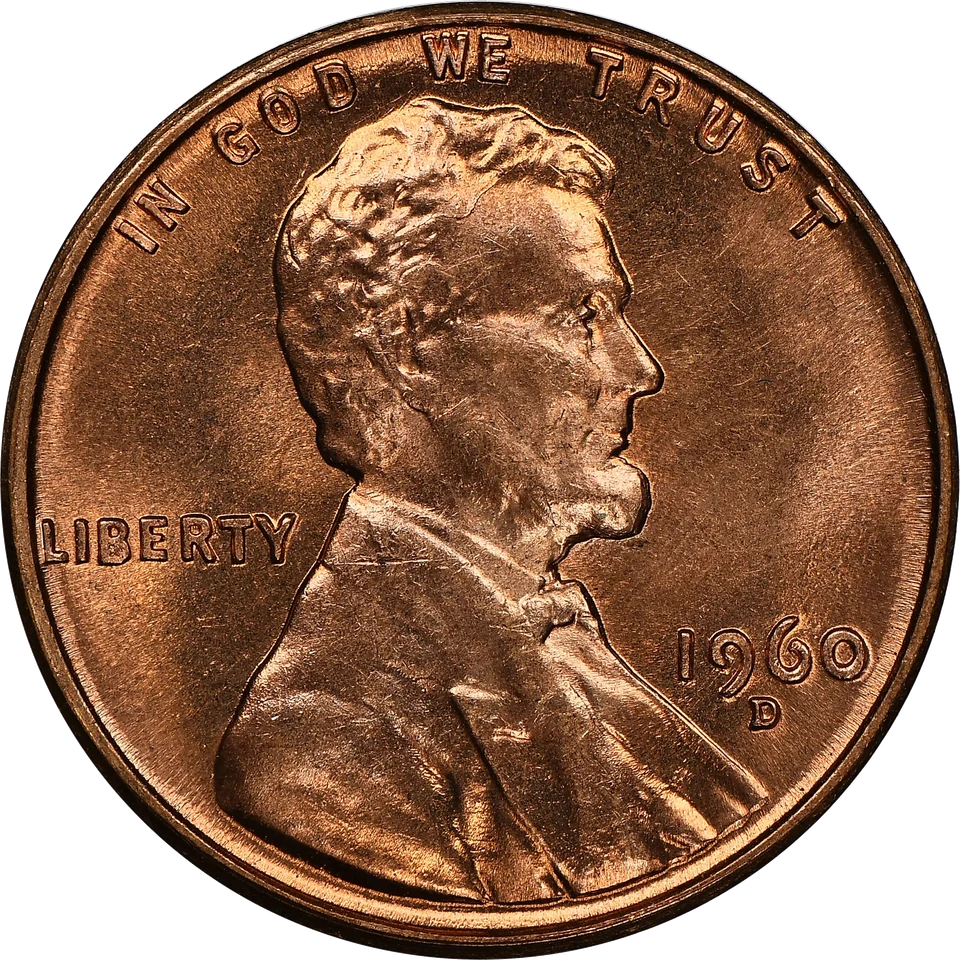
Real coin photos
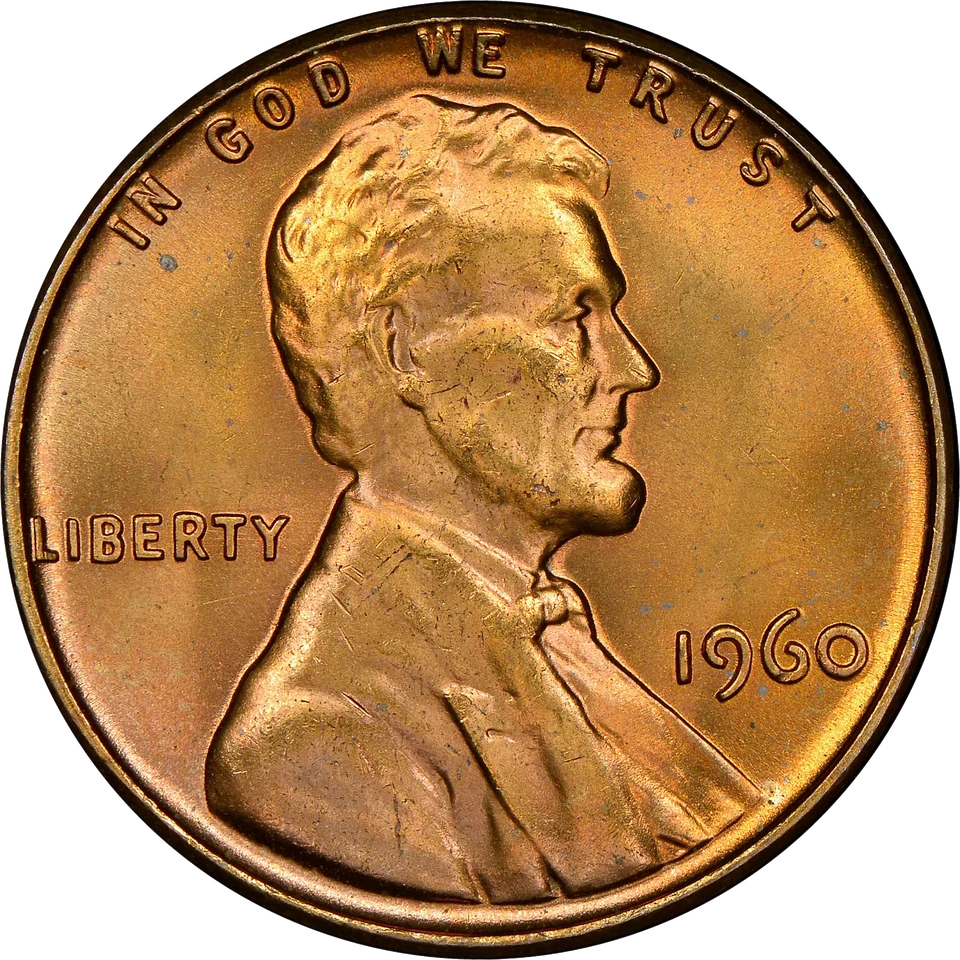
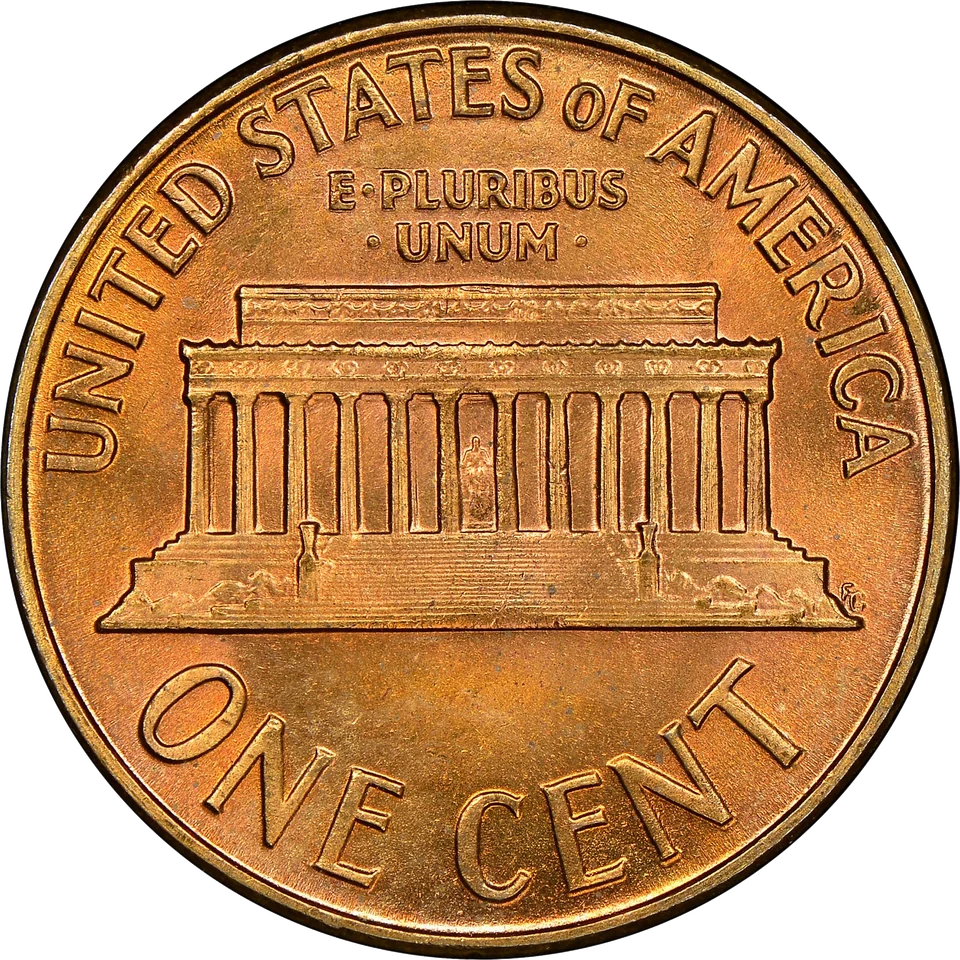
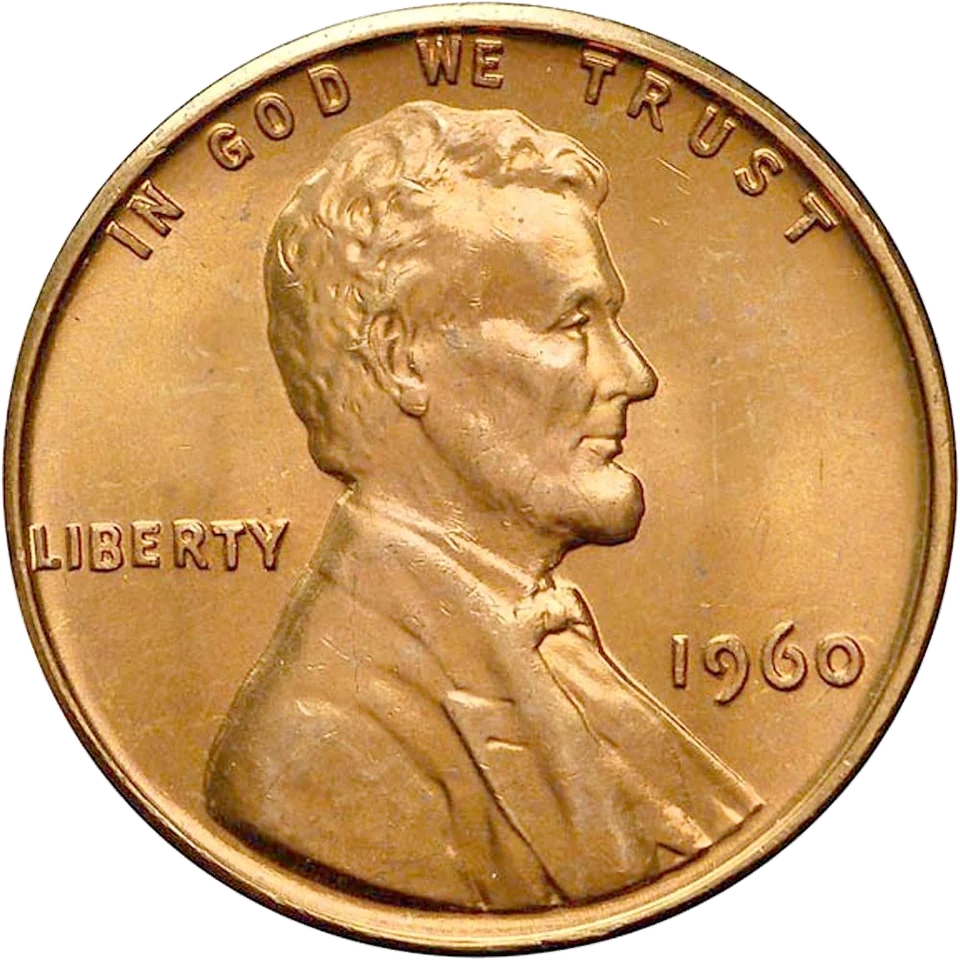
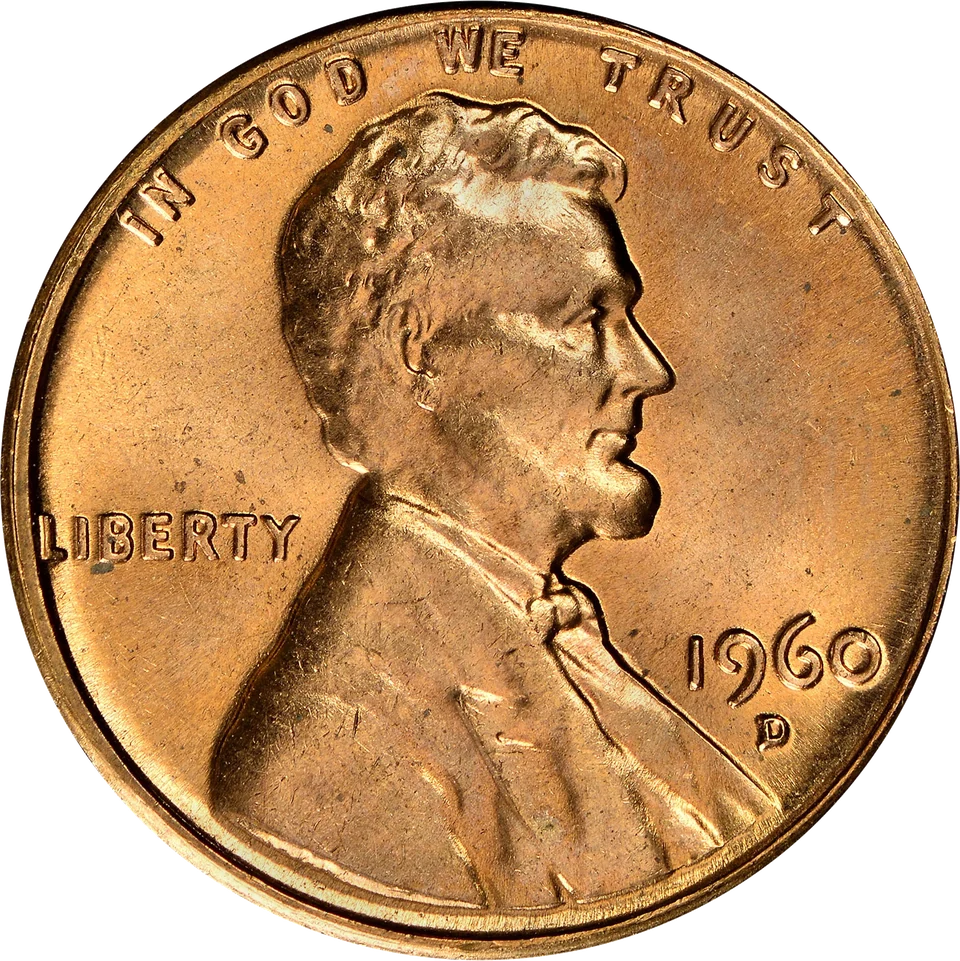
Basics & coin story
The Small Date and Large Date distinction arose from a change in the date design, not from a missing mint mark or a different denomination. NGC explains that the Small Date zero was vulnerable to die breakage and filling, prompting a revised date. Both types became collecting categories.
The Lincoln Memorial reverse had replaced the wheat design in 1959. A 1960 cent pairs Brenner’s Lincoln portrait with Gasparro’s Memorial. Date size is an obverse distinction: the common reverse does not tell you which of the four mint-and-date combinations you own.
| Feature | What to check |
|---|---|
| Issue | 1960 Lincoln Memorial cent |
| Designers | Victor D. Brenner; Frank Gasparro reverse |
| Nominal weight / diameter | 3.11 g / 19 mm |
| Composition | Bronze; 95% copper with tin and zinc |
| Edge | Plain |
| Mint marks | None for Philadelphia; D below date for Denver |
For related diagnostics, consult the series identification and variety guide.
Identification
Which of the four combinations do you have?
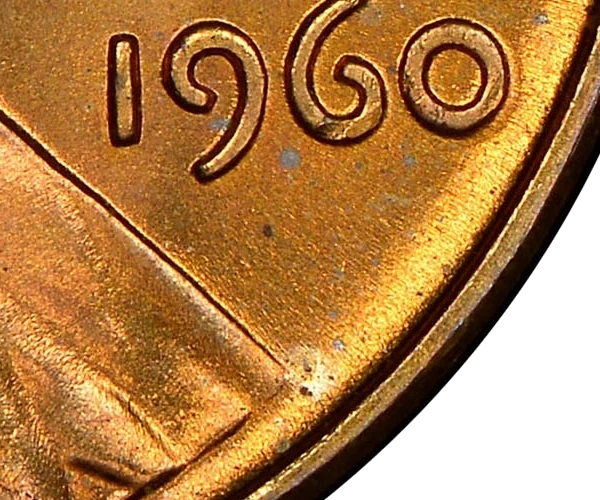
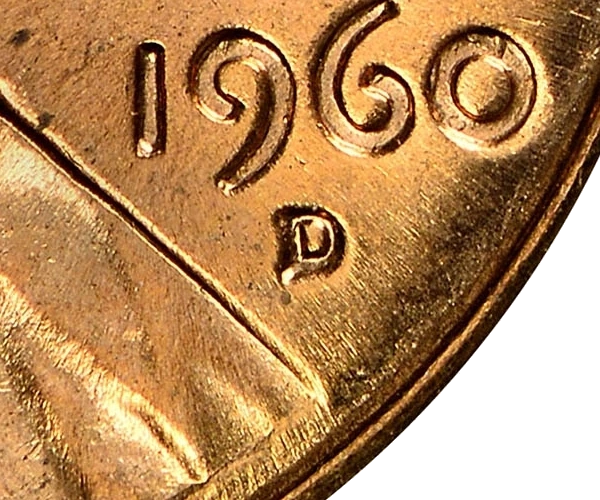
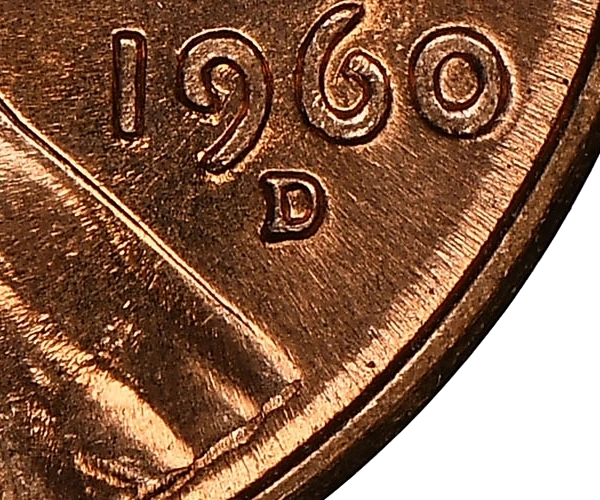
Separate no-mark Philadelphia Small Date, Philadelphia Large Date, Denver Small Date and Denver Large Date. The D is below the date on the obverse. A coin with no D is not a missing-mint-mark error merely because a Denver comparison carries one.
How can the Small Date be checked?
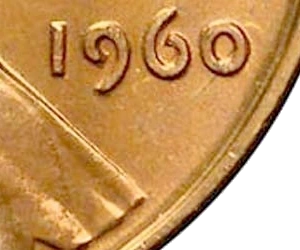
Use the date close-ups below at comparable scale. PCGS describes the Small Date zero as smaller, with an oval inner opening. Compare the complete arrangement and shapes of 1, 9, 6 and 0; perspective, wear and glare can make a single digit misleading.
Is a Small Date automatically an expensive error?
No. A major date-size variety is a recognized design distinction, not automatically a mint error. The relative availability of Philadelphia Small Date must not be transferred to Denver Small Date. Attribute the mint and date together before comparing values.
Condition & value
All amounts are U.S. dollars from the NGC retail guide accessed November 18, 2026. Row updates below use month/day/year and are often much older. These are reference estimates, not current bids, completed sales or a promise of resale proceeds. BN = Brown; RB = Red and Brown; RD = Red. MS = Mint State; EF40 = Extremely Fine 40.
| Issue | Condition / color | USD guide | Row updated |
|---|---|---|---|
| 1960 LARGE DATE 1C MS | Good BN | $0.05 | 07/04/2022 |
| 1960 LARGE DATE 1C MS | Fine BN | $0.05 | 07/04/2022 |
| 1960 LARGE DATE 1C MS | EF40 BN | $0.05 | 07/04/2022 |
| 1960 LARGE DATE 1C MS | MS63 BN | $0.75 | 07/04/2022 |
| 1960 LARGE DATE 1C MS | MS65 BN | $2.50 | 07/04/2022 |
| 1960 LARGE DATE 1C MS | MS63 RB | $5 | 07/12/2019 |
| 1960 LARGE DATE 1C MS | MS63 RD | $7.50 | 07/12/2019 |
| 1960 SMALL DATE 1C MS | MS63 BN | $4 | 07/12/2019 |
| 1960 SMALL DATE 1C MS | MS65 BN | $10 | 07/12/2019 |
| 1960 SMALL DATE 1C MS | MS63 RB | $7.50 | 07/12/2019 |
| 1960 SMALL DATE 1C MS | MS63 RD | $10 | 07/12/2019 |
| 1960 D LARGE DATE 1C MS | Good BN | $0.05 | 07/04/2022 |
| 1960 D LARGE DATE 1C MS | Fine BN | $0.05 | 07/04/2022 |
| 1960 D LARGE DATE 1C MS | EF40 BN | $0.05 | 07/04/2022 |
| 1960 D LARGE DATE 1C MS | MS63 BN | $0.75 | 07/04/2022 |
| 1960 D LARGE DATE 1C MS | MS65 BN | $2.50 | 07/04/2022 |
| 1960 D LARGE DATE 1C MS | MS63 RB | $2.50 | 07/15/2019 |
| 1960 D LARGE DATE 1C MS | MS63 RD | $7.50 | 07/15/2019 |
| 1960 D SMALL DATE 1C MS | Good BN | $0.05 | 07/04/2022 |
| 1960 D SMALL DATE 1C MS | Fine BN | $0.05 | 07/04/2022 |
| 1960 D SMALL DATE 1C MS | EF40 BN | $0.05 | 07/04/2022 |
| 1960 D SMALL DATE 1C MS | MS63 BN | $0.75 | 07/04/2022 |
| 1960 D SMALL DATE 1C MS | MS65 BN | $2.50 | 07/04/2022 |
| 1960 D SMALL DATE 1C MS | MS63 RB | $5 | 07/15/2019 |
| 1960 D SMALL DATE 1C MS | MS63 RD | $10 | 07/15/2019 |
No separate Proof price is supplied for this issue. Do not substitute a shiny ordinary coin for an authenticated collector strike.
How do mint and color change the comparison?
The ordinary-value table keeps all four combinations separate. MS means Mint State, without circulation wear; BN, RB and RD identify copper color. A price for a red certified coin does not establish the value of a worn brown example.
What about 1960 Proofs?
Philadelphia made both Small Date and Large Date Proof cents. Treat Proof manufacture as a separate comparison even when the coin has no mint mark. Bright fields alone are insufficient evidence; cleaning can also create shine.
What about Small Date over Large Date claims?
PCGS catalogs particular Small/Large and Large/Small Date Proof varieties. Those require the appropriate die diagnostics and manufacture. Do not apply a Proof variety description to an ordinary circulated coin just because its date looks crowded.
Use the completed-sale comparison checklist before selling. HeriBase photo identification can help organize initial issue research; a result is not physical authentication, a certified grade or a buying offer. See the expert appraisal guide when an uncertain detail materially changes the decision.
Summary
Sort a 1960 penny by mint, then date size, then manufacture and condition. Philadelphia Small Date, Denver Small Date and Proof varieties are separate price categories.
FAQ
How much is a 1960 penny worth?
A 1960 penny must be sorted by mint and date size before it is priced. Philadelphia and Denver each made Small Date and Large Date cents. Most worn ordinary pieces have little individual premium; the Philadelphia Small Date is the important separate comparison. NGC’s dated brown-color MS63 guides list $4 for that issue versus $0.75 for the other three. These are older retail references, not current sale offers.
Does no mint mark make this coin rare?
No. A blank mint-mark position is normal for the Philadelphia issues discussed here.
Is a 1960-D Small Date the same value category as Philadelphia Small Date?
No. Separate the mint and date size together. Philadelphia Small Date, Philadelphia Large Date, Denver Small Date and Denver Large Date each have their own comparison rows.
Can I use a high auction record to value my coin?
Only a genuinely comparable coin is useful. Match issue, grade, color, manufacture, attribution and problem status; distinguish completed sales from asking prices.
Should I clean the coin before taking photos?
No. Use diffuse light and clear photographs without altering the surfaces. Cleaning can remove evidence and reduce collector interest.
When is expert review useful?
Seek a specialist when authenticity, a claimed rare variety, unusual composition or exceptional condition materially changes the value. A photo-based app result is an initial lead, not a certified grade.
References
References and further reading
- NGC 1960 LARGE DATE 1C MS specifications, issue discussion and dated value rows
- NGC 1960 SMALL DATE 1C MS specifications, issue discussion and dated value rows
- NGC 1960 D LARGE DATE 1C MS specifications, issue discussion and dated value rows
- NGC 1960 D SMALL DATE 1C MS specifications, issue discussion and dated value rows
- NGC 1960 LARGE DATE 1C PF specifications, issue discussion and dated value rows
- NGC 1960 SMALL DATE 1C PF specifications, issue discussion and dated value rows
- PCGS: 1960 Small Date diagnostics
- PCGS: 1960 Small/Large Date Proof attribution
Accessed November 18, 2026. Source-row updates are distinct from the access date. Reference photographs do not establish a reader’s grade or attribution.