

 App Store

COIN VALUE GUIDES · PENNIES
1950 Wheat Penny Value:No Mint Mark, D, S and the Return of Proofs
Identify a 1950 Lincoln wheat cent, compare modest circulated Philadelphia estimates and separate mint marks, copper color and the distinct 1950 Proof issue.
 HeriBase TeamPublished
In this article
Quick answer
A normal 1950 wheat penny is a common copper-alloy Lincoln cent, and an ordinary circulated Philadelphia example generally belongs to the modest-premium collector market. USA Coin Book’s retail chart, last updated for numismatic values in February 2026 and checked October 22, 2026, gives 6¢ in Fine 12, 12¢ in Very Fine 20 and 24¢ in Extremely Fine 40. These are its estimates, not guaranteed buying offers or Red-designated prices.
No mint mark identifies Philadelphia; D and S identify Denver and San Francisco. Philadelphia also made a separate 1950 Proof issue. A brown worn cent, an uncirculated Red coin and a collector Proof are different comparisons, even when all share the 1950 date.
Coin photos
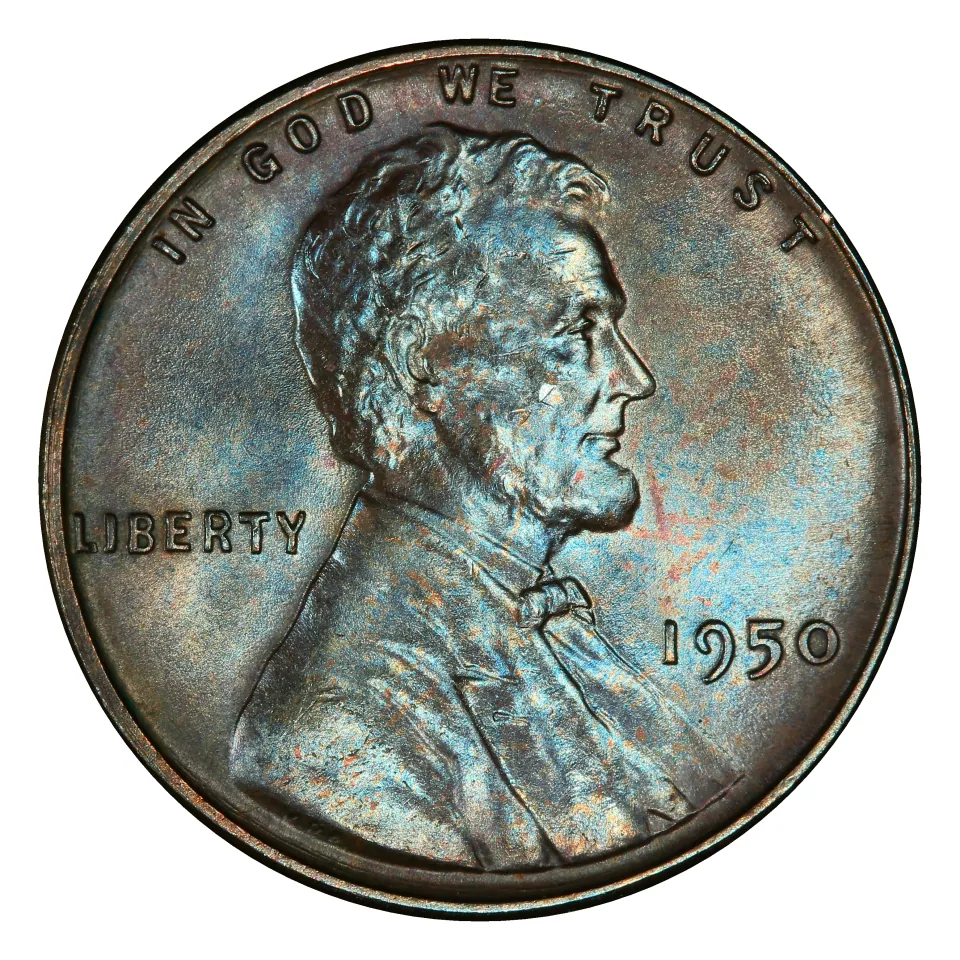
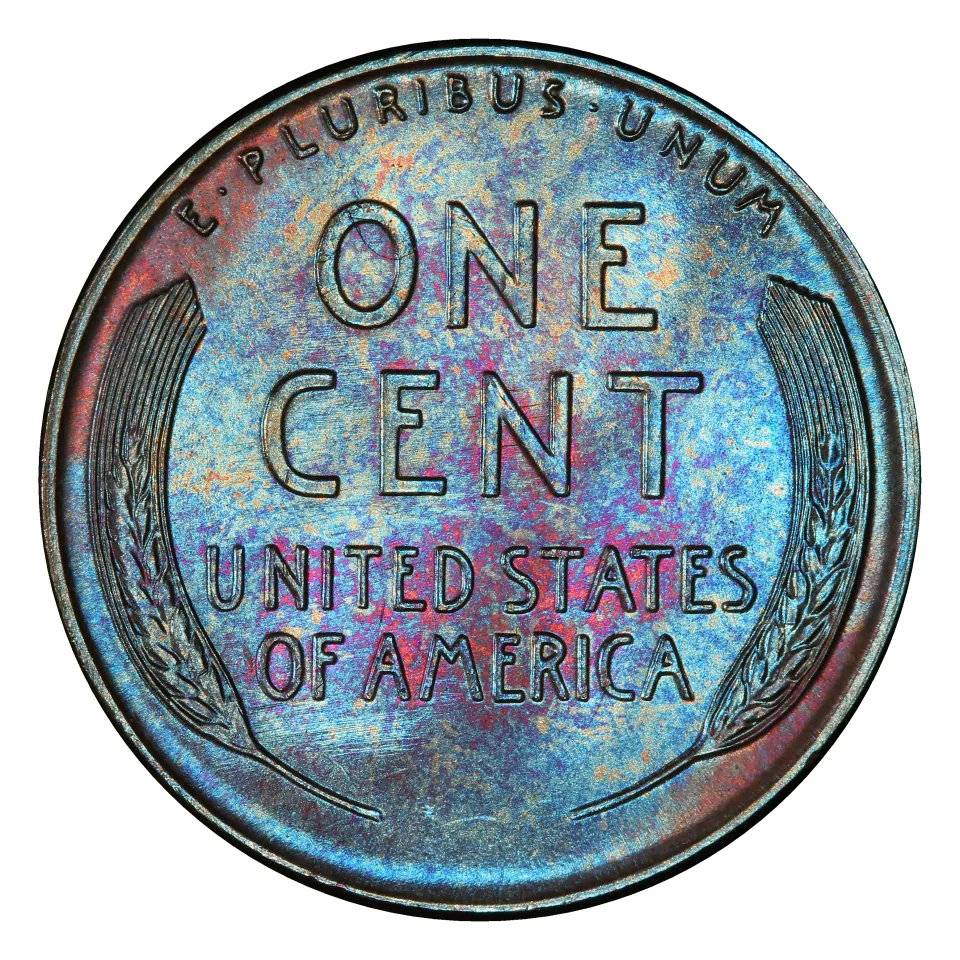
Basics & coin story
Victor David Brenner designed the Lincoln portrait and wheat reverse. The 1950 date falls within the wheat series that continued through 1958, before the Memorial building replaced the wheat ears in 1959. Philadelphia’s regular mintage was 272,635,000 according to PCGS.
The year also marks the return of U.S. Proof coin production after the wartime interruption. PCGS records 51,386 Philadelphia Proof cents for 1950. That separate collector issue explains why the date can appear in both ordinary circulated albums and higher-priced Proof listings. The lower Proof production total does not make every no-mark cent a Proof. See the wheat-cent overview for the design chronology.
| Feature | What to check |
|---|---|
| Type / denomination | Lincoln wheat cent / 1 cent |
| Designer | Victor David Brenner |
| Metal | 95% copper; 5% tin and zinc |
| Nominal weight / diameter | 3.11 g / 19 mm |
| Edge | Plain |
| Regular issues | Philadelphia: no mark; Denver: D; San Francisco: S |
| Proof issue | Philadelphia, no mark; separate collector manufacture |
| Mint-mark location | Obverse, below 1950 |
Identification
Confirm the wheat reverse and full mint mark
A normal U.S. 1950 cent shows Lincoln on the front and wheat ears around ONE CENT on the back. Other countries also issued pennies in 1950, so the year alone is not enough. Look below the date for D or S; no letter is normal for Philadelphia.
A no-mark coin is not automatically a Proof
Philadelphia regular strikes and Proofs both lack a mint mark. Proof describes a manufacturing method, commonly graded PR, rather than any particularly bright cent. The surfaces, prepared-die characteristics and original set context should agree. Polishing an ordinary coin does not create a Proof.
Keep copper color separate from wear
Brown (BN), Red and Brown (RB), and Red (RD) describe copper-color preservation. A Brown coin can be uncirculated, while a red-looking surface can be worn or artificially changed. The ordinary retail chart quoted here does not identify separate BN, RB and RD price columns; it should not be treated as a certified Red guide.
Condition & value
Amounts are in U.S. dollars or cents as labeled. USA Coin Book’s numismatic chart was last updated in February 2026 and checked October 22, 2026. It does not state separate certified copper-color columns. These are retail estimates, not guaranteed buying offers.
| Issue | Grade / condition | Value or reference | Basis | Important condition |
|---|---|---|---|---|
| 1950 Philadelphia ordinary cent | F12 | 6¢ | USA Coin Book chart; February 2026 numismatic update | Retail estimate, not an offer |
| 1950 Philadelphia ordinary cent | VF20 | 12¢ | Same retail chart | Correct mint and wear level |
| 1950 Philadelphia ordinary cent | EF40 | 24¢ | Same retail chart | Surface problems can reduce appeal |
| 1950 Philadelphia ordinary cent | MS60 / MS63 | $1.05 / $2.50 | Same retail chart | No separate certified copper-color designation stated |
| D / S / Proof / certified color grade | Exact issue, grade and designation | Use matching evidence | Separate comparisons | Do not apply the ordinary Philadelphia chart universally |
The quoted chart is useful for putting an ordinary cent in perspective: a modest individual retail estimate can be smaller than postage or selling fees. A bulk buying quote can differ from an individual catalog value, and a cleaned, corroded or damaged coin may not fit a problem-free comparison. The chart’s February 2026 update date should not be represented as a newly measured October market.
For an uncirculated coin, Mint State (MS) means no circulation wear. Inspect Lincoln’s cheek, jaw and hair for friction and the fields for spots, marks or hairlines. For a Proof, compare the exact Proof grade and any Cameo contrast designation. Use the grading guide and the penny-checking workflow before assigning a premium or considering certification.
Summary
Read the mint mark, confirm regular strike versus Proof, and compare the same wear level and copper-color category. A common circulated 1950 cent can have a small collector premium, but the date does not make it a rare Proof. Preserve the surface and keep retail-chart estimates separate from actual buying offers.
FAQ
Is a 1950 wheat penny with no mint mark rare?
No mint mark is normal for Philadelphia. Ordinary circulated examples are common; preservation, a separate Proof issue or an authenticated variety can change the comparison.
Did the Mint make 1950 Proof pennies?
Yes. Philadelphia produced a separate 1950 Proof cent issue, recorded by PCGS at 51,386. A no-mark circulation coin is not automatically a Proof.
Is every brown 1950 penny circulated?
No. Brown is a copper-color designation. Numerical grade determines wear and preservation; a Brown coin can be uncirculated.
Are the circulated prices a guaranteed selling price?
No. The cited USA Coin Book chart is a retail estimate with a February 2026 numismatic update. Buying spreads, condition, quantity, postage and fees can change the amount received.
References
References and further reading
- PCGS CoinFacts: exact issue, specifications and available guide evidence
- USA Coin Book: Philadelphia retail chart and February 2026 update date
- PCGS: separate 1950 Proof cent and mintage
- PCGS: 1950 resumption of Proof coinage
- U.S. Mint: wheat-to-Memorial design chronology
Sources and quoted guide evidence checked October 22, 2026. Guide estimates, historical sales, face value and metal-content calculations are identified separately.