

 App Store

COIN VALUE GUIDES · PENNIES
1948 Wheat Penny Value: No Mint Mark, D, S and Original Color
Compare 1948 Philadelphia, Denver and San Francisco wheat cents by condition and color, and distinguish attractive survivors from cleaned or stained coins.
 HeriBase Editorial TeamPublished
In this article
Quick answer
A normal circulated 1948 wheat penny is a common bronze cent with a modest collector premium. Check Philadelphia with no mint mark, Denver D or San Francisco S before comparing grades. NGC’s brown Philadelphia guide lists $0.05 in Good and Fine and $0.10 at Extremely Fine 40, updated November 7, 2022. Certified high-grade red coins are a different market.
Real coin photos
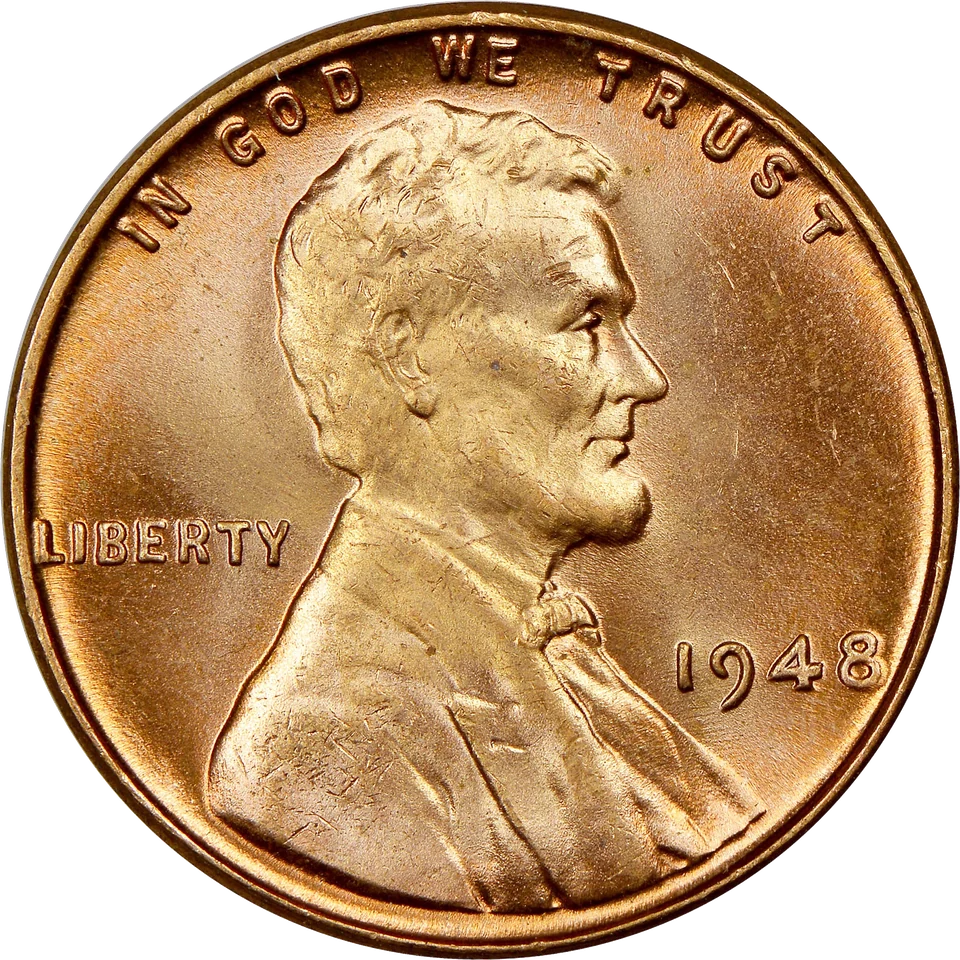
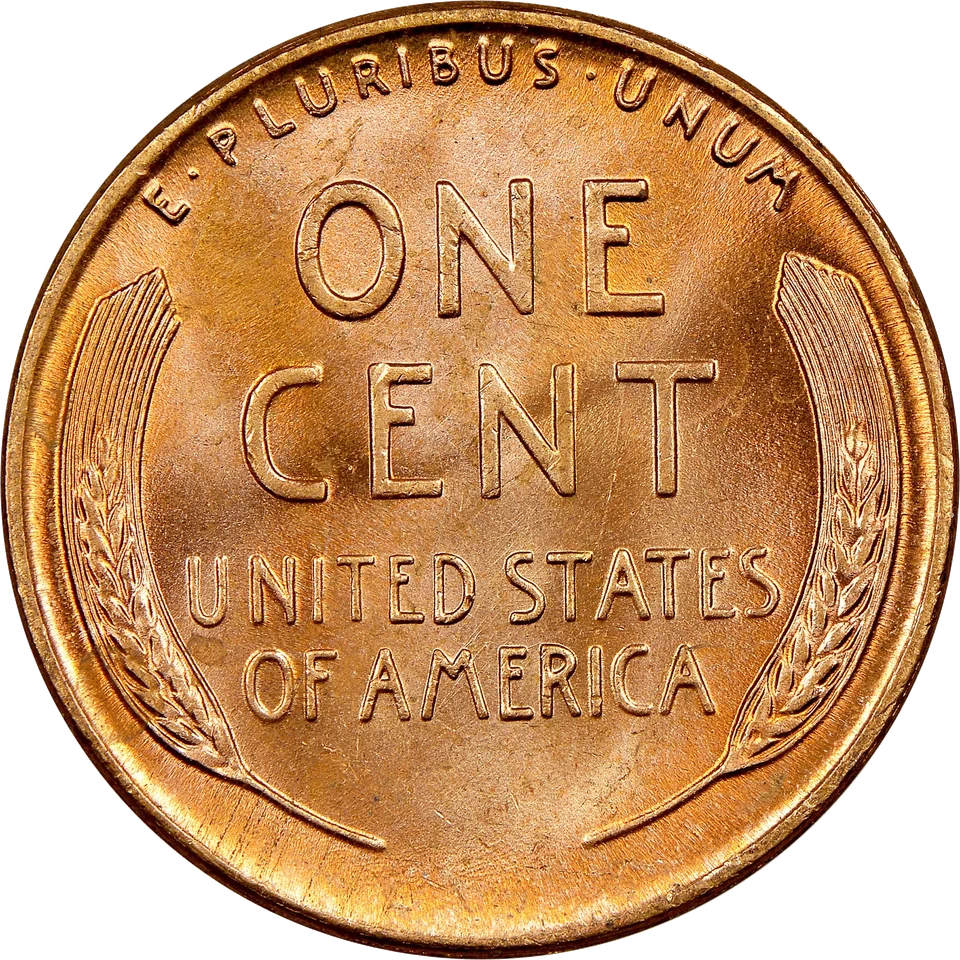
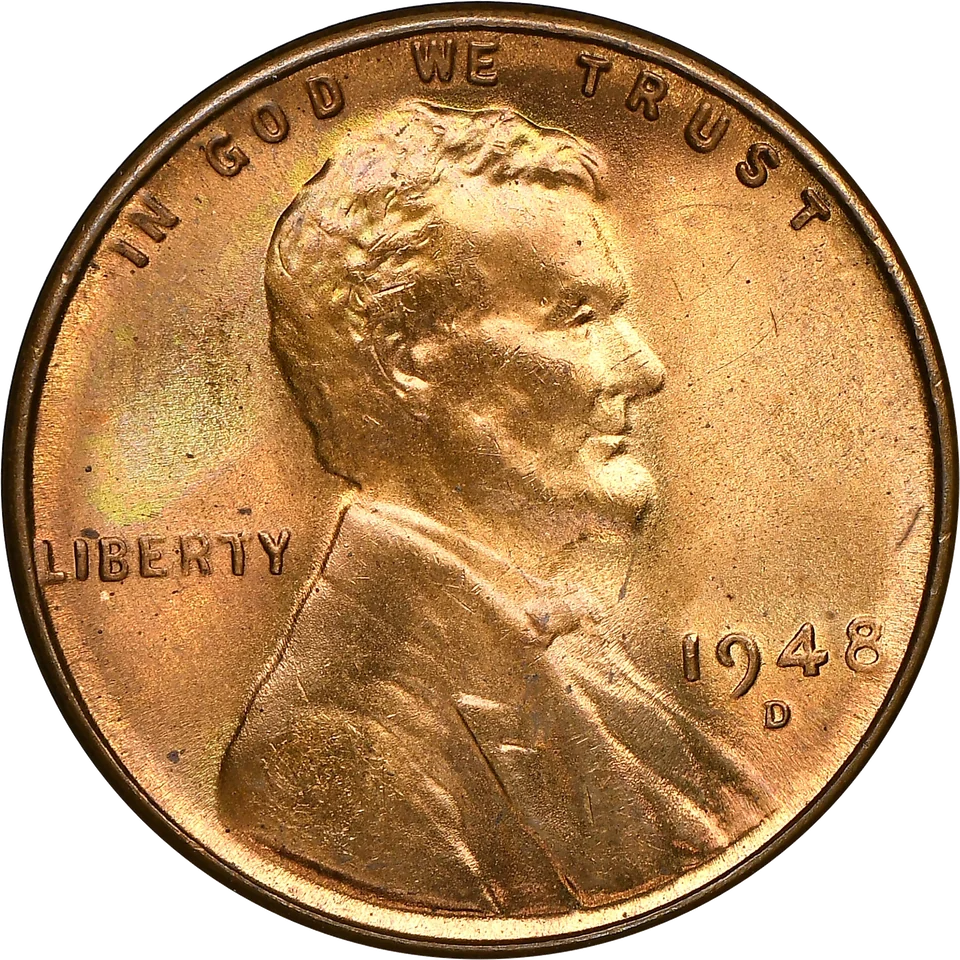
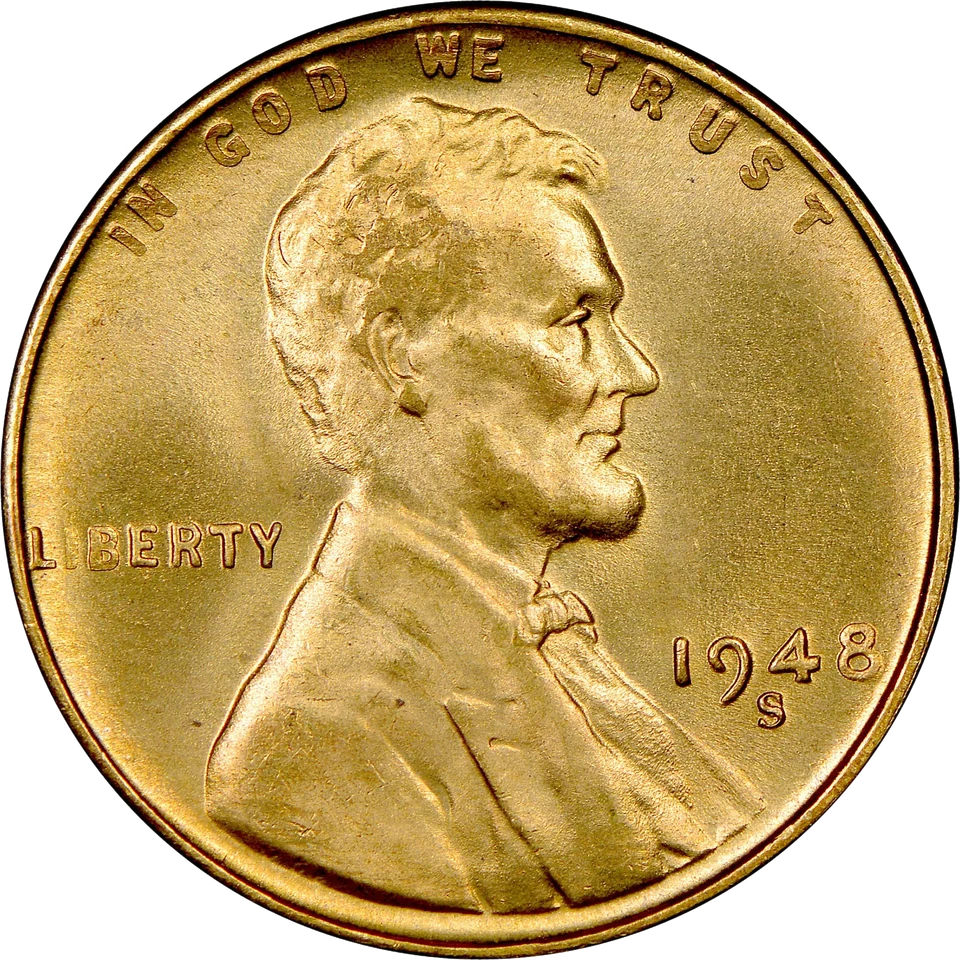
Basics & coin story
The 1948 cent continued the bronze wheat design after the wartime steel and shell-case years. Lincoln’s portrait and the wheat ears identify a different series from the later Memorial reverse, introduced in 1959. There is no regular steel composition for this year.
NGC notes that spotting and light staining affect the supply of top-quality Philadelphia survivors, even though average Mint State coins are common. This makes surface preservation an important distinction: a high original output does not guarantee many visually clean red gems.
| Feature | What to check |
|---|---|
| Issue | 1948 Lincoln wheat cent |
| Designers | Victor D. Brenner |
| Nominal weight / diameter | 3.11 g / 19 mm |
| Composition | Bronze; 95% copper with tin and zinc |
| Edge | Plain |
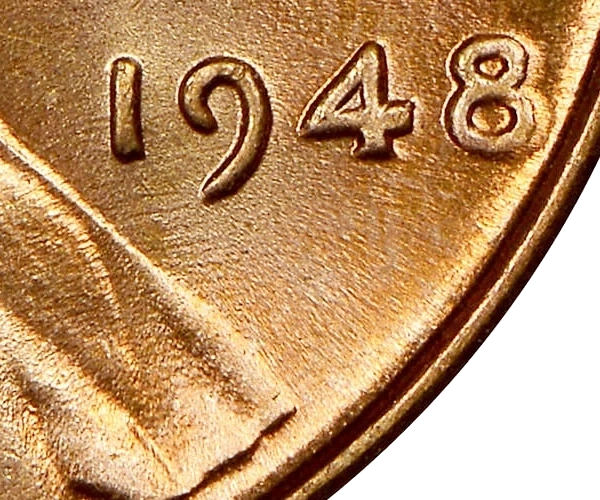
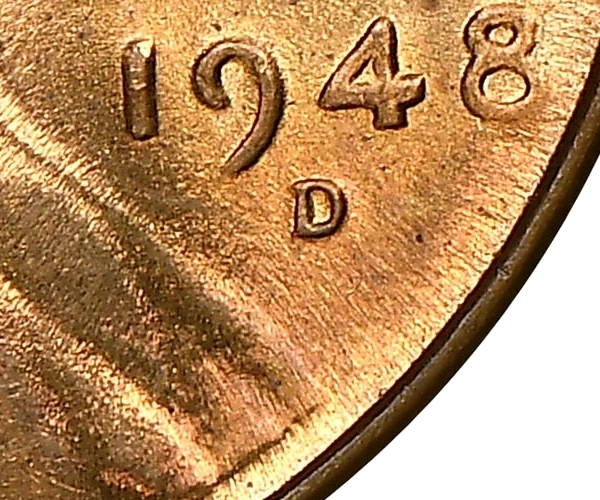
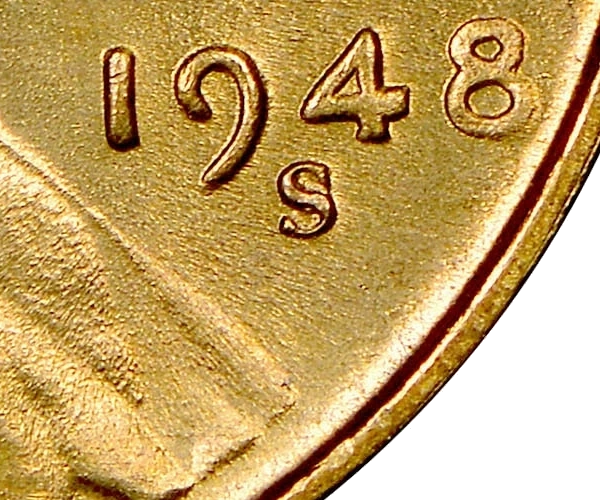
| Mint marks | None for Philadelphia; D or S below date where issued |
For related diagnostics, consult the series identification and variety guide.
Identification
Where are the P, D and S distinctions?
A Philadelphia coin has no mint letter. Denver uses D and San Francisco S below the date on the obverse. The reverse wheat ears do not carry the mint mark. Compare the letter with the surrounding surface before accepting an unusual mark.
How should the wheat design be read?
The reverse carries ONE CENT and UNITED STATES OF AMERICA between wheat ears, with E PLURIBUS UNUM above. Inspect the date and mint mark first, then the portrait high points and wheat detail. Weakness in one area need not have the same cause as general circulation wear.
Is an unusually bright coin a Proof or error?
No regular 1948 Proof cent issue is represented in this guide. Brightness can reflect original luster, cleaning or altered color. A silver-colored or unusually light coin needs a material and authenticity check; it is not automatically a rare leftover steel cent.
Condition & value
All amounts are U.S. dollars from the NGC retail guide accessed November 18, 2026. Row updates below use month/day/year and are often much older. These are reference estimates, not current bids, completed sales or a promise of resale proceeds. BN = Brown; RB = Red and Brown; RD = Red. MS = Mint State; EF40 = Extremely Fine 40.
| Issue | Condition / color | USD guide | Row updated |
|---|---|---|---|
| 1948 1C MS | Good BN | $0.05 | 11/07/2022 |
| 1948 1C MS | Fine BN | $0.05 | 11/07/2022 |
| 1948 1C MS | EF40 BN | $0.10 | 11/07/2022 |
| 1948 1C MS | MS63 BN | $1.50 | 11/07/2022 |
| 1948 1C MS | MS65 BN | $5 | 11/07/2022 |
| 1948 1C MS | MS63 RB | $3.50 | 11/13/2023 |
| 1948 1C MS | MS63 RD | $6.50 | 11/13/2023 |
| 1948 D 1C MS | Good BN | $0.05 | 11/07/2022 |
| 1948 D 1C MS | Fine BN | $0.05 | 11/07/2022 |
| 1948 D 1C MS | EF40 BN | $0.10 | 11/07/2022 |
| 1948 D 1C MS | MS63 BN | $1.50 | 11/07/2022 |
| 1948 D 1C MS | MS65 BN | $5 | 11/07/2022 |
| 1948 D 1C MS | MS63 RB | $3.50 | 11/13/2023 |
| 1948 D 1C MS | MS63 RD | $6.50 | 11/13/2023 |
| 1948 S 1C MS | Good BN | $0.05 | 11/07/2022 |
| 1948 S 1C MS | Fine BN | $0.05 | 11/07/2022 |
| 1948 S 1C MS | EF40 BN | $0.10 | 11/07/2022 |
| 1948 S 1C MS | MS63 BN | $1.50 | 11/07/2022 |
| 1948 S 1C MS | MS65 BN | $5 | 11/07/2022 |
| 1948 S 1C MS | MS63 RB | $3.50 | 11/13/2023 |
| 1948 S 1C MS | MS63 RD | $6.50 | 11/13/2023 |
No separate Proof price is supplied for this issue. Do not substitute a shiny ordinary coin for an authenticated collector strike.
Why do red high-grade coins bring different prices?
Copper surfaces change over time. Original color, spots and contact marks affect whether a coin fits a certified RD comparison. A common worn cent cannot be valued from an auction result for a top-grade red coin.
How do the three mints compare?
Use the separate mint rows below rather than transferring a San Francisco figure to Philadelphia or Denver. Match numerical grade and color as well as the letter. The source update dates differ and should remain attached to the amounts.
Should a stained coin be cleaned?
Cleaning does not restore original mint color and can leave hairlines or chemical changes. Preserve the coin as found, photograph both faces and describe stains honestly. For a potentially exceptional coin, ask a specialist before any treatment.
Use the completed-sale comparison checklist before selling. HeriBase photo identification can help organize initial issue research; a result is not physical authentication, a certified grade or a buying offer. See the expert appraisal guide when an uncertain detail materially changes the decision.
Summary
Identify the 1948 mint mark, judge wear and original copper surfaces, and keep ordinary circulated cents separate from certified red gems and unsupported metal-error claims.
FAQ
How much is a 1948 penny worth?
A normal circulated 1948 wheat penny is a common bronze cent with a modest collector premium. Check Philadelphia with no mint mark, Denver D or San Francisco S before comparing grades. NGC’s brown Philadelphia guide lists $0.05 in Good and Fine and $0.10 at Extremely Fine 40, updated November 7, 2022. Certified high-grade red coins are a different market.
Does no mint mark make this coin rare?
No. A blank mint-mark position is normal for the Philadelphia issues discussed here.
Were regular 1948 wheat pennies made of steel?
No. The ordinary 1948 issues are bronze. A silver-colored coin needs investigation for plating, alteration or another cause; color alone does not establish a rare off-metal strike.
Can I use a high auction record to value my coin?
Only a genuinely comparable coin is useful. Match issue, grade, color, manufacture, attribution and problem status; distinguish completed sales from asking prices.
Should I clean the coin before taking photos?
No. Use diffuse light and clear photographs without altering the surfaces. Cleaning can remove evidence and reduce collector interest.
When is expert review useful?
Seek a specialist when authenticity, a claimed rare variety, unusual composition or exceptional condition materially changes the value. A photo-based app result is an initial lead, not a certified grade.
References
References and further reading
- NGC 1948 1C MS specifications, issue discussion and dated value rows
- NGC 1948 D 1C MS specifications, issue discussion and dated value rows
- NGC 1948 S 1C MS specifications, issue discussion and dated value rows
Accessed November 18, 2026. Source-row updates are distinct from the access date. Reference photographs do not establish a reader’s grade or attribution.