

 App Store

COIN VALUE GUIDES · PENNIES
1947 Wheat Penny Value:No Mint Mark, D and S
Identify a 1947 Lincoln wheat cent by mint and condition. Learn why original copper color matters and how to assess a possible error.
 HeriBase Editorial TeamPublished
In this article
Quick answer
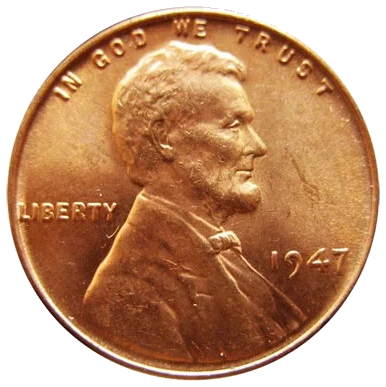
A 1947 wheat penny is a common collectible date. Ordinary worn examples generally belong in the low-cost wheat-cent market. Philadelphia has no letter below the date, while Denver and San Francisco have D and S.
Collector prices increase for original Mint State luster and for better copper color. The PCGS Red guide lists $16 for Philadelphia and $15 for both Denver and San Francisco in Mint State 65 Red (MS65 RD). Compare Brown, Red-Brown and Red separately. A suspected error needs an individual attribution.
Coin photos
Basics & coin story
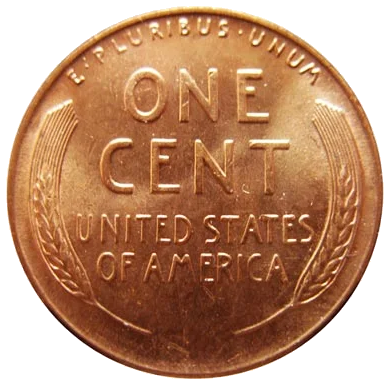
Victor David Brenner’s Lincoln cent kept its wheat-ear reverse through 1958. The 1947 issue followed the wartime departure from the ordinary bronze cent. Its nominal weight is 3.11 g, so the appearance and weight differ from the zinc-coated steel issue of 1943.
The wheat reverse makes the date part of a popular album series. A worn piece can be a practical album filler, while a certified red example is traded with other similarly preserved 1947 coins. See the 1951 wheat penny guide for a nearby date.
| Feature | What to check |
|---|---|
| Normal metal / weight | Bronze, 95% copper / 3.11 g |
| Mint marks | Blank, D or S directly under the date |
| Reverse | Two wheat heads around ONE CENT |
| Color terms | BN Brown, RB Red-Brown, RD Red |
Identification
Inspect the field under the date
The mint letter was part of the die. Look for a raised shape and compare its position against a reference. A mark cut into the metal, adhered dirt or corrosion may mimic part of a letter.
Read copper color with luster
Original color changes through exposure and handling. Look for luster rotating across the fields, detail in the wheat lines and cheek, and any dull patches on the high points. A bright orange surface with parallel hairlines merits a cleaning check.
Document suspected doubled or clipped features
Photograph both faces, the entire edge and a close view. A rounded, separated design or a clip with supporting strike effects is better evidence than a flat shelf or a sharp cut. Match the specific variety or error before comparing sales.
Condition & value
Amounts are in U.S. dollars. Retail guide values are estimates for the stated grade, mint and designation. A dated sale is a record of one coin. Neither is a guaranteed purchase offer.
| Issue | Grade / condition | Value or reference | Basis | Important condition |
|---|---|---|---|---|
| 1947 Philadelphia, D or S | Ordinary circulated | Common wheat-cent pricing | Compare sales or mixed-roll bids | Heavily worn and problem coins trade separately |
| 1947 Philadelphia / D / S | MS65 RD | $16 / $15 / $15 | PCGS retail guide, Nov 2026 | Same original color and numeric grade |
| Suspected error | Authenticated | Compare the same error | Sold comparables | Confirm the mint and diagnostic first |
Summary
Check below the date, then evaluate the wheat lines, cheek, luster and color. Shop by grade and original surface quality before paying a larger premium.
Frequently asked questions
Is a 1947 wheat penny with no mint mark rare?
No. Philadelphia used a blank field below the date.
Does a 1947-D wheat penny have the same value as a 1947-S?
Compare each mint separately at the same grade and copper color. Price differences are most meaningful on well-preserved examples.
Is a 1947 wheat penny steel?
A standard 1947 cent is bronze at a nominal 3.11 g.
What does RD mean?
Red is a grading designation for copper coins retaining predominantly original red color.
Should I clean a 1947 penny to improve its value?
Leave the surfaces as found. Cleaning can remove original color and luster and reduce collector interest.