

 App Store

COIN VALUE GUIDES · DIMES
1946 Roosevelt Dime Value:First-Year Silver, P, D and S
Calculate the silver benchmark for a 1946 dime, locate the first-year Roosevelt mint mark and compare regular strikes and Full Bands.
 HeriBase Editorial TeamPublished
In this article
Quick answer
A standard 1946 Roosevelt dime contains about 0.07234 troy ounce of silver when unworn. Multiply by the silver spot price for a starting benchmark. Philadelphia has no mint mark. On Denver and San Francisco coins, D or S is on the reverse near the base of the torch.
Most worn coins are valued primarily for their silver. Original Mint State strikes and certified Full Bands examples can bring collector premiums. There was no regular 1946 Roosevelt Proof issue.
Coin photos
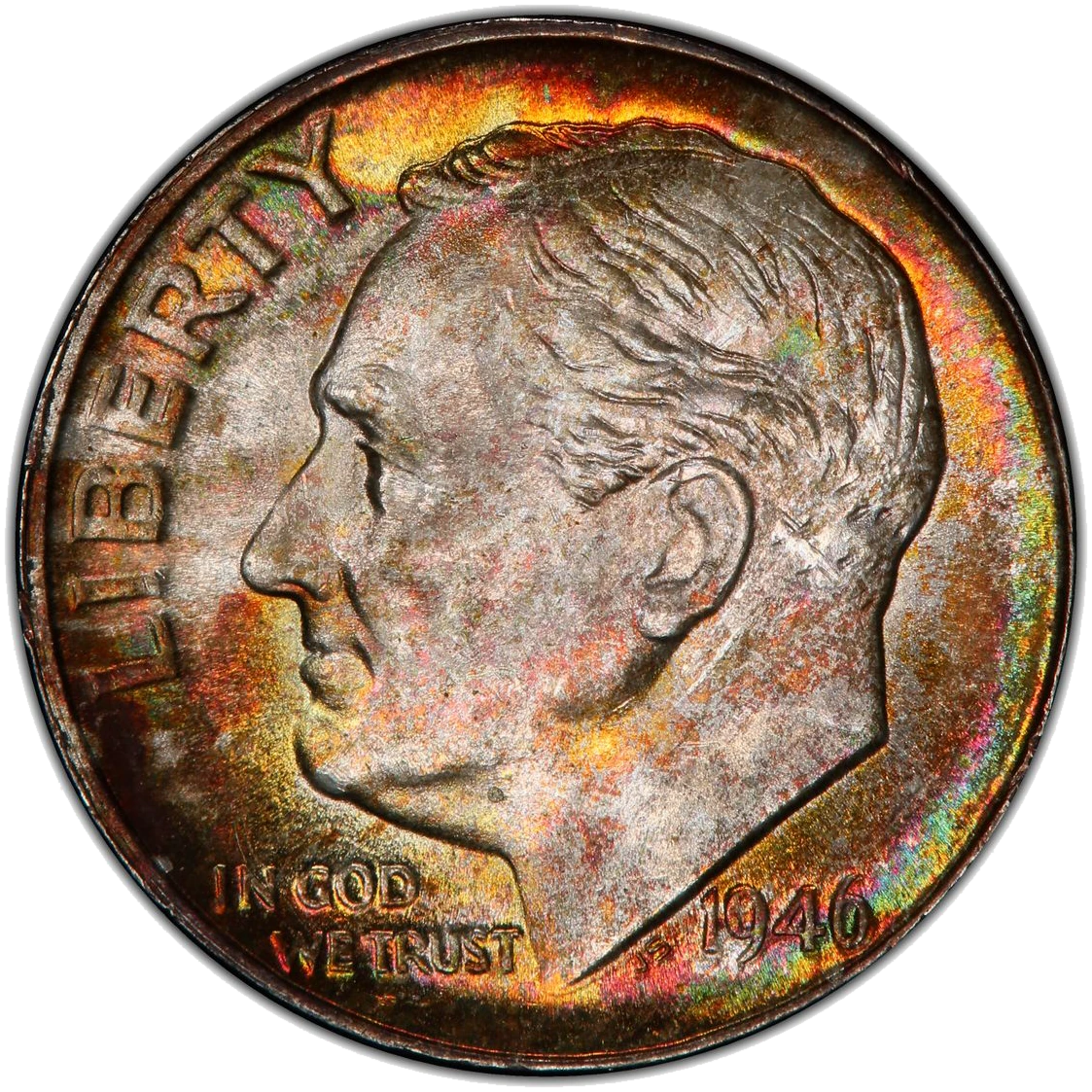
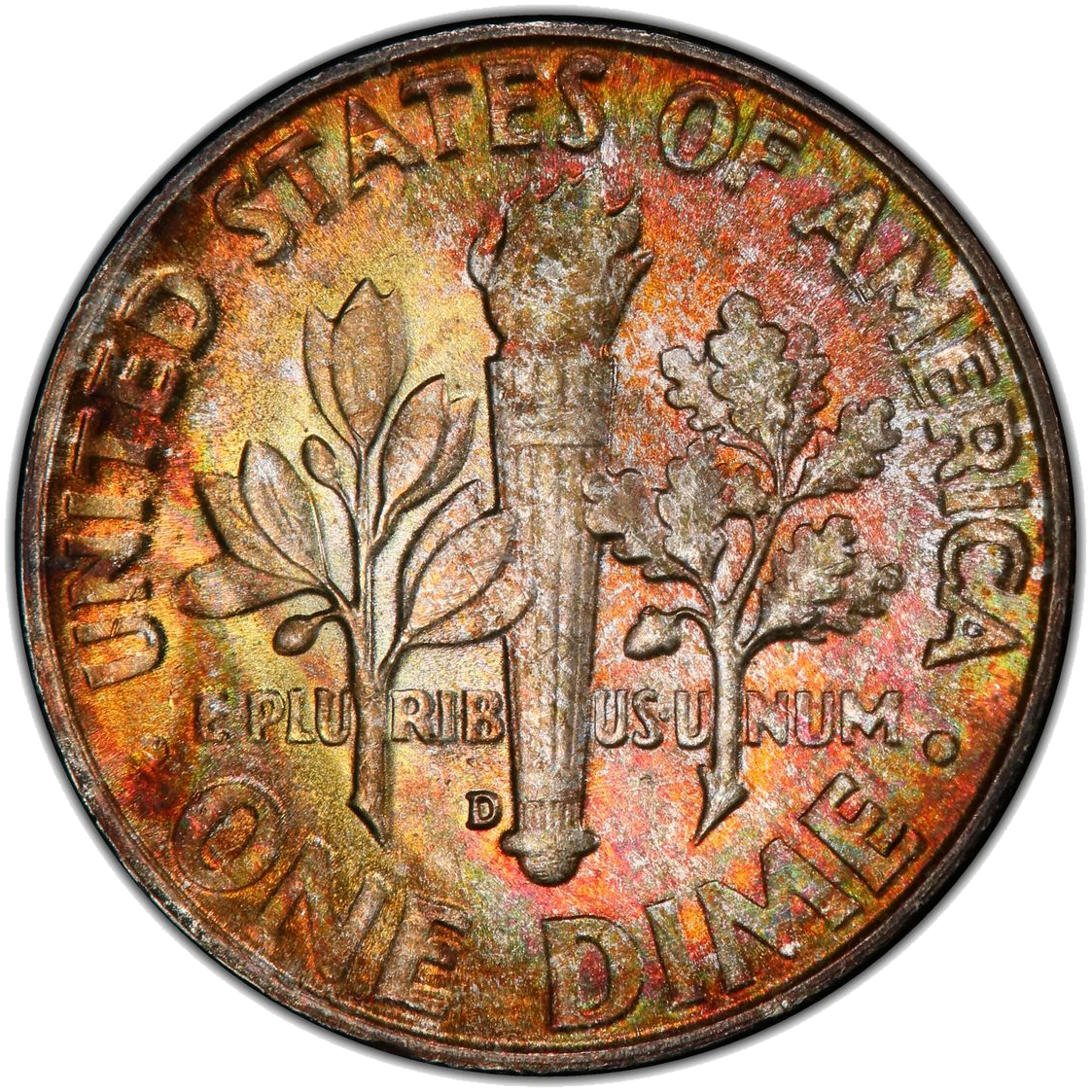
Basics & coin story
The U.S. Mint released the Roosevelt dime on January 30, 1946, his birthday. Roosevelt’s link to the March of Dimes helped make the denomination a natural choice for the memorial. John R. Sinnock’s reverse joins a torch with an olive branch and an oak branch.
The first-year Roosevelt dime retained the 90% silver composition of the Mercury dime. PCGS lists 255,250,000 Philadelphia strikes, 61,043,500 Denver and 27,900,000 San Francisco. The high-output Philadelphia issue illustrates why a first-year date can still be common in worn grades.
| Feature | What to check |
|---|---|
| Metal and nominal mass | 90% silver; 2.50 g |
| Nominal fine silver | 0.07234 troy ounce |
| Mint letters | Reverse D or S at the base of the torch; Philadelphia blank |
| Collector designation | Full Bands is assessed on the torch |
Identification
Check the bottom left of the torch
Hold the reverse upright. The early Roosevelt mint letter sits near the base of the torch on the lower left. On modern Roosevelt dimes the letter is on the portrait side by the date, so use the location appropriate to 1946.
Distinguish Full Bands from ordinary torch detail
On a Roosevelt dime, check separation within both pairs of bands at the top and bottom of the torch. Strong bands deserve a closer look on a coin with original luster. A dent or wear that crosses the separation can affect the designation. Do not apply the Mercury dime’s middle-band test to this reverse.
Start with silver, then compare the same mint and grade
Use the silver coin melt value calculator for the metal component. For a higher-grade coin, compare the exact 1946 mint and numeric grade, with a separate Full Bands comparison where relevant. The 1939 Mercury dime guide illustrates the earlier design.
Condition & value
Amounts are in U.S. dollars. Retail guide values are estimates for the stated grade, mint and designation. A dated sale is a record of one coin. Neither is a guaranteed purchase offer.
| Issue | Grade / condition | Value or reference | Basis | Important condition |
|---|---|---|---|---|
| 1946, 1946-D or S | Ordinary worn | 0.07234 × silver spot per troy ounce | Nominal metal benchmark | Actual weight and dealer spread can change a quote |
| 1946 P, D or S | Mint State | Compare regular strikes of the same grade | PCGS grade guide or recorded sales | Separate original luster from cleaning |
| 1946, D or S | Certified Full Bands | Compare same grade with Full Bands | Designation-specific market | Verify both pairs of bands |
Summary
Turn the dime over to assign its mint and calculate the silver benchmark. Use original luster, the exact mint and the documented band designation for any collector premium.
Frequently asked questions
Is a 1946 dime silver?
Yes. A standard 1946 Roosevelt dime is 90% silver.
Where is the 1946-D mint mark?
Look near the lower-left base of the torch on the reverse.
What does no mint mark mean?
The regular Philadelphia 1946 dime has a blank mint-mark field.
Did the Mint make 1946 Roosevelt Proof dimes?
No regular 1946 Proof issue was made. The Roosevelt dime Proof series began in 1950.
What are Full Bands on a Roosevelt dime?
The designation refers to qualifying separation of both pairs of horizontal bands on the reverse torch.