

 App Store

COIN VALUE GUIDES · DIMES
1939 Mercury Dime Value:Mint Marks, Silver and Full Bands
Identify a 1939 Winged Liberty dime, calculate its silver benchmark and compare regular Philadelphia, Denver and San Francisco coins, Full Bands and Proofs.
 HeriBase Editorial TeamPublished
In this article
Quick answer
A normal 1939 Mercury dime contains about 0.07234 troy ounce of silver at its original weight. Multiply by the silver spot price for a metal benchmark. A problem-free coin with sharp detail may bring more, especially in Mint State or with certified Full Bands.
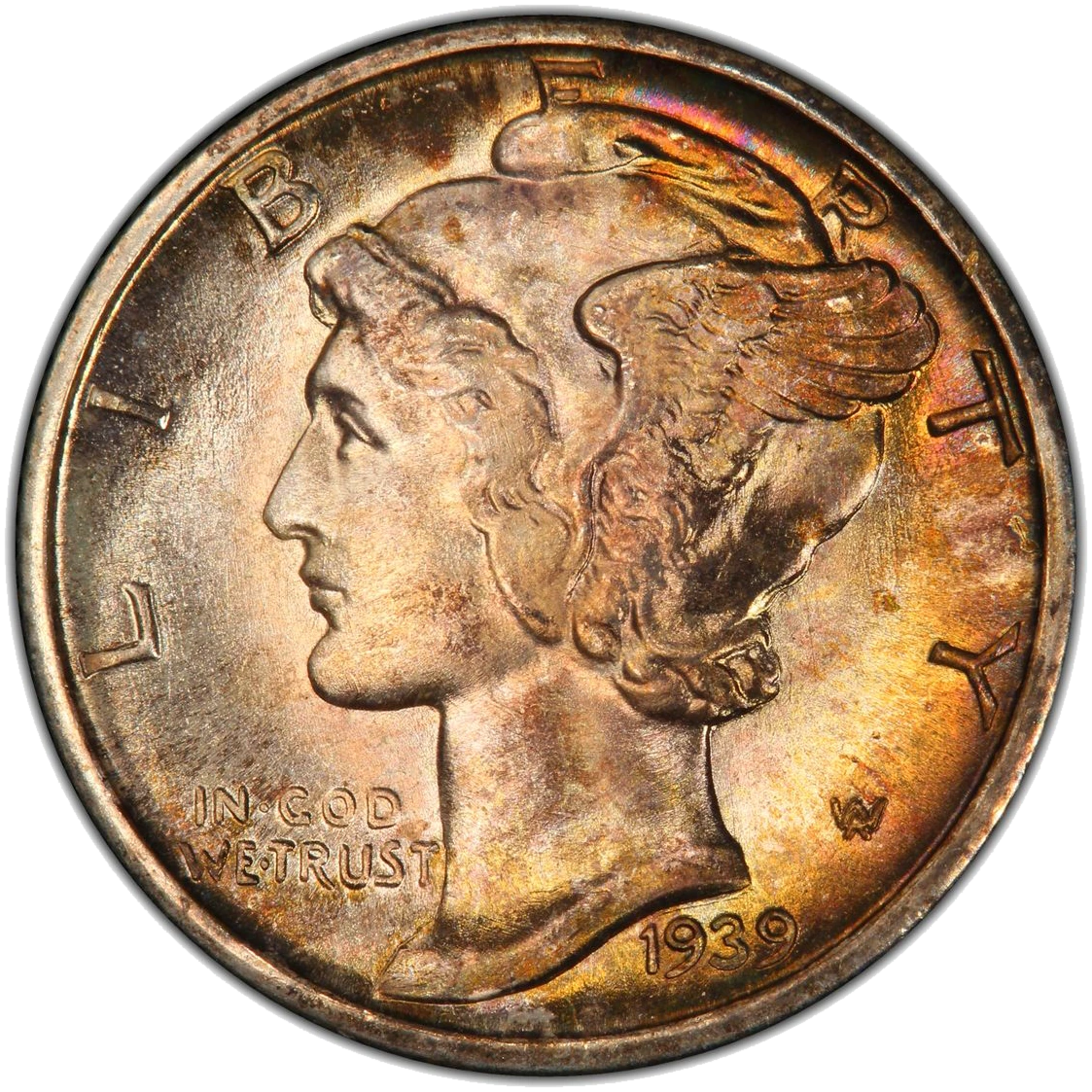
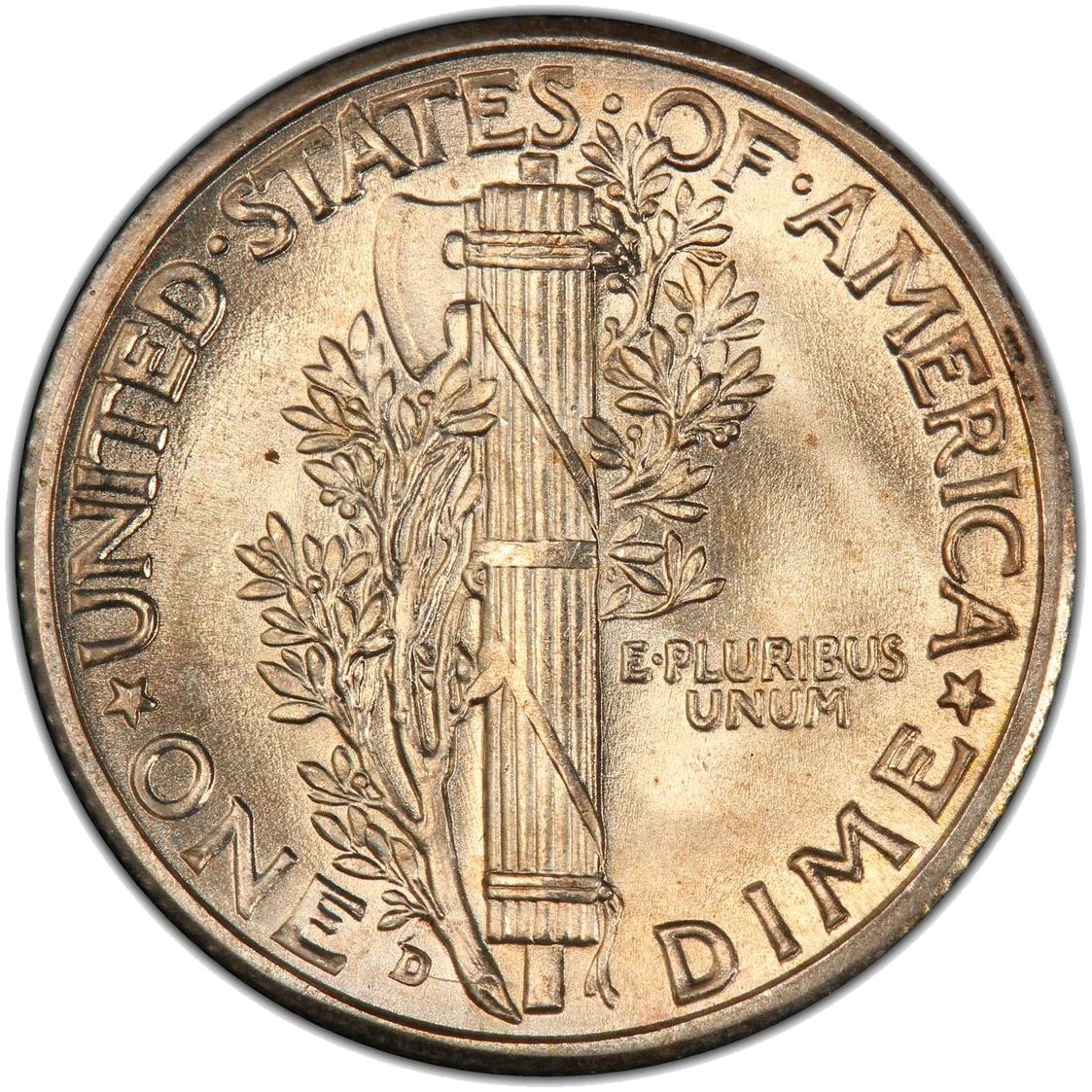
Look near the base of the fasces on the reverse for D or S. Philadelphia coins are unmarked. The small monogram that can look like W on the portrait side belongs to Adolph A. Weinman. It appears on all three mints.
Coin photos
Basics & coin story
The official subject is Winged Liberty. The cap prompted the Mercury nickname, and the reverse combines a bundle of rods with an olive branch. The same portrait-side monogram appears on coins of several different mints, so it has no role in assigning a 1939 mint.
Philadelphia also made Proofs for collectors. These have a separate finish and price comparison even though the regular Philadelphia dime and Proof both lack a mint mark. The 1945 Mercury dime guide shows why Full Bands premiums vary substantially by date and mint.
| Feature | What to check |
|---|---|
| Mass and fineness | 2.50 g nominal; 90% silver |
| Nominal silver content | 0.07234 troy ounce |
| Mint letters | D or S on reverse; blank for Philadelphia |
| Full Bands | A grading designation based on separation and condition of the bands |
Identification
Identify the letter from the reverse
Find the mint letter to the left of the base of the fasces, near the lower-left rim. Use a complete reverse photo to orient the mark. Check whether the visible feature is raised lettering or a stain in the field.
Inspect the middle bands under low light
The middle horizontal bands around the fasces should show continuous separation for PCGS Full Bands. A bridge from weak striking or a hit across the separation can matter. Blurred images and strong reflections can simulate a line, so compare certified examples at the same magnification.
Separate bullion and collector comparisons
Use the silver coin melt value calculator for the silver component. Next compare the same mint and grade with and without a bands designation. Treat a Proof, cleaned example or impaired surface as a separate comparison.
Condition & value
Amounts are in U.S. dollars. Retail guide values are estimates for the stated grade, mint and designation. A dated sale is a record of one coin. Neither is a guaranteed purchase offer.
| Issue | Grade / condition | Value or reference | Basis | Important condition |
|---|---|---|---|---|
| Any regular 1939 mint | Worn | 0.07234 × silver spot per troy ounce | Nominal metal benchmark | Wear and transaction costs affect the amount offered |
| 1939, D or S | Uncirculated | Same-mint regular-grade sales | PCGS grade guide | Use the correct grade and Full Bands status |
| 1939 Philadelphia Proof | Certified Proof | Compare the same PR grade | Proof market | Blank reverse field is expected |
Summary
Read the reverse mint mark and calculate the silver benchmark. If the dime has original luster and clean center bands, compare an attributed example before assigning a collector premium.
Frequently asked questions
Is the W on a 1939 Mercury dime a West Point mint mark?
No. The visible letters are Weinman’s AW initials. The mint letter, if present, is on the reverse.
How much silver is in a 1939 Mercury dime?
An unworn standard coin contains about 0.07234 troy ounce of silver.
Did Philadelphia make a 1939 Proof?
Yes. It has no mint mark and should be compared separately from the regular Philadelphia strike.
What do Full Bands refer to?
The term describes qualifying separation of the bands on the reverse fasces. Use the grading service’s criteria.
Are all 1939-S dimes rare?
No. The San Francisco mint mark identifies the issue. Grade, strike and a qualifying bands designation determine the relevant premium.