

 App Store

COIN VALUE GUIDES · QUARTERS
1941 Quarter Value:Silver, No Mint Mark, D, S and Proofs
Identify a 1941 Washington silver quarter, compare Philadelphia values by grade, find the reverse mint mark, and separate Proof and doubled-die comparisons.
 HeriBase TeamPublished
In this article
Quick answer
A normal 1941 Washington quarter contains 90% silver and is worth evaluating beyond its 25-cent denomination. It has a nominal weight of 6.25 grams and approximately 0.1808 troy ounce of fine silver. Philadelphia coins have no mint mark; D and S identify Denver and San Francisco.
The PCGS retail guide checked October 22, 2026 lists Philadelphia regular strikes at $17 in Very Fine 20, $24 in Mint State 63 and $45 in Mint State 65. These are grade-specific estimates for problem-free coins, not guaranteed buying offers. Other mints, the separate Philadelphia Proof and attributed die varieties require matching entries.
Coin photos
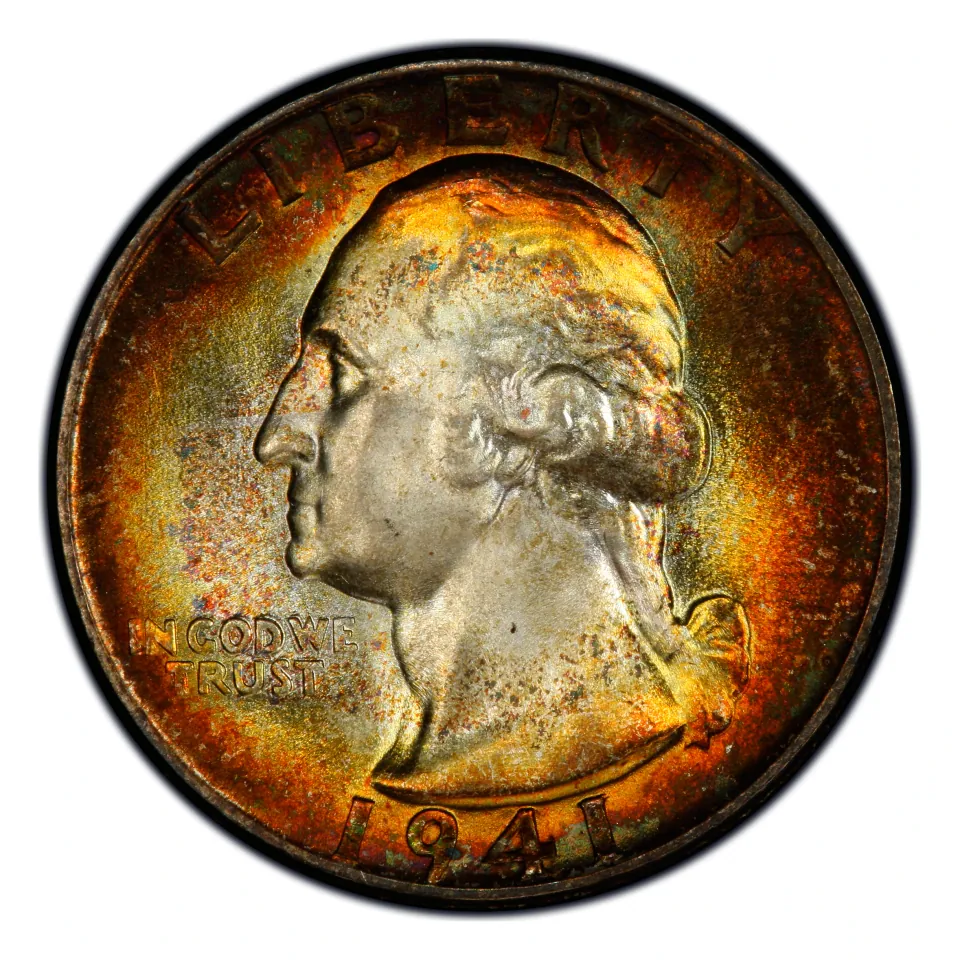
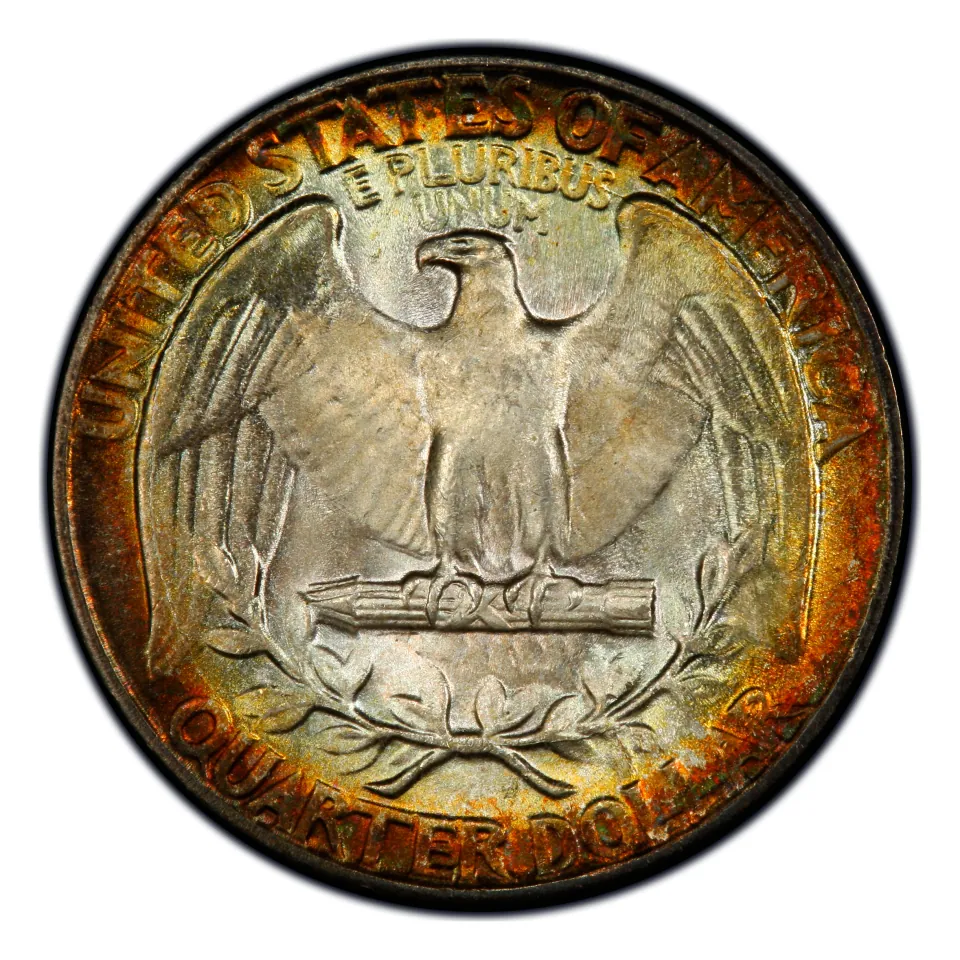
Basics & coin story
John Flanagan’s Washington design first appeared in 1932 for the 200th anniversary of Washington’s birth. The 1941 issue retains the portrait and eagle reverse of the silver Washington series, rather than the changing designs of later state and national-park quarters.
Philadelphia produced 79,032,000 regular quarters in 1941 according to PCGS. That was a substantial output for the earlier Washington years, so age alone should not be confused with scarcity. The 90% silver composition remained standard for circulating Washington quarters through 1964; the normal composition changed to copper-nickel clad in 1965. Compare that transition with the 1964 silver-quarter guide.
| Feature | What to check |
|---|---|
| Type / denomination | Washington quarter, eagle reverse / 25 cents |
| Designer | John Flanagan |
| Metal | 90% silver, 10% copper |
| Nominal weight / diameter | 6.25 g / approximately 24.3 mm |
| Fine silver | Approximately 0.1808 troy ounce |
| Edge | Reeded |
| Regular issues | No mark, D and S |
| Mint-mark location | Reverse, below the wreath and above the denomination |
Identification
Turn to the reverse for D or S
The small mint mark belongs below the eagle and wreath, above QUARTER DOLLAR. No letter is normal for Philadelphia. Do not inspect the later Washington obverse mint-mark position and conclude that a 1941 coin is missing a letter. Record the date and reverse mark together before comparing prices.
Philadelphia made regular strikes and Proofs
A no-mark coin is not automatically a Proof. The collector Proof is a separate manufacturing issue, commonly graded PR, while uncirculated regular strikes use Mint State, or MS. Reflective fields alone are insufficient because polishing can imitate brightness while damaging a surface. Original set context and an expert’s examination help resolve a loose coin’s identity.
Check alleged doubling against the exact attribution
PCGS catalogs specific 1941 doubled-die entries, including obverse FS-101 and reverse FS-801. A thick letter, doubled reflection or flattened shelf does not establish one of them. Match the mint, side and required diagnostics rather than attaching a variety premium to any unusual lettering.
Condition & value
Amounts are in U.S. dollars. PCGS retail-guide examples were checked October 22, 2026 and apply only to the stated issue, grade and designation. They are not guaranteed purchase offers; current market conditions and selling costs can change the amount received.
| Issue | Grade / condition | Value or reference | Basis | Important condition |
|---|---|---|---|---|
| 1941 Philadelphia regular | VF20 | $17 | PCGS retail guide | Problem-free circulated example |
| 1941 Philadelphia regular | MS63 | $24 | PCGS retail guide | Uncirculated, ordinary strike |
| 1941 Philadelphia regular | MS65 | $45 | PCGS retail guide | Correct grade and surfaces required |
| Contained silver | Approximately 0.1808 troy oz | 0.1808 × silver spot per oz | Metal-content calculation | Not a fixed retail price or dealer offer |
| D / S / Proof / attributed variety | Exact issue and grade | Use matching evidence | Separate entries | Do not transfer Philadelphia regular prices |
For an ordinary worn example, contained silver is a useful reference. Multiply approximately 0.1808 by the silver price per troy ounce at the time of evaluation. That calculation does not account for collector demand, buying spreads or selling costs. A retail guide can also differ from a current metal quote.
Inspect Washington’s hair and cheek and the eagle’s breast for friction, then look for contact marks and hairlines in the fields. Wear, weak strike and cleaning are different issues; none should be judged solely by whether the coin looks shiny. Use the grading-scale guide and the cleaning-identification guide before assigning an uncirculated grade to a loose find.
Summary
Confirm the 1941 date, inspect the reverse mint mark and use the 90% silver specification. Match mint, grade and manufacturing method before selecting a price. No mint mark is normal, and an unusual-looking letter needs exact variety evidence; keep the surface uncleaned while investigating.
FAQ
Is a 1941 quarter silver?
Yes. A standard 1941 Washington quarter contains 90% silver, approximately 0.1808 troy ounce at its nominal 6.25-gram weight.
Where is the mint mark on a 1941 quarter?
It is on the reverse below the wreath and above QUARTER DOLLAR. D identifies Denver, S San Francisco, and no mark is normal for Philadelphia.
Is a 1941 quarter with no mint mark a Proof?
Not necessarily. Philadelphia made regular strikes and a separate Proof issue without a mint mark. The finish and manufacturing category must be identified independently.
Does doubled-looking lettering prove a rare 1941 quarter?
No. A recognized doubled die requires matching diagnostics for the correct mint and side. Reflections, damage and mechanical effects are insufficient.
References
References and further reading
- PCGS CoinFacts: exact issue, specifications and available guide evidence
- U.S. Mint: Washington quarter origin and composition change
- NGC: 1941 quarter nominal weight and silver specifications
Sources and quoted guide evidence checked October 22, 2026. Guide estimates, historical sales, face value and metal-content calculations are identified separately.