

 App Store

COIN VALUE GUIDES · PENNIES
1902 Indian Head Penny Value:Philadelphia, Brown Copper and Separate Proofs
Identify a Philadelphia bronze Indian Head cent, read the headband wear and keep a collector Proof out of ordinary value comparisons.
 HeriBase TeamPublished
In this article
Quick answer
1902 Indian Head Penny does not have one universal price. For the Philadelphia ordinary issue, NGC’s Brown copper guide lists $4 in Fine and $160 in Mint State 65. That source row was updated 03/22/2021; the guide was accessed November 16, 2026. These are dated retail references, not a fresh dealer buying offer.
Every regular 1902 cent was struck at Philadelphia and normally has no mint letter. San Francisco Indian Head cents came later in the series. A purported 1902-S or 1902-D requires authentication rather than a premium inferred from an unexpected letter. Prices for altered, corroded or cleaned coins should not be inferred from problem-free certified guide entries.
Coin photos
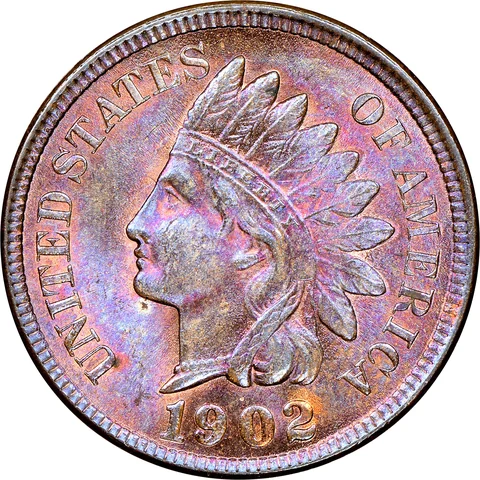
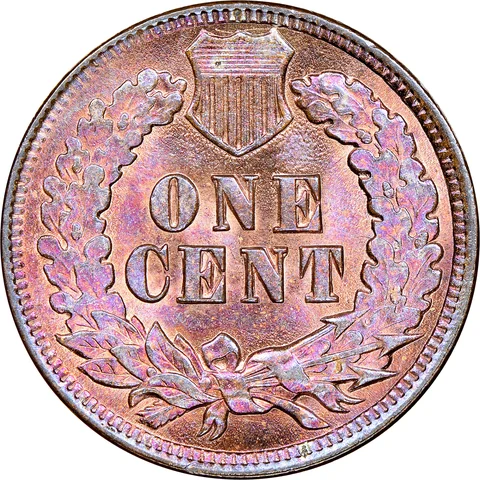
Basics & coin story
James B. Longacre’s design portrays Liberty wearing a feathered headdress. The common name Indian Head describes the design convention; it is not a named historical Native American portrait. The oak wreath and shield reverse distinguish this later bronze type from the earliest designs. NGC records ordinary-strike mintages of Philadelphia: 87,374,704.
Every regular 1902 cent was struck at Philadelphia and normally has no mint letter. San Francisco Indian Head cents came later in the series. A purported 1902-S or 1902-D requires authentication rather than a premium inferred from an unexpected letter. Follow the design and related dates in the Indian Head penny series guide.
| Feature | What to check |
|---|---|
| Type / denomination | 1902 Indian Head cent / one cent |
| Designer | James B. Longacre |
| Standard alloy | 95% copper; 5% tin and zinc (bronze) |
| Nominal weight / diameter | 3.11 g / 19 mm |
| Edge | Plain |
| Mint-mark position | None on the 1902 Philadelphia issue |
Identification
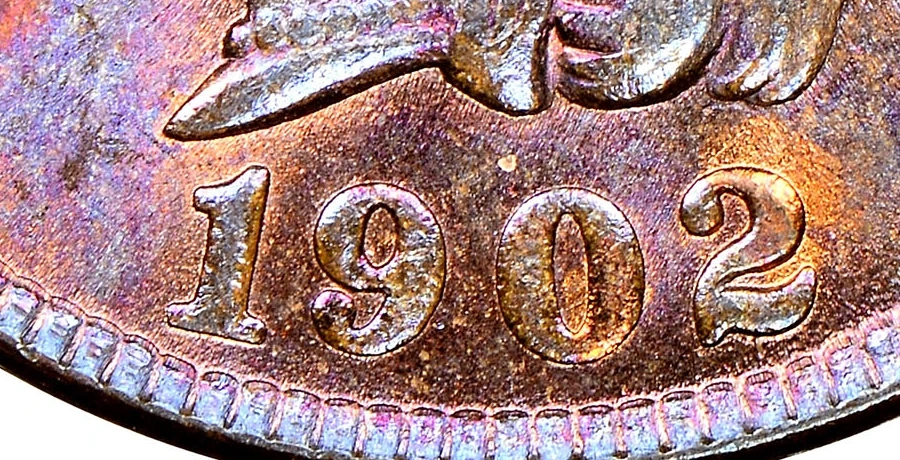
Date and mint identification
Read the date under Liberty; this year’s regular cent is from Philadelphia and has no mint letter.
The date-specific trap
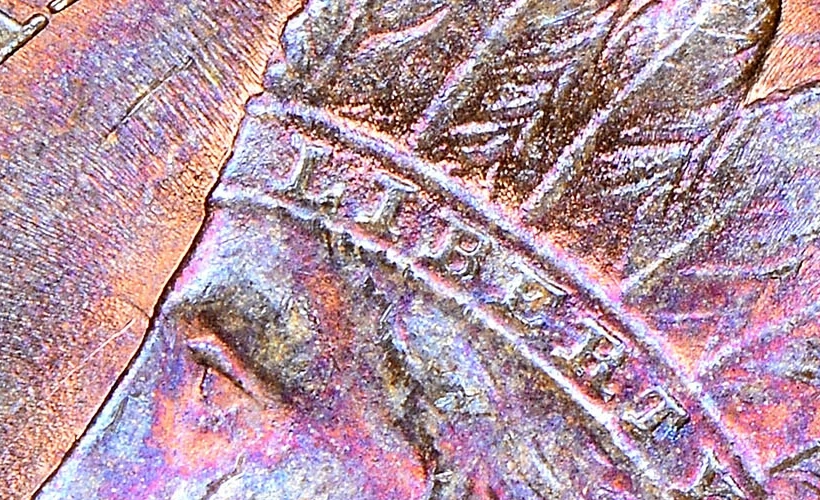
A complete LIBERTY is helpful when examining the headband, but the word is not a standalone numerical grading rule. Inspect the cheek, hair, wreath, rim, surface damage and whether the wear is consistent across both sides.
Wear, strike and surface condition
Examine both sides under even light. High-point smoothing from circulation is different from incomplete detail left by the dies. Hairlines, pitting, unnatural color and an altered date can prevent a problem-free grade even if some details remain sharp.
Condition & value
Amounts are in U.S. dollars. The final column gives each source row’s update date (month/day/year), separate from the access date of November 16, 2026. Published guides are reference estimates, not guaranteed buying offers or seller net proceeds. Obtain recent like-for-like completed comparisons for an actual transaction.
MS means Mint State. The ordinary table uses Brown (BN) copper entries; Red-Brown (RB), Red (RD), Proofs and attributed varieties are separate.
| Issue | Grade / condition | USD reference | Basis | Source updated |
|---|---|---|---|---|
| 1902 no mark BN | Good | $2 | NGC retail guide | 03/22/2021 |
| 1902 no mark BN | Fine | $4 | NGC retail guide | 03/22/2021 |
| 1902 no mark BN | Extremely Fine 40 | $15 | NGC retail guide | 03/22/2021 |
| 1902 no mark BN | MS63 | $75 | NGC retail guide | 03/22/2021 |
| 1902 no mark BN | MS65 | $160 | NGC retail guide | 03/22/2021 |
Match the comparison to the coin
Every regular 1902 cent was struck at Philadelphia and normally has no mint letter. San Francisco Indian Head cents came later in the series. A purported 1902-S or 1902-D requires authentication rather than a premium inferred from an unexpected letter.
What the ordinary table excludes
Brown (BN), Red-Brown (RB) and Red (RD) are separate color designations. The table deliberately uses Brown entries. Original color and numerical grade are separate observations; chemical brightening does not recreate a naturally Red coin.
Proofs are a separate market
NGC separately catalogues the 1902 Proof, with PF63 at $250 and PF65 at $600; the row update is 08/09/2019. These are Brown Proof references. Do not identify Proof manufacture from brightness alone, or compare a polished circulation coin with a certified Proof.
Obtain an actual selling comparison
Use the same date, mint, manufacture and grade, then inspect photographs for comparable surfaces. A completed sale, a retail guide estimate and an unsold asking price are different evidence. Do not add an auction record premium to an ordinary worn coin simply because the year matches.
Photograph both faces under even light and record the visible date and mint mark. HeriBase can help organize an initial photo-based identification; verify important mint, finish and variety details against the references before using a price. An app result is not a certified grade, authentication or purchase offer.
Summary
Identify the complete 1902 issue first, then compare the appropriate ordinary or collector category. Every regular 1902 cent was struck at Philadelphia and normally has no mint letter. San Francisco Indian Head cents came later in the series. A purported 1902-S or 1902-D requires authentication rather than a premium inferred from an unexpected letter.
FAQ
How much is a 1902 penny worth?
For the Philadelphia ordinary issue, NGC lists Fine at $4 and MS65 at $160, using its 03/22/2021 row. Mint, grade, surface problems and special manufacture must be matched; these are not guaranteed cash offers.
Where should I look for the mint mark?
Read the date under Liberty; this year’s regular cent is from Philadelphia and has no mint letter.
What is often misidentified on the 1902 issue?
A complete LIBERTY is helpful when examining the headband, but the word is not a standalone numerical grading rule. Inspect the cheek, hair, wreath, rim, surface damage and whether the wear is consistent across both sides.
Should I clean the coin before checking its value?
No. Cleaning can leave hairlines or altered surfaces and can change the market comparison. Photograph the coin as found, inspect it without rubbing, and obtain appropriate authentication for an unusual or potentially valuable piece.
Are Proofs included in the ordinary 1902 value table?
No. A separate Proof reference is discussed in the value section; the ordinary table concerns circulation strikes.
Can HeriBase determine the final selling price?
HeriBase can assist an initial photo-based identification and help organize a collection. It is not a certified grade, an authentication guarantee or a binding purchase offer. Confirm important details before using a price reference.
References
References and further reading
- NGC: 1902 1C MS specifications, issue analysis and dated guide
- NGC: separate collector Proof issue and dated guide
References accessed November 16, 2026. Guide update dates, source publication dates and sale dates are distinct. No independent examination or current buying offer for a reader’s coin is implied.