

 App Store

COIN VALUE GUIDES · DOLLARS
1901 Silver Dollar Value:Morgan Mint Marks and the Mint State Gap
Identify a 1901 Morgan dollar, distinguish Philadelphia, O and S issues, and understand why a small amount of wear can radically change a Philadelphia valuation.
 HeriBase TeamPublished
In this article
Quick answer
A normal 1901 U.S. silver dollar is a 90% silver Morgan dollar, with approximately 0.7734 troy ounce of fine silver. No mint mark identifies Philadelphia, O New Orleans and S San Francisco. The Philadelphia issue is especially sensitive to the distinction between circulated and genuinely Mint State condition.
The PCGS guide checked October 23, 2026 lists ordinary Philadelphia regular strikes at $100 in Very Fine 20, $250 in Extremely Fine 40 and $500 in About Uncirculated 50. The same guide lists $5,000 at Mint State 60. That large jump is why a worn coin must not inherit an uncirculated price. Other mints and collector Proofs need separate evidence.
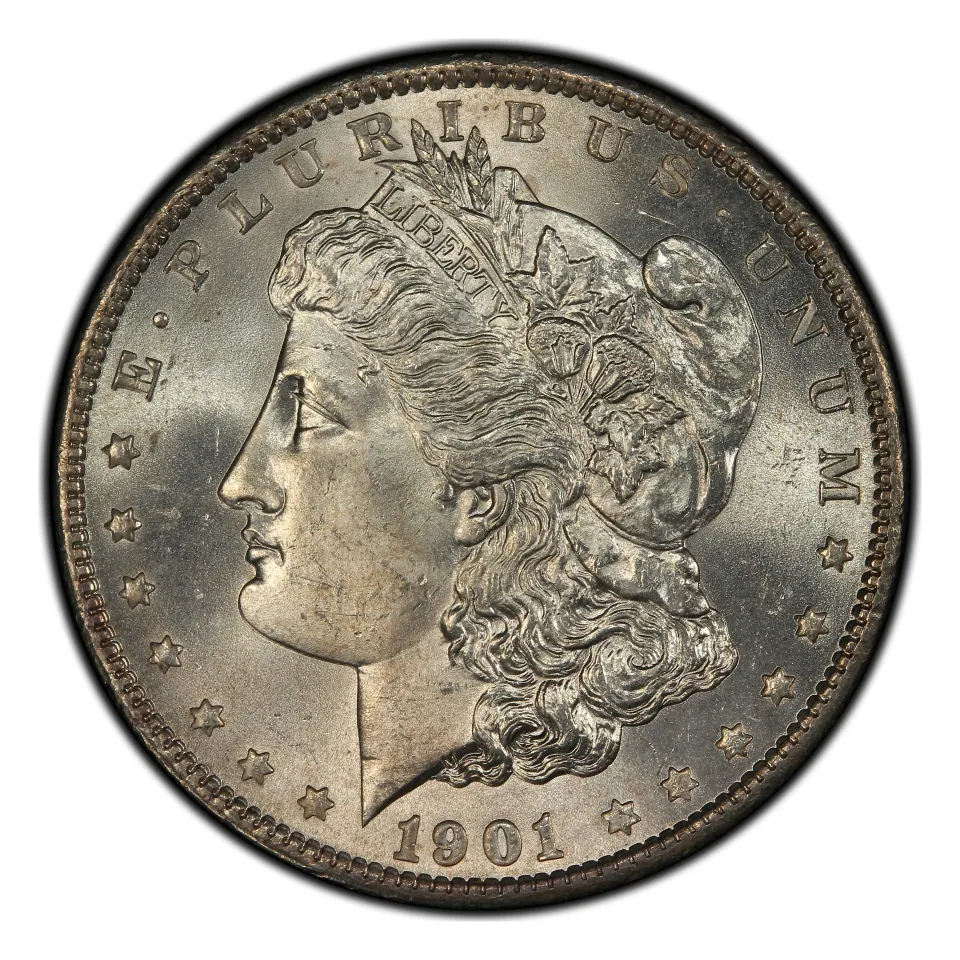
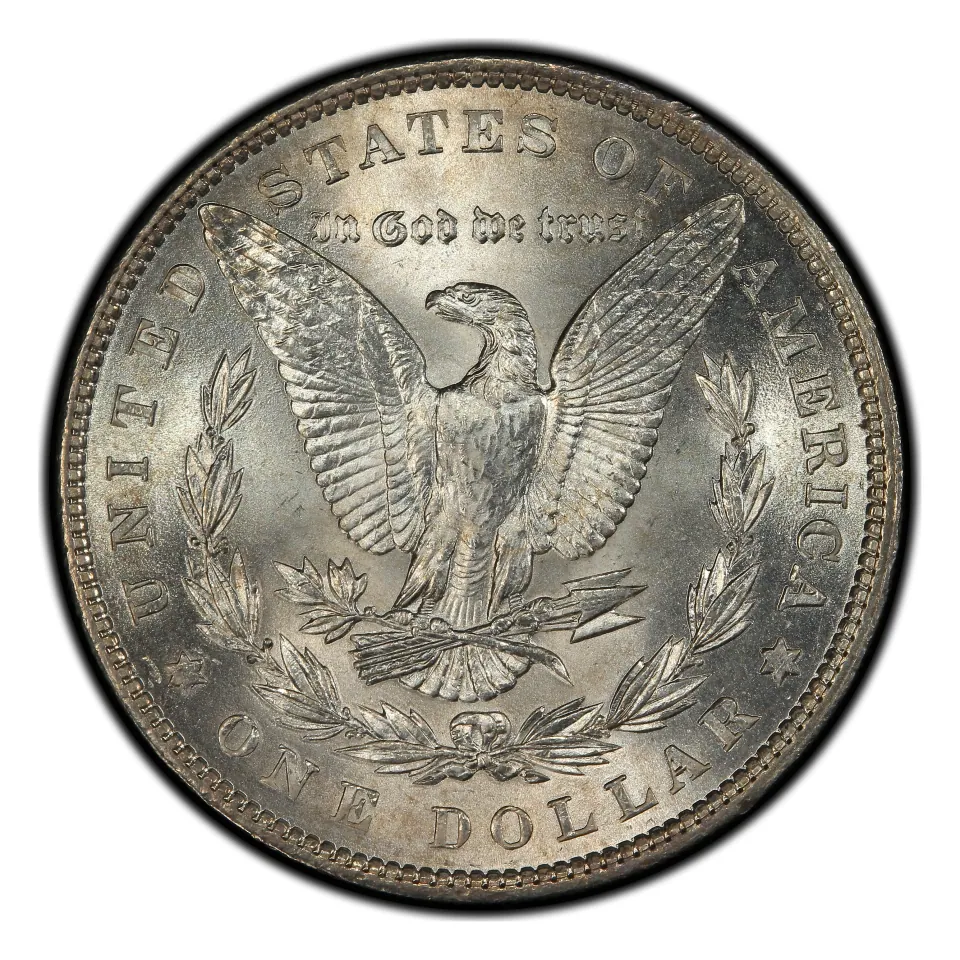
Coin photos
Basics & coin story
George T. Morgan’s Liberty portrait and spread-wing eagle identify this dollar. The 1901 date belongs to the original Morgan production period, before the later 1921 return and the Peace dollar design. A radiate Liberty portrait or a perched Peace eagle would point to a different coin, regardless of a seller’s abbreviated silver-dollar label.
Philadelphia struck 6,962,000 regular dollars in 1901 according to PCGS. Yet its historical narrative describes a very different availability pattern from common dates released in large stored quantities. Many circulated, and the entry discusses melting as a likely factor. Original mintage therefore does not tell you how many genuinely unworn examples survived.
This makes 1901 a useful lesson in condition rarity. A circulated Philadelphia example can be collectible without belonging to the much smaller Mint State market. A familiar Morgan date in worn condition and an exceptional survivor answer different collecting goals. The Morgan series guide explains mint identification across other years.
| Feature | What to check |
|---|---|
| Type / denomination | Morgan dollar / $1 |
| Designer | George T. Morgan |
| Composition | 90% silver, 10% copper |
| Nominal weight / diameter | 26.73 g / 38.1 mm |
| Fine silver | Approximately 0.7734 troy ounce |
| Edge | Reeded |
| Regular mints | Philadelphia: no mark; New Orleans: O; San Francisco: S |
| Mint-mark location | Reverse below the wreath and above DOLLAR |
| Philadelphia regular mintage | 6,962,000; not a surviving Mint State population |
Identification
Establish the mint before interpreting scarcity
Look above DO in DOLLAR and below the wreath. A genuine O or S changes the issue; no letter is normal for Philadelphia. Do not apply Philadelphia’s condition-rarity story to another mint automatically. An unclear or altered mint-mark area calls for examination, not an assumption that the coin belongs to the most valuable category.
About Uncirculated is not Mint State
A small amount of friction can be financially significant for this issue. Check Liberty’s hair, the eagle’s breast and the continuity of luster across both faces. Weak strike and wear are different, and reflective lighting can hide either. A seller’s use of “uncirculated-looking” is not a recognized grade or evidence that an AU coin qualifies for an MS price.
Separate Proofs and named varieties
Philadelphia also has a separate Proof comparison, while PL and DMPL describe qualifying reflective regular strikes. Specific doubled-die and VAM entries require their own diagnostics. Neither a mirrorlike photograph nor a doubled-looking scratch establishes the category. Match the complete date, mint, production method and attributed feature before using a premium reference.
Condition & value
Amounts are in U.S. dollars. PCGS retail-guide examples were checked October 23, 2026 and apply only to the stated issue, grade and designation. They are not guaranteed purchase offers; current market conditions and selling costs can change the amount received.
| Issue | Grade / condition | Value or reference | Basis | Important condition |
|---|---|---|---|---|
| 1901 Philadelphia ordinary regular | VF20 | $100 | PCGS retail guide | Problem-free circulated reference |
| 1901 Philadelphia ordinary regular | EF40 | $250 | PCGS retail guide | Correct wear and surfaces |
| 1901 Philadelphia ordinary regular | AU50 | $500 | PCGS retail guide | Circulation friction remains |
| 1901 Philadelphia ordinary regular | MS60 | $5,000 | PCGS retail guide | Genuinely uncirculated; authentication and grade matter |
| Contained silver | Approximately 0.7734 troy oz | 0.7734 × silver spot per oz | Metal-content reference | Not the complete collector valuation |
| 1901-O / S / Proof / PL / DMPL / VAM | Exact issue and designation | Compare separately | Different entries | No Philadelphia ordinary price transferred |
The table deliberately begins with circulated grades. A headline result for a superb certified coin does not establish the value of an ordinary worn dollar. Compare recent transactions with the same mint, numerical grade and surface status, and distinguish a completed sale from an asking price. Fees and buying spreads affect the amount ultimately received.
For a potentially uncirculated Philadelphia coin, specialist assessment is particularly useful because the AU-to-MS boundary can change the comparison substantially. Correct dimensions alone cannot authenticate a coin, and a valid holder number should be checked against the actual coin and any available grading-service images. The appraisal guide explains what photographs and records help.
Do not polish a lightly worn coin to make it appear more brilliant. Cleaning can harm marketability without eliminating wear. Use the grading scale and cleaning-identification guide. The metal reference, approximately 0.7734 times the silver price per troy ounce, remains separate from the collector premium for an authenticated, correctly graded coin.
Summary
For a 1901 dollar, identify the mint and verify wear before choosing a price. Philadelphia’s circulated and Mint State coins occupy markedly different value levels. Preserve the surface, authenticate significant candidates and keep Proofs, other mints and attributed varieties in their own comparisons.
FAQ
What kind of silver dollar was made in 1901?
A normal 1901 U.S. silver dollar is a Morgan dollar with 90% silver and approximately 0.7734 troy ounce of fine silver.
Where is the mint mark on a 1901 Morgan dollar?
On the reverse below the wreath and above DOLLAR. O identifies New Orleans, S San Francisco, and no mark Philadelphia.
Why can an uncirculated 1901 Philadelphia dollar cost much more?
The issue is condition-sensitive: genuinely Mint State survivors are much less available than ordinary circulated examples. A trace of wear can put a coin in a different comparison category.
Can an AU 1901 dollar use Mint State prices?
No. About Uncirculated still has circulation friction. A Mint State guide reference requires a genuinely uncirculated coin of the stated issue and surface status.
References
References and further reading
- PCGS CoinFacts: exact issue, specifications and available guide evidence
- U.S. Mint: Morgan and Peace dollar chronology
- PCGS: numerical grading and surface standards
Sources and quoted guide evidence checked October 23, 2026. Guide estimates, historical sales, face value and metal-content calculations are identified separately.