

 App Store

COIN VALUE GUIDES · SILVER DOLLARS
1891 Silver Dollar Value:Morgan Mint Marks, Grades and Varieties
Identify an 1891 Morgan dollar by no mark, CC, O or S, compare Philadelphia guide values, and distinguish metal content, condition and attributed die varieties.
 HeriBase TeamPublished
In this article
Quick answer
A normal 1891 U.S. silver dollar is a Morgan dollar containing 90% silver, with approximately 0.7734 troy ounce of fine silver. No mint mark identifies Philadelphia; CC, O and S identify Carson City, New Orleans and San Francisco. These are different issues with different markets.
The PCGS guide checked October 22, 2026 lists a Philadelphia regular strike at $92 in Very Fine 20, $250 in Mint State 63 and $2,400 in Mint State 65. These retail estimates apply to the stated mint and grade without a Prooflike designation. They do not value every worn 1891 dollar, a CC coin or an attributed die variety.
Coin photos
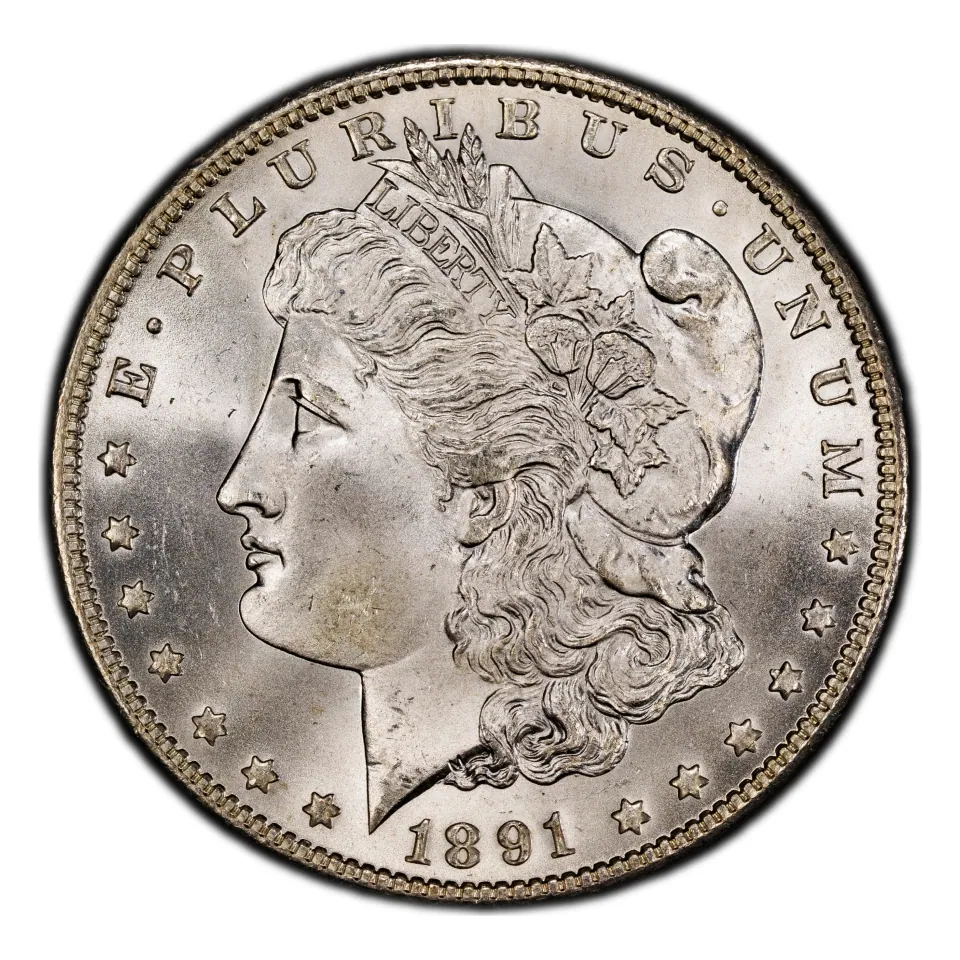
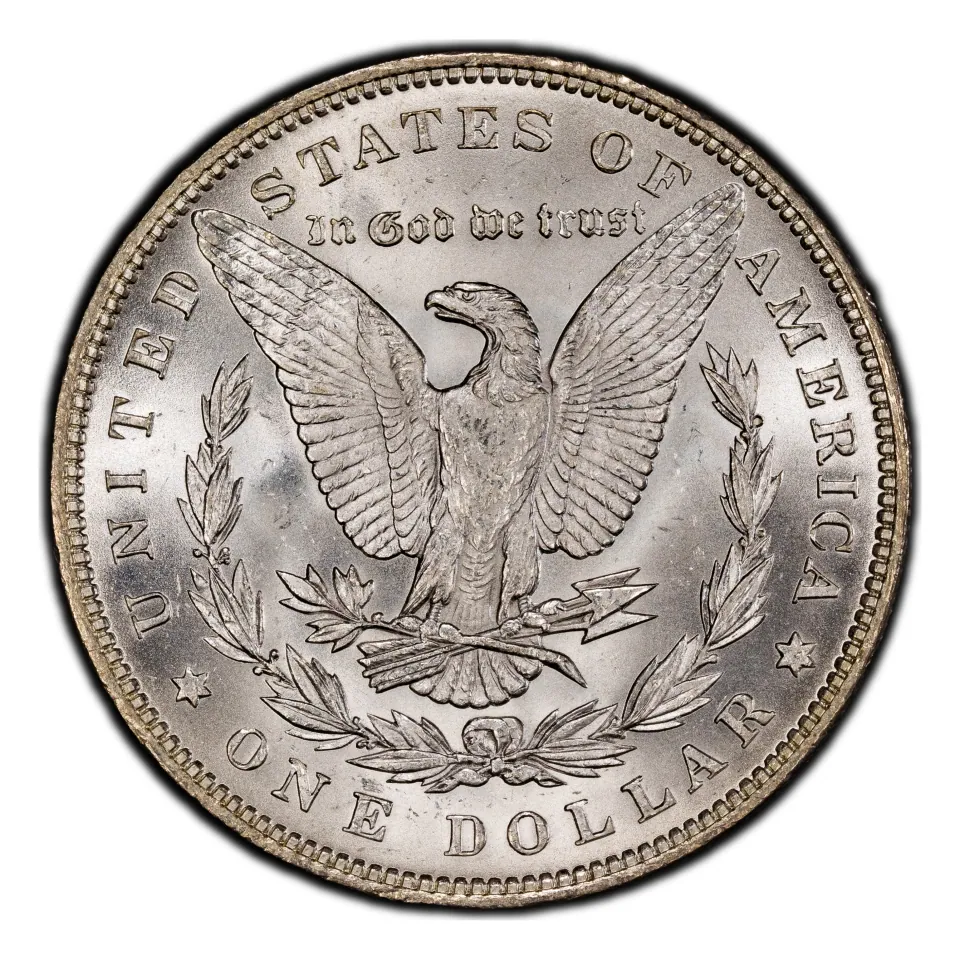
Basics & coin story
George T. Morgan’s dollar belongs to the silver-dollar production era that began in 1878. The 1891 issue also intersects with the recoinage of Trade Dollar silver: the PCGS historical narrative describes legislation directing Treasury-held Trade Dollars and bullion into standard silver dollars, including production at Philadelphia and New Orleans.
Philadelphia’s reported original mintage is 8,693,556. That total is not the surviving supply in any one grade. The substantial gap between the Philadelphia MS63 and MS65 references illustrates why a common-looking date can become much more demanding at a specific preservation level. Compare the broader mint system in the Morgan silver-dollar guide.
| Feature | What to check |
|---|---|
| Type / denomination | Morgan dollar / $1 |
| Designer | George T. Morgan |
| Metal | 90% silver, 10% copper |
| Nominal weight / diameter | 26.73 g / 38.10 mm |
| Fine silver | Approximately 0.7734 troy ounce |
| Edge | Reeded |
| Regular mint marks | None, CC, O and S |
| Mint-mark location | Reverse, above DO in DOLLAR and below the wreath |
Identification
Read the reverse mint mark
Look between the wreath and DOLLAR. No letter is normal for Philadelphia, CC means Carson City, O New Orleans and S San Francisco. Record the mark with the date before comparing a sale. An 1891-D is not a normal Morgan dollar issue; a coin presented that way needs authentication rather than a Denver price entry.
Match the die variety to its mint
PCGS lists a Philadelphia Doubled Ear attribution among the 1891 VAM varieties. VAM numbers describe particular die combinations and diagnostics; a line near the ear or a scratch across Liberty does not automatically establish the named variety. Other mints have their own lists. Do not transfer a Philadelphia nickname or price to an O, S or CC coin.
Separate Prooflike from Proof
A regular strike may receive a Prooflike (PL) or Deep Mirror Prooflike (DMPL) designation. Those reflective-field designations do not make it a separately manufactured Proof. Polishing can make a coin bright while impairing its surface. Compare the correct issue, numerical grade and designation, and investigate hairlines before assigning a reflective-coin premium.
Condition & value
Amounts are in U.S. dollars. PCGS retail-guide examples were checked October 22, 2026 and apply only to the stated issue, grade and designation. They are not guaranteed purchase offers; current market conditions and selling costs can change the amount received.
| Issue | Grade / condition | Value or reference | Basis | Important condition |
|---|---|---|---|---|
| 1891 Philadelphia, ordinary regular | VF20 | $92 | PCGS retail guide | Problem-free circulated example |
| 1891 Philadelphia, ordinary regular | MS63 | $250 | PCGS retail guide | No PL or DMPL designation included |
| 1891 Philadelphia, ordinary regular | MS65 | $2,400 | PCGS retail guide | Exceptional preservation must be established |
| Contained silver | Approximately 0.7734 troy oz | 0.7734 × silver spot per oz | Metal-content calculation | Not the full collector value or guaranteed offer |
| 1891-CC / O / S / attributed VAM | Exact issue, grade and designation | Use matching entry | Separate comparisons | Philadelphia prices are not universal |
Inspect Liberty’s cheek and open fields for contact marks, then the hair above the ear and the eagle’s breast for friction. A weak strike and circulation wear are different problems, and a sharp reverse does not erase damage on the obverse. Mint State (MS) requires no circulation wear; the date alone cannot justify an MS65 comparison.
The contained-silver formula provides a transparent metal reference without fixing today’s spot price. Collector premiums can exceed that reference, while dealer spreads and transaction costs affect an offer. For a graded coin, verify its complete label and certification before comparing completed sales of the same mint, grade and designation.
Do not clean a dollar to improve its shine. Use the cleaning-identification guide and the grading scale, then keep neighboring 1889 Morgan dollars in a separate price comparison.
Summary
Find the reverse mint mark, assess the surface and grade, then investigate any specific variety or reflective designation. All four normal 1891 mint issues share the Morgan design and 90% silver standard, but not one universal price. Preserve the coin and compare matching evidence before seeking a purchase or sale quote.
FAQ
Is a silver dollar dated 1891 a Morgan or Peace dollar?
A normal 1891 U.S. silver dollar is a Morgan dollar. The Peace design began in 1921.
What does no mint mark mean on an 1891 dollar?
It normally identifies Philadelphia. CC, O and S are found on the reverse above DO in DOLLAR and identify other mints.
Was there an 1891-D Morgan dollar?
There is no normal 1891-D Morgan dollar issue. A coin presented with that date-and-mint combination should be authenticated.
Does an MS65 price apply to a worn 1891 silver dollar?
No. A worn coin requires its own mint, grade and surface assessment. The Philadelphia MS65 guide reference applies to that specific preservation level, not every 1891 dollar.
References
References and further reading
- PCGS CoinFacts: exact issue, specifications and available guide evidence
- PCGS: 1891-O separate issue and specifications
- PCGS: 1891-S separate issue and specifications
- U.S. Mint: Morgan dollar history and historic mints
Sources and quoted guide evidence checked October 22, 2026. Guide estimates, historical sales, face value and metal-content calculations are identified separately.