

 App Store

COIN VALUE GUIDES · DOLLARS
1890 Silver Dollar Value:No Mint Mark, O, S and CC Compared
Compare 1890 Morgan dollar values by mint and condition, recognize the mint-mark location, and separate Tailbar claims from ordinary CC coins.
 HeriBase TeamPublished
In this article
How much is an 1890 silver dollar worth?
Most 1890 Morgan dollars need a mint-and-grade comparison, with Carson City priced separately. The PCGS guide checked October 19, 2026 lists regular Philadelphia, New Orleans and San Francisco coins at $92 in Very Fine 20. At Mint State 63, the corresponding figures are $125, $215 and $185. The standard 1890-CC entry is $235 in VF20 and $1,650 in MS63.
CC is not the same as the Tailbar variety. Tailbar requires its own reverse diagnostic, and Prooflike, Deep Mirror Prooflike, Proof and damaged coins fall outside the ordinary comparisons above. Confirm the mint mark below the reverse wreath and match condition before using a price.
1890 Philadelphia and Carson City examples
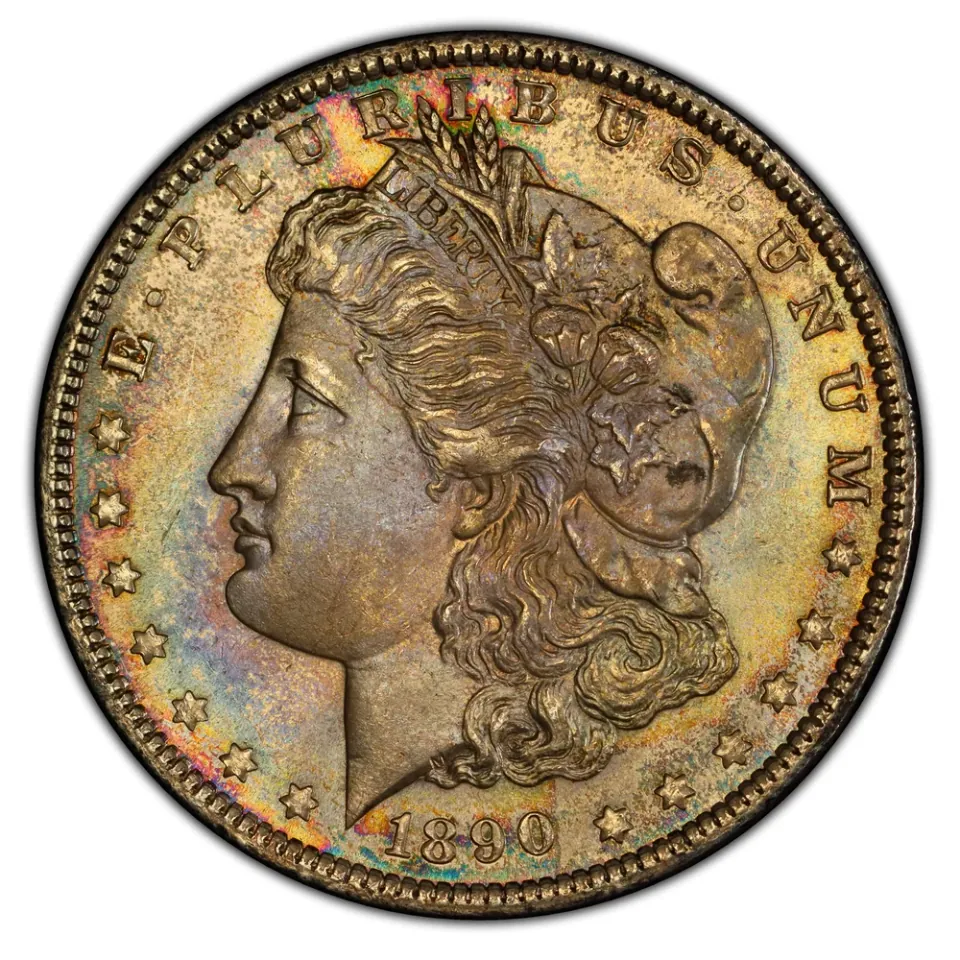
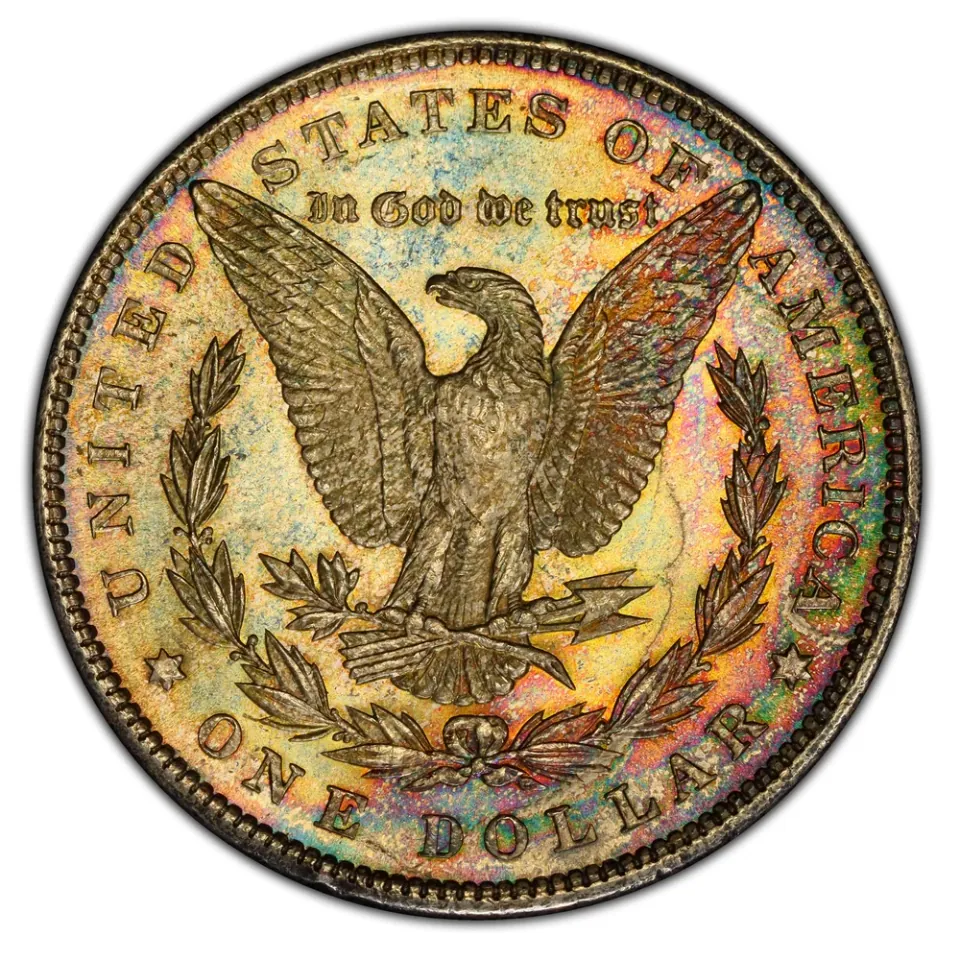
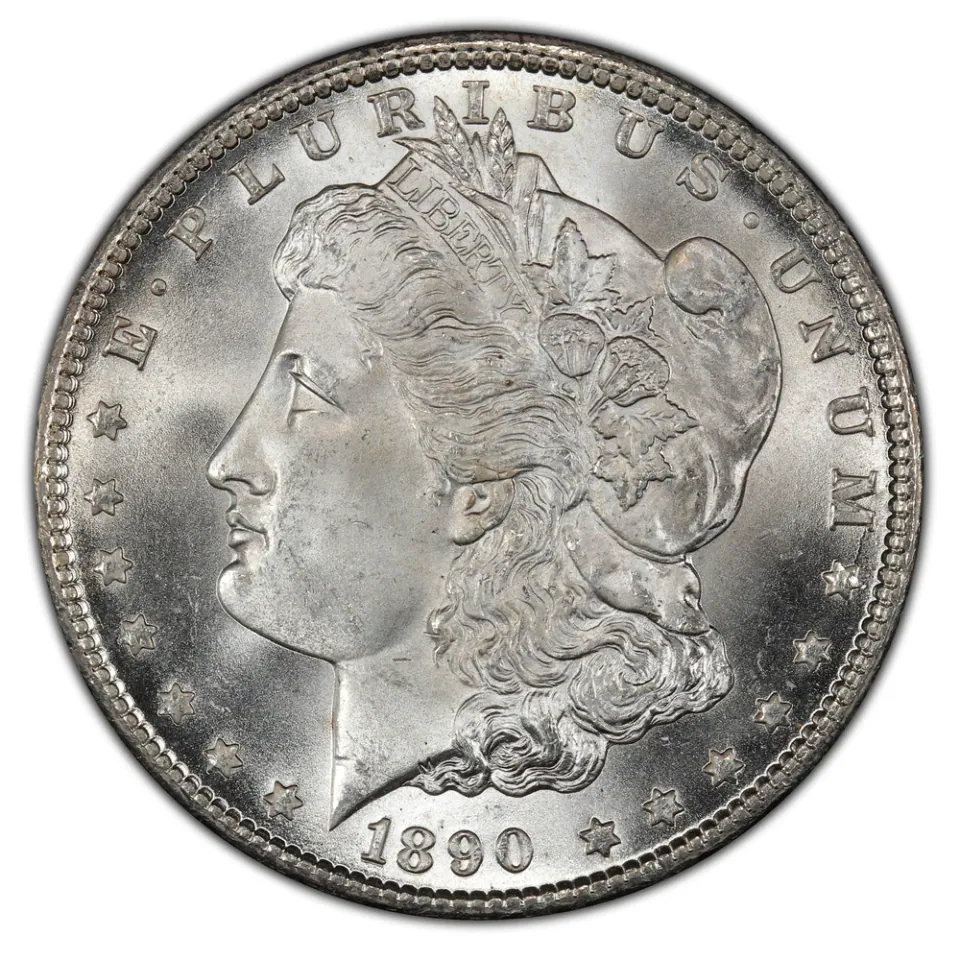
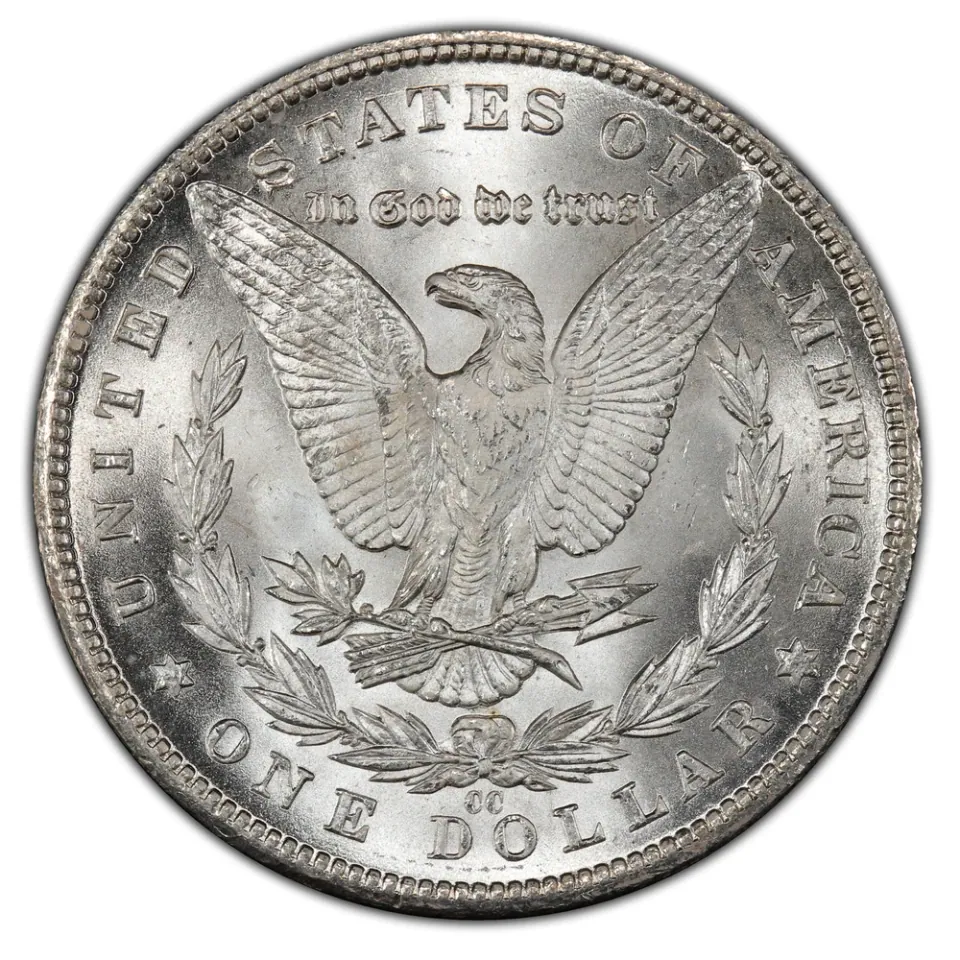
A silver dollar from a year of changing silver policy
The date 1890 sits at a turning point in American silver policy. On July 14, the Sherman Silver Purchase Act was approved. The Morgan design continued across that legislative change: the date records the coin’s issue year, while the portrait, eagle and small mint mark identify the familiar dollar type.
This makes the coin a tangible connection to the period’s debate over silver money, but it does not make every surviving example scarce. Four mints produced the date in substantial numbers. Their output differed, and the number of attractive coins surviving in each grade differs again. Production history and a coin’s present condition answer different questions.
| Mark | Mint | Recorded mintage | Scope |
|---|---|---|---|
| None | Philadelphia | 16,802,000 | Regular issue; varieties included in mint total |
| O | New Orleans | 10,701,000 | Regular issue; varieties included in mint total |
| S | San Francisco | 8,230,373 | Regular issue; varieties included in mint total |
| CC | Carson City | 2,309,041 | Regular issue; varieties included in mint total |
| Feature | What to check |
|---|---|
| Designer | George T. Morgan |
| Composition | 90% silver, 10% copper |
| Nominal weight / diameter | 26.73 g / 38.1 mm |
| Fine silver | Approximately 0.7734 troy ounce |
| Edge | Reeded |
| Mint-mark location | Reverse, below the wreath and above DOLLAR |
For a comparison across the series, use the complete Morgan mintage table. The previous year’s 1889 dollar guide is a separate price reference; its famous CC premium must not be transferred to an 1890 coin.
Separate the mint, finish and Tailbar attribution
First confirm the date and mint mark. The four normal choices are no mark for Philadelphia, O for New Orleans, S for San Francisco and CC for Carson City. All share the Morgan dollar’s silver specification. The metal content alone therefore cannot explain why a CC coin costs more than a similarly worn Philadelphia example.
What is the 1890-CC Tailbar?
Tailbar is a recognized reverse die variety, not a name for all 1890-CC dollars. Its raised feature connects the lower arrow-feather area to the leaves beneath. A scratch cuts into the surface; a raised mark in the approximate area still needs comparison with the complete cataloged diagnostic. Do not add the Tailbar premium just because there is a line near the eagle’s tail.
The CC photograph above is an example of the mint and date, not a Tailbar attribution guide. If your coin appears to show the feature, photograph the complete reverse and the relevant detail under even lighting, then obtain a precise variety assessment. PCGS maintains a separate Tailbar entry because its value must be compared separately.
Mirror fields are a different category
Prooflike (PL) and Deep Mirror Prooflike (DMPL) are surface designations used for qualifying regular strikes. A Proof is a different manufacturing issue. Neither label follows automatically from a shiny coin or from the CC mint mark. Polishing can imitate reflectivity while reducing collector value.
A soft-looking center may reflect strike quality as well as wear. Examine the rest of the surface and luster before making a grade claim. The coin grading guide and cleaning-identification guide cover these shared checks.
1890 Morgan dollar value chart
| Regular issue | VF20 | XF40 | AU58 | MS63 | MS65 |
|---|---|---|---|---|---|
| 1890 · no mint mark | $92 | $92 | $94 | $125 | $950 |
| 1890-O | $92 | $92 | $94 | $215 | $1,250 |
| 1890-S | $92 | $92 | $94 | $185 | $900 |
| 1890-CC | $235 | $300 | $700 | $1,650 | $6,000 |
PCGS retail guide estimates in US dollars, checked October 19, 2026. These are references for genuine, problem-free coins in the stated grade, not auction results or guaranteed offers. Cleaned, damaged and incorrectly graded coins need different comparisons.
VF20 and XF40 are circulated grades; AU58 indicates slight wear; MS63 and MS65 are uncirculated grades with different surface-quality requirements. The table covers the standard regular issue from each mint. It excludes the Tailbar premium, PL/DMPL designations and Philadelphia Proofs.
Carson City shows the clearest step up. Its guide moves from $300 at XF40 to $700 at AU58, $1,650 at MS63 and $6,000 at MS65. These are distinct condition categories, not a price range that can be assigned to any readable CC coin. A cleaned example may retain sharp detail without fitting the problem-free grade comparison.
At the higher grade shown, the O issue is $1,250, Philadelphia $950 and San Francisco $900. This is why simply ranking mints by production volume gives an incomplete answer. At VF20 their guide figures are alike, but the market for better-preserved examples separates.
A metal calculation uses approximately 0.7734 troy ounce of fine silver per standard coin. Use a current silver quotation if you need that reference, and keep it separate from collector value and transaction costs. For a sale, compare actual examples in matching condition rather than the largest auction headline for the date.
Record the full date, mint, any certified variety, grade and surface designation together. If a seller claims Tailbar or a high Mint State grade, ask for the evidence that supports that exact description. The appraisal guide explains how to prepare an uncertain coin for review.
Treat CC and Tailbar as separate questions
A normal 1890 Morgan dollar and an 1890-CC do not share one price. At VF20 the checked guide is $92 for P, O and S versus $235 for CC; at MS63 it ranges from $125 for Philadelphia to $1,650 for CC.
Identify the mint first, then condition and finish. Investigate Tailbar only when the correct raised reverse feature is present, and use its own reference rather than applying a blanket premium to every CC coin.
Frequently asked questions
What is an 1890 silver dollar worth with no mint mark?
The regular Philadelphia issue is listed at $92 in VF20, $94 in AU58 and $125 in MS63 in the PCGS guide checked October 19, 2026. These are problem-free guide estimates, not guaranteed offers.
Is an 1890-CC dollar more valuable?
The checked regular-issue guide is $235 at VF20 and $1,650 at MS63, higher than the other mints in those grades. Authenticity, surfaces and an accurate grade remain essential.
Is every 1890-CC a Tailbar Morgan dollar?
No. Tailbar is a separate die variety with a raised reverse feature connecting the lower arrow-feather area to leaves below. A CC mark or a scratch near the tail does not establish it.
Were 1890 Morgan dollars made of silver?
Yes. Standard examples are 90% silver and 10% copper, with a nominal weight of 26.73 grams and approximately 0.7734 troy ounce of fine silver.
References
Sources
Research checked October 19, 2026. Any price example retains its stated source date and scope.
- PCGS · 1890 PhiladelphiaIssue specifications, production and grade-specific guide prices.
- PCGS · 1890-OIssue specifications, production and grade-specific guide prices.
- PCGS · 1890-SIssue specifications, production and grade-specific guide prices.
- PCGS · 1890-CCIssue specifications, production and grade-specific guide prices.
- U.S. Mint · Historical timelineJuly 14, 1890 silver legislation.
- PCGS · 1890-CC TailbarSeparate die-variety attribution.
- Stack’s Bowers · August 2020 Rarities NightSpecialist description of the Tailbar reverse feature.