

 App Store

COIN VALUE GUIDES · DOLLARS
James Monroe Dollar Coin:2008 Value, Edge Lettering and Errors
Read the real issue date, understand the 1817–1825 inscription, and distinguish normal edge orientation from genuine errors.
 HeriBase TeamPublished
In this article
What is a James Monroe dollar coin worth?
A normal circulated James Monroe Presidential dollar is worth its $1 face value. It was issued in 2008, not during the 1817–1825 dates printed beside the portrait; those years identify Monroe’s presidency. The coin is golden-colored but contains no gold. Look on the edge for the actual year and mint mark.
Preservation, collector finish or an authenticated edge error can change the comparison. For one defined example, the PCGS guide checked October 19, 2026 lists the 2008-P Position A regular strike at $5 in Mint State 63 and $7 in MS65. These figures do not price every Monroe dollar. Ordinary upside-down edge lettering is a normal orientation, not an error.
Identify Monroe and the shared dollar reverse
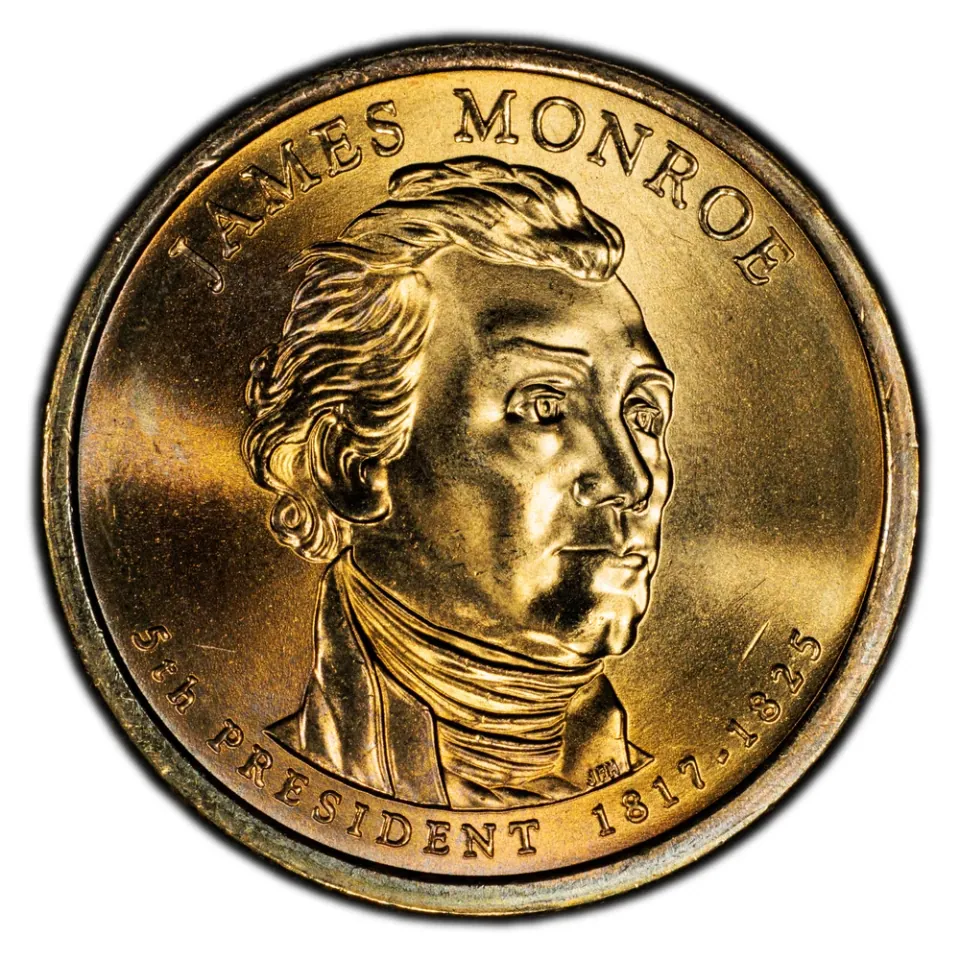
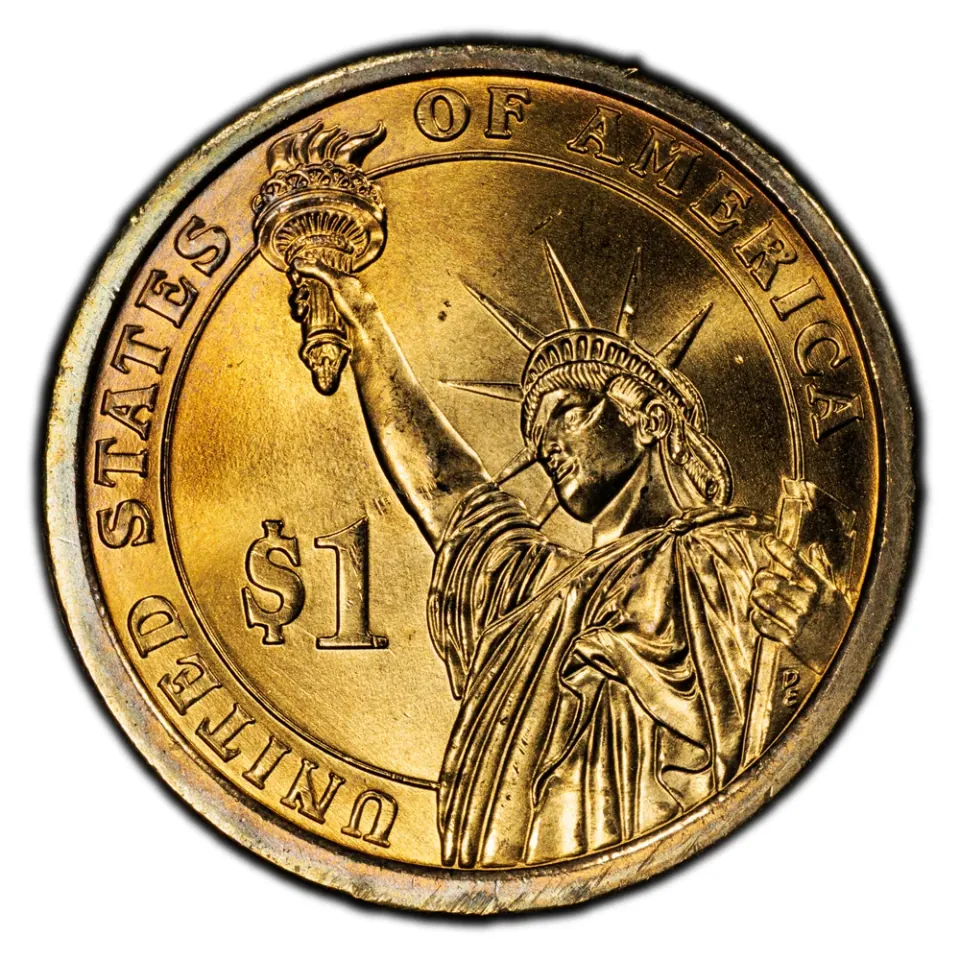
The fifth president on a 2008 coin
The Presidential dollar program presented presidents in their order of service. Monroe’s coin was the first release of 2008 and the fifth in the sequence, entering circulation on February 14. The portrait is by Joseph Menna, paired with Don Everhart’s common Statue of Liberty reverse.
Monroe served from 1817 to 1825. His administration is associated with the 1823 Monroe Doctrine, which opposed further European expansion in the Western Hemisphere. His presidency also included the Missouri Compromise, a political settlement concerning slavery and the balance between free and slave states. Those historical dates explain the portrait-side inscription; they do not make this a nineteenth-century coin.
The modern program placed the production year, mint mark and other inscriptions on the edge, leaving more room on the two main faces. That layout is the reason an owner can read 1817–1825 immediately but miss the much later issue year.
| Feature | What to check |
|---|---|
| Issue / denomination | 2008 / $1 |
| Portrait | James Monroe, fifth president |
| Term shown on front | 1817–1825 |
| Nominal weight / diameter | 8.10 g / 26.50 mm |
| Metal | Copper-based manganese-brass clad composition; no gold |
| Edge | Lettered, including year and mint mark |
| Regular circulation mints | Philadelphia P and Denver D |
The following presidential issue is covered in the John Quincy Adams dollar guide. For the earlier start of the series, see George Washington dollar identification.
Read the edge before calling the coin an error
| Location | Normal information | Meaning |
|---|---|---|
| Portrait side | JAMES MONROE; 5th PRESIDENT; 1817–1825 | Who is honored and when he served |
| Reverse | Statue of Liberty; $1 | Shared design and denomination |
| Edge | 2008, mint mark and mottos | Production date and issue identification |
Inspect the entire edge in good light. In this 2008 issue, IN GOD WE TRUST is on the edge rather than the portrait side. Not seeing it on the front therefore does not establish a missing-motto error. A holder can also conceal some lettering, so check what is actually visible before drawing a conclusion.
Position A and Position B are normal
PCGS calls the orientation Position A when the edge lettering reads upside down with the president’s portrait facing up, and Position B when it reads normally from that reference. Regular coins received edge lettering in a separate operation, so either orientation can occur. Collectors may track both positions, but “upside down” alone is not a minting mistake.
Missing or doubled edge lettering is a different claim
PCGS lists Monroe coins with missing edge lettering and doubled edge lettering. Those attributions must be distinguished from ordinary orientation, wear, damage or a filed edge. A genuine error must be matched to its specific type and condition before assigning a price. Preserve the edge and seek an assessment if the full inscription appears abnormal.
For color questions, the gold-colored dollar guide explains why a golden appearance is not evidence of gold bullion content.
James Monroe dollar value by category
| Issue | Condition | Reference | Basis | What to match |
|---|---|---|---|---|
| Ordinary circulation coin | Worn | $1 | Face value | Correct denomination |
| 2008-P Position A | MS63 | $5 | PCGS retail guide | Regular strike and grade |
| 2008-P Position A | MS65 | $7 | PCGS retail guide | Original surfaces and grade |
| S Proof or satin collector issue | Collector finish | Separate comparison | Matching completed sales | Mint, finish and grade |
| Attributed edge error | Varies | Separate comparison | Exact error attribution | Not normal A/B orientation |
Mint State (MS) means no circulation wear, not freedom from every contact mark. The modest regular-strike figures show why a shiny common coin may not justify grading and selling costs. A price attached to a rare error or an exceptional holder should not be transferred to a typical coin from change.
S Proof coins and satin-finish collector issues are different from ordinary P and D circulation strikes. Record the precise issue if you own a coin from a set. A certification label’s early-release or first-day wording also does not independently establish a mint error.
Compare completed sales for the same issue rather than the highest active listing. Keep a whole set’s packaging and other coins separate from the value of a single Monroe dollar. The appraisal guide describes how to document the faces and edge for a useful review.
One dollar unless the specific coin supports more
A normal worn Monroe dollar is a 2008 base-metal coin worth $1, not an 1817 gold coin. The portrait dates are his term in office; the issue date is on the edge.
Read the complete edge, identify the finish and judge preservation. Normal Position A/B lettering is not an error; only a supported grade, collector issue or authenticated error justifies a different comparison.
Frequently asked questions
Is a James Monroe dollar from 1817 or 1825?
No. The Presidential dollar was issued in 2008. The 1817–1825 dates on the front identify Monroe’s presidency; the production year is on the edge.
Is the James Monroe dollar made of gold?
No. Its golden color comes from its copper-based manganese-brass clad composition. The normal issue has no gold content and has a $1 denomination.
Is upside-down edge lettering an error?
No. PCGS recognizes normal Positions A and B according to how the edge lettering reads with the portrait facing up. Orientation alone does not establish a mint error.
What is an ordinary James Monroe dollar worth?
A normal worn coin generally remains worth $1. The October 19, 2026 PCGS guide gives $5 at MS63 and $7 at MS65 for the specific 2008-P Position A regular issue; collector finishes and authenticated errors need separate comparisons.
References
Sources
Research checked October 19, 2026. Any price example retains its stated source date and scope.
- U.S. Mint · James Monroe dollarYear, portrait subject, term and historical context.
- U.S. Mint · 2008 presidential releasesRelease sequence and February 14 date.
- PCGS · 2008-P Position ARegular issue, composition and grade-specific prices.
- PCGS · Edge orientationDefinitions of normal Positions A and B.
- PCGS · Monroe issue listingsSeparate finishes and attributed edge-error categories.