

 App Store

COIN VALUE GUIDES · QUARTERS
Crossing the Delaware Quarter:2021 Value, Mint Marks and Errors
Recognize the one-year Washington design, separate circulation coins from Proofs, and assess unusual reverse details.
 HeriBase TeamPublished
In this article
What is a Crossing the Delaware quarter worth?
An ordinary circulated 2021 Crossing the Delaware quarter is generally worth its 25-cent face value. The design shows Washington directing the December 1776 river crossing, but the coin itself is dated 2021. P and D issues were made for circulation; uncirculated coins, collector Proofs and authenticated significant errors need separate comparisons.
Check the mint and finish before using a price. Regular clad coins have a nominal weight of 5.67 g and contain no silver. San Francisco made S-marked clad and silver Proof versions, so S alone does not prove silver. A small raised die chip or an unusual-looking hat is not evidence of a large premium.
Recognize the 2021 design
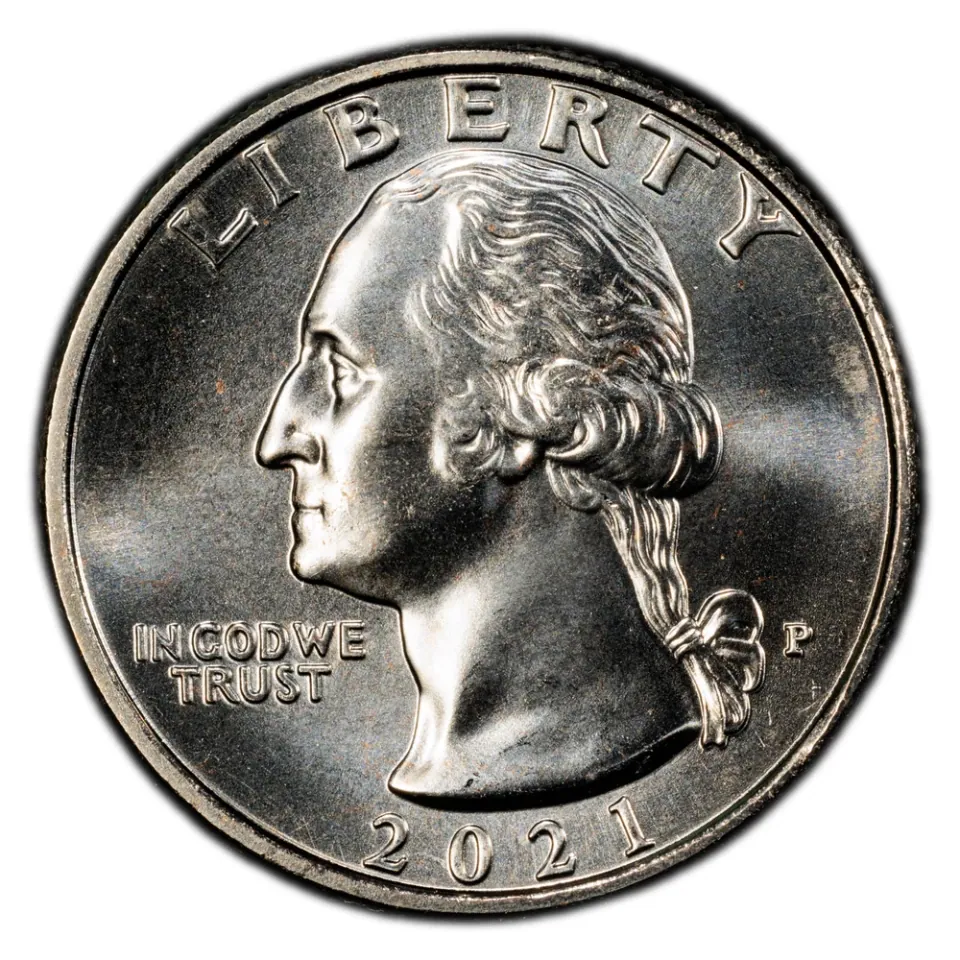
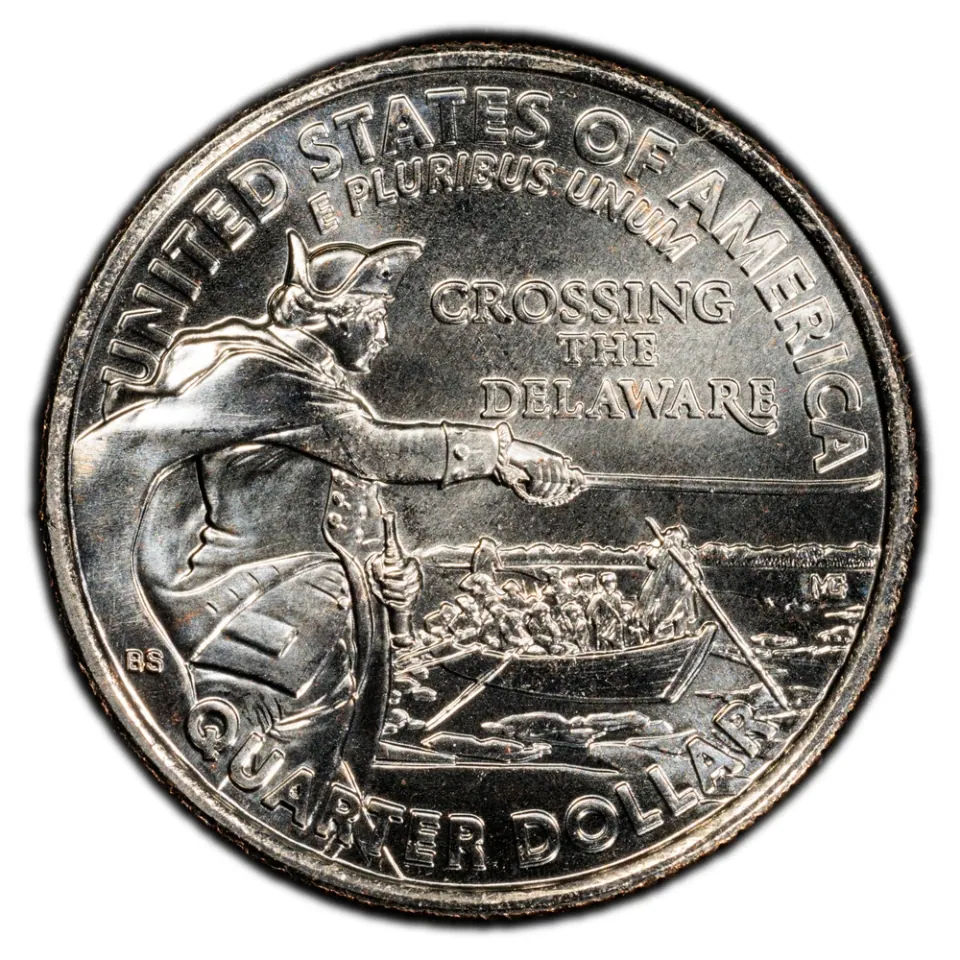
Why this design appeared for one year
On the night of December 25, 1776, Washington led troops across the Delaware River before the attack on Trenton. The quarter focuses on his leadership during that operation. The historical event explains the scene; it does not make the coin a 1776 issue or a Bicentennial quarter.
The Mint introduced the design into circulation on April 5, 2021. Benjamin Sowards designed the reverse and Michael Gaudioso sculpted it. The obverse returned to John Flanagan’s traditional Washington portrait layout after the America the Beautiful series.
2021 also includes the Tuskegee Airmen quarter, the final America the Beautiful design. The Crossing the Delaware coin therefore should not be treated as the only quarter design dated 2021. The American Women Quarters program followed in 2022 with a different Washington portrait. See the 2024 five-design guide for that later series.
| Feature | What to expect |
|---|---|
| Date | 2021 on the obverse |
| Circulation mints | Philadelphia P and Denver D |
| Denomination | $0.25 |
| Metal | Copper-nickel clad over a copper core |
| Nominal weight / diameter | 5.67 g / 24.26 mm |
| Edge | Reeded; copper-colored core often visible |
| Reverse subject | Washington commanding the Delaware crossing |
P, D and S: compare the right version
| Issue | Typical context | Key distinction | Value reference |
|---|---|---|---|
| P or D regular strike | Change, rolls or uncirculated sets | Clad circulation design | Face value if ordinary and worn; same-grade sales if preserved |
| S clad Proof | Collector Proof set | Specially prepared strike; not silver merely because it shines | Matching clad Proof sales |
| S silver Proof | Silver Proof set | Silver collector version; confirm product or certification | Matching silver Proof sales |
| Authenticated error | Any qualifying issue | Specific mint-made defect, not damage | Same error type, scale and grade |
Proof is a method of manufacture, not a synonym for any shiny coin. A silver-colored surface is also not a metal test: normal clad quarters are silver-colored. Use original product documentation or a reliable certification attribution when separating the two S-marked versions.
The 1776–1976 Bicentennial quarter has a drummer reverse and a dual date. Do not transfer its varieties, silver-set rules or prices to the 2021 coin. Likewise, the 2026 Revolutionary War quarter belongs to a different program.
Value, preservation and the “crown” question
The ordinary worn-coin starting point is $0.25. PCGS’s CoinFacts discussion describes typical raw uncirculated examples around $1–$2, but that is a general collecting reference rather than a dated completed sale. It is not a price for every circulated coin, and retail shipping can cost more than the coin.
A certified high-grade example has a different market. Contact marks, surface preservation and grading population can produce a large gap between an ordinary uncirculated coin and a top-certified specimen. Do not apply a record price to a coin from change without confirming that it meets the same conditions.
Raised metal near Washington’s hat
Collectors sometimes use “crown” or similar informal names for raised die-break features around Washington’s hat on the reverse. A name in a listing does not establish a standardized rarity or price. The extent and shape of a genuine die chip can vary, and small die chips may have little demand.
First locate the feature on a sharp full reverse photograph. Then take a close-up under more than one light direction. Raised metal from a damaged die should be distinguished from a gouge, displaced metal or material stuck to the surface. A coin with post-mint damage is not a mint error simply because its design looks unusual.
For a possible significant error, compare the precise feature with an attributed example and sold results, including the coin’s grade. Avoid cleaning the area to reveal it; the cleaned-coin guide explains why that can reduce collector interest.
A simple way to collect this issue
A basic circulation pair consists of one P and one D coin. Keep the best original examples you can find, record each mint, and store them without polishing. Adding a Proof changes the scope of the collection: label clad and silver versions separately rather than counting every S as one interchangeable issue.
If buying, compare total delivered cost and the actual photographs. A generic stock image cannot show the contact marks on the particular coin being sold. If you are completing a 2021 quarter group, identify Tuskegee Airmen separately so the two reverse designs are not accidentally combined under one title.
What to remember
2021 Crossing the Delaware quarters from ordinary circulation generally remain 25-cent coins. P and D identify the regular circulation mints; an S collector coin must still be separated into clad or silver Proof. The historical scene is from 1776, while the coin date is 2021.
Keep exceptional grades and authenticated errors in their own price comparisons. A “crown” nickname, shine or a dramatic asking price does not establish rarity.
Frequently asked questions
Is the Crossing the Delaware quarter rare?
The ordinary 2021 P and D circulation issues are not rare merely because of the design. Most worn examples remain worth 25 cents; exceptional preservation and authenticated errors are separate cases.
Is a 2021 Crossing the Delaware quarter silver?
Normal circulation examples are copper-nickel clad, not silver. S-marked collector Proofs exist in clad and silver versions, so the mint letter alone does not determine metal.
Why does my Delaware quarter say 2021 rather than 1776?
2021 is the coin’s issue date. The reverse commemorates Washington’s December 1776 crossing; a historical scene does not change the coin’s date.
Does a crown on Washington’s hat make it valuable?
Not automatically. That nickname can refer to raised die-break features. Confirm whether the feature is mint-made, its precise form and comparable sold results; a small chip or damaged surface does not establish a large premium.
References
Sources
Research checked October 19, 2026. Any price example retains its stated source date and scope.
- U.S. Mint · Crossing the Delaware quarterDesign, history, artists and circulation release.
- PCGS CoinFacts · 2021-PCirculation issue and context for ordinary uncirculated values.
- U.S. Mint · quarter specificationsStandard clad quarter dimensions and composition.