

 App Store

COIN ERRORS & VARIETIES
Clipped Planchet Coins:How to Tell a Mint Clip From a Cut
Identify curved, straight and irregular clips. Compare rim weakness, metal flow, edge texture and weight before attributing a clip.
 HeriBase Editorial TeamPublished
In this article
Quick answer
A clipped planchet is already incomplete when it is struck. The edge gap can be curved, straight or irregular. Inspect the transition into the rim and the design nearest the gap for evidence that the missing metal was present as a gap during the strike.
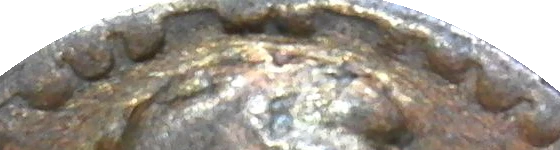
Rim weakness opposite the gap, known as the Blakesley effect, can support a diagnosis. Its visibility varies. A half-moon shape, a low weight or one photograph alone leaves a later cut possible.
Specimen photos
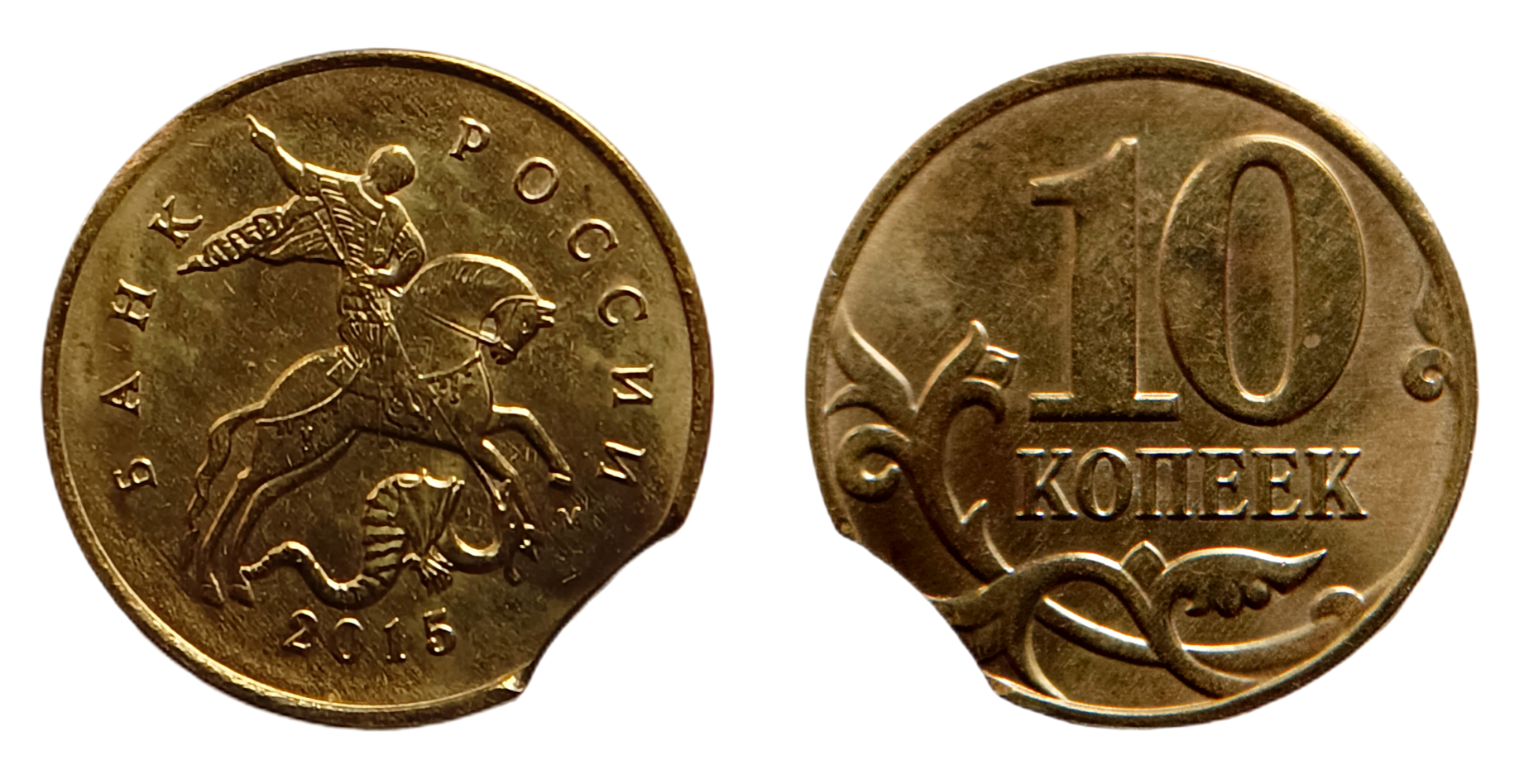
How it happens
A blanking press punches coin blanks out of a strip. If a punch overlaps the hole left by a previous blank, the next blank can be incomplete. A punch at the edge of a strip can leave a straight gap, while an irregular strip edge may leave a ragged one. Collectors use “clip” to describe the missing edge area.
Before stamping, the mint raises the rim during upsetting. An incomplete blank can receive less rim formation opposite the missing area, accounting for the Blakesley effect. The same process does not guarantee an equally visible sign on every coin.
| Type | Location or shape | What to check | Comparison |
|---|---|---|---|
| Curved clip | Arc-shaped missing segment | Inspect the edge transition and rim opposite the gap | Compare the arc with a documented clip; scissors can imitate the outline |
| Straight clip | Nearly straight edge segment | Inspect both endpoints and how the nearby rim terminates | A sharp line alone is inconclusive |
| Irregular clip | Uneven missing segment | Check for compatible strike effects around the loss | Corrosion and gouges can also look ragged |
| Post-mint cut | Tool lines, burrs or displaced metal may appear | Inspect the sidewall with angled light | Weight can be low from either a genuine clip or a later cut |
Identification
Find the edge transition
Use low-angle light at both ends of the opening. Check whether the strike and rim fade or flow into the area or whether a tool seems to have cut finished relief.
Check opposite the gap
Look for a weak or flat part of the rim roughly opposite the missing segment. Use this as one observation alongside the opening, not as the entire diagnosis.
Weigh and document the coin
Compare the same issue and composition. Record exact weight and photograph the complete faces, the gap and the edge opposite it. A low weight also occurs after metal is removed.
Documented cases and value
GreatCollections lot 1254168 records an ANACS MS63 1990-P Jefferson nickel with a major curved clip and a 20% off-center strike at 3.38 g. Since it combines two errors, its market cannot establish the premium for a plain clip. The 1990 nickel error guide compares that case with other attributed nickel errors.
Clip shape and visibility, remaining date, condition and additional errors all matter. Use individual attributed results and avoid extrapolating from a much larger or more dramatic defect.
Summary
Follow the rim through both ends of the gap and inspect the opposite side. Keep the edge, weight and design evidence together when distinguishing a mint clip from a later cut.
Frequently asked questions
Does the Blakesley effect have to be visible?
Visibility varies. Its presence supports a clip, and an inconclusive opposite rim calls for more evidence from the strike, opening and weight.
Is a half-moon gap enough to identify a clip?
No. A later cut can duplicate the outline. Check how the rim and design meet the opening and inspect the edge for tool marks.
Can the same coin be clipped and off-center?
Yes. An incomplete blank can also be out of position when struck. Compare it with other combination errors when pricing.
Where should I photograph a suspected clip?
Photograph both complete faces, both ends of the opening, the edge within the gap and the rim opposite it.
References
References and further reading
- PCGS clipped planchet types and illustrated examples
- PCGS explanation of the Blakesley effect
- GreatCollections 1990-P nickel with curved clip and off-center strike
- U.S. Mint coin production terminology
- Specimen photo by DmVlKam. CC BY 4.0. Converted to WebP and resized. The clipped-planchet list cover uses only the first face.
