

 App Store

COIN VALUE GUIDES · PLATINUM EAGLES
American Platinum Eagle:Sizes, Designs and Value Basics
Identify American Platinum Eagles, distinguish one-ounce bullion from changing collector designs and compare the correct metal amount, denomination and finish.
 HeriBase TeamPublished
In this article
Quick answer
The American Platinum Eagle began in 1997 and uses .9995 fine platinum. The one-ounce bullion format has a $100 face value, measures 32.70 mm and weighs approximately 31.12 grams. Its metal reference is based on one troy ounce of fine platinum.
Historical fractional denominations and collector Proof designs need separate identification. A Liberty portrait, eagle or $100 inscription alone does not establish the exact product, grade or market value.
Coin photos
Basics & coin story
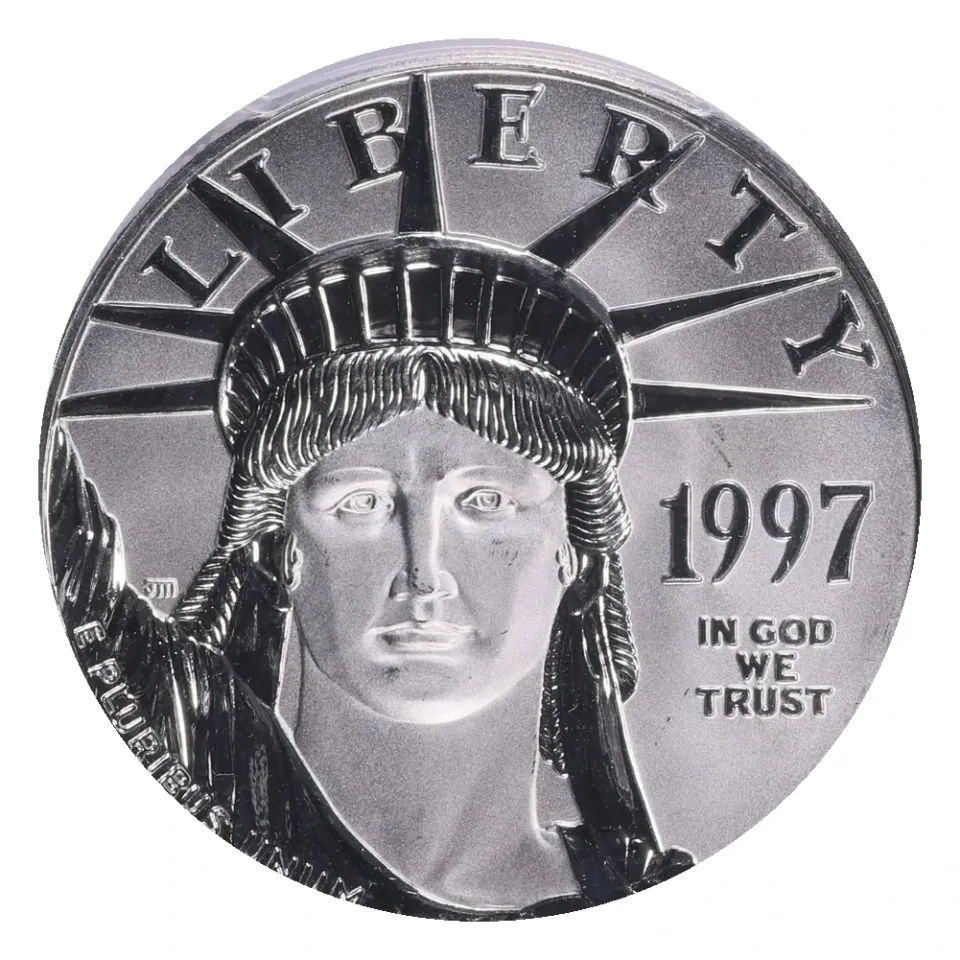
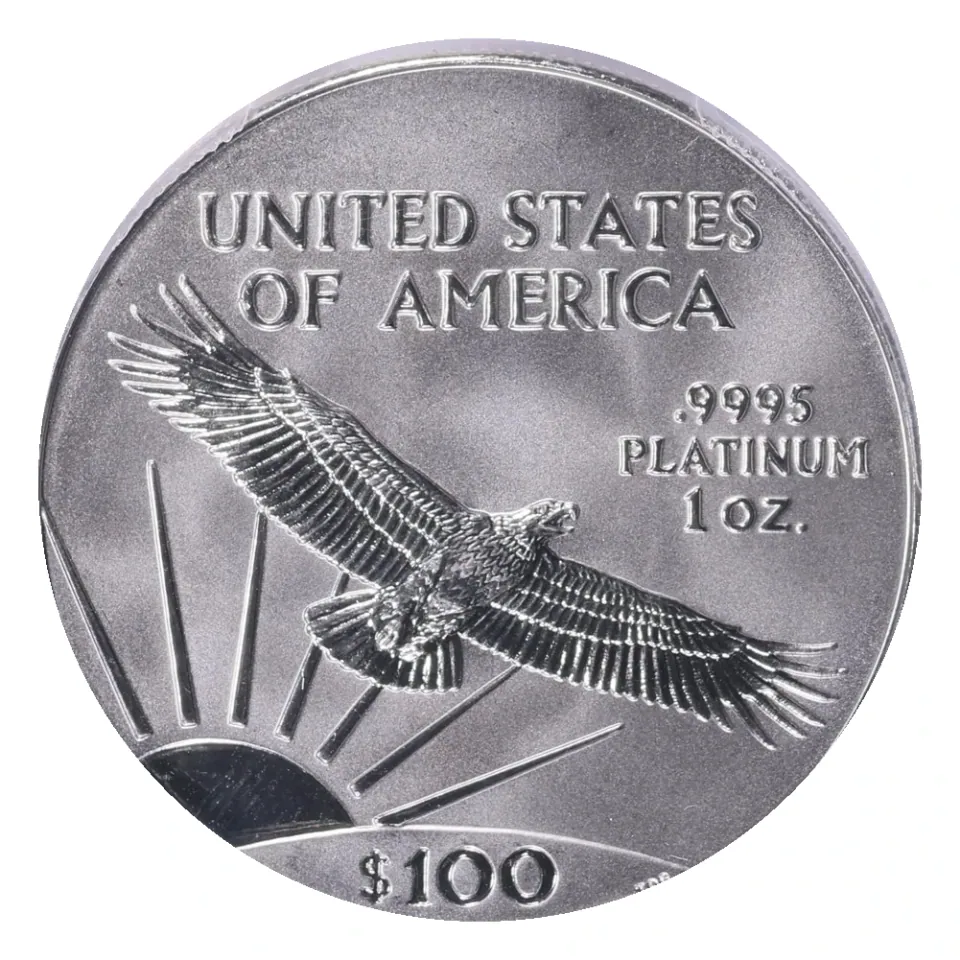
Platinum joined the American Eagle family after the gold and silver programs. John Mercanti’s close-up Statue of Liberty portrait identifies the original bullion obverse, while Thomas D. Rogers’ soaring eagle appears on the bullion reverse.
The program also includes collector Proof designs that have changed across themes and years. Some later Proof issues differ substantially from the familiar bullion portrait. That variation is intentional and should be checked against the official product, rather than called a wrong-design error.
The photographed 1997 coin is a first-year one-ounce bullion example. It shows one important format, not every later Proof design. Gold, silver and platinum Eagles share a program name while having different metals and specifications; the Gold Eagle guide covers its separate alloy and gross mass.
| Feature | What to check |
|---|---|
| Program start | 1997 |
| Platinum fineness | 99.95%, or .9995 |
| One-ounce denomination | $100 |
| One-ounce nominal mass / diameter | Approximately 31.12 g / 32.70 mm |
| Original bullion obverse | Statue of Liberty, John Mercanti |
| Bullion reverse | Soaring eagle, Thomas D. Rogers |
| Historical fractional denominations | $50 half ounce; $25 quarter ounce; $10 tenth ounce |
| Important distinction | Bullion designs and changing collector Proof designs are separate issues |
Identification
Read PLATINUM and the weight
The original bullion reverse states .9995 PLATINUM, the fine-metal quantity and denomination. Confirm those inscriptions and the date before selecting a value. A white metal appearance does not distinguish platinum from silver or another alloy.
The one-ounce example photographed here is not a fractional. Use the actual stated weight for a $50, $25 or $10 historical size, and verify that the date and product were issued. Do not assume every size was offered in every year.
Identify bullion versus collector design
A changing Proof design can belong to an official collector issue, even when it does not resemble the original 1997 bullion portrait. Compare it with the exact year’s official product and retain the original packaging or certification record.
A numerical Proof grade and a cameo designation describe different attributes. A high numerical grade does not identify the theme or metal for you. Separate private plating, colorization and medals from the Mint’s issued coin designs.
Check authenticity and preservation together
A scale, diameter and visual comparison are useful screening steps. They do not prove platinum content or authenticity in isolation. If a valuable coin’s material remains uncertain, use appropriate specialist testing rather than a scratch or acid test.
Inspect the fields, rim and raised devices for marks, haze or cleaning. The pictured PCGS MS69 attribution belongs to that specimen. Our grading guide helps distinguish numerical preservation from the identity of the product.
Condition & value
Fine-metal formulas prepared October 27, 2026. They require a separately dated platinum spot quote and do not assert a retail purchase price or resale offer.
| Issue | Grade / condition | Value or reference | Basis | Important condition |
|---|---|---|---|---|
| One-ounce bullion | $100 denomination | 1.000 × platinum spot per troy oz | Fine-metal reference | Use a separately dated platinum quote |
| Historical half ounce | $50 denomination | 0.500 × platinum spot per troy oz | Fine-metal reference | Confirm actual year and manufacture |
| Historical quarter ounce | $25 denomination | 0.250 × platinum spot per troy oz | Fine-metal reference | A collector premium is separate |
| Historical tenth ounce | $10 denomination | 0.100 × platinum spot per troy oz | Fine-metal reference | Do not substitute one-ounce mass or diameter |
| Proof, collector Uncirculated or certified coin | Exact date, product and grade | Compare matching completed sales | Collector evidence | No universal series-wide dollar range asserted |
A spot calculation measures nominal contained-metal value. It does not include a dealer premium, selling spread, delivery cost or collector demand. Record those components separately when comparing an actual offer.
For a fractional coin, compare all-in cost per fine ounce only after confirming its stated content. For a changing Proof design, the date, theme, grade and original product identity can matter beyond metal. A modern Proof should not inherit a bullion price simply because both say $100.
No fixed current retail range is asserted here because it would mix different sizes, metals-market dates and collector issues. Use recent matching completed sales and a current dated platinum quote for a specific transaction. Keep the coin and its packaging intact while seeking an appraisal.
Summary
Read the platinum fineness, stated weight, denomination and date. Separate the original bullion format from collector designs and historical fractions. Calculate the correct metal amount, then research the exact issue’s premium.
FAQ
When did the American Platinum Eagle begin?
The program began in 1997.
How much platinum is in a one-ounce Platinum Eagle?
The one-ounce format specifies one troy ounce of fine platinum at .9995 purity, with an approximate gross mass of 31.12 grams.
Are all $100 Platinum Eagles the same design?
No. The familiar bullion design and changing collector Proof themes require year-specific identification.
Were fractional Platinum Eagles made?
Yes. Historical fractional denominations include the $50 half ounce, $25 quarter ounce and $10 tenth ounce. Verify availability for the exact year and product.
References
References and further reading
References consulted October 27, 2026. Price tables retain the update dates stated in the text; guide estimates, face values and completed transactions are different forms of evidence.