

 App Store

COIN VALUE GUIDES · QUARTERS
1984 Quarter Value:P, D, S Proofs and Real Mint Errors
Compare ordinary 1984 quarters by mint and grade, then check whether an unusual shape or surface could be a genuine mint error.
 HeriBase Editorial TeamUpdated
In this article
Quick answer
Most worn 1984-P and 1984-D quarters are worth 25 cents. They are copper-nickel clad. The PCGS retail guide checked November 24, 2026 gives $20 for 1984-P and $32 for 1984-D in MS65. Those estimates apply to the specified uncirculated grade.
The 1984-S is a Proof. For a suspected error, compare the entire coin, rim and edge. A clipped-looking edge, copper appearance or doubled-looking lettering needs more evidence before it is priced as an error.
Coin photos
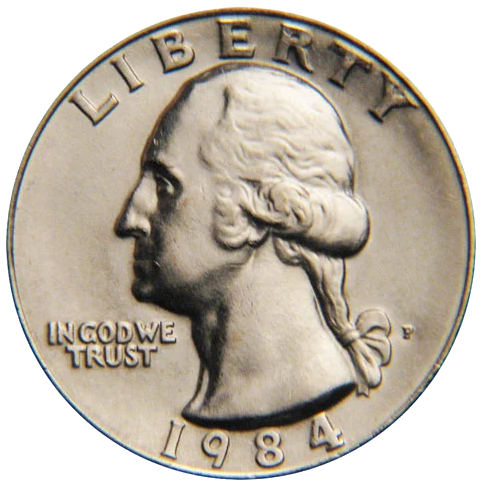
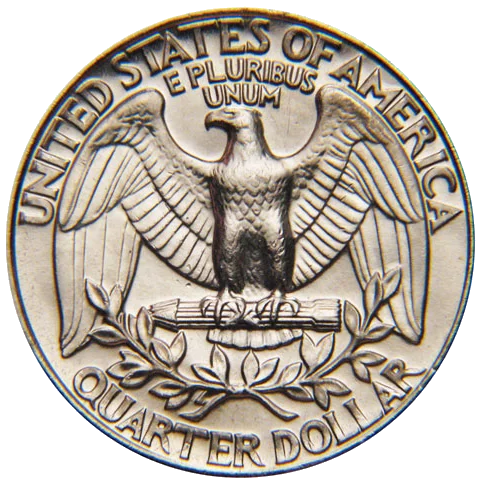
Basics & coin story
The Mint resumed its regular annual uncirculated sets in 1984 after the 1982–1983 gap. The quarter retained Washington’s portrait and Flanagan’s eagle reverse. Philadelphia and Denver made regular strikes, while San Francisco made the Proof in collector sets.
The circulated 1984 quarter was often handled for decades. Contact and wear can obscure the mint mark or distort an edge. Use the Washington quarter guide to compare the normal design before looking for a deviation.
| Feature | What to check |
|---|---|
| Regular mints | Philadelphia P; Denver D |
| Collector proof | San Francisco S |
| Metal | Copper-nickel clad with copper core |
| Weight / diameter | 5.67 g / 24.3 mm |
| Regular mintages | 676,545,000 P; 546,483,064 D |
Identification
Distinguish off-center striking from a damaged edge
A genuine off-center strike can leave a portion of the original blank unstruck and shift the design on both faces. A bent, torn or gouged edge that cuts through struck devices is more consistent with later damage.
Look for evidence of missing cladding
Check the color across the entire affected face and inspect the rim and weight. Wear, heat or plating can change color without removing a clad layer at the Mint. A single copper-colored patch is weak evidence.
Compare original surfaces within the exact grade
Check Washington’s cheek and the eagle’s breast for wear and large marks. Separate proof mirrors and cameo contrast from the luster of a regular strike.
Condition & value
Amounts are in U.S. dollars. Retail guide values are estimates for the stated grade, mint and designation. A dated sale is a record of one coin. Neither is a guaranteed purchase offer.
| Issue | Grade / condition | Value or reference | Basis | Important condition |
|---|---|---|---|---|
| 1984-P or 1984-D | Worn regular strike | $0.25 baseline | Face value | No attributed error |
| 1984-P | MS63 / MS65 | $5 / $20 | PCGS retail guide | Applies to original surfaces in those grades |
| 1984-D | MS63 / MS65 | $5 / $32 | PCGS retail guide | Do not transfer the premium to a worn coin |
| 1984-S | Proof | Compare by PR grade | Different manufacture | A Proof is expected to be distinctly reflective |
| Confirmed strike or clad-layer error | Attributed specimen | Compare same mechanism and grade | Completed error sales | No flat price for a different error |
Summary
Confirm P, D or S and identify the strike before looking at value. If the coin appears off-center or the cladding looks unusual, document both faces and the edge so the claim can be evaluated against genuine examples.
Frequently asked questions
Does a 1984 quarter contain silver?
Normal 1984 quarters, including the S Proof, are copper-nickel clad.
Is a 1984-P quarter with a dull surface an error?
Dullness can result from wear, environmental exposure or prior cleaning. It does not identify an error by itself.
Where is the mint mark?
Look on the obverse, to the right of Washington’s hair ribbon.
Can a 1984 quarter be valuable?
Certified high grades and genuinely attributed errors can command premiums. An ordinary worn coin generally starts at face value.