

 App Store

COIN VALUE GUIDES · QUARTERS
1983 Quarter Value:P, D, S Proofs and the Spitting Eagle
Check a 1983 Washington quarter’s mint mark, grade and the FS-901 Spitting Eagle diagnostic before using a price.
 HeriBase Editorial TeamUpdated
In this article
Quick answer
An ordinary worn 1983 quarter starts at 25 cents. It is copper-nickel clad, and a P or D beside Washington’s hair ribbon is expected. The PCGS retail guide checked November 24, 2026 lists normal MS65 examples at $46 for 1983-P and $35 for 1983-D.
The 1983-P Spitting Eagle is a specific die clash, cataloged as FS-901. Check for its raised ridge below the beak and compare it with a confirmed reference. San Francisco S coins are Proof issues and use a separate price table.
Coin photos
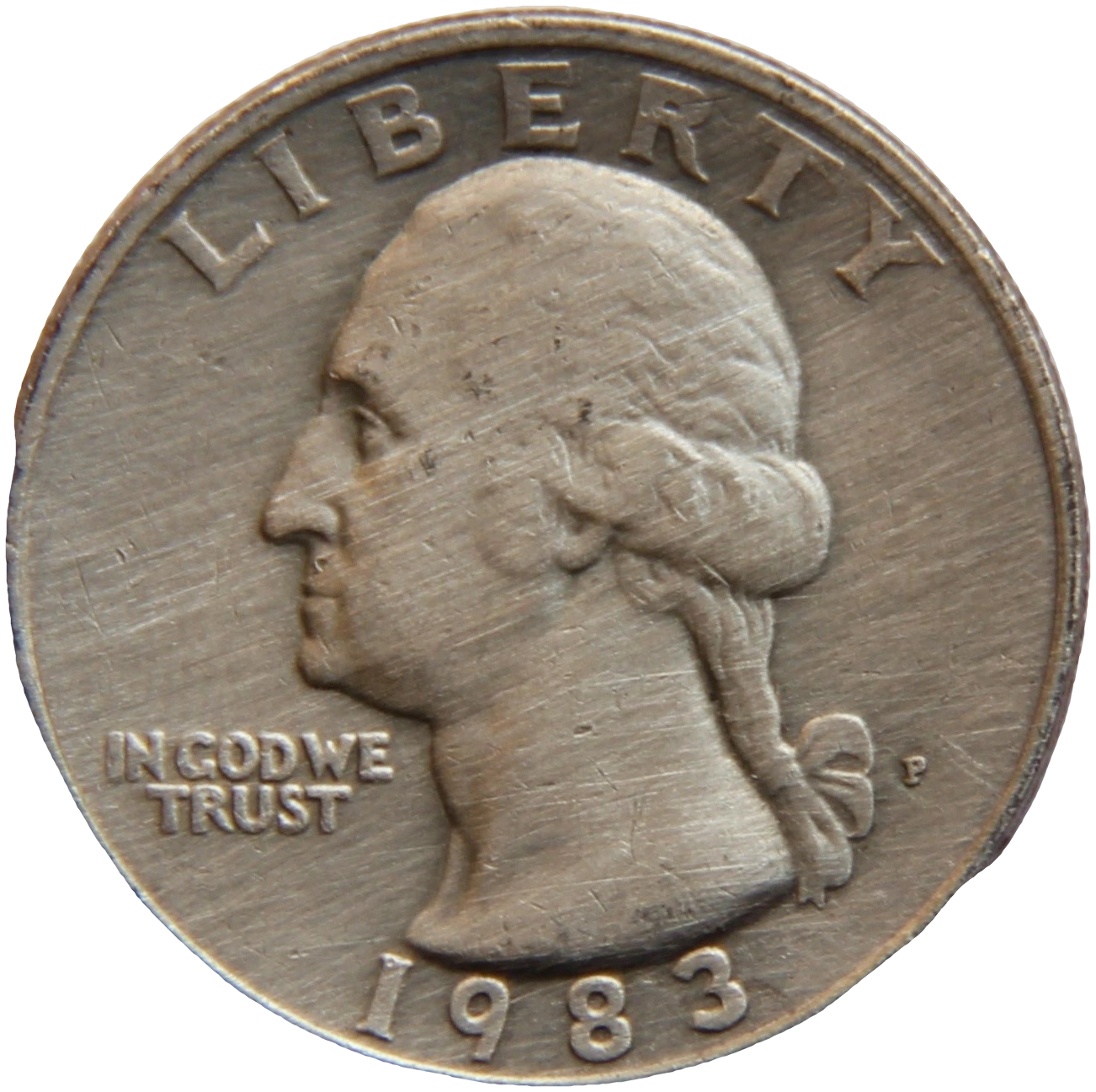
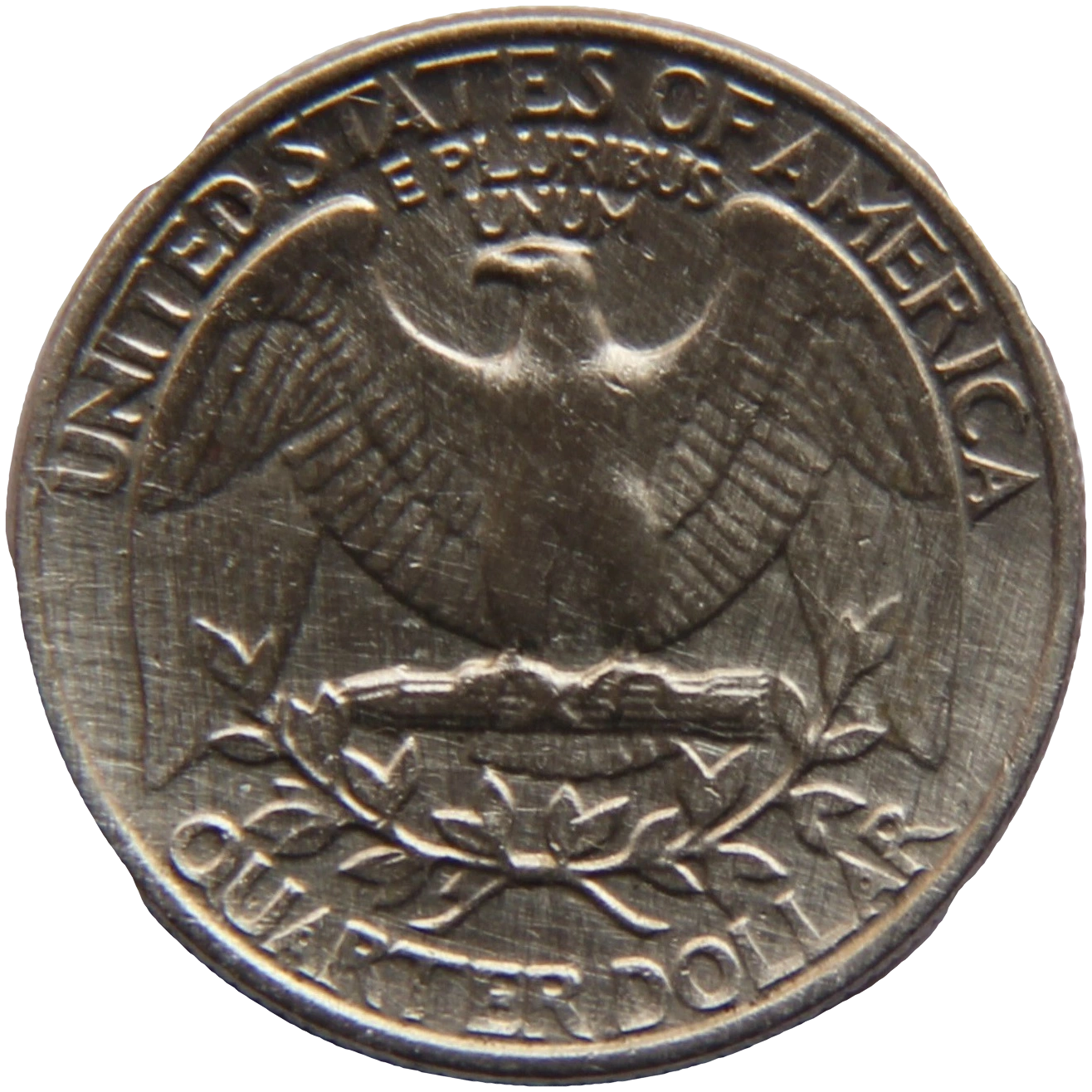
Coin photography by AKS.9955 (CC BY-SA 4.0, the original). Cropped and resized.

Basics & coin story
John Flanagan’s Washington portrait remained in use on the quarter in 1983, alongside the long-running eagle reverse. Philadelphia had begun placing a P on quarters in 1980, so finding a visible P is expected. The Mint did not issue the usual annual Uncirculated Coin Set in 1983; that helps explain why grade-sensitive comparisons matter despite high production.
For the composition and earlier mint-mark positions, see the Washington quarter series guide.
| Feature | What to check |
|---|---|
| Normal metal | Copper-nickel outer layers over a copper core |
| Nominal mass / diameter | 5.67 g / 24.3 mm |
| Regular strikes | Philadelphia P and Denver D |
| Proof issue | San Francisco S |
| Cataloged clash | 1983-P FS-901, Spitting Eagle |
Identification
Check the portrait side for the mint
Find the small letter to the right of the ribbon. If it looks absent, inspect for wear, debris or damage in the field. A rubbed-off letter does not turn it into a new Philadelphia variety.
Inspect the field below the eagle’s beak
NGC describes the Spitting Eagle as a raised ridge left by opposing dies touching. A scratch cuts into the metal. A raised line in the wrong location or shape also needs further comparison before attributing FS-901.
Separate Mint State from a bright worn coin
Rotate the obverse under one lamp and look for broken luster on Washington’s cheek and hair. Check the reverse breast and fields for wear. A clean-looking coin with actual wear does not qualify for MS65 pricing.
Condition & value
Amounts are in U.S. dollars. Retail guide values are estimates for the stated grade, mint and designation. A dated sale is a record of one coin. Neither is a guaranteed purchase offer.
| Issue | Grade / condition | Value or reference | Basis | Important condition |
|---|---|---|---|---|
| 1983-P or 1983-D | Ordinary circulated | $0.25 baseline | Face value | No confirmed variety |
| 1983-P | MS63 / MS65 | $28 / $46 | PCGS retail guide | Regular strike without a variety designation |
| 1983-D | MS63 / MS65 | $26 / $35 | PCGS retail guide | Same-grade comparison |
| 1983-S | Proof | Compare by PR grade and contrast | Separate issue | Do not apply regular-strike values |
| 1983-P FS-901 | Confirmed die clash | Compare attributed sales | PCGS / NGC variety | Use identical designation and grade |
Summary
Read the mint letter, assess actual wear and photograph the eagle’s beak if a raised ridge is visible. Use ordinary grade values until the exact die clash is confirmed.
Frequently asked questions
Is a 1983 quarter silver?
Normal 1983 P, D and S quarters are copper-nickel clad.
What makes a 1983-P quarter worth more?
Original Mint State condition or a confirmed variety can justify a different comparison. The P alone is expected.
What does a Spitting Eagle look like?
Look for the documented raised clash ridge below the eagle’s beak. Match the location and shape against a confirmed FS-901.
Is a 1983-S quarter an error?
S is normal for the San Francisco Proof. Price it by Proof grade and cameo designation, if any.