

 App Store

COIN VALUE GUIDES · QUARTERS
1981 Quarter Value:P, D, S Proofs and Type 1 vs Type 2
Check a 1981 Washington quarter by mint and finish, compare Philadelphia grades, and distinguish S Proof mint-mark types without mistaking a clad coin for silver.
 HeriBase TeamPublished
In this article
Quick answer
An ordinary circulated 1981 P- or D-mint Washington quarter has a 25-cent face-value baseline and contains no silver in its standard composition. The S issue is a separate clad Proof. Its Type 1 and Type 2 labels describe different S mint-mark punches, not silver content or a redesigned eagle.
The PCGS guide checked October 22, 2026 lists 1981-P regular strikes at $2 in Mint State 63, $20 in Mint State 65 and $35 in Mint State 66. These grade-specific retail estimates apply to problem-free uncirculated Philadelphia coins. They do not price a worn pocket-change quarter, a Denver coin or a San Francisco Proof.
Coin photos
Basics & coin story
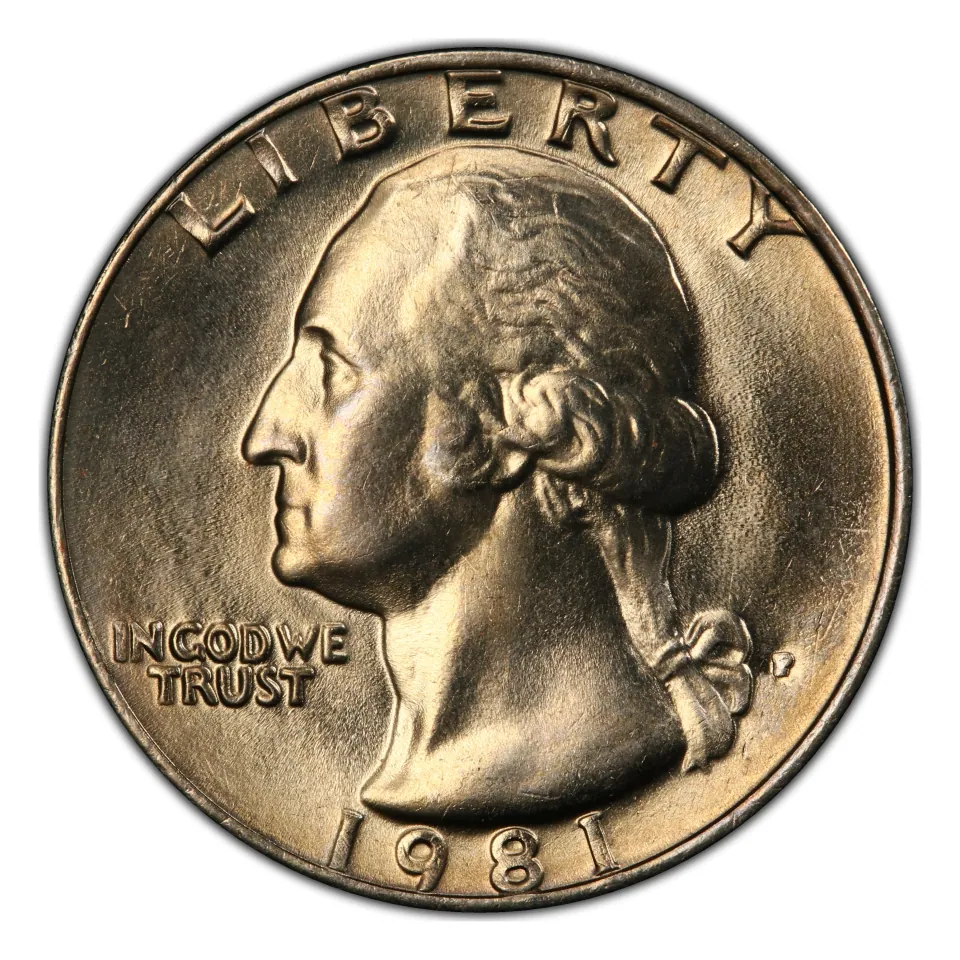
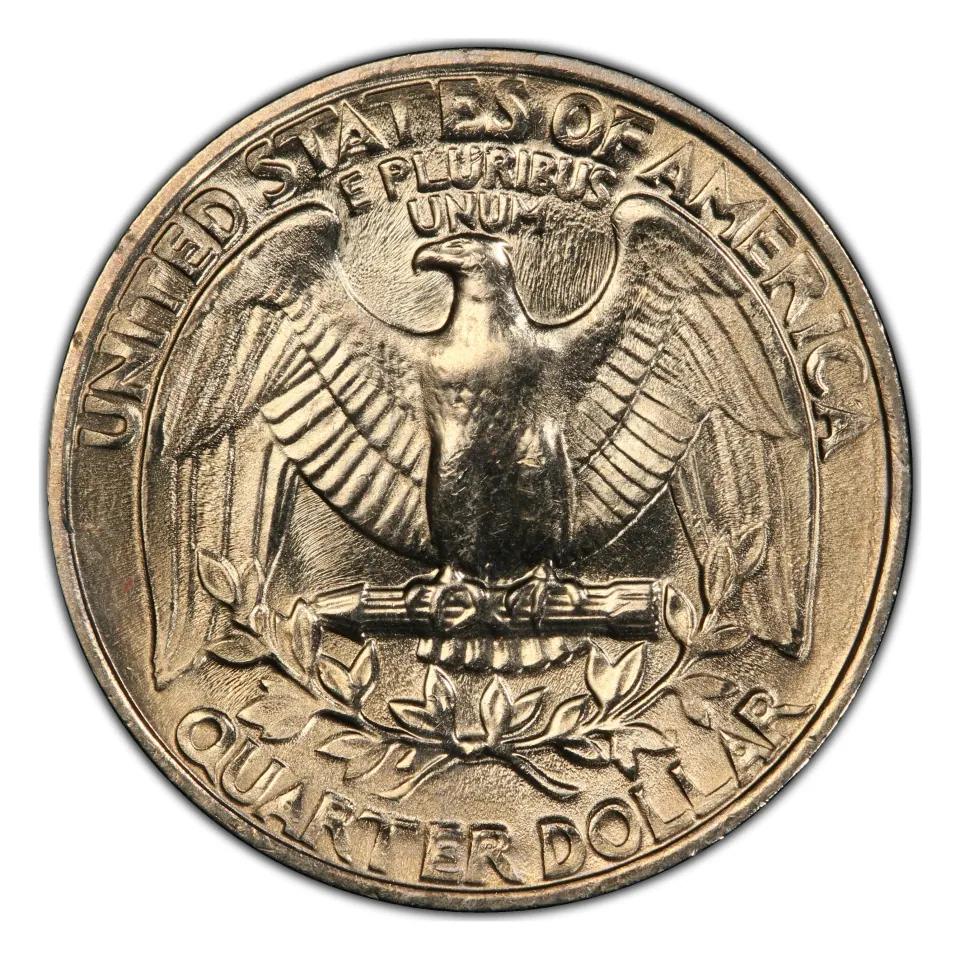
The 1981 quarter belongs to the Washington eagle-reverse era, before the state-quarter designs. John Flanagan’s Washington portrait and eagle design identify the type. A P or D distinguishes the regular production mint; the Proof issue carries S.
Philadelphia produced 601,716,000 regular 1981 quarters according to the issue records. Collectors also pay attention to the two S punches used on Proofs. PCGS explains that the 1981 Type 1 is the punch introduced as the 1979 Type 2, while the 1981 Type 2 has a different, more clearly defined shape with bulbous serifs. The type number must therefore be interpreted with its year.
| Feature | What to check |
|---|---|
| Type / denomination | Washington quarter, eagle reverse / 25 cents |
| Designer | John Flanagan |
| Standard composition | Copper-nickel outer layers over a copper core; no silver |
| Nominal weight / diameter | 5.67 g / approximately 24.3 mm |
| Edge | Reeded |
| Regular issues | 1981-P and 1981-D |
| Collector issue | 1981-S clad Proof, Type 1 or Type 2 |
| Mint-mark location | Obverse, beside Washington near the hair ribbon |
Identification
Find P, D or S before looking up a value
Inspect the portrait side near Washington’s hair ribbon. P selects Philadelphia, D Denver and S the Proof issue. An unclear letter should be photographed under better light. Do not treat an apparently absent mark as a normal Philadelphia convention for this date: its regular issue uses P.
Type 1 and Type 2 apply to the S Proof
Compare the S punch, including its shape and terminal serifs, with an authoritative image. A dark area filling a letter in a photograph is not enough for attribution. The 1979 and 1981 numbering is especially easy to confuse because the 1981 Type 1 uses the earlier year’s Type 2 punch. These labels should not be applied to P or D coins.
A standard S Proof is still clad
The normal 1981-S quarter has copper-nickel outer layers over a copper center. A Proof finish does not make it a silver issue. Brightness, toning or an apparently white edge alone should not establish a different composition. A suspected off-metal strike needs measurements and specialist authentication rather than a silver claim based on color.
Condition & value
Amounts are in U.S. dollars. PCGS retail-guide examples were checked October 22, 2026 and apply only to the stated issue, grade and designation. They are not guaranteed purchase offers; current market conditions and selling costs can change the amount received.
| Issue | Grade / condition | Value or reference | Basis | Important condition |
|---|---|---|---|---|
| Ordinary worn P or D | Circulated | 25¢ face-value baseline | Denomination | No silver-content premium for the normal coin |
| 1981-P regular | MS63 | $2 | PCGS retail guide | Problem-free Philadelphia comparison |
| 1981-P regular | MS65 | $20 | PCGS retail guide | Uncirculated, correct grade |
| 1981-P regular | MS66 | $35 | PCGS retail guide | Contact marks and luster matter |
| 1981-D / 1981-S Proof | Exact mint, grade and type | Use matching evidence | Separate issues | P-mint MS prices do not apply |
| Suspected mint error | Authenticated error | Case-specific | Physical evidence required | Ordinary damage excluded |
Mint State (MS) means uncirculated. Look for friction on Washington’s high points and contact marks across the cheek and fields. A strongly detailed coin may still have rub, and a weakly struck coin is not automatically worn. A small guide premium may not justify certification, postage and selling costs.
Proof grading commonly uses PR. Cameo or Deep Cameo contrast is another designation, separate from the S-punch type. Compare the same type, grade and contrast rather than a high-grade Type 2 record selected from a search result. The 2023 PCGS article explains diagnostics; its old price examples should not be treated as today’s quotes. Use the grading-scale guide and the surface-cleaning guide when assessing preservation.
Summary
Read P, D or S, identify regular strike versus Proof, and use the standard clad composition. Type 1 and Type 2 are S-Proof mint-mark distinctions. Reserve Philadelphia Mint State comparisons for matching coins, and document an uncertain mint mark or alleged error before seeking an attribution.
FAQ
Is a 1981 quarter silver?
Standard 1981-P and D regular strikes and the 1981-S Proof are copper-nickel clad, without silver in their normal composition.
Where is the mint mark on a 1981 quarter?
It is on the obverse beside Washington near the hair ribbon. P and D identify regular production mints; S identifies the Proof issue.
What is a 1981-S Type 2 quarter?
It is a Proof with a distinct S punch featuring a clearer shape and bulbous serifs. Confirm the mint-mark diagnostics rather than relying on brightness or the reverse design.
Does Type 2 mean the quarter is silver or an error?
No. Type 2 identifies the S mint-mark punch used on a Proof. It does not change the normal clad composition or by itself describe a mint error.
References
References and further reading
- PCGS CoinFacts: exact issue, specifications and available guide evidence
- PCGS: 1981 Type 1 and Type 2 S-punch diagnostics
- PCGS: 1981-S Type 2 Proof specifications
Sources and quoted guide evidence checked October 22, 2026. Guide estimates, historical sales, face value and metal-content calculations are identified separately.