

 App Store

COIN VALUE GUIDES · QUARTERS
1978 Quarter Value:No Mint Mark, D and S Proof
Check a 1978 Washington quarter for its mint mark, clad edge and wear. Compare Philadelphia and Denver values and identify the S Proof issue.
 HeriBase Editorial TeamUpdated
In this article
Quick answer
An ordinary circulated 1978 quarter is generally worth 25 cents. A blank mint-mark spot means Philadelphia, a D means Denver, and an S points to the separately priced San Francisco Proof.
For certified regular strikes, PCGS lists both circulation issues at $2 in MS63. At MS65 its guide lists $20 for Philadelphia and $7 for Denver. Use the grade that matches the coin’s surfaces and wear.
Coin photos
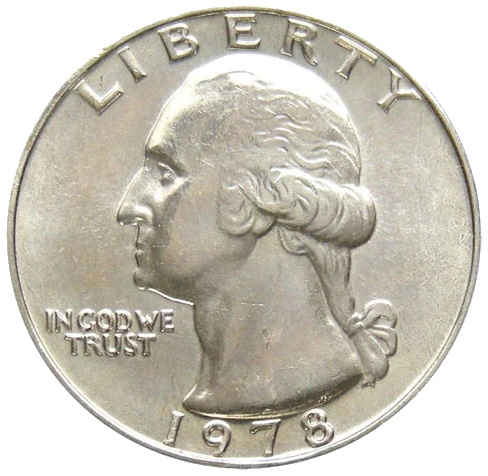
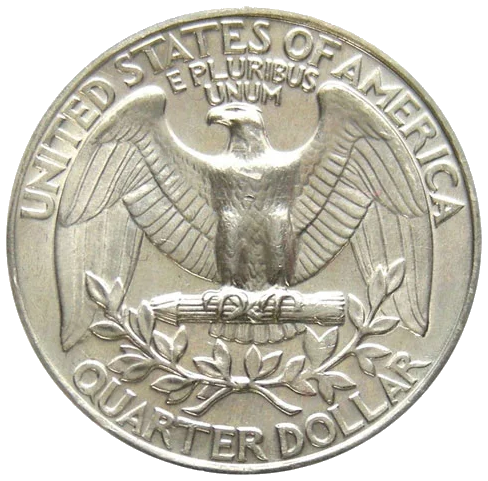
Basics & coin story
The regular date returned in 1977 after the dual-dated Bicentennial issue. A 1978 quarter has the standard eagle reverse. That reverse and date rule out the special Bicentennial silver quarter as a price comparison.
The two sides retain John Flanagan’s Washington portrait and eagle. The clad layers can usually be seen on the reeded edge. Compare other dates and mint-mark locations in the Washington quarter guide.
| Feature | What to check |
|---|---|
| Standard composition | Copper-nickel outer layers over a copper core |
| Nominal weight / diameter | 5.67 g / 24.3 mm |
| Regular strike | Philadelphia (blank) or Denver (D) |
| Collector issue | San Francisco S Proof |
| Mint-mark location | Obverse, just to the right of the hair ribbon |
Identification
Read the date and mint-mark field
Confirm all four digits and move to the hair ribbon. On a worn coin, tilt the field to see whether a small D is present. A legible blank on a regular 1978 quarter is ordinary for Philadelphia.
Evaluate wear under one light
Follow the cartwheel luster across Washington’s cheek. Friction often dulls the center of the cheek and the hair above the ear. Look for a similar break on the eagle’s breast. Separate contact marks, which can limit a Mint State grade, from actual wear.
Check a suspected off-center strike
For an off-center candidate, look for a blank crescent and clearly displaced design on both faces. Compare a rim flattened by squeezing or scraping with attributed errors. A partial rim or dark edge alone adds no price evidence.
Condition & value
Amounts are in U.S. dollars. Retail guide values are estimates for the stated grade, mint and designation. A dated sale is a record of one coin. Neither is a guaranteed purchase offer.
| Issue | Grade / condition | Value or reference | Basis | Important condition |
|---|---|---|---|---|
| Philadelphia or Denver | Ordinary worn | $0.25 | Face value | Unattributed circulation coin |
| 1978 Philadelphia | MS63 / MS65 | $2 / $20 | PCGS Price Guide, checked Nov. 24, 2026 | Same mint in both grades |
| 1978-D | MS63 / MS65 | $2 / $7 | PCGS Price Guide, checked Nov. 24, 2026 | Denver circulation strike |
| 1978-S | Proof | Match PR grade and contrast | Separate issue | Look for the S and compare confirmed Proofs |
Summary
For a 1978 quarter, sort by mint and strike, then inspect the highest design points for friction. Compare attributed mint errors separately from normal coins.
Frequently asked questions
Is a 1978 quarter silver?
The standard Philadelphia, Denver and San Francisco Proof issues are copper-nickel clad. Check the specifications and edge before attributing an unusual composition.
Is a 1978 quarter with no mint mark rare?
A blank field is standard on the Philadelphia regular strike. Preservation or a documented error can change the comparison.
Is a 1978-S quarter a Proof?
San Francisco issued the S-marked collector Proof for this date. Proof values depend on grade and contrast designation.
What makes a 1978 quarter worth more than face value?
An attractive uncirculated coin or a verified mint error may carry a premium. Compare the same mint and grade, or the same error type and extent.