

 App Store

COIN VALUE GUIDES · DOLLARS
1974 Silver Dollar Value:Clad, 40% Silver and Proof Versions
Tell a 1974 clad Eisenhower dollar from a silver collector issue, then compare the correct mint, finish and condition.
 HeriBase TeamPublished
In this article
What is a 1974 silver dollar worth?
Most 1974 Eisenhower dollars are copper-nickel clad, not silver. Ordinary worn Philadelphia and Denver coins have a $1 face-value baseline; the PCGS retail guide checked October 19, 2026 lists them at $2 in Very Fine 20. At Mint State 63, its figures are $18 for Philadelphia and $20 for Denver. Actual purchase and sale prices depend on preservation and transaction costs.
The normal 40% silver versions are 1974-S collector issues, in uncirculated and Proof finishes. The checked guide for the uncirculated silver issue is $30 at MS63 and $34 at MS65. San Francisco also made clad Proofs, so S alone does not prove silver. Identify the metal and finish before using a “1974 silver dollar value” price.
Two 1974 dollars with different metal
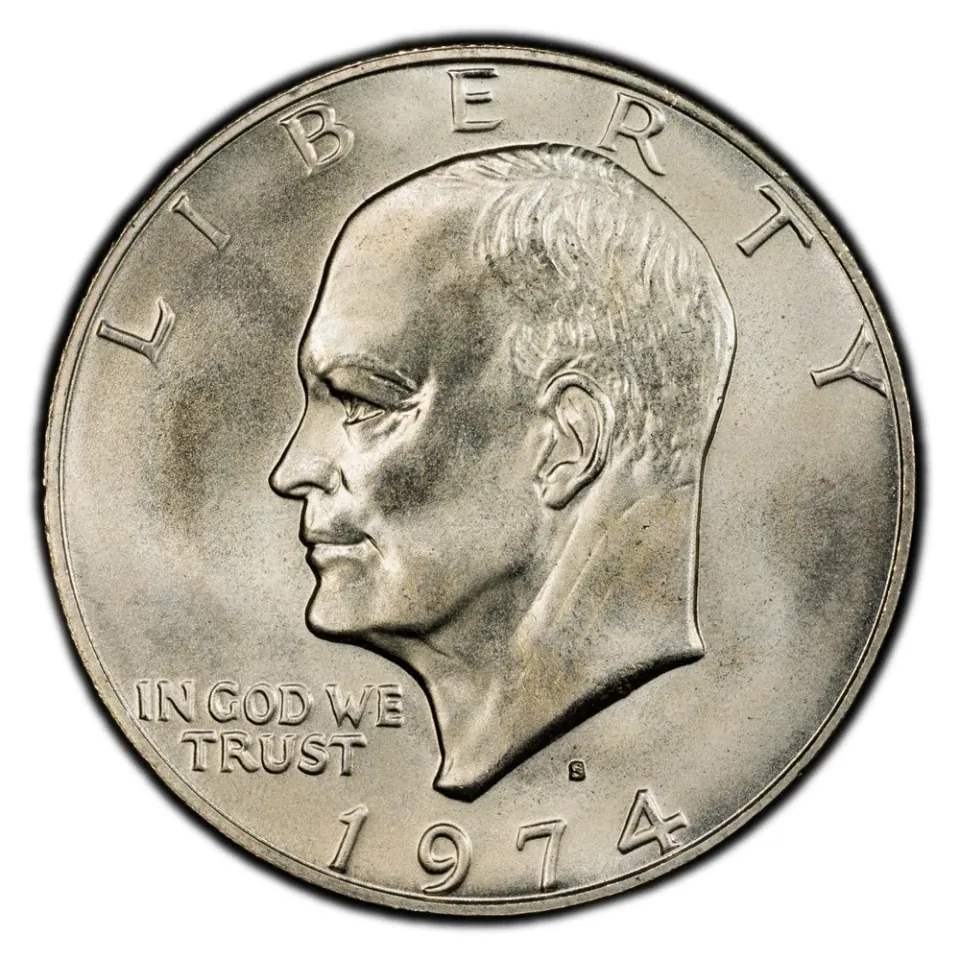
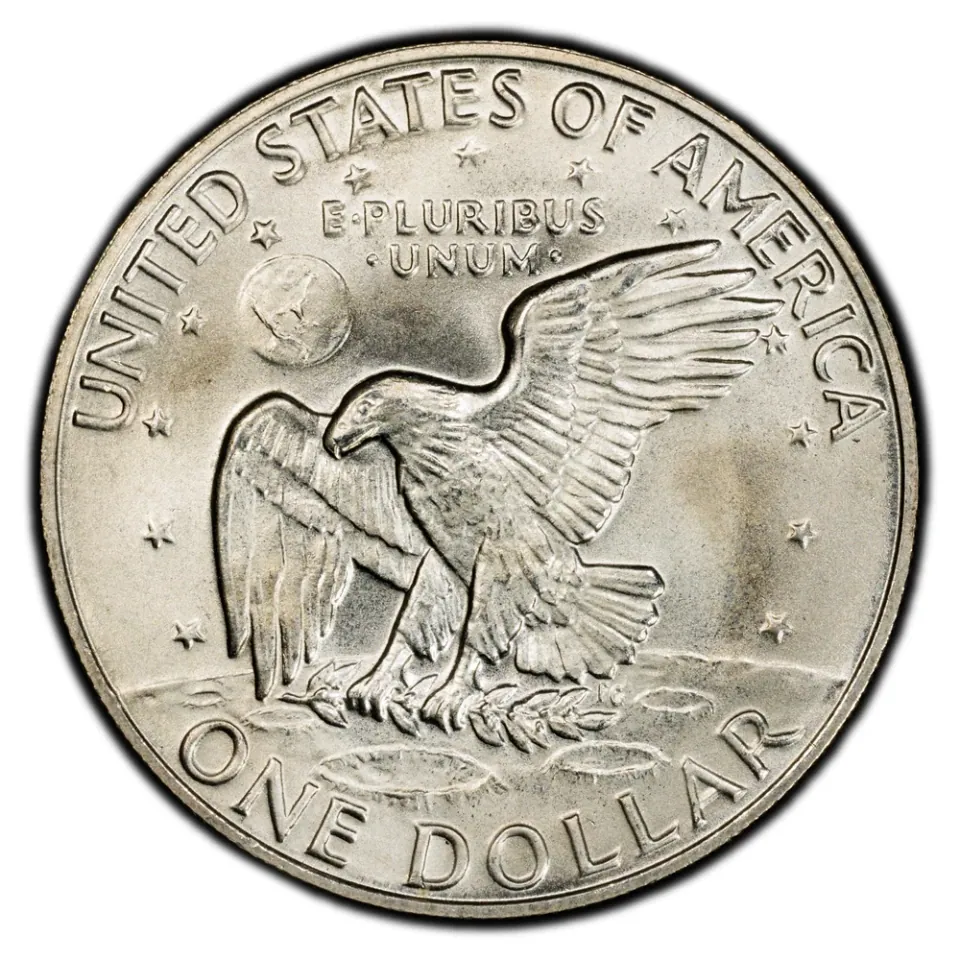
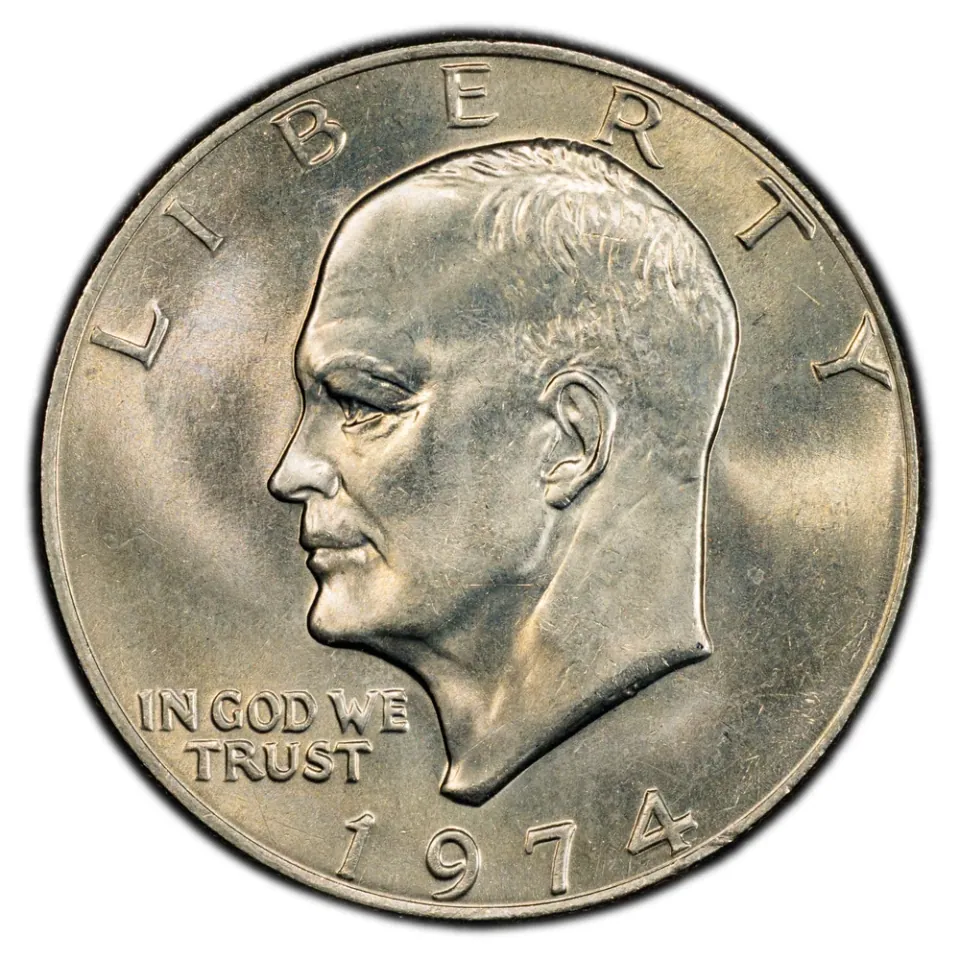
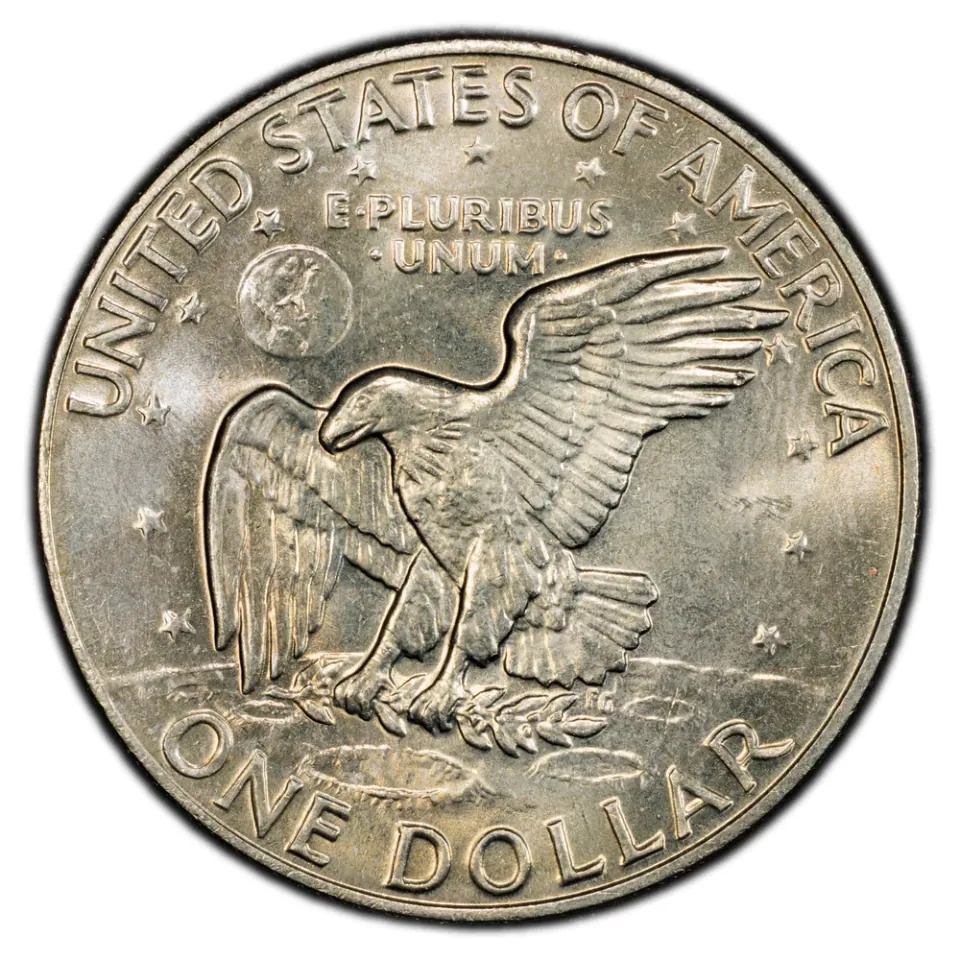
Eisenhower, Apollo and the last pre-Bicentennial date
The Eisenhower dollar joined a presidential portrait to an image inspired by the Apollo 11 mission. Eisenhower appears on the front, while the eagle descends onto the Moon holding an olive branch. This combination makes the coin a record of both a public figure and the era’s space achievement, rather than a continuation of the older Morgan silver dollar.
The year 1974 also sits immediately before the Bicentennial design change. Dollars made for the Bicentennial carry 1776–1976 and a Liberty Bell-and-Moon reverse. There is no normal 1975-dated Eisenhower dollar. The 1974 silver collector issue therefore belongs to the earlier eagle-reverse group; a dual-dated dollar needs a different guide.
| Feature | What to check |
|---|---|
| Type | Eisenhower dollar |
| Face value | $1 |
| Portrait / reverse theme | Dwight D. Eisenhower / Apollo 11-inspired eagle |
| Mint-mark location | Obverse, below neck and above date |
| Normal clad weight | Approximately 22.7 g |
| 40% silver weight | Approximately 24.6 g |
| Silver in 40% issue | Approximately 0.3161 troy ounce of fine silver |
| Edge | Reeded |
The Eisenhower dollar series guide covers the broader timeline. The earlier 1971 dollar and 1972 dollar guides have their own date-specific issues and should not supply prices for 1974.
For the next dollar design, the 1776–1976 dollar guide compares Bicentennial lettering types and separates silver from clad versions.
Separate the five normal 1974 versions
| Issue | Mint mark | Metal | Finish | What to compare |
|---|---|---|---|---|
| Philadelphia | None | Copper-nickel clad | Regular strike | 1974 no-mark clad coin |
| Denver | D | Copper-nickel clad | Regular strike | 1974-D clad coin |
| San Francisco clad Proof | S | Copper-nickel clad | Proof | Clad Proof grade and contrast |
| San Francisco silver uncirculated | S | 40% silver | Regular collector strike | 1974-S silver MS grade |
| San Francisco silver Proof | S | 40% silver | Proof | Silver Proof grade and contrast |
Start with the mint mark, then check the version. A copper-colored band at the edge supports a clad identification, while the different nominal weights help separate standard clad and silver issues. Neither appearance nor a single weight reading is an independent authentication result. Surface changes, wear and measurement limitations must be considered.
Original collector packaging can help identify a product, but check that the actual coin matches it. A loose S coin needs a metal and finish assessment. Proof describes the method and resulting finish, not a guarantee of silver content or an automatic top grade.
Rare wrong-planchet claims are outside this normal-issue table. An unexpected weight or color on a P or D coin needs specialist attribution; do not promote a normal clad dollar into the silver category on appearance alone.
1974 dollar value by issue and condition
| Regular issue | VF20 | MS63 | MS65 | Scope |
|---|---|---|---|---|
| 1974 · no mark | $2 | $18 | $26 | Clad, problem-free regular strike |
| 1974-D | $2 | $20 | $30 | Clad, problem-free regular strike |
| 1974-S silver | — | $30 | $34 | 40% silver collector regular strike |
PCGS retail guide estimates in US dollars, checked October 19, 2026. These are references for genuine, problem-free coins in the stated grade, not auction results or guaranteed offers. Cleaned, damaged and incorrectly graded coins need different comparisons.
Very Fine (VF) describes circulation wear; Mint State (MS) means no circulation wear. The $2 circulated guide reference is a retail listing level, not a promise that a dealer will pay $2 for every worn coin. For an ordinary coin, the $1 denomination remains the reliable face-value baseline.
For a separate Proof example, the same checked guide lists the 1974-S clad Deep Cameo issue at $14 in PR65 and $18 in PR67. PR is the Proof grade prefix; Deep Cameo describes strong contrast between frosted devices and mirrored fields. These particular figures do not price the silver Proof or a coin without that contrast designation.
What is the silver worth by itself?
For a normal 40% silver 1974-S dollar, multiply 0.3161 by a dated silver price per troy ounce. That is a metal-only reference before selling costs. It is different from both the retail collector value and the nominal coin weight. Do not use the Morgan dollar’s 0.7734-ounce silver content for an Eisenhower dollar.
Large open fields show handling marks readily. Luster, contact marks and any evidence of cleaning affect the comparison even when two coins have the same date and metal. Use the coin grading guide for condition terminology and compare the precise version in recent completed sales.
The shortest route to the right value
Identify clad versus 40% silver first, then regular strike versus Proof. Normal worn P and D dollars start at $1 face value; the checked retail guide is $2 at VF20 and $18–$20 at MS63. The 1974-S silver regular issue is $30 at MS63.
An S mark alone is insufficient because clad Proofs also exist. Record the mint, weight and finish, then use a matching price instead of a generic “silver dollar” quote.
Frequently asked questions
Are all 1974 Eisenhower dollars silver?
No. Normal Philadelphia and Denver issues are copper-nickel clad. The normal 40% silver collector versions bear S, but S clad Proofs also exist.
What is a 1974 dollar worth with no mint mark?
An ordinary worn Philadelphia clad dollar has a $1 face-value baseline. The PCGS retail guide checked October 19, 2026 lists $2 at VF20, $18 at MS63 and $26 at MS65; those are condition-specific references, not guaranteed offers.
How much silver is in a 1974-S silver dollar?
The normal silver collector issue is 40% silver overall and contains approximately 0.3161 troy ounce of fine silver. Its nominal total weight is approximately 24.6 grams. A 1974-S clad Proof has no silver.
Why is there no ordinary 1975 Eisenhower dollar?
The Bicentennial dollar coinage carries the dual date 1776–1976 instead of a normal 1975 date, and uses a Liberty Bell-and-Moon reverse. A 1974 eagle-reverse dollar is a separate issue.
References
Sources
Research checked October 19, 2026. Any price example retains its stated source date and scope.
- PCGS · 1974 PhiladelphiaClad specifications and regular-strike values.
- PCGS · 1974-DDenver regular-strike values.
- PCGS · 1974-S silver regular strikeSilver composition, weight and prices.
- PCGS · 1974-S clad Deep Cameo ProofThe distinct clad Proof price comparison.
- PCGS encyclopedia · 1974-S silver dollarHistorical context and the change to Bicentennial coinage.
- U.S. Mint · Eisenhower Proof set historyClad Proof coinage alongside separate silver collector issues.