

 App Store

COIN VALUE GUIDES · QUARTERS
1973 Quarter Value:No Mint Mark, Denver and Proof
Find the value of an ordinary 1973 quarter and learn how to distinguish the no-mint-mark Philadelphia strike, 1973-D and 1973-S Proof.
 HeriBase Editorial TeamPublished
In this article
Quick answer
An ordinary circulated 1973 Washington quarter is generally worth 25 cents. A blank field beside the hair ribbon is normal for Philadelphia. Denver circulation strikes show D there, and San Francisco produced S-marked Proofs for collectors.
Philadelphia and Denver coins are copper-nickel clad. A clean Mint State coin may sell for a premium, especially at the top grades. Compare an S Proof separately by numeric Proof grade and cameo designation.
Coin photos
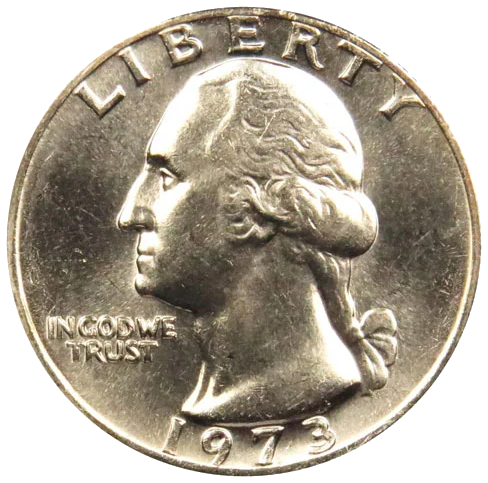
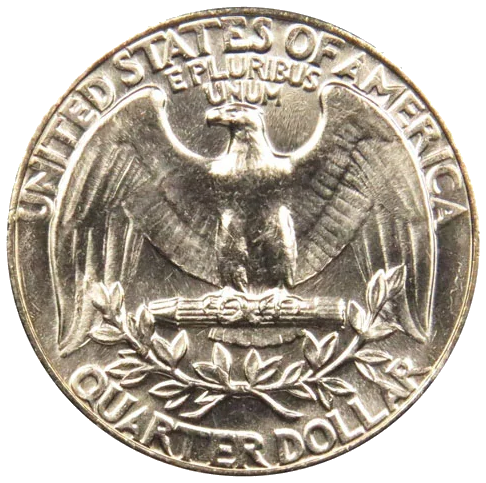
Basics & coin story
The 1973 quarter kept John Flanagan’s portrait and eagle, but used the copper-nickel clad composition introduced for circulation quarters in 1965. The design can therefore look very similar to older silver quarters. The date and construction tell you which price column to use.
This is also a regular single-date issue. The dual-date 1776–1976 reverse with the drummer belongs to a separate Bicentennial design. Compare mint-mark locations with the 1972 Washington quarter guide.
| Feature | What to check |
|---|---|
| Philadelphia / Denver | Blank or D to the right of the ribbon |
| San Francisco | 1973-S Proof |
| Nominal mass / diameter | 5.67 g / 24.3 mm |
| Normal alloy | Copper-nickel outer layers over a copper core |
Identification
Start at the ribbon
Check to the right of Washington’s hair ribbon rather than beneath the wreath. A worn high point, a dark patch or a dent may resemble a letter. Rotate the quarter and examine the field before assigning the mint.
Look at the edge as a confirmation
The normal clad edge often shows a copper-colored band between silver-colored surfaces. Dirt, toning and plating can obscure the band. If you suspect an unusual planchet, record the weight and diameter and compare a professionally attributed example.
Separate an ordinary shiny quarter from a Proof
Strong luster alone does not identify a Proof. Look for the S mint mark, the style of the rims and the surface contrast. For a regular Mint State coin, compare marks on Washington’s cheek and in the open fields.
Condition & value
Amounts are in U.S. dollars. Retail guide values are estimates for the stated grade, mint and designation. A dated sale is a record of one coin. Neither is a guaranteed purchase offer.
| Issue | Grade / condition | Value or reference | Basis | Important condition |
|---|---|---|---|---|
| 1973 blank or D | Ordinary circulated | $0.25 | Face value | Regular clad strike |
| 1973 blank or D | Mint State | Compare the same grade and mint | PCGS grade guide | A lower Mint State grade is not a top-population comparison |
| 1973-S | Proof | Compare the same PR grade and contrast | Proof market | Check original surfaces rather than polish |
Summary
Identify the mint on the portrait side. Use face value for a normal worn quarter, then compare the appropriate market for high-grade coins and S Proofs.
Frequently asked questions
Is the 1973 quarter with no mint mark rare?
No. A blank field is expected on a regular Philadelphia 1973 quarter.
Is a 1973 quarter silver?
The standard Philadelphia and Denver coins are copper-nickel clad, and the regular 1973-S Proof is also clad.
Where is the D on a 1973 quarter?
On the obverse to the right of the hair ribbon.
What is a circulated 1973-D quarter worth?
A normal circulated example is generally worth its 25-cent denomination.
How do I compare a 1973-S quarter?
Confirm that it is the San Francisco Proof and compare the same PR grade and cameo designation.