

 App Store

COIN VALUE GUIDES · QUARTERS
1970 Quarter Value:No Mint Mark, 1970-D and 1970-S Proofs
Identify a 1970 Washington quarter, compare ordinary clad coin values and distinguish a real die variety or strike error from damage.
 HeriBase Editorial TeamUpdated
In this article
Quick answer
A worn ordinary 1970 quarter typically starts at 25 cents. Regular no-mark Philadelphia and D-mint quarters are copper-nickel clad. USA Coin Book’s February 2026 numismatic table lists $12 at MS65 for 1970 Philadelphia, a guide estimate for a specific uncirculated grade.
An S indicates a San Francisco Proof. A documented 1970-D doubled die or a genuine wrong-host-coin strike is a separate comparison. A blank mint-mark space, odd color or apparent doubling alone does not establish an error.
Coin photos
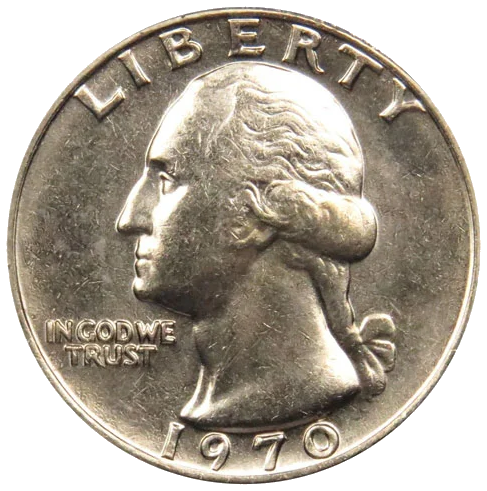
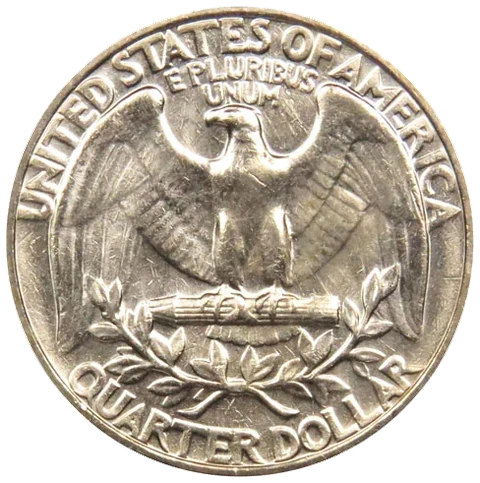
Basics & coin story
Washington quarters changed from 90% silver to copper-nickel clad during the preceding decade. By 1970 the regular Philadelphia and Denver strikes were clad, and mint marks had moved to the front. The blank area on Philadelphia’s coin was normal before the P was added to quarters in 1980.
The 1970-S Proof was a product for collectors. A published 1970-S Proof overstrike on a 1941 Canadian quarter is an unusual individual coin, not evidence that ordinary 1970-S quarters are silver or that 1941 can be read on a normal reverse. See the Washington quarter series guide for baseline design comparisons.
| Feature | What to check |
|---|---|
| Normal weight / diameter | 5.67 g / 24.3 mm |
| Normal composition | Copper-nickel clad over a copper core |
| Regular strikes | No mark Philadelphia; D Denver |
| Proof | S San Francisco |
| Mint-mark position | Obverse near Washington’s hair ribbon |
Identification
Read both the date and mint position
Look right of the hair ribbon. The absence of a letter is expected for Philadelphia. D is Denver, while S belongs to the contemporary Proof issue. A dark or worn field can hide the letter, so change the lighting before concluding it is absent.
Inspect lettering for a documented doubled die
Some 1970-D dies are cataloged for obverse or reverse doubling, including FS-101 and FS-801. Match the letter positions and separation to the exact listing. Flat shelf-like machine doubling and contact damage are separate phenomena.
For a claimed overstrike, document a second design
A genuine overstrike claim should identify consistent remnants of the host design. One random line, edge discoloration or an unusual scratch does not establish the Canadian-host piece.
Condition & value
Amounts are in U.S. dollars. Retail guide values are estimates for the stated grade, mint and designation. A dated sale is a record of one coin. Neither is a guaranteed purchase offer.
| Issue | Grade / condition | Value or reference | Basis | Important condition |
|---|---|---|---|---|
| 1970 or 1970-D | Normal circulated | $0.25 baseline | Face value | Unless an authenticated premium feature is present |
| 1970 Philadelphia | MS65 | $12 | USA Coin Book, Feb. 2026 numismatic table | Ordinary regular strike in the stated grade |
| 1970 Philadelphia | MS67+ | $2,160 | Heritage, June 2019, PCGS archive | Historic sale for an exceptional certified specimen |
| 1970-S | Proof | Compare same PR and contrast | Collector issue | Normal Proof is clad |
| 1970-D DDO / DDR | Exact authenticated attribution | Compare attributed sales | Separate die variety | FS number and grade matter |
Summary
Identify blank, D or S before comparing prices. Use regular clad values for most coins, and verify a die attribution or a second host design before comparing error sales.
Frequently asked questions
Is a 1970 quarter with no mint mark rare?
No. A blank mint position is standard on 1970 Philadelphia quarters.
Are 1970-S quarters silver?
Standard 1970-S Proof quarters are copper-nickel clad. An authenticated wrong-host exception does not change the standard alloy.
Where is the D on a 1970 quarter?
On the obverse to the right of Washington’s hair ribbon.
What is an ordinary 1970 quarter worth?
A normal worn coin typically starts at 25 cents. Uncirculated grades, Proofs and attributed varieties need different comparisons.