

 App Store

COIN VALUE GUIDES · QUARTERS
1969 Quarter Value:No Mint Mark, Denver and S Proofs
Find what an ordinary 1969 Washington quarter is worth, where to check the mint mark and when a Denver repunched mint mark deserves a closer look.
 HeriBase Editorial TeamPublished
In this article
Quick answer
An ordinary circulated 1969 Washington quarter is generally worth 25 cents. A blank field beside Washington’s hair ribbon is normal for Philadelphia. Denver used D, and 1969-S coins are clad Proofs.
The PCGS guide lists $32 for Philadelphia and $18 for Denver at Mint State 65. Those figures apply to graded regular strikes. A cataloged 1969-D/D repunched mint mark trades separately.
Coin photos
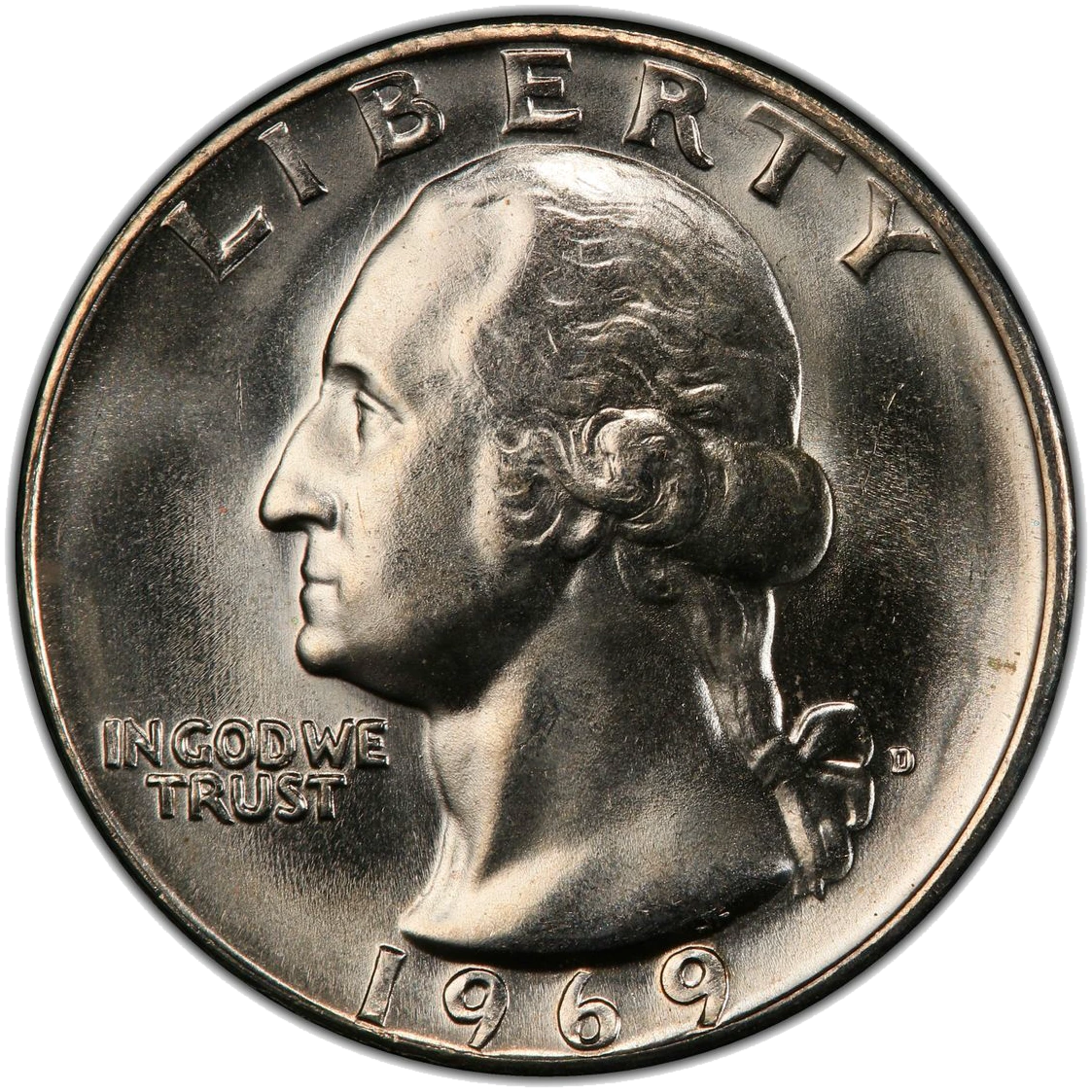
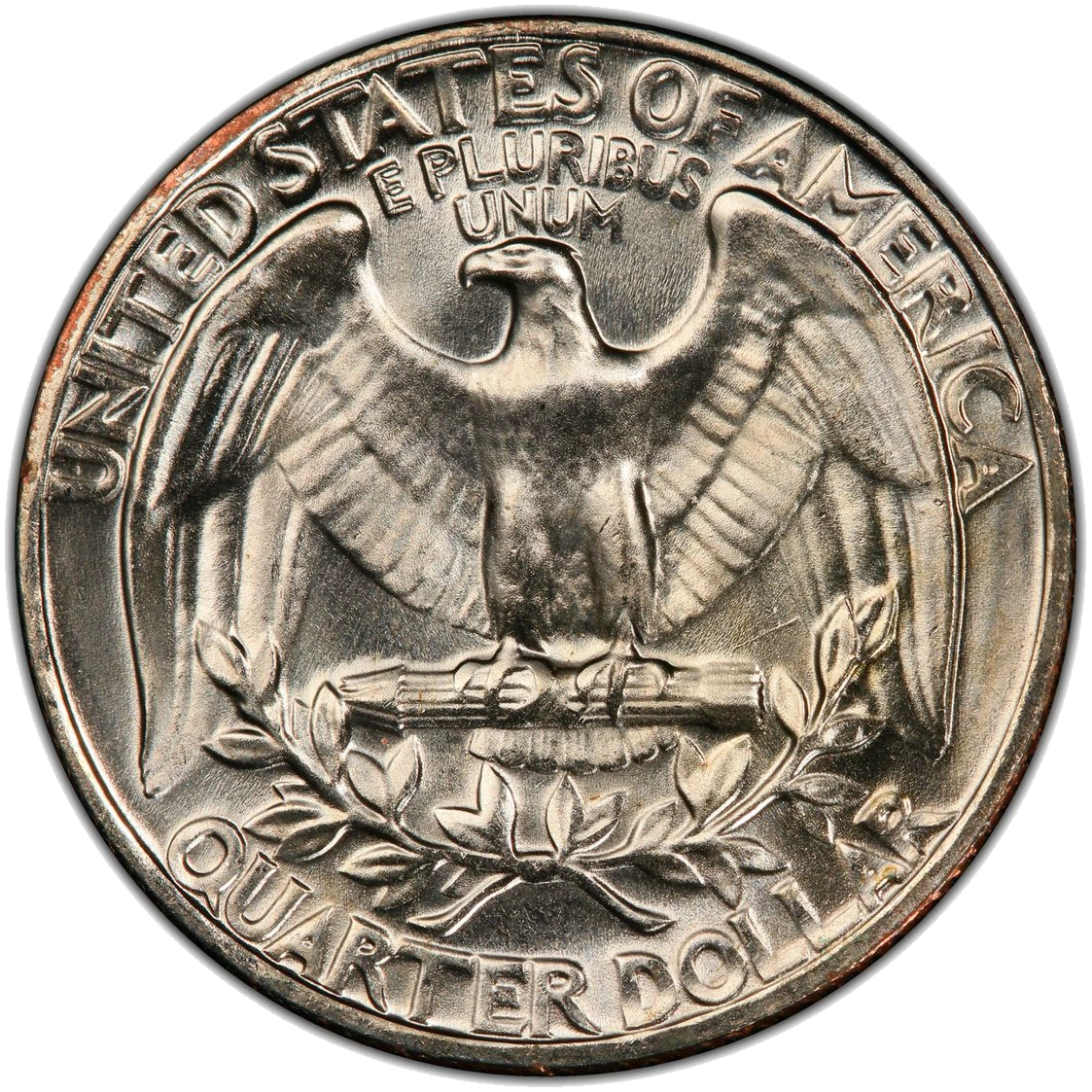
Basics & coin story
The mint mark moved from the reverse to the obverse in 1968. In 1969, Philadelphia still left its mark blank while Denver placed a D by the ribbon. The same design appears on earlier silver quarters, so the date is the first clue to the alloy.
Philadelphia struck 176,212,000 and Denver 114,372,000 circulation quarters. Both regular issues use copper-nickel outer layers around a copper core. A lower mintage does not automatically make the Denver coin more valuable at a given grade.
| Feature | What to check |
|---|---|
| Philadelphia | No mark to the right of the hair ribbon |
| Denver and San Francisco | D circulation strike; S clad Proof |
| Nominal clad dimensions | 5.67 g; 24.30 mm |
| Cataloged mint mark varieties | 1969-D/D FS-501 and FS-502 |
Identification
Use the obverse mint-mark area
Look to the right of the ribbon near the date. A blank field is normal on Philadelphia coins. Older silver quarters can have their mint mark below the reverse wreath, so a reverse search can lead to the wrong identification.
Match the suspected secondary D to one die
Inspect the raised D under side lighting. Match the positions and shapes of the secondary impression to FS-501 or FS-502. A flat ledge, displaced scrape or fuzzy halo calls for a different explanation. Compare the whole field before putting a variety premium on the coin.
Judge wear and strike with moving light
Compare the cheek, hair and eagle for fresh luster and actual wear. Unbroken luster can survive on a softly struck coin. For a 1969-S, compare the Proof grade and contrast separately. A shiny no-mint-mark coin still needs a circulation-strike comparison unless the evidence supports a different attribution.
Condition & value
Amounts are in U.S. dollars. Retail guide values are estimates for the stated grade, mint and designation. A dated sale is a record of one coin. Neither is a guaranteed purchase offer.
| Issue | Grade / condition | Value or reference | Basis | Important condition |
|---|---|---|---|---|
| Philadelphia or Denver | Ordinary circulated | $0.25 | Face value | Regular clad coin |
| Philadelphia / Denver | MS65 | $32 / $18 | PCGS retail guide, November 2026 | Ordinary graded examples |
| 1969-D/D FS-502 | PCGS MS66 | $2,640 on August 8, 2022 | Heritage lot 45089 | Attributed variety and high grade |
| 1969-S | Proof | Use same grade and contrast | Proof market | Standard clad issue |
Summary
Check the ribbon area first. Use face value for a normally worn example, then match mint and grade when luster or a cataloged second D supports a premium.
Frequently asked questions
Is a 1969 quarter with no mint mark rare?
A blank mint-mark field is normal on a Philadelphia circulation strike.
Is a normal 1969 quarter silver?
No. The standard 1969 issues, including S Proofs, are copper-nickel clad.
Where is the mint mark on a 1969 quarter?
Look to the right of Washington’s hair ribbon on the obverse.
What does 1969-D/D mean?
It refers to a genuine repunched Denver mint mark. Compare the coin with the diagnostic photos for an attributed variety.
Does an S automatically make the coin valuable?
An S is expected on a 1969 Proof. Its price depends on Proof grade, contrast and surfaces.