

 App Store

COIN VALUE GUIDES · DIME GUIDES
1961 Dime Value:Silver, No Mint Mark, D and Proofs
Identify a 1961 Roosevelt silver dime, find the reverse mint mark and compare circulated, Mint State, Full Bands and Proof examples.
 HeriBase TeamPublished
In this article
Quick answer
A genuine standard 1961 Roosevelt dime is 90% silver, whether it has no mint mark or a D. A worn example is usually evaluated first for its silver content: approximately 0.07234 troy ounce per nominal-weight coin. Multiply that by a current silver quote for a metal reference, then compare actual dealer bids; it is not a guaranteed cash payout.
For problem-free ordinary strikes, the PCGS guide retrieved November 6, 2026 lists $18 at Mint State 65 for Philadelphia and $18 for Denver. The retrieved table displays a November 3 update. These are retail guide estimates, not completed sales. Full Bands, Proofs and attributed varieties need separate comparisons; a missing mint mark is normal on Philadelphia coins.
Real coin photos
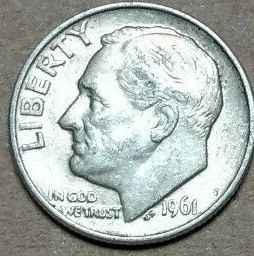
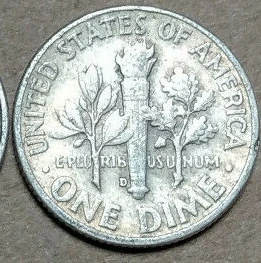
Basics & coin story
John R. Sinnock’s Roosevelt dime debuted in 1946 following Franklin D. Roosevelt’s death. Its torch, olive branch and oak branch express liberty, peace and strength. The denomination also connects Roosevelt with the March of Dimes campaign against polio. This date belongs to the original silver era, before regular dime production changed to copper-nickel clad in 1965.
The 1961 issue keeps that familiar design: Roosevelt faces left, with LIBERTY and IN GOD WE TRUST on the obverse and ONE DIME on the reverse. Nominal specifications are 2.50 g and 17.90 mm, with a reeded edge and 90% silver / 10% copper. Wear reduces actual weight; a scale alone does not authenticate a specimen.
Denver’s total exceeds 209 million. Common availability and an exceptional certified grade can coexist; the old MS68 sale below should not set expectations for a worn find.
| Version | Mint mark / strike | Mintage |
|---|---|---|
| 1961 Philadelphia | No mark; regular strike | 93,730,000 |
| 1961-D Denver | D on reverse; regular strike | 209,146,550 |
| 1961 Philadelphia Proof | No mark; collector strike | 3,028,244 |
Versions & mint marks
No mint mark or D?
Read the obverse date first, then turn the coin over. On this silver-era design the small mint letter sits left of the lower torch, near its base. No letter means Philadelphia; D means Denver. JS by the portrait is the designer’s initials, not a mint mark. There is no regular 1961-S issue. Dirt, a weak photograph or surface damage should not be described as a missing-mint-mark error.
Proof is a method of manufacture
Philadelphia also made 3,028,244 Proofs for collectors. They have no mint mark too. Do not decide “Proof” from a shiny surface alone: polishing can create shine and damage a business strike. Examine the fields, devices and rims together; Cameo or Deep Cameo contrast is an additional designation, not a substitute for the numerical Proof grade.
Cataloged varieties to research
1961-D doubled die reverse, FS-801. Compare the reverse with the specific published die markers. A doubled outline caused by lighting or mechanical doubling does not establish the cataloged die. Photograph both sides and the relevant detail before seeking attribution. Ordinary damage, scratches and machine doubling do not automatically carry a variety premium.
Condition & value
Separate wear from strike weakness. Circulated coins lose relief on the cheek and hair; Mint State means no circulation wear, not an absence of contact marks. Full Bands (FB) concerns the separation of the reverse torch bands and requires its own attribution. It is not awarded simply because a coin is unworn. Read the grading guide before comparing a raw coin to a certified grade.
| Issue | EF40 | MS65 | MS66 | Evidence |
|---|---|---|---|---|
| 1961, no mark | $7 | $18 | $20 | PCGS retail guide |
| 1961-D | $7 | $18 | $22 | PCGS retail guide |
| Worn / damaged | Metal-based comparison | Not applicable | Not applicable | Current bid for comparable silver coins |
| Proof / Full Bands / variety | Separate issue | Match exact designation | Match exact designation | Separate guide and sold lots |
Retrieved November 6, 2026; the source table displays November 3, 4:59 PM EST. The MS65 and MS66 entries are base grades, not plus grades or FB. Do not interpolate unlisted prices or apply these ordinary-strike figures to Proofs. Fees, shipping, taxes and selling costs are separate from these guide estimates.
Silver-content reference
At a hypothetical $40 per troy ounce, 0.07234 × $40 is about $2.89 of silver. This is arithmetic, not a current spot quote or a retail valuation. An actual offer depends on the current market, quantity, wear and the buyer’s spread; a collectible premium is not automatically added to every silver coin.
A documented historical comparison
1961-D, NGC MS68 with Star designation: $1,610, September 2009, lot 545. PCGS reports this individual result. Its summary does not separate hammer and buyer’s premium, so the displayed sale amount is not described as a hammer price or seller proceeds. It is an exceptional-grade historical example, not a typical circulated value. For a current estimate, compare several recent sales at the same mint, grade and designation.
Leave surfaces uncleaned. For an ordinary worn coin, compare a local dealer’s silver bid before paying for grading. If a potentially valuable variety or unusually high grade is plausible, use an appraisal to decide whether physical certification is justified.
Summary
For a 1961 dime, identify the reverse mint mark and strike type, then judge condition. Common worn coins start with a silver-market comparison; clean, certified Mint State pieces, Full Bands and Proofs belong in different markets. Preserve the surfaces and match dated evidence before deciding to sell or grade.
The Roosevelt dime guide covers the series and changing mint-mark locations. Compare 1962 dime values, 1960 dime values, 1956 dime values.
FAQ
Is a 1961 dime silver?
Yes. Standard Philadelphia, Denver and Philadelphia Proof 1961 Roosevelt dimes are 90% silver, with nominal silver content of approximately 0.07234 troy ounce.
Where is the mint mark on a 1961 dime?
On the reverse to the left of the lower torch. D identifies Denver; no letter is normal for Philadelphia.
Is a no-mint-mark 1961 dime an error?
No. Philadelphia regular strikes and Proofs normally have no mint mark for this year. Establish the strike type and condition before pricing.
Can a 1961 dime be worth hundreds of dollars?
Particular certified high-grade or attributed examples can sell for strong premiums. Those sales do not establish the value of a common worn coin; match mint, grade, designation and sale date.
References
References and further reading
- PCGS: 1961 Philadelphia
- PCGS: 1961-D
- PCGS: 1961 Proof
- PCGS Roosevelt dime price guide
- U.S. Mint: dime history and design
- PCGS: historical sale comparison
Sources checked November 6, 2026. Guide estimates and historical sale results retain their separate dates and scope.