

 App Store

COIN VALUE GUIDES · NICKELS
1953 Jefferson Nickel Value:D and S Mint Marks, Steps and Proofs
Find the 1953 nickel mint letter, separate normal strikes from Philadelphia Proofs and learn why sharp Full Steps can draw a different price.
 HeriBase Editorial TeamPublished
In this article
Quick answer
A normally worn 1953 Jefferson nickel is generally worth five cents. Look to the right of Monticello for D or S. An empty field is normal on a Philadelphia strike. The 1953 nickel uses copper-nickel alloy.
Collector premiums are more sensitive to preservation and strike than to the date alone. Separate ordinary Mint State examples from certified Full Steps, and compare unmarked Proofs with the correct Proof grade.
Coin photos
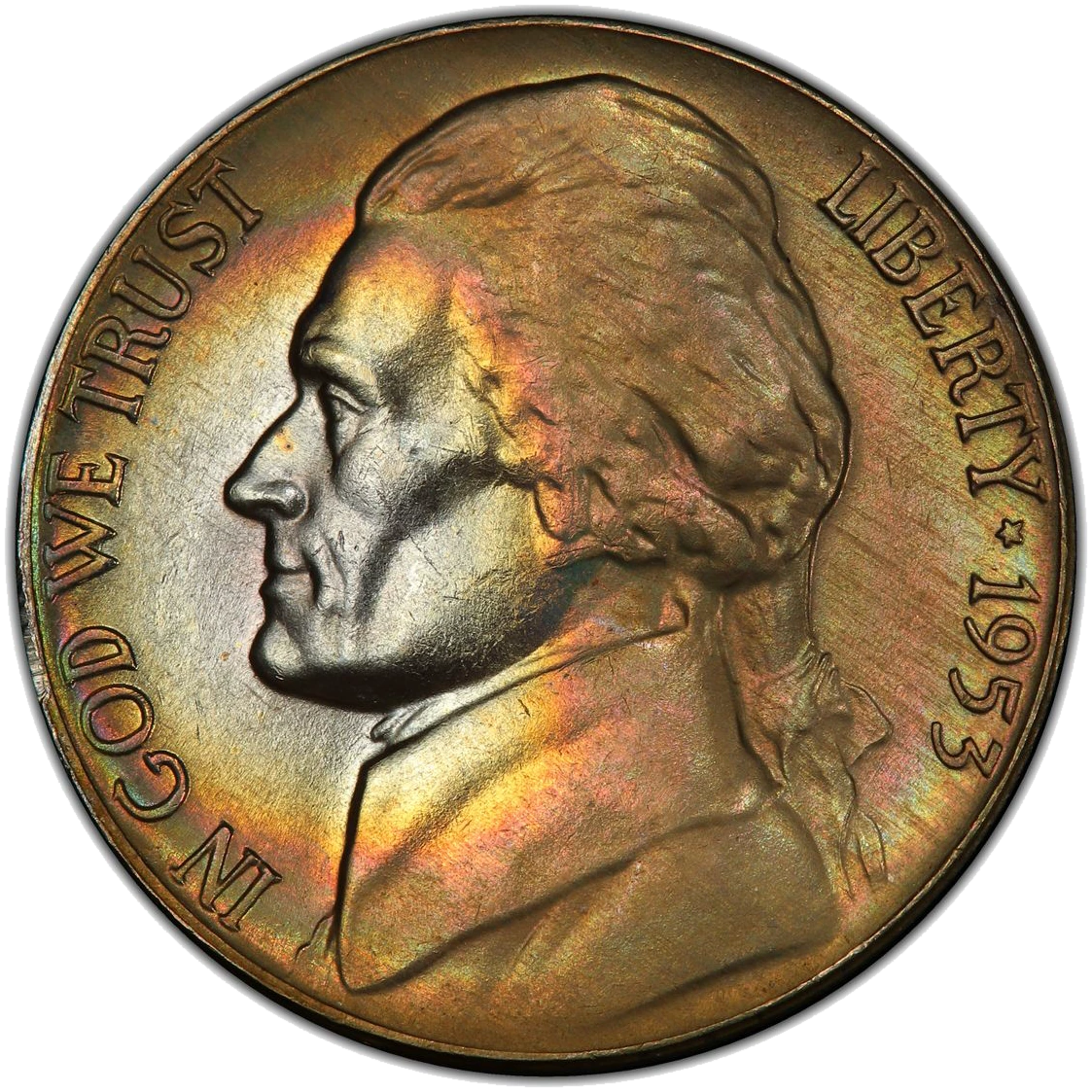
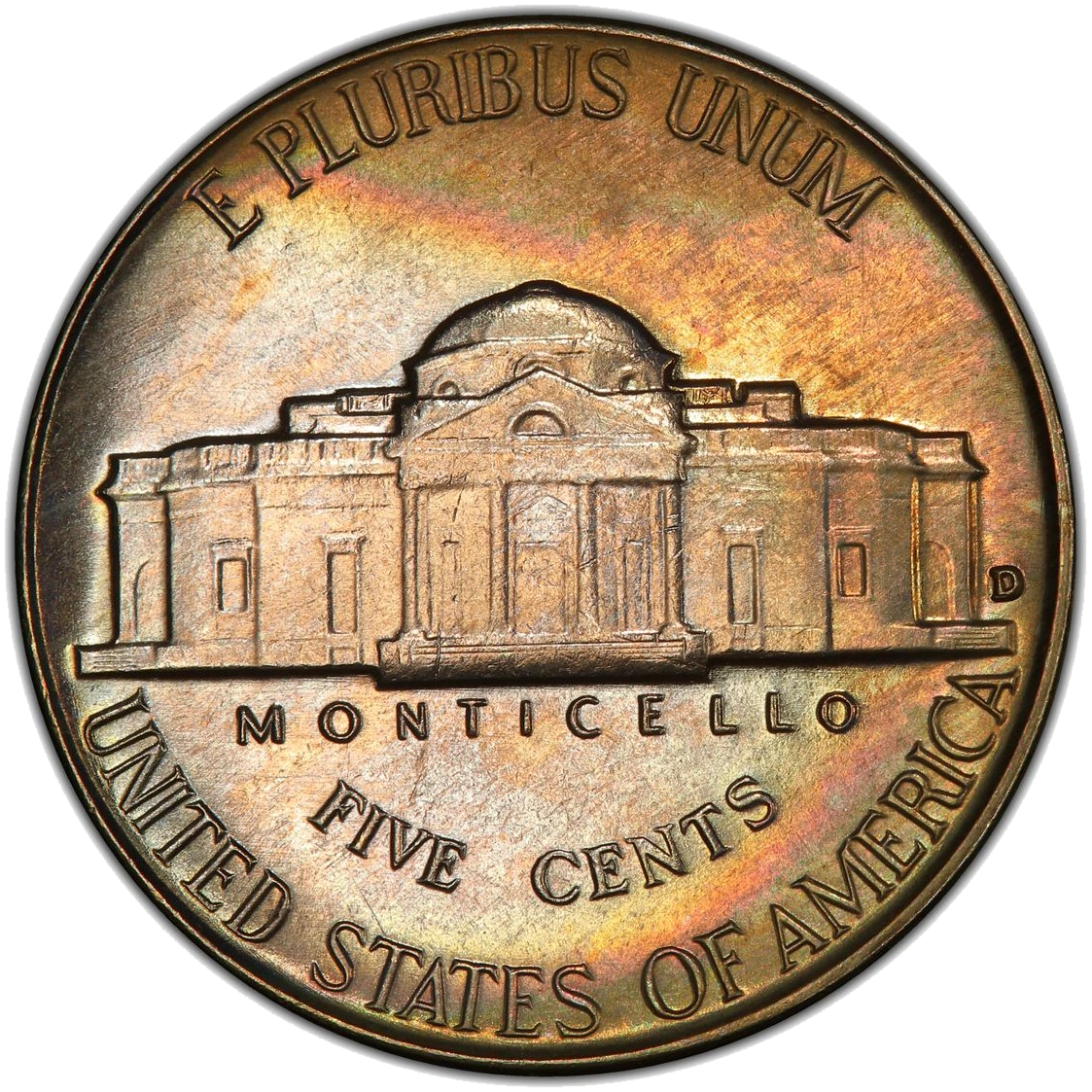
Basics & coin story
The original Jefferson design puts the date on the front and the branch mint mark on the back. A mark by the date on an ordinary 1953 coin is not where Denver or San Francisco identified its work.
PCGS lists 46,644,000 Philadelphia regular strikes and 19,210,900 for San Francisco. The 1953-S can be collected with soft detail in the steps, making the condition of the actual step lines more important than how sharp the date appears. Philadelphia also made Proofs for collectors.
| Feature | What to check |
|---|---|
| Circulation mints | Philadelphia (blank), Denver (D), San Francisco (S) |
| Collector finish | Philadelphia 1953 Proof, with no mint mark |
| Metal and mass | 75% copper, 25% nickel; 5.00 g |
| Reverse checks | Mint letter by the right wall; steps centered below Monticello |
Identification
Start with the reverse rather than the ribbon or date
The D or S sits to the right of the building on this date. Check a dark mark under two lighting directions. If the surface is disturbed or the shape does not match, keep the mint reading tentative.
Separate soft strike from wear on Jefferson and Monticello
A soft door or weak step lines can occur on a coin with original luster. Rub typically interrupts the luster on the high points of the hair and portrait. Grade those surfaces before using the step designation as a pricing factor.
Compare ordinary, Full Steps and Proof separately
Check the middle steps for uninterrupted lines, including marks interrupting the run. A Full Steps circulation strike and a reflective Proof are different comparisons. For another early-1950s example see the 1952 Jefferson nickel guide.
Condition & value
Amounts are in U.S. dollars. Retail guide values are estimates for the stated grade, mint and designation. A dated sale is a record of one coin. Neither is a guaranteed purchase offer.
| Issue | Grade / condition | Value or reference | Basis | Important condition |
|---|---|---|---|---|
| 1953, D or S | Ordinary circulated | $0.05 baseline | Face value | An attractive album coin may sell at a small premium |
| 1953-D or S | Uncirculated | Match mint, numeric grade and step status | PCGS guide or completed sales | Full Steps comparison requires the actual designation |
| 1953 Philadelphia | Proof | Compare PR grade and cameo designation | Proof market | The unmarked field does not separate a Proof from a regular Philadelphia coin |
Summary
Check the mint mark by Monticello, judge the luster and only then examine the steps. Keep regular-strike, Full Steps and Proof sales in separate comparisons.
Frequently asked questions
Where is the mint mark on a 1953 nickel?
A D or S appears just to the right of Monticello on the reverse.
Does a 1953 nickel with no mint mark have a mint error?
A blank mint-mark field is normal for Philadelphia.
What does Full Steps mean on a Jefferson nickel?
It is a strike designation for coins whose Monticello steps meet a grading service’s visibility and continuity criteria.
Are 1953 nickels made of silver?
No. Standard 1953 nickels use a copper-nickel alloy.
Does a shiny 1953 nickel automatically qualify as a Proof?
No. Check the strike, rims and finish against a certified 1953 Philadelphia Proof.