

 App Store

COIN VALUE GUIDES · NICKELS
1952 Jefferson Nickel Value:The S Mint, Proofs and Full Steps
Read a 1952 nickel’s reverse mint mark, compare common circulated coins and identify when a sharper strike or Proof could matter.
 HeriBase Editorial TeamPublished
In this article
Quick answer
A worn, ordinary 1952 Jefferson nickel generally starts at five cents. Blank means Philadelphia, D means Denver and S means San Francisco. The mint letter belongs on the reverse beside Monticello. None of the standard 1952 issues use the wartime silver alloy.
Original Mint State pieces, sharp Full Steps coins and Philadelphia Proofs have a separate collector market. An S identifies the lowest-mintage regular issue of the year and by itself establishes neither a high grade nor a large premium.
Coin photos
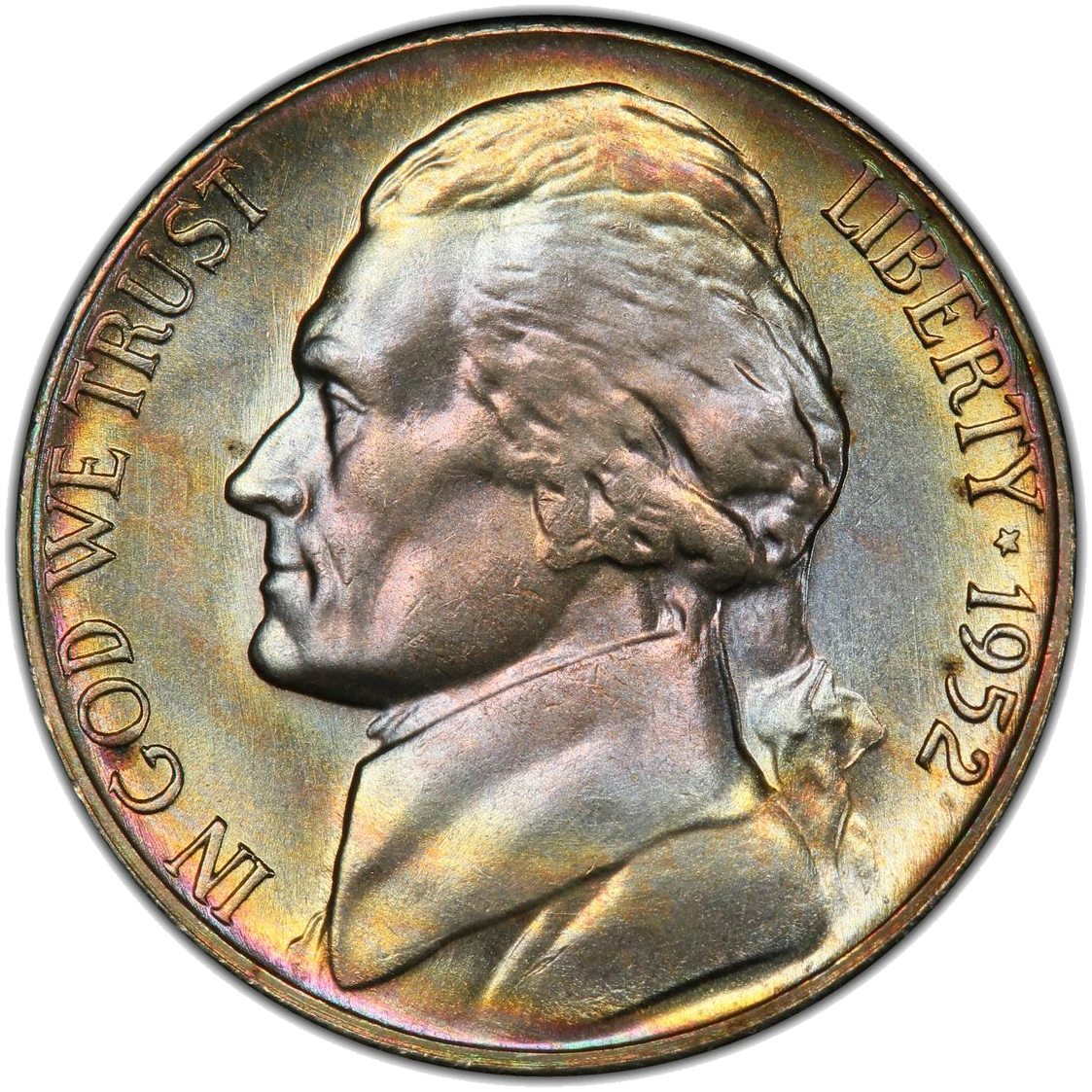
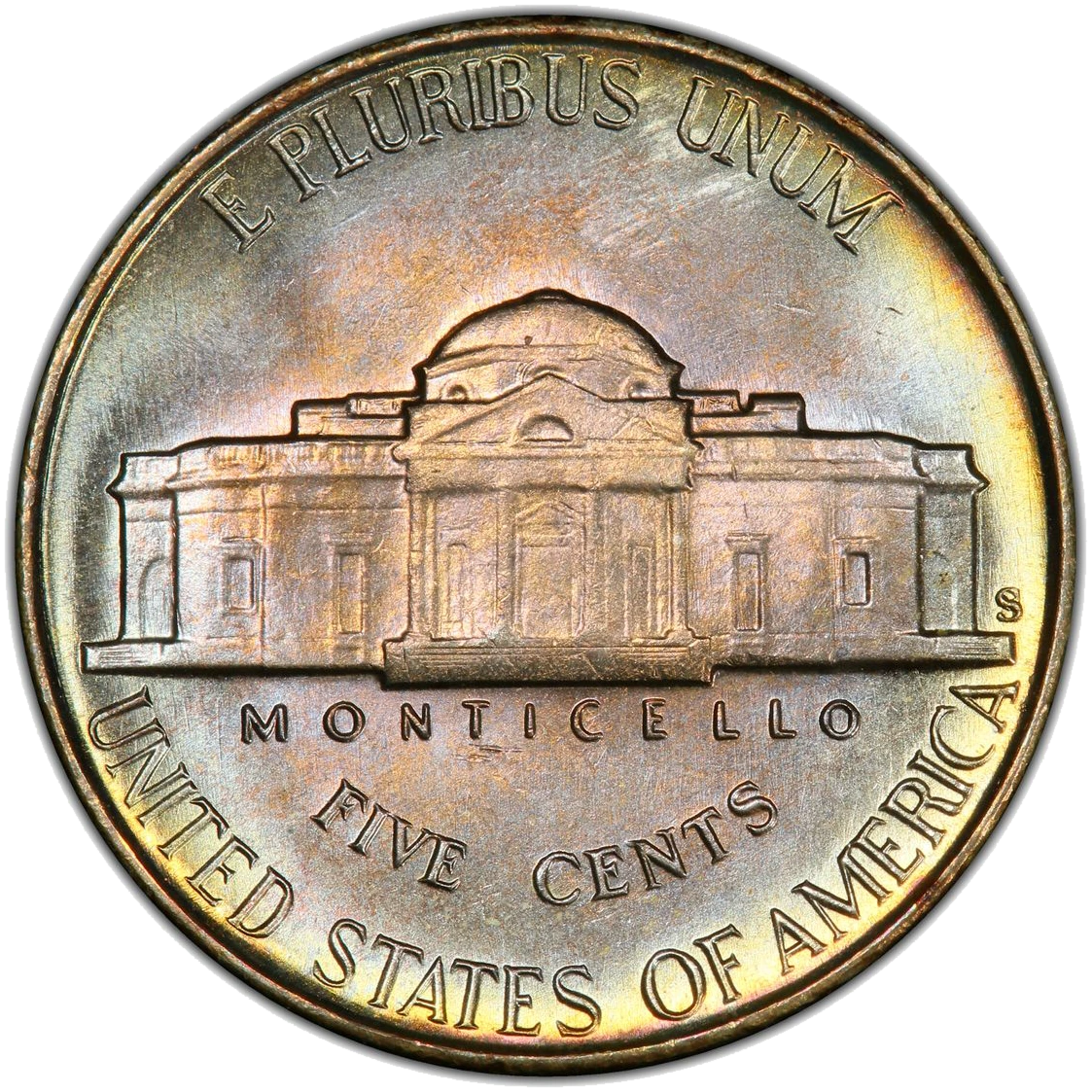
Basics & coin story
Felix Schlag’s Jefferson portrait and Monticello design were introduced in 1938. The original copper-nickel alloy was in regular use again by 1952. The wartime interruption is helpful context because the large mint marks above Monticello belong to the silver-alloy era, not to this issue.
PCGS lists 63,988,000 regular Philadelphia strikes, 30,638,000 Denver strikes and 20,572,000 San Francisco strikes. A lower production figure can affect date-and-mint collecting. Step definition and original surfaces still explain much of the variation among higher-grade coins.
| Feature | What to check |
|---|---|
| Nominal mass and diameter | 5.00 g; 21.20 mm |
| Alloy | 75% copper, 25% nickel |
| Obverse | Jefferson and the 1952 date |
| Reverse mint letter | D or S to the right of Monticello; blank for Philadelphia |
Identification
Read the S in its correct position
Check just right of Monticello near the rim. A letter above the building on a visibly different date belongs to another issue. In an angled photo, a genuine mark remains a raised letter in the expected area.
Look across the steps, then across the fields
The step lines must be meaningfully separated for an eligible Full Steps designation. A hit, weak segment or fused steps can prevent it. Use rotating light to check for circulation rub and verify the grade before placing the coin in a Full Steps price column.
Distinguish a Philadelphia Proof from a polished nickel
Both can be bright and unmarked. Examine the strike and original finish across both sides and compare an authenticated 1952 Proof. A uniform mirror over worn lettering can be a sign of alteration. Compare other Jefferson dates in the 1942 wartime and prewar nickel comparison.
Condition & value
Amounts are in U.S. dollars. Retail guide values are estimates for the stated grade, mint and designation. A dated sale is a record of one coin. Neither is a guaranteed purchase offer.
| Issue | Grade / condition | Value or reference | Basis | Important condition |
|---|---|---|---|---|
| Any regular 1952 mint | Ordinary circulated | $0.05 baseline | Face value | A dealer may separately price a problem-free album coin |
| 1952-S | Mint State | Compare the same grade and S issue | PCGS guide or completed sales | Use a separate comparison for Full Steps |
| 1952 Philadelphia | Proof | Use the same PR grade and contrast | Proof market | A blank mint-mark area is normal |
Summary
Identify the mint on the reverse and look for natural luster before studying the steps. A worn nickel and a certified Full Steps example need separate price checks.
Frequently asked questions
Is a 1952 nickel silver?
No. The regular 1952 nickel contains copper and nickel.
Where is the S on a 1952 nickel?
Look to the right of Monticello on the reverse.
Is the 1952-S low mintage?
It had the lowest regular-strike mintage of the three 1952 mints, at 20,572,000.
Can a Philadelphia 1952 nickel be a Proof?
Yes. Philadelphia made unmarked Proofs as a separate collector issue.
Do visible steps guarantee Full Steps?
No. Check the continuity of the lines, strike, marks and the grading service’s eligibility criteria.