

 App Store

COIN VALUE GUIDES · QUARTERS
1943 Quarter Value:Silver, Mint Marks and Doubled Dies
Identify a 1943 Washington quarter by its reverse mint mark, calculate its silver value, and check the diagnostics for a genuine doubled die.
 HeriBase Editorial TeamPublished
In this article
Quick answer
A regular 1943 Washington quarter contains about 0.1808 troy ounce of silver when unworn. Multiply 0.1808 by the current silver spot price per troy ounce for an approximate metal value. Collector prices also depend on mint, condition and any attributable variety.
Philadelphia quarters have no mint mark. A D or S appears on the reverse below the wreath. A genuine 1943 doubled die is a separate attribution. Start with the exact mint and use the diagnostics for that die.
Coin photos
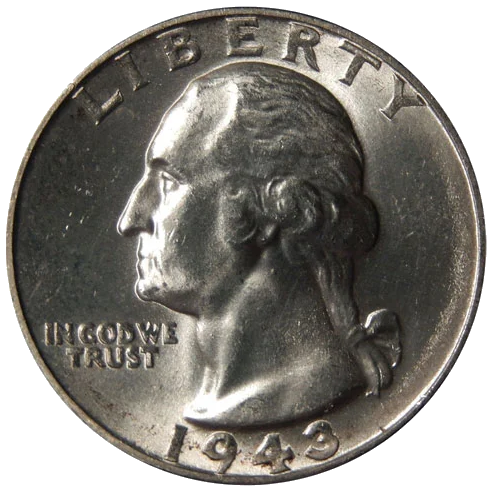
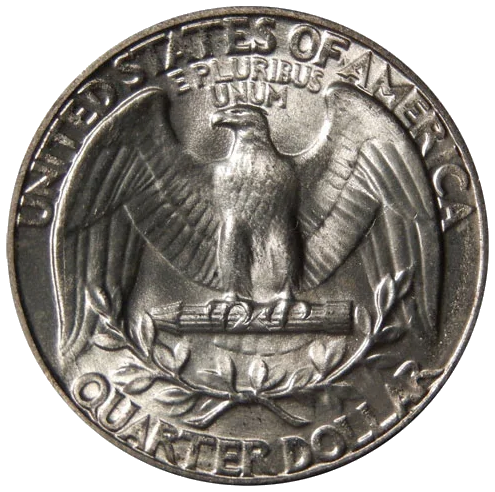
Basics & coin story
The Washington quarter began in 1932, the bicentennial of Washington’s birth. John Flanagan’s portrait and eagle reverse were both still in use in 1943. These wartime quarters retained 90% silver while the cent switched to zinc-coated steel.
The silver calculation uses the nominal 6.25 g weight, 90% fineness and 31.1035 g per troy ounce. A worn quarter may weigh less. Use the result as a metal benchmark, then compare collector sales or dealer bids for the coin you have. See the 1942 silver quarter guide for the neighboring date.
| Feature | What to check |
|---|---|
| Regular issues | Philadelphia (blank), Denver (D), San Francisco (S) |
| Mint mark | Reverse below the wreath |
| Nominal weight / fineness | 6.25 g / 90% silver |
| Silver content when unworn | Approximately 0.1808 troy ounce |
Identification
Turn the coin over first
Look below the wreath and above QUARTER DOLLAR. Check the area under light from two angles to distinguish a raised mint letter from a stain or contact mark. Pair the reverse photo with a legible date photo.
Check the motto against one cataloged die
For a suspected Philadelphia doubled die, compare IN GOD WE TRUST with the photographs for that specific attribution. Look for repeated raised contours or notches in the same locations as the reference. A flat shelf or isolated scratch needs a different explanation.
Grade the portrait and eagle together
Look for rub on Washington’s hair and loss of feather detail on the eagle. Under rotating light, interrupted luster helps separate actual wear from soft strike. Compare with the same mint and grade, then evaluate the surfaces for cleaning.
Condition & value
Amounts are in U.S. dollars. Retail guide values are estimates for the stated grade, mint and designation. A dated sale is a record of one coin. Neither is a guaranteed purchase offer.
| Issue | Grade / condition | Value or reference | Basis | Important condition |
|---|---|---|---|---|
| Any normal mint | Worn | 0.1808 × spot as a nominal silver benchmark | Metal calculation | Allow for wear, dealer spread and any collector premium |
| Philadelphia / D / S | Higher circulated or Mint State | Match the individual mint and grade | PCGS grade guide | Treat visibly cleaned pieces separately |
| Philadelphia doubled die | Attributed | Compare sales for the exact die number | Variety market | A diagnostic match and grade are both needed |
Summary
Use the silver calculation as the starting point, then read the mint under the wreath. If the motto appears doubled, confirm the exact attribution before opening a variety price guide.
Frequently asked questions
Is a 1943 quarter silver?
Yes. The standard issue is 90% silver, with about 0.1808 troy ounce of silver at full weight.
What does no mint mark mean?
A regular 1943 quarter without a reverse mint mark was struck in Philadelphia.
Where is the D or S on a 1943 quarter?
Look on the reverse below the wreath and above QUARTER DOLLAR.
Does a wide motto make it a doubled die?
Compare the shape and position of the doubling with a cataloged die. Flat shelves and damage can widen letters as well.
What is a worn 1943 quarter worth?
Start with its silver content and then check current local bids and sold examples for its mint and condition.