

 App Store

COIN VALUE GUIDES · DIMES
1943 Mercury Dime Value:No Mint Mark, D, S and Full Bands
Find the mint mark on a 1943 Mercury dime, identify Weinman’s AW monogram and compare standard 90% silver coins with Full Bands examples.
 HeriBase Editorial TeamUpdated
In this article
Quick answer
A regular 1943 Mercury dime is 90% silver, with about 0.07234 troy ounce of fine silver. In the PCGS guide checked November 24, 2026, normal Philadelphia, Denver and San Francisco coins were each $10 in XF40 and $65 in MS65.
A W-like mark on the obverse is part of Adolph A. Weinman’s AW monogram. The real mint letter is on the reverse. An attributed Full Bands example needs a grade and strike designation match before using a price.
Coin photos
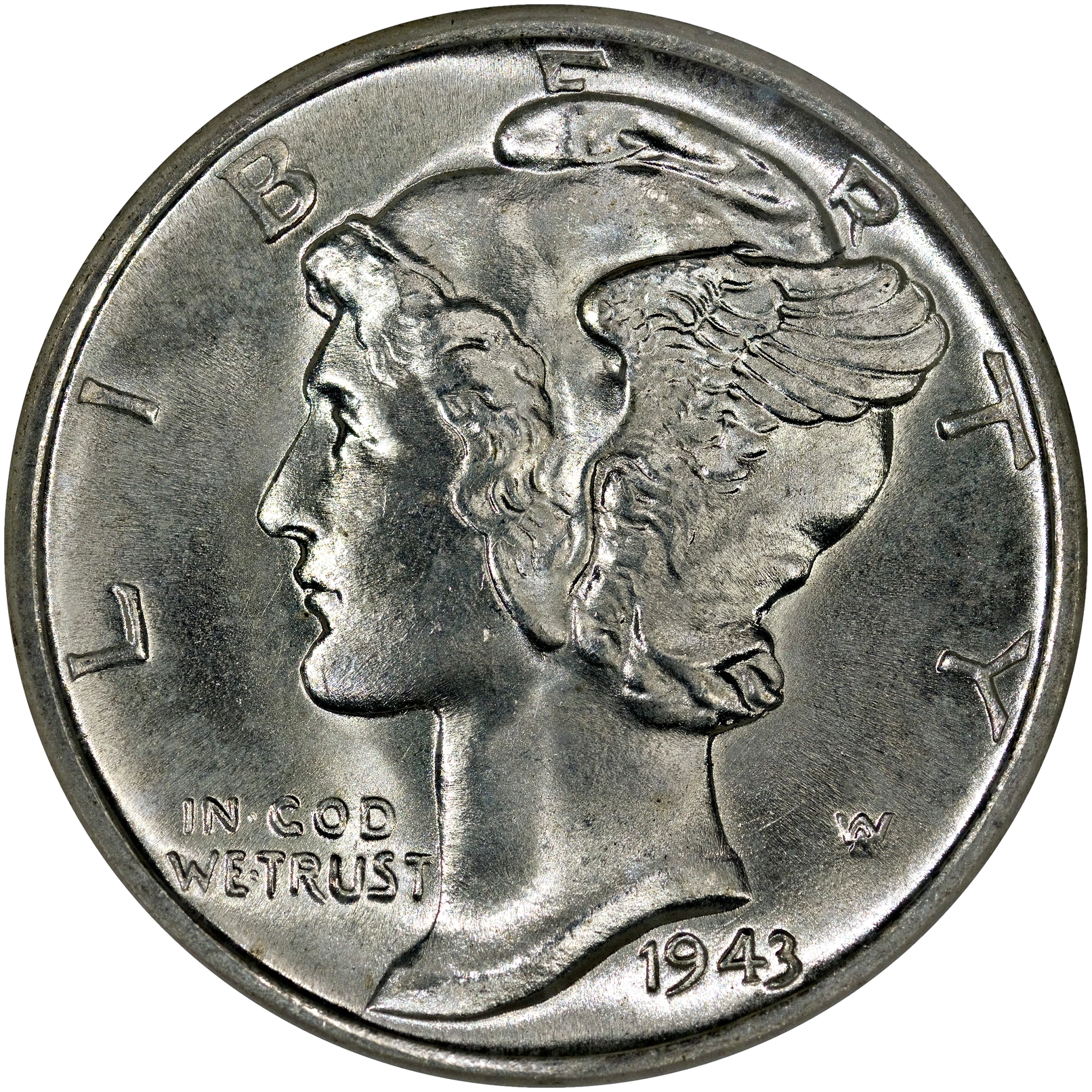
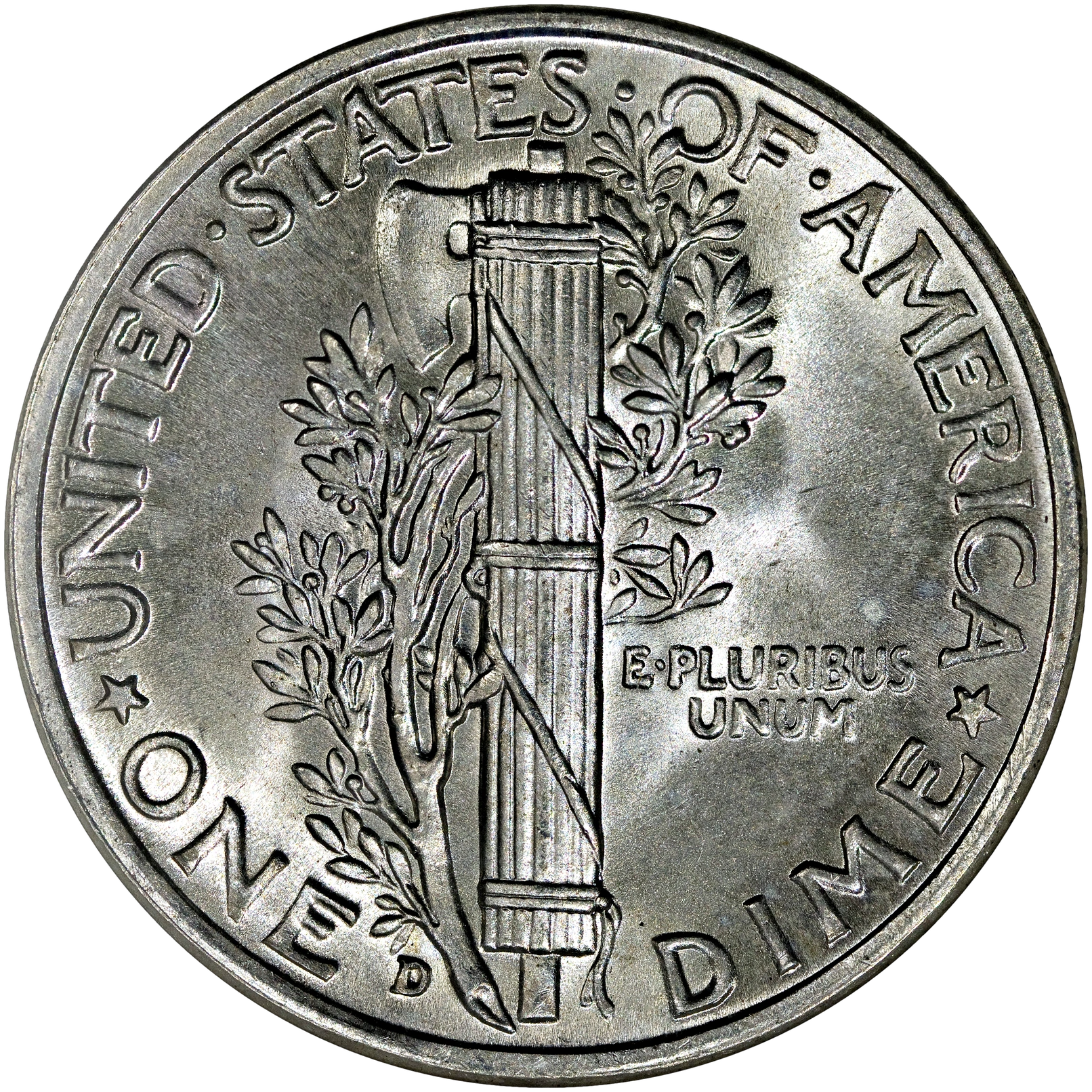
Coin photography by Brandon Grossardt (CC BY-SA 3.0, the obverse and the reverse). Cropped and resized.


Basics & coin story
Weinman’s design is commonly called the Mercury dime because its winged cap reminded viewers of Mercury. The figure is Liberty. By 1943 the design had been in circulation for decades, and standard dimes remained silver even as the United States changed the metal used in cents and nickels.
The reverse pairs a fasces with an olive branch. Its central bands matter to collectors assessing strike detail, while the tiny mint mark has its own position near the base. The Mercury dime series guide puts both features in context.
| Feature | What to check |
|---|---|
| Denomination | 10 cents |
| Alloy and weight | 90% silver; 2.50 g |
| Fine silver | About 0.07234 troy oz |
| Mint marks | Blank Philadelphia; D Denver; S San Francisco |
| Obverse signature | AW is the artist’s monogram |
Identification
Locate the mint letter by the lower fasces
Turn the coin over and inspect the lower-left area beside the fasces, near the olive branch stem. Read D or S if present. A blank Philadelphia mint position is normal.
Inspect the central horizontal bands
For Full Bands, look at the discrete split across the center bands. Check for a continuous separation and interruptions from marks. Use the grading service’s designation instead of assigning Full Bands from one low-resolution photograph.
Separate WWII dates and varieties
The well-known 1942/41 overdate is dated 1942, and the famous 1945-S Micro S is dated 1945. A 1943 dime with a letter or a weak area belongs to its own date and mint comparison.
Condition & value
Amounts are in U.S. dollars. Retail guide values are estimates for the stated grade, mint and designation. A dated sale is a record of one coin. Neither is a guaranteed purchase offer.
| Issue | Grade / condition | Value or reference | Basis | Important condition |
|---|---|---|---|---|
| 1943, 1943-D or 1943-S | XF40 / MS65 | $10 / $65 | PCGS retail guide | Normal strike without Full Bands |
| 1943 Philadelphia or D | MS65 FB | $75 | PCGS retail guide | Match the Full Bands designation |
| 1943-S | MS65 FB | $95 | PCGS retail guide | S and FB must both match |
| Any normal 1943 dime | Nominal fine silver | 0.07234 × silver price per troy oz | Metal calculation | Actual proceeds differ |
Summary
Read the date and reverse mint mark before assessing the middle bands. Use the dated silver price per troy ounce to estimate nominal metal value, then compare grade and designation separately.
Frequently asked questions
Is a 1943 Mercury dime silver?
Yes, a standard 1943 Mercury dime is 90% silver.
Is the W on a 1943 dime a West Point mint mark?
No. It is part of Weinman’s AW designer monogram. D or S appears on the reverse.
What is a 1943 dime with no mint mark?
It is normally a Philadelphia Mercury dime. The blank area does not make it an error.
What does Full Bands mean?
It is a grading designation for separation of the central reverse bands. The number grade and exact mint are still needed for comparison.