

 App Store

COIN VALUE GUIDES
1942 Mercury Dime Value: Mint Marks and 1942/1 Overdates
Check a 1942 Mercury dime for silver content, P/D/S mint marks and the 1942/1 overdate. Learn which details and grade conditions change the value.
 HeriBase Editorial TeamUpdated
In this article
What is a 1942 Mercury dime worth?
A regular 1942 Mercury dime contains 90% silver, so a common worn example is usually evaluated first for its silver content, then for any collector premium. Its original specification contains about 0.07234 troy ounce of silver; multiply that by the current silver price per troy ounce for theoretical metal content, before wear, spreads and fees.
In the PCGS guide checked November 24, 2026, normal Philadelphia, Denver and San Francisco coins are each listed at $10 in XF40 and $65 in MS65 without Full Bands. Separate normal dates from the 1942/1 Philadelphia and 1942/1-D Denver overdates. These are specific die varieties, not all coins dated 1942. Grade, surface condition, Proof status and any Full Bands designation can materially change the comparison. An unclear date photo is not enough to authenticate an overdate.
Watch the identification example
Watch on Instagram ↗ · Compare the actual date detail; the video is not an authentication.
Recognize both sides
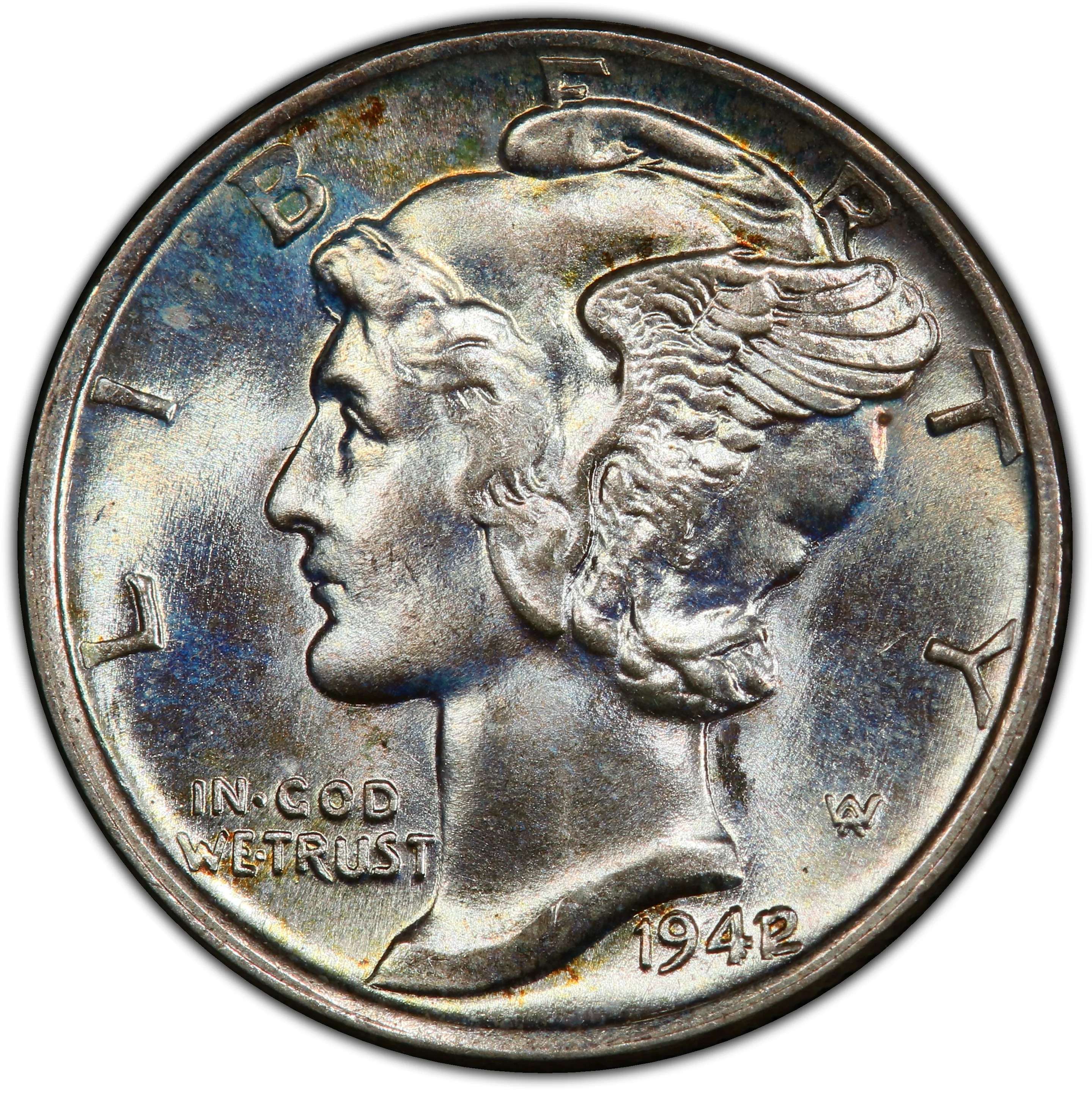
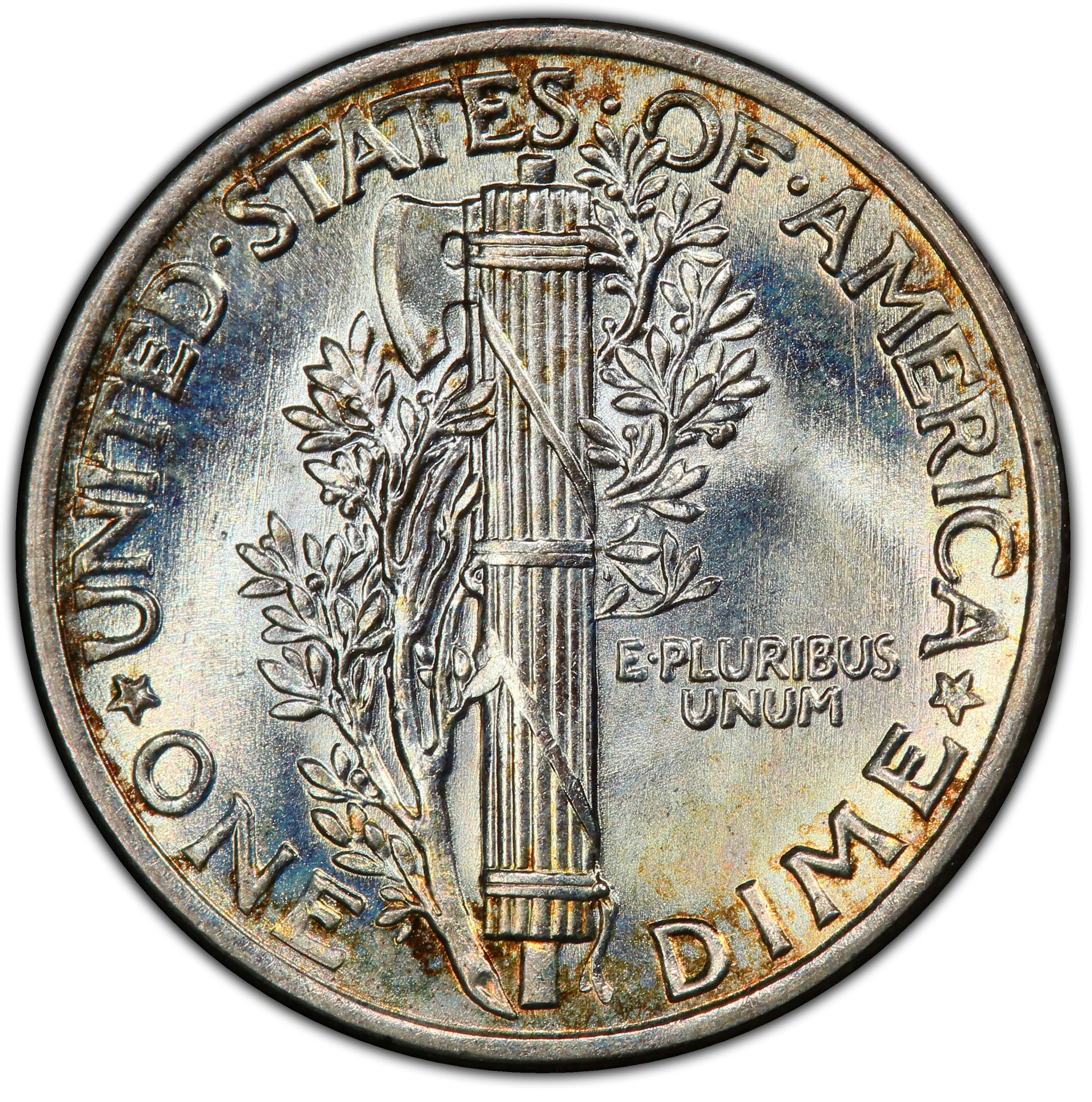
Issues and varieties to keep separate
How one die carried traces of two years
Adolph A. Weinman’s Winged Liberty design entered circulation in 1916. The winged cap suggested freedom of thought, but its resemblance to the Roman god’s headgear gave the coin its familiar “Mercury” nickname. The reverse joins a fasces with an olive branch. The portrait is Liberty, not a depiction of Mercury.
For the famous overdate, a working die received impressions involving 1941 and 1942 dates during die manufacture. The visible remnants were then transferred to coins. Collectors call it an overdate, but it is also a doubled-die variety. The Philadelphia variety became widely known after its 1943 discovery. The Mercury dime series guide places it alongside key dates and other issues.
| Issue | Date / mint | Difference | Where to look | Decision |
|---|---|---|---|---|
| Normal date | 1942, no mint mark | Philadelphia circulation issue | Reverse, beside fasces base | No mint mark is normal |
| Normal date | 1942-D / 1942-S | Denver / San Francisco issue | Reverse mint mark | A D or S does not mean overdate |
| Overdate | 1942/1 | Philadelphia doubled-die variety | Obverse date | Match remnants of underlying digits |
| Overdate | 1942/1-D | Different Denver die variety | Obverse date + reverse D | Use Denver-specific diagnostics |
| Collector Proof | 1942, no mint mark | Specially prepared collector strike | Both surfaces and strike | Do not identify by shininess alone |
Overdate versus an altered date
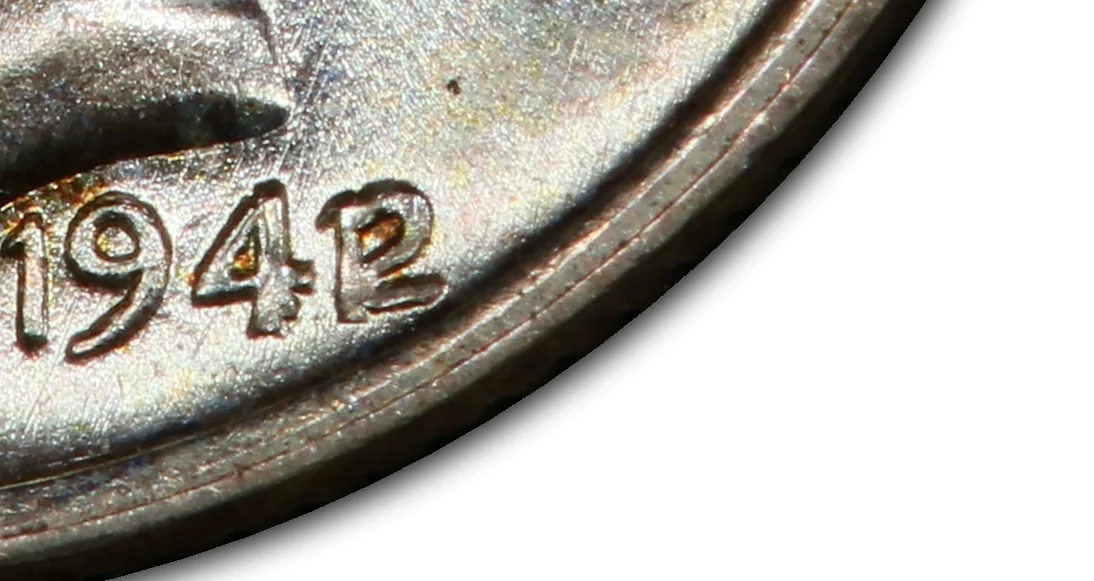
Use the date detail as a comparison for the Philadelphia variety. Look for the underlying 1 at the 2 and compare the shapes of the other digits as well. Then inspect the reverse to establish whether you are examining Philadelphia or Denver. The 1942/1-D is a separate die variety with subtler diagnostics, so the Philadelphia photo cannot confirm it.
NGC has documented counterfeit overdates made by adding material to a normal 1942 dime. A suspicious extra line at the date is therefore a reason for closer examination, not immediate authentication. Have a credible candidate checked before paying an overdate price.
Condition and value: compare like with like
The metal calculation is a reference, not a dealer’s guaranteed buying price. A normal circulated dime, a certified overdate and a high-grade Full Bands coin belong in different comparison groups. Current silver prices change; use the silver melt value calculator for a current metal-content reference.
A numerical grade describes preservation, while Full Bands addresses separation in the reverse fasces bands. Cleaning scratches, damage or an altered date can reduce value even when the year is desirable. If the coin may be an overdate, get the attribution established before comparing headline sales.
| Issue | Condition / attribution | USD / reference | Evidence | How to use it |
|---|---|---|---|---|
| Normal worn 1942 / D / S | No attributed variety | 0.07234 × silver spot | Theoretical metal reference | Actual offers reflect wear, spreads and fees |
| Normal 1942 / D / S | XF40 / MS65 | $10 / $65 each | PCGS Price Guide, checked Nov. 24, 2026 | Certified regular strikes without Full Bands |
| Normal collector Proof | Philadelphia, Proof grade | Match the exact PR grade | Separate collector issue | Compare with other attributed 1942 Proofs |
| 1942/1 | PCGS MS67+ | $90,000 | Heritage, Jan. 2023 | Exceptional historical sale listed by PCGS |
| 1942/1-D | Attributed Denver overdate | Separate comparison required | Different die variety | Do not copy the Philadelphia record |
Check your coin in three steps
- 01Confirm the 1942 date and the Mercury design, then inspect the reverse mint-mark position near the base of the fasces. Sort no mark, D and S; check Proof status separately. The small mark that resembles a W behind Liberty’s neck is Adolph A. Weinman’s AW monogram. It is present on normal coins and carries no separate premium.
- 02Magnify the complete date under diffuse light. Compare a suspected Philadelphia or Denver overdate with the corresponding attributed variety, rather than treating every extra line as an underlying 1.
- 03Assess wear and surface problems before choosing a price comparison. Full Bands refers to reverse detail on qualifying Mint State coins; it cannot be assumed from a sharp portrait or applied casually to a worn dime.
What to remember
For a 1942 Mercury dime, begin with silver content, then separate mint mark, normal date, overdate and Proof status. The 1942/1 and 1942/1-D require different diagnostic comparisons.
Keep any candidate uncleaned, record both sides and the date detail, and seek authentication when the overdate looks convincing. Match prices to attribution, condition and designation rather than a date or promotional headline alone.
Frequently asked questions
Is every 1942 Mercury dime silver?
The standard genuine 1942 Mercury dime is 90% silver and 10% copper, with an original weight of 2.50 grams. Its theoretical silver content is about 0.07234 troy ounce.
Where is the mint mark on a 1942 Mercury dime?
Look on the reverse beside the base of the fasces. D identifies Denver and S San Francisco; a normal Philadelphia coin has no mint mark.
Does a line near the 2 prove a 1942/1 overdate?
No. Compare the complete date with the correct Philadelphia or Denver variety. Damage and counterfeit alterations can imitate the feature, so a photograph alone is not final authentication.
Does Full Bands mean my worn dime is rare?
Full Bands is a grading designation tied to specific reverse detail on qualifying Mint State Mercury dimes. It is not automatically established by a clear date, a sharp portrait or an App identification.
References
References and further readingExpand
- PCGS Mercury dime price guideRegular-strike grade comparisons checked November 24, 2026.
- PCGS CoinFacts: 1942/1 Mercury dimeOverdate attribution, specifications and January 2023 historical sale; checked November 12, 2026.
- NGC: counterfeit detection, 1942/1 Mercury dimeAltered-date detection and why a date line alone is insufficient.
- PCGS: Weinman’s AW monogramShows why the mark that looks like a W is normal.
- PCGS: Mercury dime guideSeries context and mint-mark comparisons.
- HeriBase: Mercury dime valueDesign history, Full Bands and the wider series.