

 App Store

COIN VALUE GUIDES · HISTORIC GOLD
1933 Double Eagle:History, Authentication and the 2021 Sale
Understand the 1933 Saint-Gaudens double eagle, its exceptional documented ownership history and why a famous auction result cannot price an unidentified replica.
 HeriBase TeamPublished
In this article
Quick answer
The 1933 Double Eagle is a twenty-dollar Saint-Gaudens gold coin with an exceptional release and ownership history. The single specimen authorized for private ownership sold at Sotheby’s on June 8, 2021 for a reported approximately $18.87 million.
That result concerns a specific documented coin, not any object dated 1933. A matching-looking date, correct weight or reproduction certificate does not establish authenticity, provenance or the same ownership status. There is no ordinary circulated-price chart to apply to an unidentified claimed example.
Coin photos
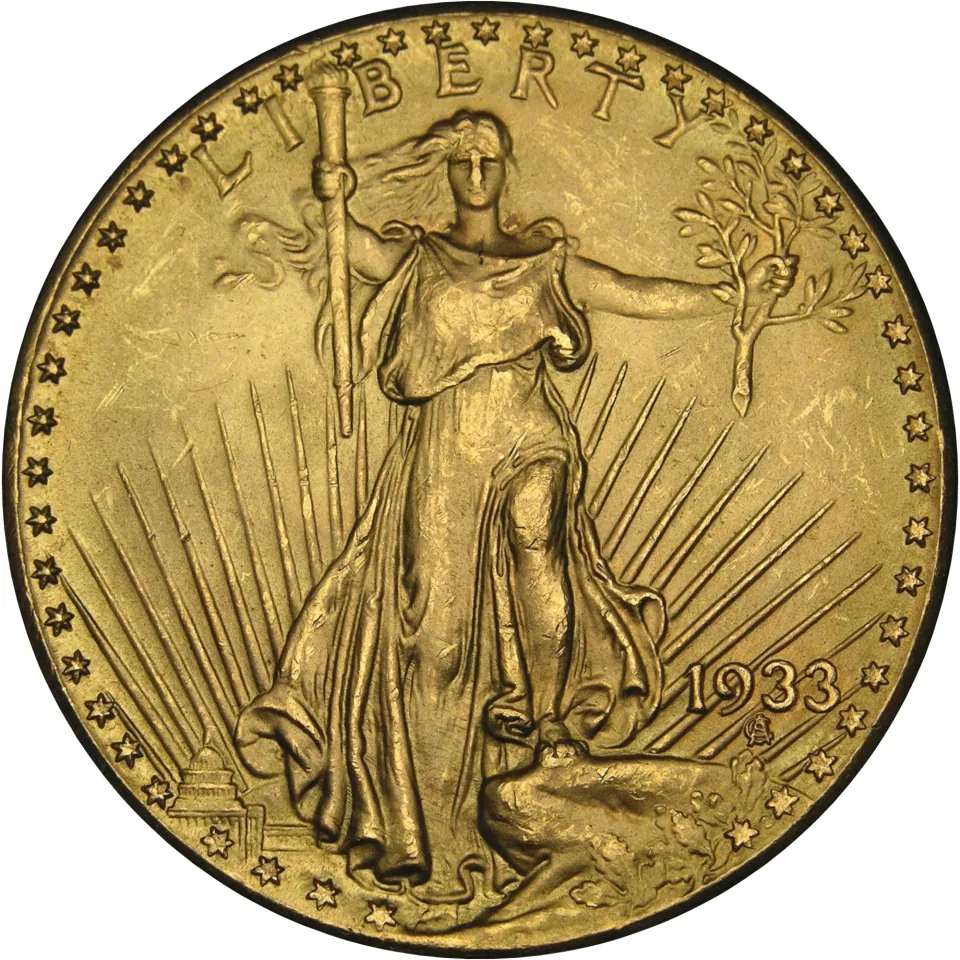
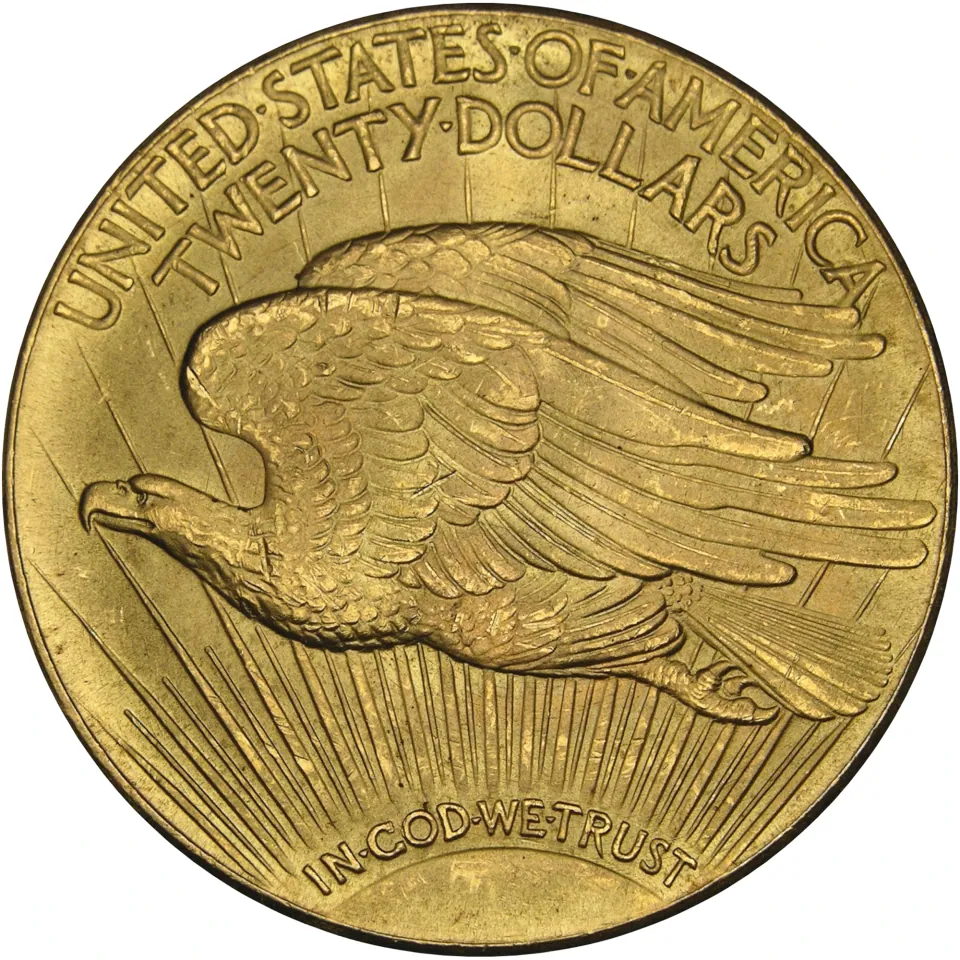
Basics & coin story
The double eagle was the historical twenty-dollar gold denomination. Saint-Gaudens’ standing Liberty and flying eagle became defining American coin designs. The 1933 issue arrived during the Great Depression and the withdrawal of gold coins from normal payment.
The Mint’s July 2026 account states that 445,500 pieces were struck at Philadelphia and that they were not released to the public as legal tender. Most were melted. Two examples were transferred to the Smithsonian, and other surviving pieces became the subject of investigations and litigation.
A unique settlement allowed one specimen to be monetized and sold in 2002. That same documented coin was sold again in 2021. The Mint’s 2026 account also describes eleven government-held specimens. These distinct histories explain why survival and private tradability must not be treated as the same question.
| Feature | What to check |
|---|---|
| Date / historical denomination | 1933 / twenty dollars |
| Design | Augustus Saint-Gaudens: standing Liberty and flying eagle |
| Mint | Philadelphia; no mint mark |
| Standard alloy | 90% gold, 10% copper |
| Nominal mass / diameter | Approximately 33.44 g / 34 mm |
| Fine gold | Approximately 0.9675 troy ounce |
| Main valuation evidence | The specifically documented June 8, 2021 Sotheby’s sale |
| Main identification limitation | Physical appearance does not establish the exceptional provenance or ownership status |
Identification
Separate an original from a tribute or replica
Read the complete inscriptions, date and edge and document the entire object. Copies, medals and private gold reproductions can use similar Liberty imagery. A listing title, souvenir card or word such as tribute should not be silently discarded when identifying the item.
The photographs are U.S. Mint reference views. They illustrate the design and are not asserted here to depict the privately owned 2021 auction specimen. Another specimen’s photograph cannot supply missing provenance.
Understand what the auction catalog actually says
Sotheby’s catalog describes a specific coin with a Certificate of Monetization from the 2002 settlement. Its discussion of an expert MS65 opinion is not the same as saying that the coin was sold in a sealed third-party holder.
Compare a proposed historical claim with the full catalog record, not just a photograph of a grade or a quoted price. A generic certificate of authenticity for a modern reproduction is different from the documented monetization certificate described in that record.
Keep authenticity and ownership history distinct
An object can require both physical authentication and provenance research. A weight near the nominal standard does not settle either question. The Mint’s published account and the cited court outcome concern specific surviving originals, not a method to approve a newly discovered coin from a photograph.
Preserve an unfamiliar piece and its documents. Do not polish it, alter it or assume that a dramatic asking price proves a genuine original. Specialist authentication and appropriate review of provenance are necessary before treating a claim as comparable to the historic sale.
Condition & value
Historical reported auction totals in USD, with transaction dates retained. These are not current quotes, ordinary grade-guide prices or valuations of an unidentified object. The 2021 figure is a reported result rather than a hammer-only claim.
| Issue | Grade / condition | Value or reference | Basis | Important condition |
|---|---|---|---|---|
| Documented privately owned specimen | Sotheby’s, June 8, 2021 | Approximately $18.87 million reported result | Historical auction outcome | Specific provenance; not an ordinary retail guide |
| Same documented specimen | 2002 sale | Approximately $7.59 million reported result | Historical transaction | Different sale date and market |
| U.S. government or Smithsonian specimen | Documented institutional holding | No ordinary retail price asserted | Institutional history | Survival does not imply market availability |
| Unidentified claimed 1933 piece | Authenticity and provenance unresolved | No original-coin value assigned | Evidence limitation | Date and appearance are insufficient |
| Reproduction or tribute | Actual maker and material | Compare the product itself | Separate object | Does not inherit the original’s auction result |
The 2021 figure is a reported sale result, not the $10–15 million pre-sale estimate and not a new October 2026 valuation. It should not be described as an ordinary price available to any seller of a purported 1933 piece.
The cited historical totals and the physical coin’s twenty-dollar denomination answer different questions. Its gold content also does not explain the auction result on its own. The exceptional history of this specimen dominates the comparison.
The modern American Gold Eagle borrows related Liberty imagery but is a separate bullion program with different content and a normal retail market. Keep modern bullion, historical double eagles and replicas apart when organizing a collection.
Summary
The 1933 Double Eagle story depends on documented identity and provenance. Treat the 2021 sale as evidence about one exceptional coin, not a price for an unidentified object. Preserve records and obtain specialist review before relying on a claim.
FAQ
What is a double eagle?
Historically it is the U.S. twenty-dollar gold denomination. The 1933 issue belongs to the Saint-Gaudens design series.
What did the 1933 Double Eagle sell for in 2021?
The specifically documented privately owned specimen sold at Sotheby’s on June 8, 2021 for a reported approximately $18.87 million.
Can the date and weight prove a claimed 1933 coin is genuine?
No. Basic measurements and appearance do not establish authenticity, provenance or the exceptional status of the auctioned specimen.
Do the photographs show the 2021 auction coin?
The photographs used here are U.S. Mint reference views. They illustrate the design and are not asserted to identify the privately owned auction specimen.
References
References and further reading
- U.S. Mint: July 2026 account of the surviving 1933 coins
- Sotheby’s: 2021 lot 1 catalog and monetization certificate
- NGC: reported June 8, 2021 sale result
- U.S. Department of Justice: ownership litigation outcome
References consulted October 27, 2026. Price tables retain the update dates stated in the text; guide estimates, face values and completed transactions are different forms of evidence.