

 App Store

COIN ERRORS & VARIETIES
1922 Peace Dollar Errors and Varieties: Field Breaks, Relief and Damage
Check raised field breaks on a 1922 Peace dollar, compare the VAM-1F attribution and separate circulation strike wear from rare high-relief issues.
 HeriBase Editorial TeamPublished
In this article
Quick answer
Check raised metal in the field before calling a 1922 Peace dollar a mint error. A die break can leave a raised shape that repeats on coins from the same die. Cut lines, cleaning scratches and flattened design need a different comparison.
The 1922 Philadelphia VAM-1F Field Break is a cataloged die variety. Its break runs across rays in the reverse field above DOLLAR. Most 1922 circulation coins are lower relief. The high-relief Proof is a separate documented issue with its own diagnostics.
Specimen photos
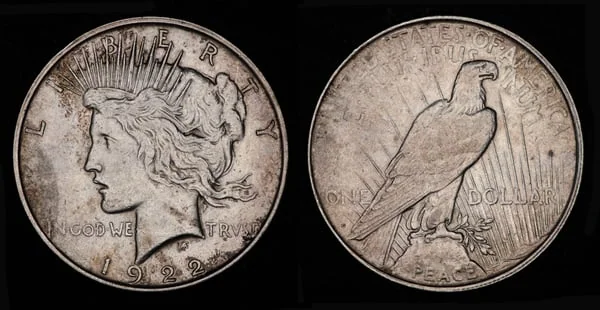
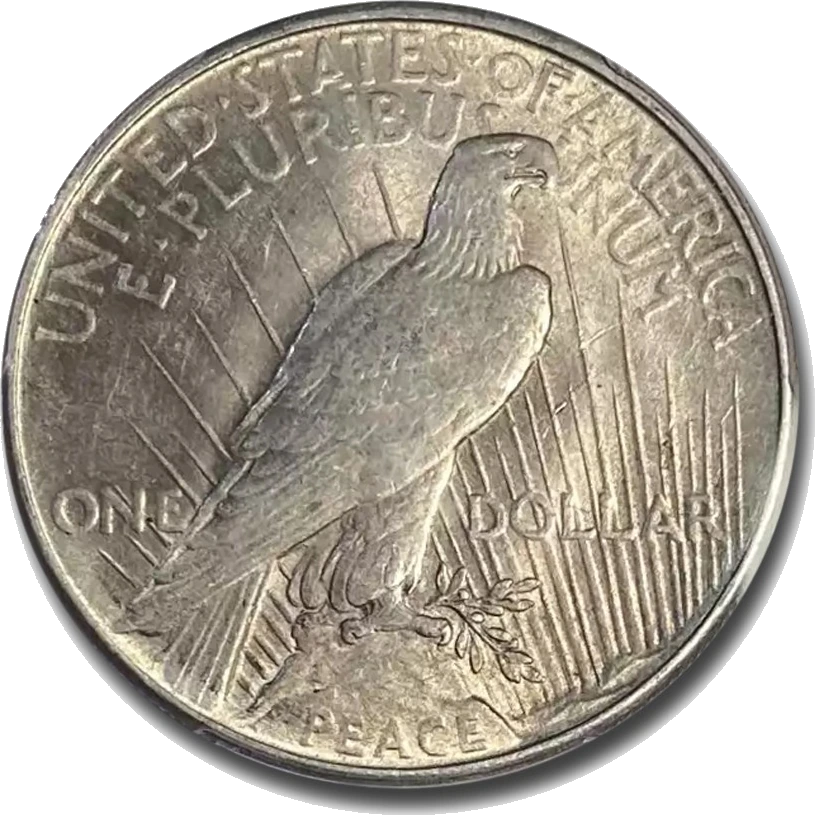
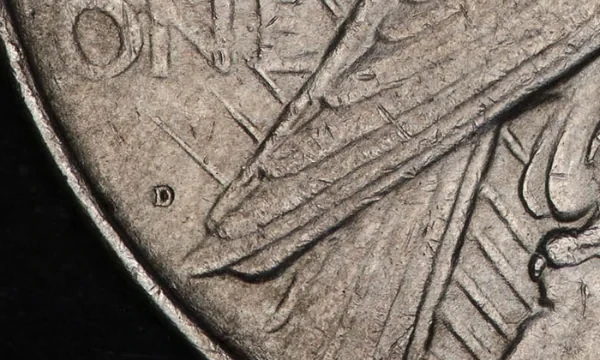
Variety and error comparison
The Mint reduced relief after the 1921 issue to improve striking. A lower profile on a 1922 coin generally reflects that design change. This is a poor basis for assuming a die defect or a Proof.
VAM numbering identifies specific Morgan and Peace dollar die varieties. Raised metal can come from multiple breaks on different dies. The full combination of relief, mint and die markers is the useful match. The linked PCGS registry record supplies a photographed VAM-1F comparison.
| Claim | Look for | Rule out | Compare to | Next step |
|---|---|---|---|---|
| 1922 VAM-1F | Matching raised field break | A random hit or another die | Attributed Philadelphia specimen | Check rays above DOLLAR |
| Ordinary 1922 | Low-relief circulation design | Assuming a flat portrait is a rare issue | Same mint and grade | Use the corresponding date and mint |
| High-relief Proof claim | Full specialist die and finish diagnostics | High grade or brightness alone | PCGS reference by Proof attribution | Seek specialist authentication |
| Post-mint damage | Incuse scratch, disturbed metal | An intact raised feature | Angled photos of the same area | Look for an incuse line |
Three identification checks
Read date and mint
Most importantly, determine whether the mint matches the VAM listing. The normal Denver control illustrates the reverse mint-mark position.
Check raised versus cut
Use lighting from two directions. Raised metal with a repeatable shape suggests a die comparison. A groove and adjacent displaced metal suggest later contact.
Match the whole die
Start with the attributed photographs and compare the surrounding design, not just the most conspicuous line.
Documented cases and value
Compare values against the exact mint, grade and confirmed VAM. The 1922 Peace dollar value guide handles the regular issue. A high-relief Proof sale and a standard VAM sale describe different coins and price populations.
Summary
Identify the regular issue first, then compare the field and die markers with an attributed reference. Keep relief, damage and die breaks separate.
Frequently asked questions
Are all 1922 Peace dollars high relief?
The usual 1922 circulation issue is low relief. High-relief Proofs are separate specialist attributions.
Does any raised line make a 1922 VAM-1F?
No. Compare its exact shape and surrounding details against the published VAM-1F reference.
Where is a Peace dollar mint mark?
On the reverse, inspect under ONE and near the tail area. Philadelphia circulation coins carry no mint mark.
Does a cleaning scratch add an error premium?
A scratch from cleaning is surface damage and belongs in the condition assessment.