

 App Store

COIN VALUE GUIDES · DOLLARS
1896 Silver Dollar Value:No Mint Mark, O and S by Grade
Compare 1896 Morgan dollar values, understand the New Orleans condition premium, and recognize misleading mint-mark claims.
 HeriBase TeamPublished
In this article
How much is an 1896 silver dollar worth?
An 1896 Morgan dollar can be a relatively accessible circulated coin or a much more expensive Mint State issue, depending on its mint. The PCGS guide checked October 19, 2026 lists Philadelphia and New Orleans coins at $92 in Very Fine 20, versus $200 for San Francisco. At Mint State 63, the same three issues are $100, $7,500 and $4,750 respectively. These are grade-specific retail estimates, not a blanket valuation of any 1896 dollar.
The key distinction is no mint mark, O or S. All three regular issues contain 90% silver, but the value of an 1896-O changes sharply at higher preservation levels. Confirm authenticity and surface condition before using an uncirculated price; a bright or freshly cleaned coin is not automatically Mint State.
1896 Morgan dollar: Philadelphia and New Orleans
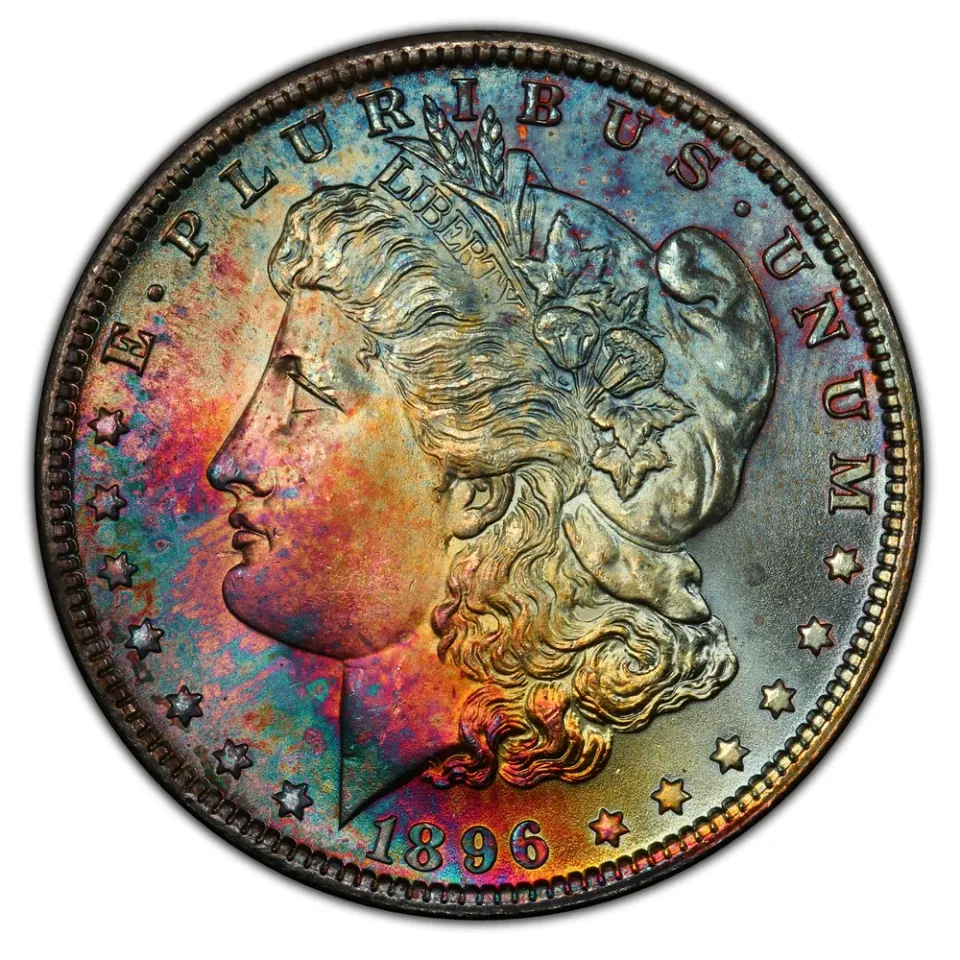
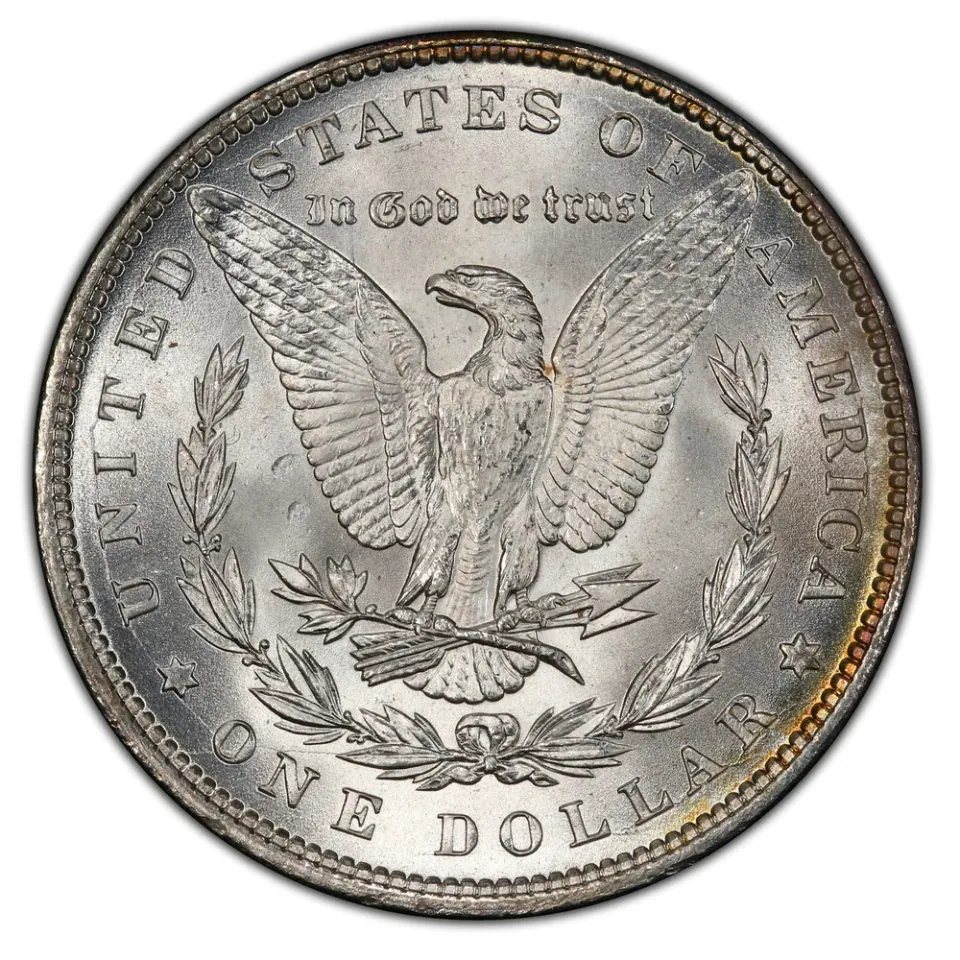
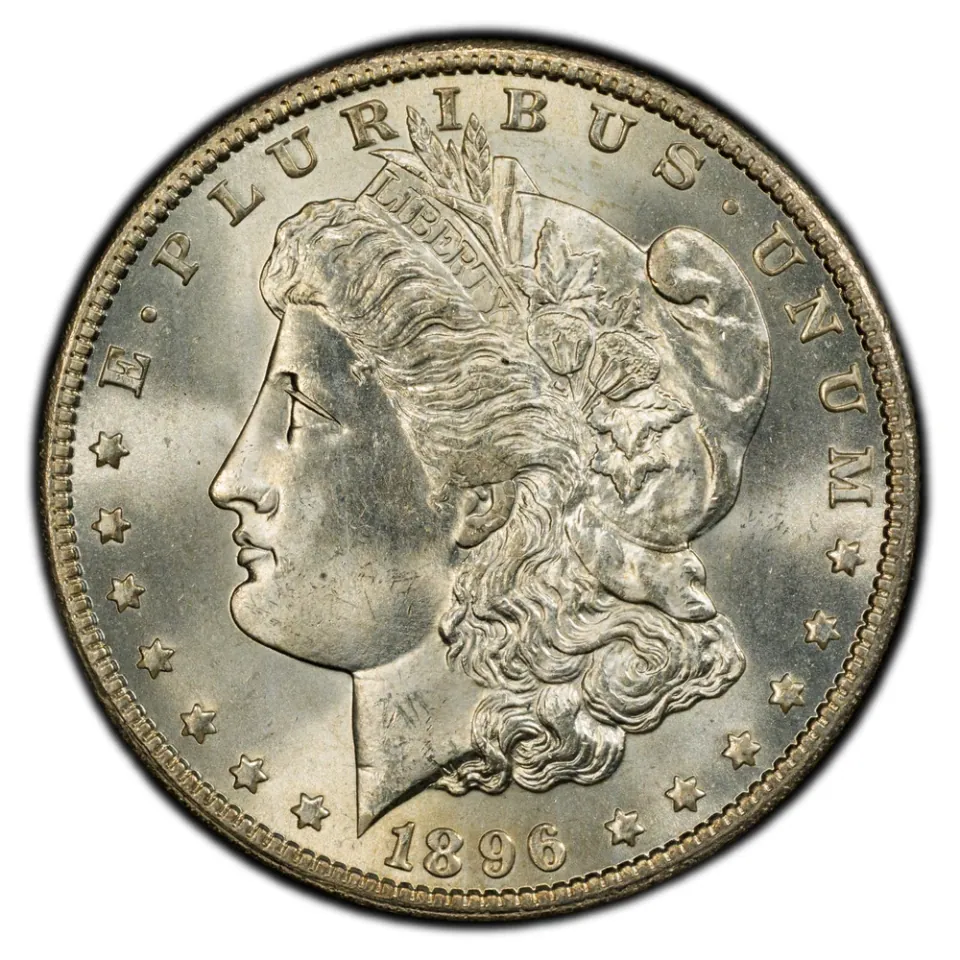
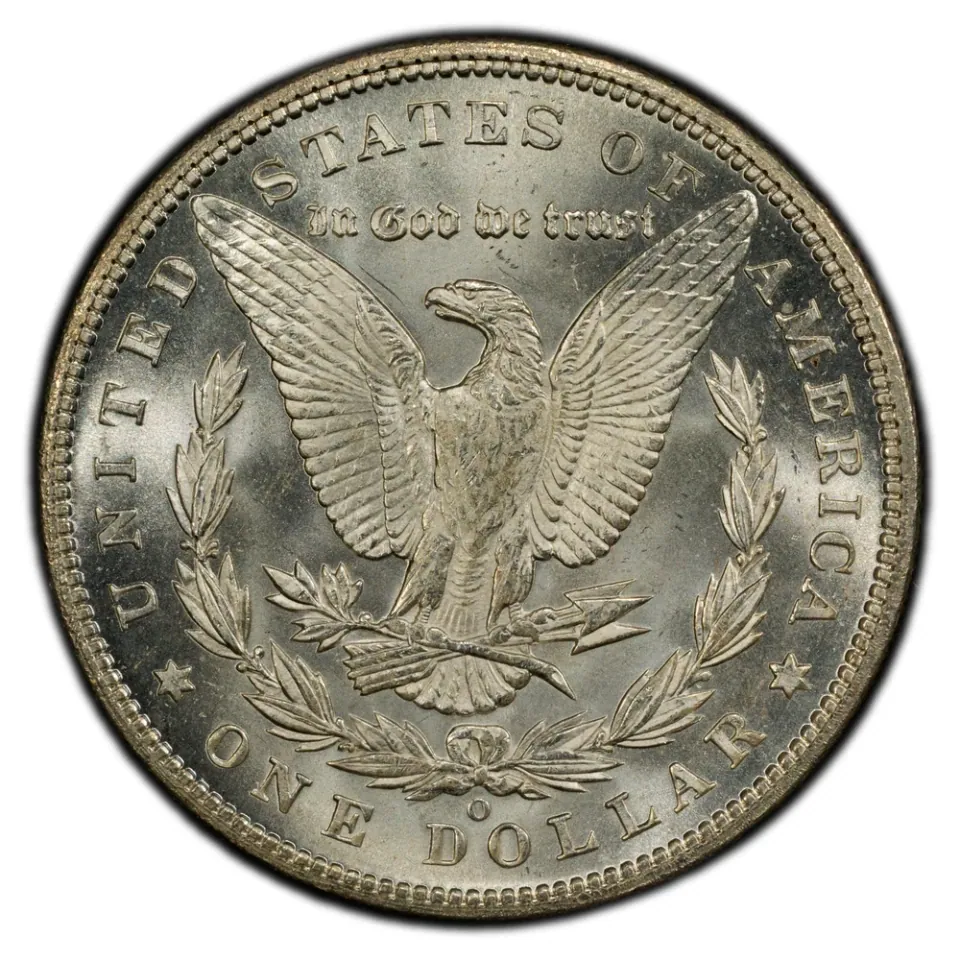
The story behind a condition-sensitive date
The Morgan dollar’s design was shared across the mints, but the way coins were used and preserved changed what collectors can find today. In 1896, Philadelphia, New Orleans and San Francisco struck regular dollars. Carson City did not produce a regular 1896 issue, and Denver’s Morgan production belongs to 1921.
The New Orleans issue is an especially clear example of the difference between mintage and surviving quality. PCGS’s historical account describes coins entering circulation as well as pieces kept in government vaults. Its analysis emphasizes that the date is far easier to obtain worn than in exceptional Mint State condition. The collector story is therefore about preservation, not simply a tiny original production total.
| Mint | Mark | Coins struck |
|---|---|---|
| Philadelphia | None | 9,976,000 |
| New Orleans | O | 4,900,000 |
| San Francisco | S | 5,000,000 |
| Feature | What to check |
|---|---|
| Designer | George T. Morgan |
| Metal | 90% silver, 10% copper |
| Weight / diameter | 26.73 g / 38.10 mm |
| Edge | Reeded |
| Fine silver content | Approximately 0.7734 troy ounce |
| Mint-mark location | Reverse, below wreath bow |
Use the Morgan mintage table for other years. Similar production totals cannot be used as a shortcut to equal prices: the condition distribution and collector demand must also be considered.
Identify the mint and rule out misleading comparisons
The mint letter is on the back, between the wreath and ONE DOLLAR. O means New Orleans; S means San Francisco. No letter is normal for Philadelphia. If a listing says “1896-CC” or “1896-D,” do not apply this chart: that description does not match a regular historical issue for this year.
Be cautious with a tiny “Micro O” claim
PCGS reports that the so-called Micro O dollars dated 1896, 1900 and 1902 were determined to be counterfeits after shared die markers were recognized. A seller presenting an unusually small O as a rare genuine variety therefore needs careful scrutiny. Do not buy the story merely because the coin has old-looking toning or a detailed reverse.
Separate wear, weak strike and surface alteration
Check luster and surface texture on exposed areas, not only the amount of visible hair detail. Wear changes a surface through contact; strike softness can leave detail incomplete from manufacture. Cleaning may remove original surface evidence while leaving the coin looking more brilliant. The cleaned-coin guide provides examples of the distinction.
The chart below excludes Proofs and the separate Prooflike or Deep Mirror Prooflike categories. Those descriptions require their own evidence and comparison. The Morgan series guide covers the broader design and finish terminology.
1896 silver dollar value chart
| Issue | VF20 | XF40 | AU58 | MS63 |
|---|---|---|---|---|
| 1896 · no mark | $92 | $92 | $94 | $100 |
| 1896-O | $92 | $92 | $675 | $7,500 |
| 1896-S | $200 | $500 | $2,250 | $4,750 |
PCGS retail guide estimates in US dollars, checked October 19, 2026. These are references for genuine, problem-free coins in the stated grade, not auction results or guaranteed offers. Cleaned, damaged and incorrectly graded coins need different comparisons.
Very Fine (VF) and Extremely Fine (XF) describe circulated grades. About Uncirculated (AU) still allows slight wear; Mint State (MS) does not. The jump from AU58 to MS63 is particularly consequential for O and S issues. A casual description such as “almost perfect” is not a substitute for that distinction.
Read across the same row before comparing grades, and down the same column before comparing mints. For example, the O and Philadelphia coins share the checked VF20 guide figure, yet they have very different MS63 figures. That does not make every O coin valuable at the uncirculated level—it makes correct grading more important.
For a possible high-grade O or S, obtain an informed condition assessment before selecting a price. Record any cleaning, scratches, rim damage or repairs. A Details coin falls outside a problem-free numerical-grade comparison; there is no universal percentage discount that fixes the mismatch.
A metal-only reference uses 0.7734 times a dated silver price per troy ounce. The result cannot explain the higher-grade premiums in this table. For a sale, compare recent completed transactions with the same mint, grade and surface status. The appraisal guide explains how to prepare the photographs and identifying information.
The price depends on more than 1896
Confirm no mark, O or S before estimating value. In the checked VF20 guide, Philadelphia and O are $92 while S is $200; at MS63 those figures separate to $100, $7,500 and $4,750.
The large condition premiums make authenticity, original surfaces and a defensible grade essential. Treat a “Micro O” claim as an authentication issue, and never apply an exceptional-grade price to a merely shiny coin.
Frequently asked questions
What is an 1896 silver dollar worth without a mint mark?
The October 19, 2026 PCGS guide lists the Philadelphia regular issue at $92 in VF20 and $100 in MS63. These are retail references for genuine, problem-free coins in those grades.
Why can an 1896-O Morgan dollar be expensive?
Its value is especially sensitive to preservation. The checked PCGS guide moves from $92 in VF20 to $675 in AU58 and $7,500 in MS63. A worn example must not be priced as a high-grade uncirculated coin.
Was there an 1896-CC Morgan dollar?
No regular 1896 Morgan issue was struck at Carson City. The regular issues for this year are Philadelphia without a letter, New Orleans with O and San Francisco with S.
Is an 1896 Micro O a valuable genuine variety?
PCGS determined that the so-called Micro O dollars dated 1896, 1900 and 1902 were counterfeit. An unusually small O claim requires specialist scrutiny rather than an assumed rarity premium.
References
Sources
Research checked October 19, 2026. Any price example retains its stated source date and scope.
- PCGS · 1896 PhiladelphiaSpecifications, mintage and regular-strike guide.
- PCGS · 1896-OCondition sensitivity, history, Micro O finding and prices.
- PCGS · 1896-SSan Francisco production and grade-specific values.