

 App Store

COIN VALUE GUIDES · DOLLARS
1880 Silver Dollar Value:Mint Marks, CC Varieties and Grade Prices
Identify an 1880 Morgan dollar, compare four mints, and understand why overdates, reverse types and condition change its value.
 HeriBase TeamPublished
In this article
How much is an 1880 silver dollar worth?
An ordinary 1880 Morgan silver dollar must be priced by mint and condition. In the PCGS retail guide checked October 19, 2026, Philadelphia, New Orleans and San Francisco regular issues are each $92 in Very Fine 20. At Mint State 63, they separate to $115, $650 and $110. A regular 1880-CC is higher at $385 in VF20 and $900 in MS63.
No mint mark is normal for Philadelphia; CC, O and S identify different issues. Overdates and reverse varieties need their own attribution, and Prooflike or Deep Mirror Prooflike designations require separate price comparisons. The figures above are guide estimates for genuine, problem-free coins, not a flat offer for every coin dated 1880.
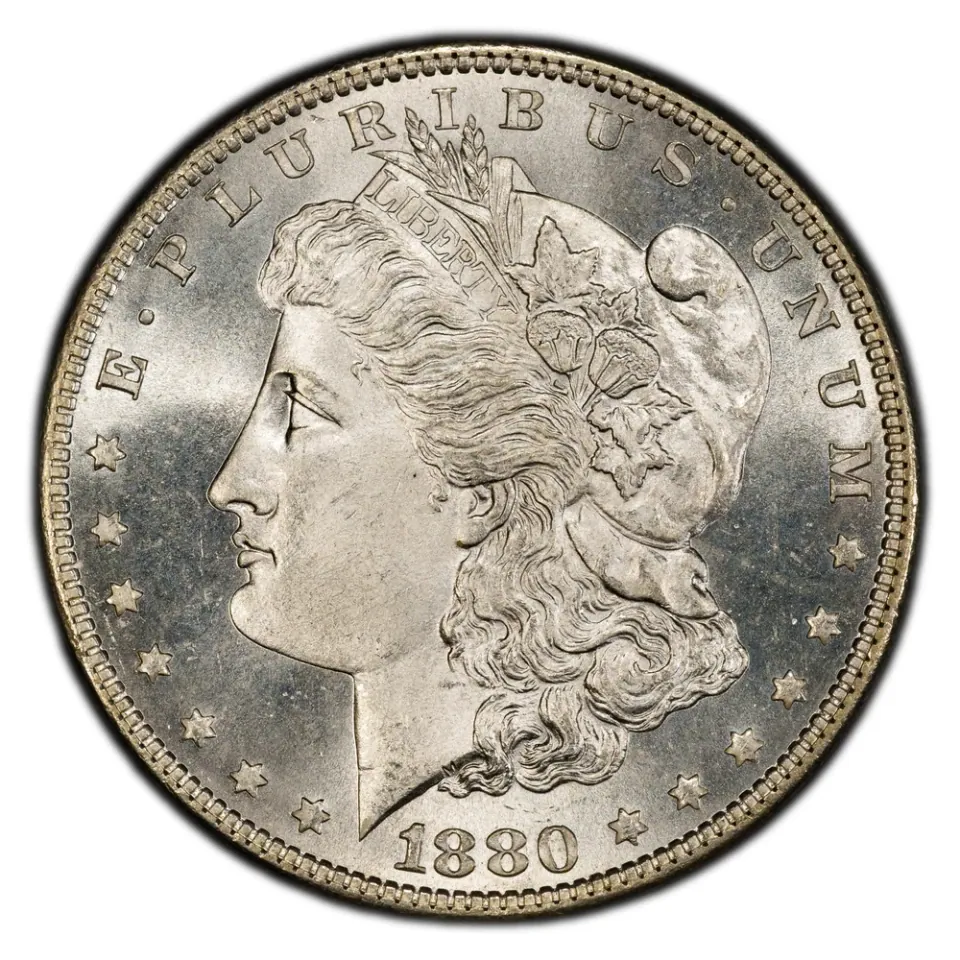
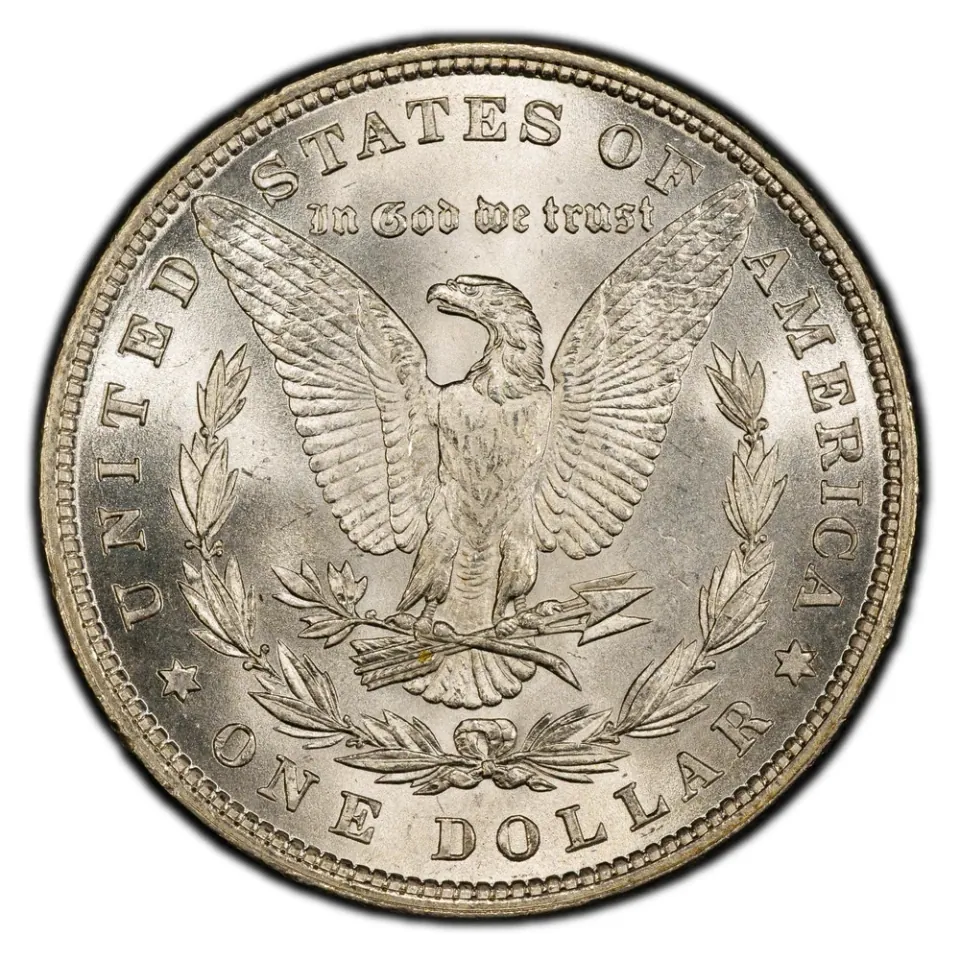
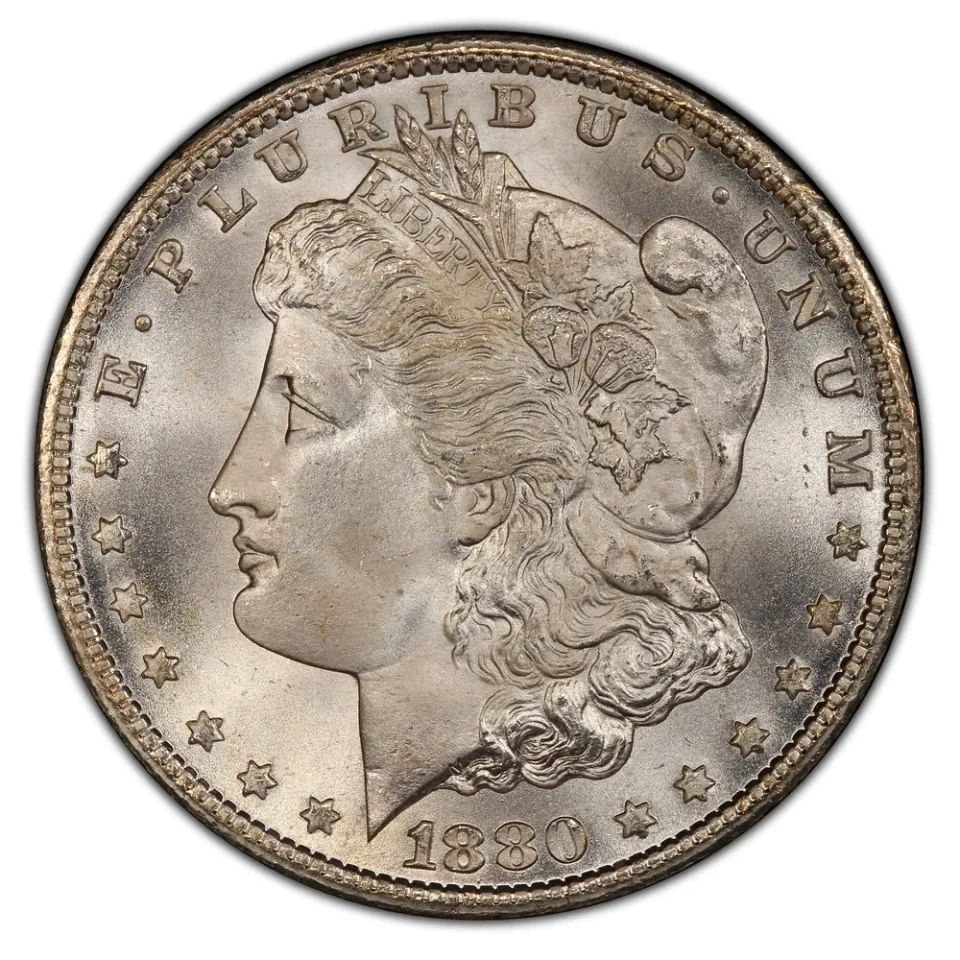
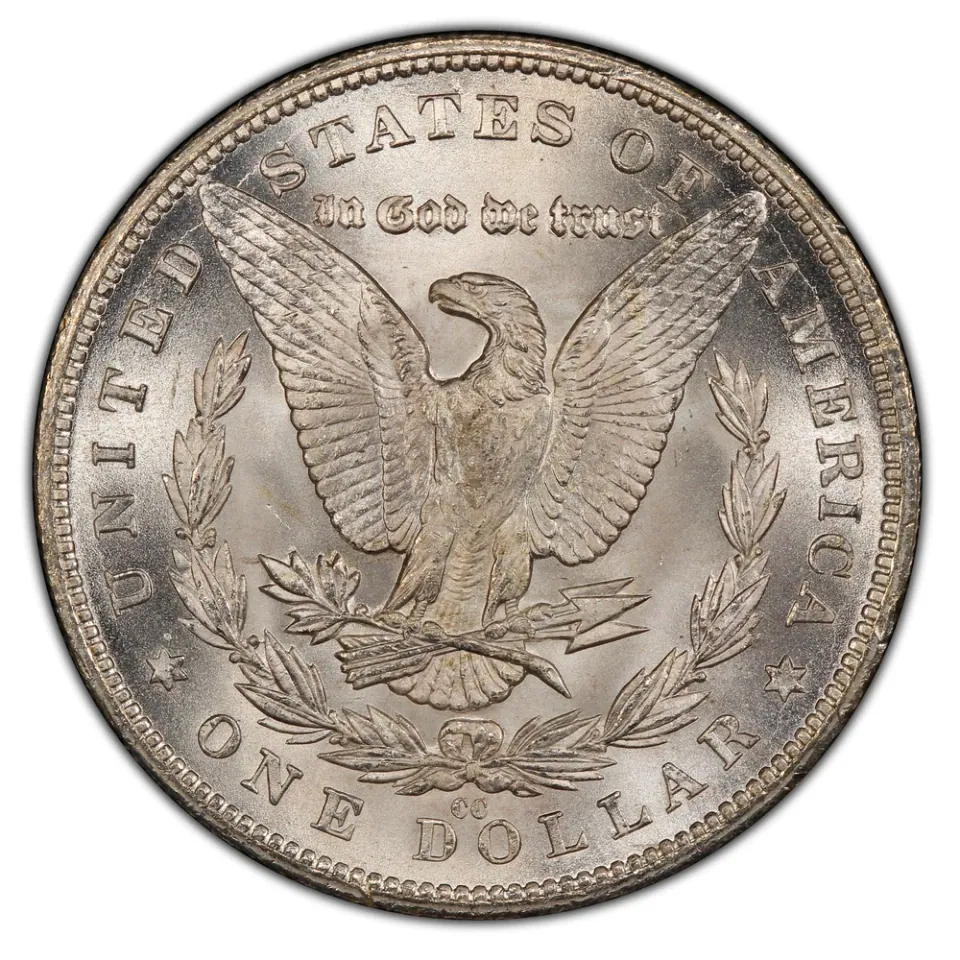
1880 Morgan dollars from Philadelphia and Carson City
Why a low mintage does not tell the whole story
The 1880 dollar belongs to the early years of the Morgan series, introduced in 1878. Its Liberty portrait and eagle remained familiar across several mints, so the small reverse letters can matter more to a price comparison than the large date on the front.
Carson City recorded just 591,000 dollars for 1880, but low original production is only part of the story. Treasury-held coins later released through General Services Administration sales supplied collectors with many preserved examples. That history helps explain why an 1880-CC can be both desirable and obtainable in uncirculated grades. A low mintage is not the same as a low surviving population.
| Mark | Mint | Recorded mintage | Scope |
|---|---|---|---|
| None | Philadelphia | 12,600,000 | Regular issue; varieties included in mint total |
| O | New Orleans | 5,305,000 | Regular issue; varieties included in mint total |
| S | San Francisco | 8,900,000 | Regular issue; varieties included in mint total |
| CC | Carson City | 591,000 | Regular issue; varieties included in mint total |
| Feature | What to check |
|---|---|
| Designer | George T. Morgan |
| Composition | 90% silver, 10% copper |
| Nominal weight / diameter | 26.73 g / 38.1 mm |
| Fine silver | Approximately 0.7734 troy ounce |
| Edge | Reeded |
| Mint-mark location | Reverse, below the wreath and above DOLLAR |
These production totals are not separate counts for every overdate or reverse variety. Use the Morgan year-by-mint mintage table for broader comparisons and the Morgan series guide for the shared design history.
Read the mint mark, then investigate the date
Turn the coin over and inspect the area between the wreath bow and DOLLAR. No letter means Philadelphia; O means New Orleans; S means San Francisco; CC means Carson City. Inspect the surrounding surface as well as the letter. A valuable mint mark should not be accepted solely because it looks plausible in a small photograph.
The 1880 date has several cataloged overdate families. PCGS lists 8/7 and 80/79 varieties, with different entries for particular mints. A line inside a digit is a reason to compare the coin with a precise reference, not enough to assign an overdate premium. The relevant remnants and die markers must agree, and a scratch or contact mark can imitate part of a numeral.
1880-CC also has more than one reverse family
Some 1880-CC dollars use the Reverse of 1878, with a flatter eagle breast and a flat upper arrow feather. Other examples use the later reverse form. Check the breast and arrows together with the date diagnostics. Do not classify every CC coin from this year as the same overdate or reverse.
The photographs above establish the date, design and mint-mark area. For a suspected specialist variety, use additional close-ups and a catalog match. This guide’s price table refers to the standard regular-issue entries; it does not assign individual VAM premiums. VAM numbers identify die varieties named for researchers Leroy Van Allen and A. George Mallis.
A reflective surface introduces another distinction: Prooflike (PL) and Deep Mirror Prooflike (DMPL) describe qualifying regular-strike surfaces. They do not make a coin a Proof. Polishing can also create shine, so check the cleaned-coin identification guide before treating brightness as a premium.
1880 silver dollar value by mint and grade
| Regular issue | VF20 | XF40 | AU58 | MS63 | MS65 |
|---|---|---|---|---|---|
| 1880 · no mint mark | $92 | $92 | $94 | $115 | $500 |
| 1880-O | $92 | $92 | $125 | $650 | $14,000 |
| 1880-S | $92 | $92 | $94 | $110 | $185 |
| 1880-CC | $385 | $460 | $625 | $900 | $1,500 |
PCGS retail guide estimates in US dollars, checked October 19, 2026. These are references for genuine, problem-free coins in the stated grade, not auction results or guaranteed offers. Cleaned, damaged and incorrectly graded coins need different comparisons.
VF and XF mean Very Fine and Extremely Fine, both circulated grades. AU means About Uncirculated, with slight wear; MS means Mint State, without circulation wear. The grading guide explains the scale. Contact marks can occur on an uncirculated coin, while a worn coin can remain bright.
The New Orleans issue is especially sensitive to condition. Its checked guide rises from $125 at AU58 to $650 at MS63 and $14,000 at MS65. The last figure describes a much scarcer grade category; it is not a useful starting price for a typical raw 1880-O. Philadelphia and San Francisco are also separate markets, despite similar circulated guide figures.
For a silver-content reference, multiply 0.7734 by a current silver price in dollars per troy ounce. That gives a theoretical metal amount before costs, not a guaranteed buy price. It also leaves out any collectible premium. The CC mark, a confirmed variety, original surfaces and grade can all matter beyond the metal.
Before selling or buying, compare examples with the same mint, numerical grade and surface designation. Cleaned, scratched or repaired coins require separate comparisons. If you have a potential CC overdate or a high-grade O, the appraisal guide explains what to document before seeking an assessment.
Mint and variety come before the price
1880 is a four-mint date with several distinct price levels. The checked guide puts ordinary P, O and S coins at $92 in VF20, while CC is $385. Mint State prices diverge sharply, particularly for New Orleans.
Confirm the reverse mint mark, investigate any overdate or reverse attribution, then match grade and surface status. Keep ordinary coins separate from certified specialist varieties and mirror-surface examples.
Frequently asked questions
What is an 1880 silver dollar worth with no mint mark?
It is normally a Philadelphia Morgan dollar. The PCGS guide checked October 19, 2026 gives $92 at VF20, $94 at AU58 and $115 at MS63 for the regular issue, subject to authenticity and surface condition.
Where is the mint mark on an 1880 Morgan dollar?
It is on the reverse below the wreath and above DOLLAR. O, S and CC indicate New Orleans, San Francisco and Carson City; Philadelphia uses no letter.
Is every 1880-CC dollar an overdate?
Do not assume a specific overdate from the year and CC mark. Several date and reverse varieties are cataloged, and attribution requires matching the relevant details to the correct reference.
How much silver is in an 1880 dollar?
A standard Morgan dollar is 90% silver and weighs 26.73 grams nominally, containing approximately 0.7734 troy ounce of fine silver. Its collector value can exceed a metal-content calculation.
References
Sources
Research checked October 19, 2026. Any price example retains its stated source date and scope.
- PCGS · 1880 PhiladelphiaIssue specifications, production and grade-specific guide prices.
- PCGS · 1880-OIssue specifications, production and grade-specific guide prices.
- PCGS · 1880-SIssue specifications, production and grade-specific guide prices.
- PCGS · 1880-CCIssue specifications, production and grade-specific guide prices.