

 App Store

COLLECTOR STORIES
Every collector
starts with a question.
See how collectors use HeriBase to go from “What is this?” to “Now I know.”
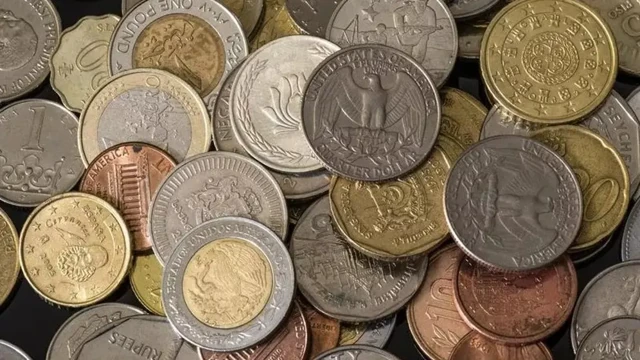
I inherited a box of coins. What should I figure out first?
I started by identifying a 1921 Peace dollar, then saved its details to my collection so I had somewhere to pick up next time.
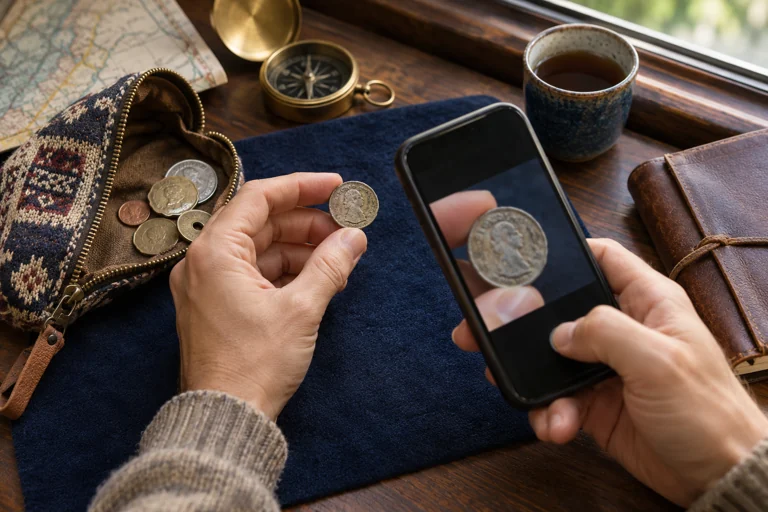
I couldn’t read the coin. Where was I supposed to start?
An unfamiliar portrait and a buffalo gave me no obvious starting name. Photographs helped me connect the design to a country, date and denomination.
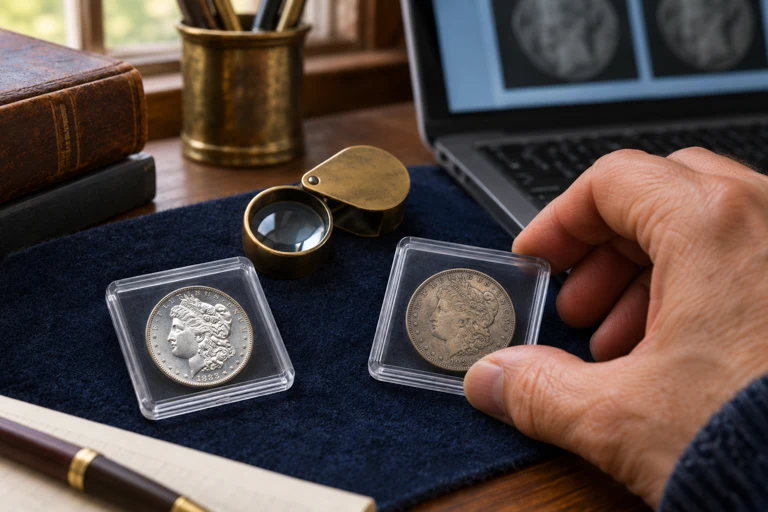
Similar-looking coins, very different prices. What was I missing?
Two Morgan dollars looked similar to me. Comparing their dates, mint details and displayed condition labels helped me understand why their reference prices were so different.
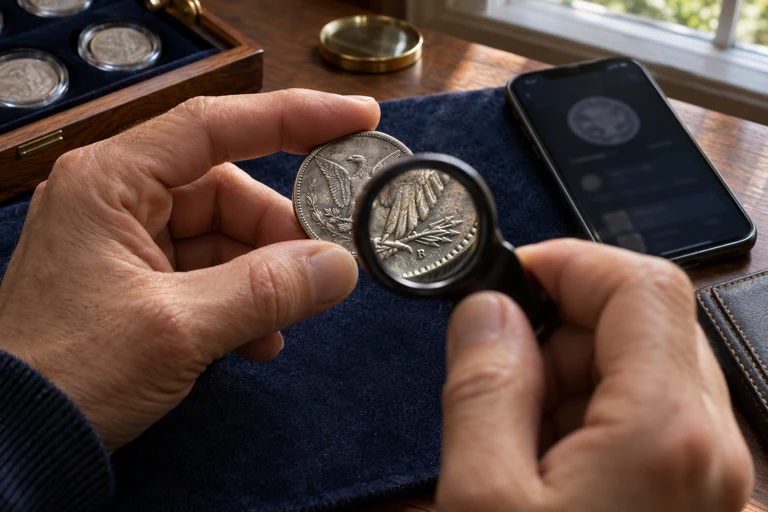
What was that tiny letter on my coin?
I kept looking at the date. The detail I needed was somewhere else.
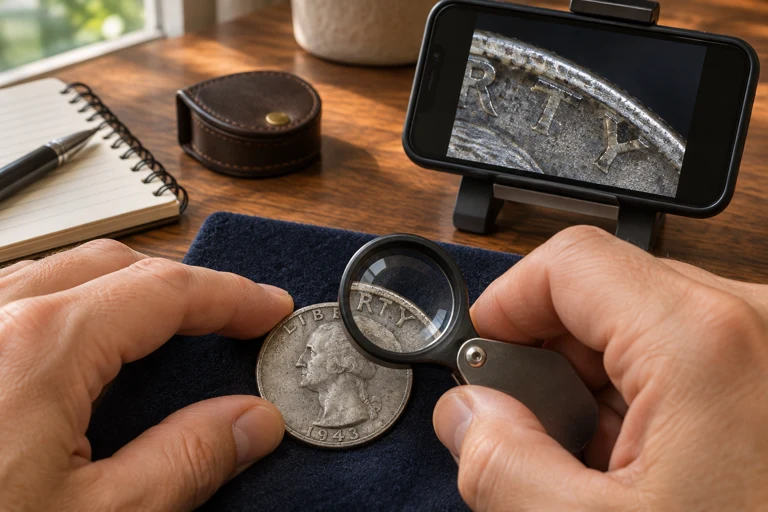
Was that doubled lettering—or just damage?
A strange-looking letter caught my attention. I needed better evidence before calling it an error.
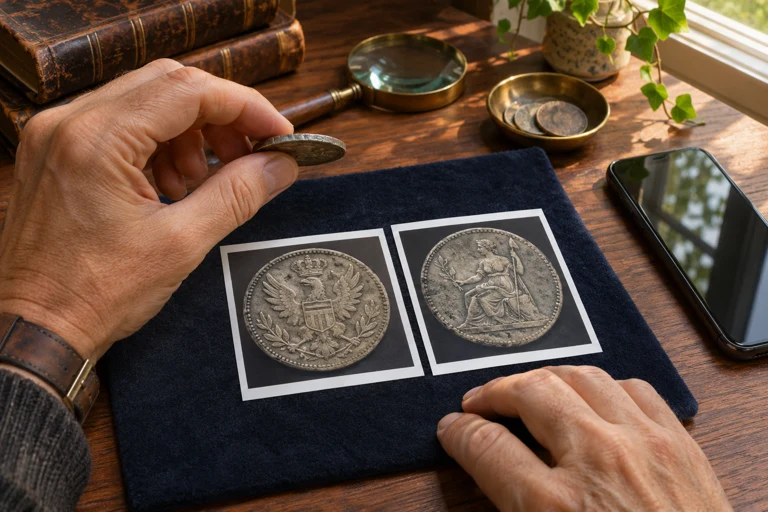
Two results looked right. Which one matched my coin?
I stopped choosing the closest picture and started checking the details I could actually see.
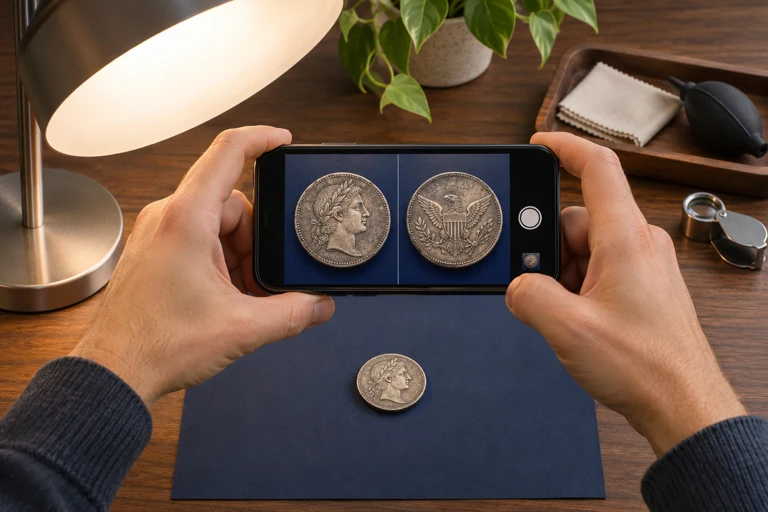
Why did a new photograph give me a different result?
Before trying another name, I took a closer look at how I had photographed the coin.
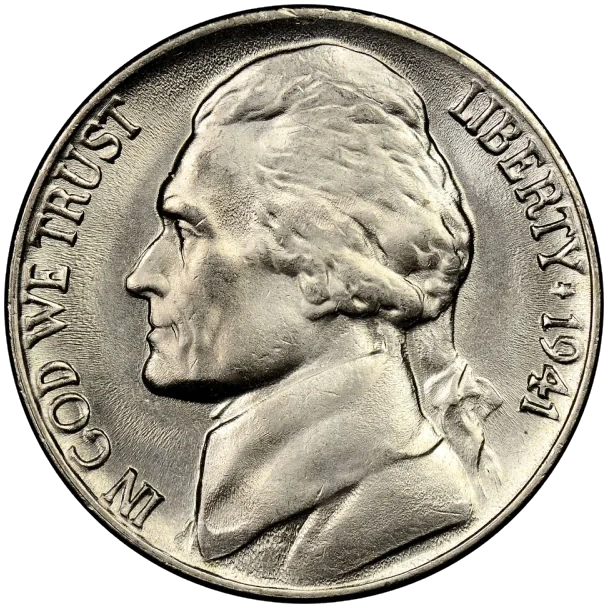
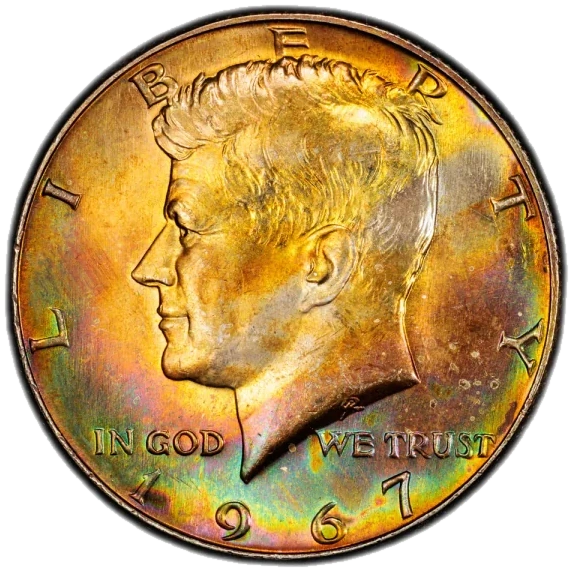
I found a 1941 nickel and a 1967 half dollar. Which one is silver?
The older coin contains no silver. The Kennedy half dollar contains 40%, and its worn appearance doesn’t change the original alloy.
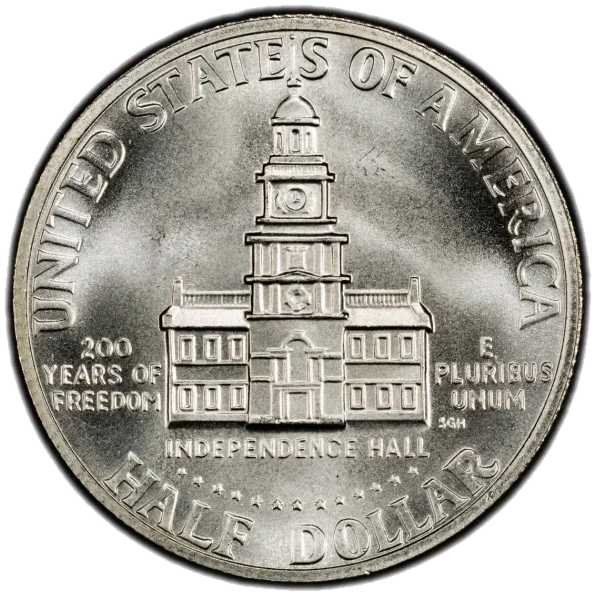
I pulled a 1776–1976 half dollar from a coin jar. Who is on it?
John F. Kennedy is on the front and Independence Hall is on the back. The mint mark and finish explain why similar-looking coins sell for different amounts.
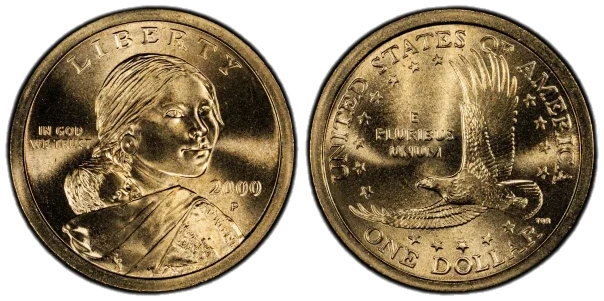
I have a handful of gold-colored $1 coins. Are they real gold?
Most ordinary modern golden dollars contain no gold. The portraits, dates and reverse designs show which coins deserve a closer look.
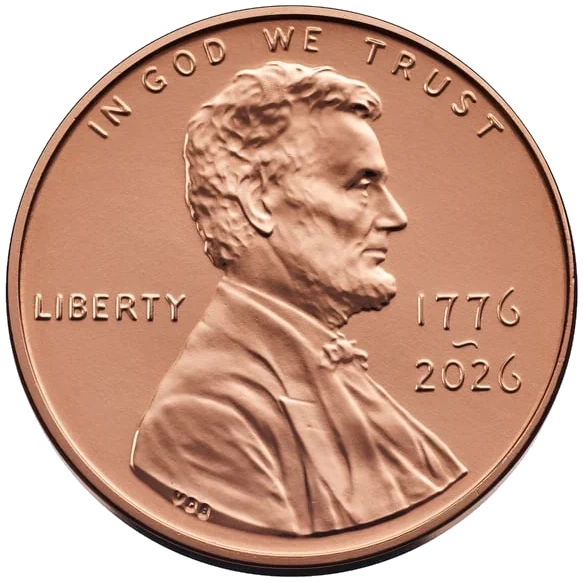
Did the Mint really make a 2026 penny, and is it worth saving?
Yes. The 1776–2026 Lincoln cent was made for collector sets. Its finish and condition matter more than a headline about the end of the penny.
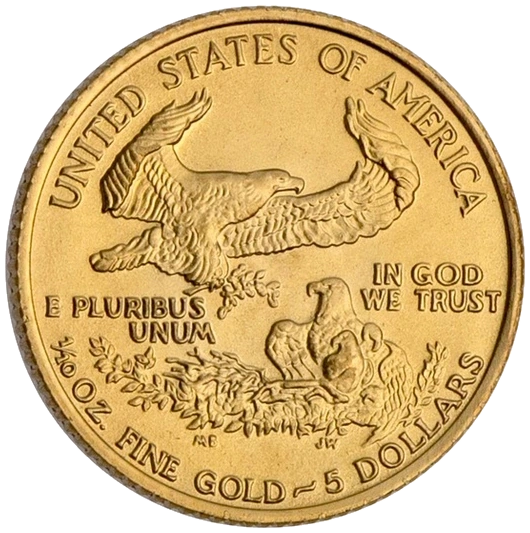
Why does a 1/10 oz Gold Eagle weigh more than 3.11 grams?
A 1986 $5 Gold Eagle shows how to read the weight on the coin, calculate its gold value and compare dealer premiums.
START WITH YOUR COINS
Have a coin question of your own?
Download HeriBase to identify your coins, explore reference values, and start organising your collection.