

 App Store

APP COMPARISONS · ONLINE IDENTIFICATION
HeriBase vs CoinIn: Which Online Coin Identifier Works Without an App?
We compared what each browser tool showed after uploading photos of an 1856 U.S. large cent, from the first preview to the identification result or checkout screen.
 HeriBase Editorial TeamPublished
In this article
Quick answer
HeriBase returned a suggested coin identification in the browser without registration or a subscription. Its web tool offers up to three free identifications per day for machine-struck coins. In this test, it suggested an 1856 U.S. Liberty Head cent with an Upright 5 and displayed specifications and inscriptions. The reference price was obscured, and the price button directed users to the App.
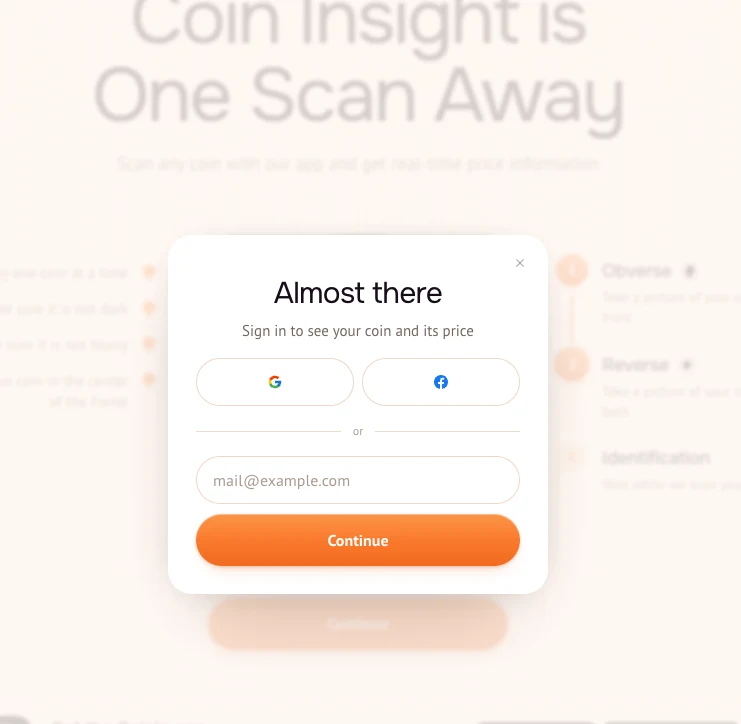
CoinIn accepted photo uploads in the browser and asked us to sign in to see the coin and its price. After sign-in, the tested flow presented a paid subscription screen. The test ended there, so we could compare the steps required to reach a result, but could not compare the two tools’ identification accuracy or price estimates.
How we tested the two browser tools
We used front and back photos of the same 1856 U.S. large cent in the two homepage upload flows. We recorded how each site framed the photos, whether it asked for an account or payment, and which details were visible at the last step reached. HeriBase publishes this comparison and makes one of the tools tested.
The 1856 date makes framing especially relevant. The coin belongs to the Braided Hair large-cent series, designed by Christian Gobrecht. Professional Coin Grading Service (PCGS) lists both Upright 5 and Slanted 5 varieties for 1856. The date sits low on the portrait side, making a complete view useful when comparing the shape of the 5.
HeriBase and CoinIn at a glance
| What we checked | HeriBase web tool | CoinIn web tool |
|---|---|---|
| Photo input | Separate uploads for the front and back | Separate steps for the front and back |
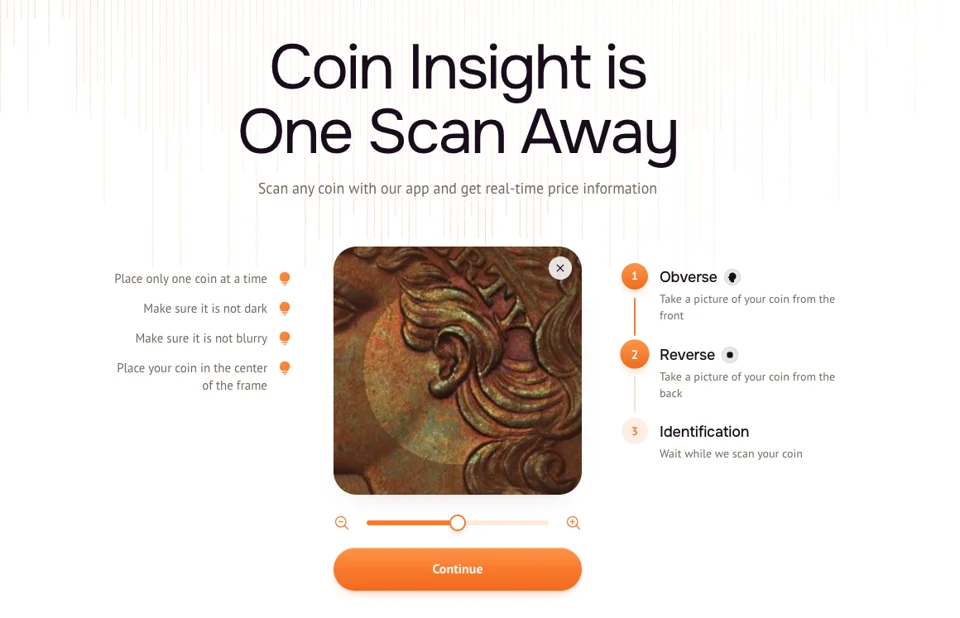
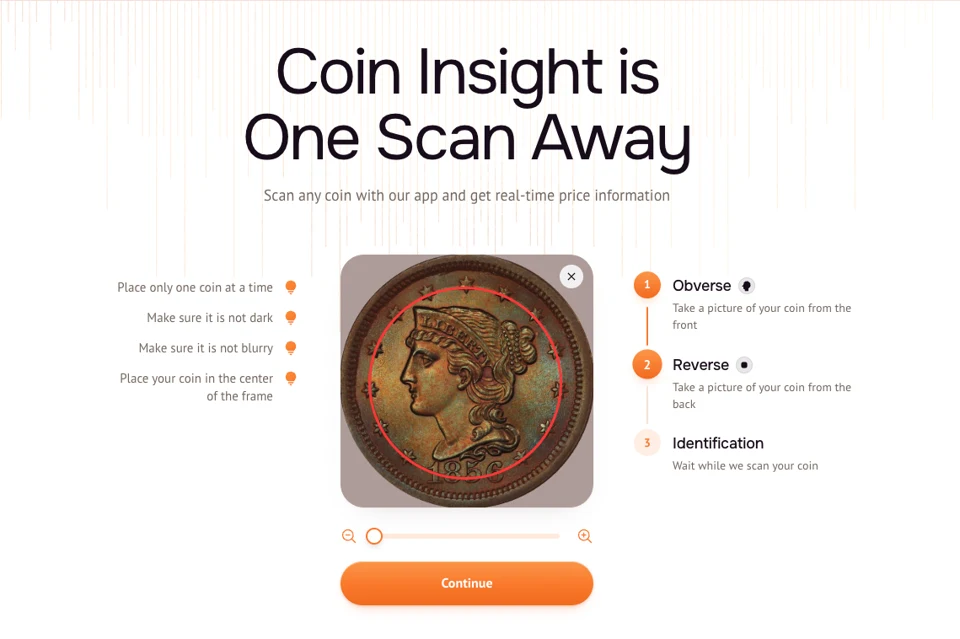
| Photo framing | Both full coin faces visible in the tested preview | Opened zoomed in. We adjusted the slider, and the rim still extended beyond the circular guide |
| Account | No registration required in the tested flow | Sign-in prompt before the result |
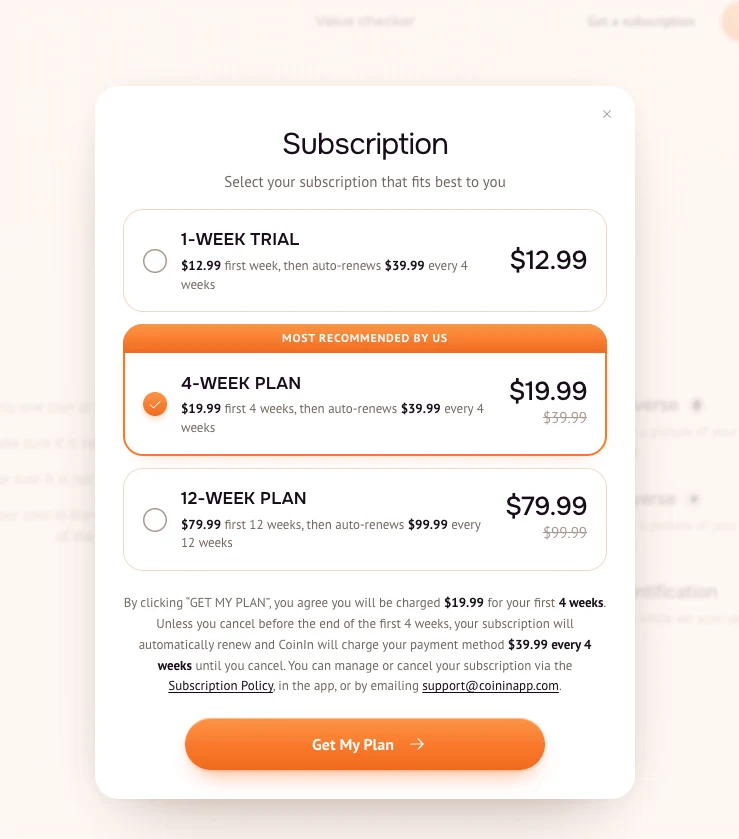
| Payment | Up to three free identifications per day | Paid subscription screen after sign-in in the tested flow |
| Identification result | Suggested 1856 U.S. Liberty Head cent, Upright 5, with specifications and inscriptions | Result screen was not reached |
| Reference price | Amount obscured in the browser. The price button directed users to the App | Price screen was not reached |
CoinIn: Photo framing, sign-in and subscription
CoinIn opened the uploaded portrait photo at a tight zoom. At first, the preview showed mostly Liberty’s hair and part of the portrait. Moving the zoom slider toward its minimum brought the coin into view, but the colored circular guide still sat inside the rim and crossed the lower date area. The screenshots show the visible guide. They do not establish which pixels CoinIn processes during identification.
The upload flow then asked us to sign in to see the coin and its price. After sign-in, the subscription screen presented three paid options. The one-week offer displayed $12.99 for the first week, followed by automatic renewal at $39.99 every four weeks. Those were the terms shown in this session. Check the offer and renewal terms presented to you before paying.
HeriBase: What the free browser result showed
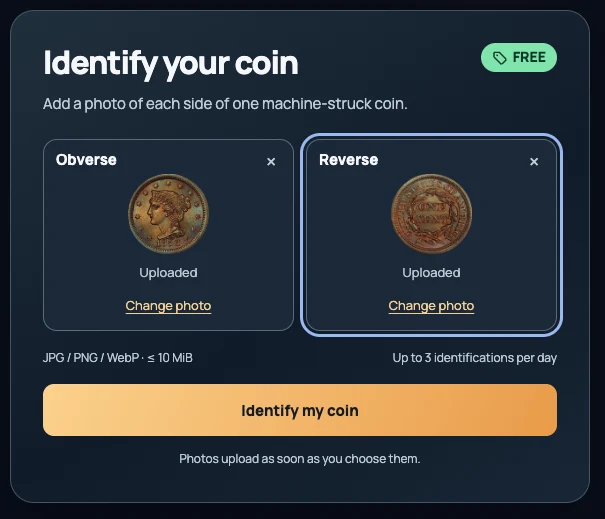
On the HeriBase homepage, we selected the obverse (front) and reverse (back) photos, then chose Identify my coin. Both full coin faces were visible in the preview. The result opened in the browser without an account or payment prompt.
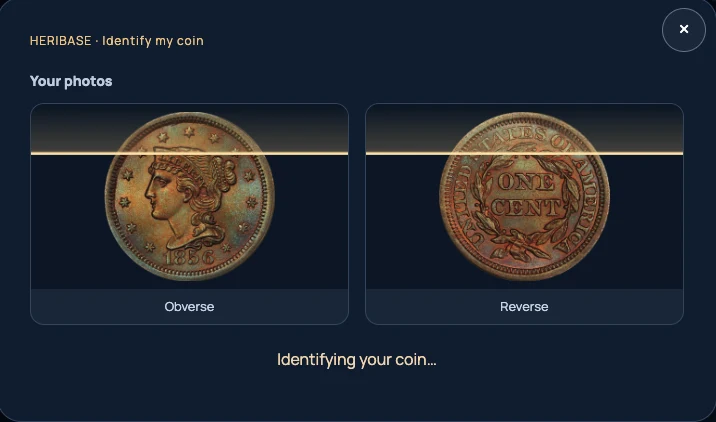
The browser suggested a U.S. one-cent Liberty Head coin dated 1856, Upright 5. It showed the year, country, denomination, copper composition and inscriptions, and offered reference photos for comparison. It also returned a Mint State (MS) label. Treat that label and the variety suggestion as leads to verify. The displayed specifications are reference fields rather than physical measurements of this specimen.
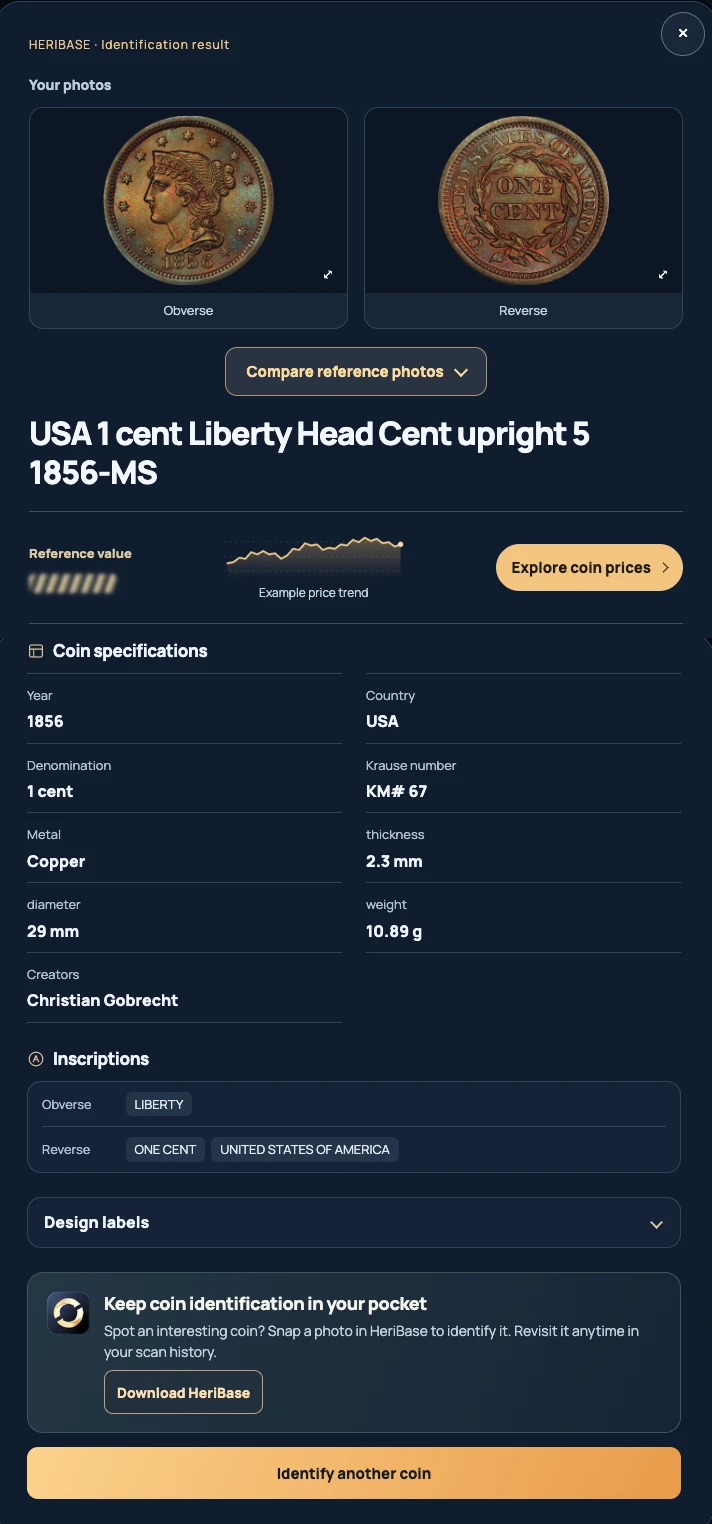
The example price chart was labeled as an example. The Explore coin prices button directed users to the App. If you reach the web tool’s daily limit or want to explore more identification features, the result also includes a download link. The App has its own usage and pricing terms.
Which online coin identifier should you use?
If you have photos of both sides and want a quick starting point, HeriBase gave us a suggested match with fewer steps in this browser test. Start by checking the date, inscriptions and visible design against reference photos. When the variety could change the value, pull up the relevant catalog record and compare the exact feature before relying on it.
If price is your main question, check which details are available at each step. HeriBase’s free result gave us identification details and routed price exploration to the App. CoinIn showed a paid offer before we could see its result. This single-coin test supports a choice about browser access and workflow. A comparison of identification accuracy or pricing would require completed results from both tools across several coins.
Summary: start on the web, continue in the App
HeriBase reached a suggested identification without an account or subscription in this test. CoinIn accepted the same photographs but required sign-in and presented a subscription offer before the result. That is a difference in access and workflow; it is not an accuracy ranking.
Use the website to get started, then download HeriBase to save a collection, explore market listings or request a separately billed expert appraisal. The User Guide explains the next steps.
Continue in the HeriBase App
The website is a standalone starting point: upload both sides, review the suggested identity, then continue in the App when you want to do more with the coin. HeriBase describes its coin coverage as 195+ countries and regions; this test checked one U.S. coin, not the full database.
Identify coins and banknotes: photograph both sides and explore the identification details. Read the HeriBase User Guide for the full workflow.
Build a collection: save coin records and photographs, organise sets and record purchase costs so you can find your research again.
Explore the market: browse listings and compare coins. Selling access depends on the eligible subscription; a reference value is not a guaranteed sale price.
Ask a human expert: use the App’s expert appraisal service when you need a closer review of condition, authenticity or a suspected error. Expert appraisal is charged separately.
Start with free access: the App offers three free scans per day, with available ads for additional scans. Eligible offers may include a three-day free trial followed by annual billing. Availability and renewal terms are shown at checkout.
Consider Pro for regular use: eligible benefits include unlimited identification, an unlimited collection and an ad-free experience. See the pricing and subscription guide before choosing a plan.
Try your own coin in HeriBase. Start on the website, or download the App to continue identifying, organising and exploring your collection.
Frequently asked questions
Can I identify a coin online without downloading an app?
Yes. The HeriBase homepage accepts front and back photos of a machine-struck coin and offers up to three free browser identifications per day without registration or a subscription.
Does CoinIn require payment to identify a coin online?
In the browser flow we tested, CoinIn asked for sign-in and then displayed a paid subscription offer before we could see the identification or price. Offers may vary by session, market or date.
Can I see a coin’s price in the free HeriBase browser scan?
The tested result displayed a reference-value section with the amount obscured. The price button directed users to the App.
Does a browser scan confirm the variety, grade or authenticity?
A browser scan can suggest a match and provide details to compare. For this 1856 cent, check the shape of the 5 against a catalog reference. Confirm condition and authenticity separately before making a purchase, sale or grading decision.