

 App Store

COIN VALUE GUIDES · QUARTER GUIDES
Mount Rushmore Quarter:2006 vs. 2013, Versions and Error Claims
Distinguish the 2006 South Dakota state quarter from the 2013 Mount Rushmore national-site quarter, and separate intended carving details from damage and genuine mint errors.
 HeriBase TeamPublished
In this article
Quick answer
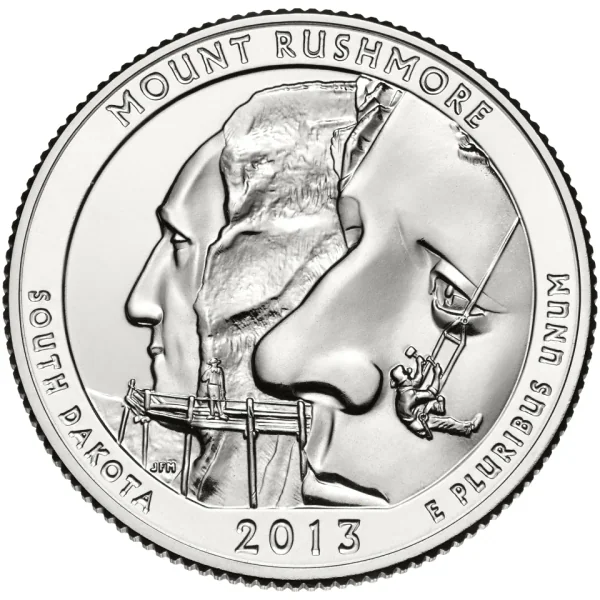
Two different circulating quarter designs show Mount Rushmore: the 2006 South Dakota state quarter and the 2013 Mount Rushmore National Memorial quarter. The 2013 design focuses on workers carving the monument; the machinery and unfinished-looking detail belong to the intended design.
An ordinary worn P or D clad example generally starts at 25 cents. A “misprint Mount Rushmore quarter” claim needs specific evidence; the subject, a rough-looking face or a scratch does not establish an error. Silver Proofs and the large five-ounce issues are separate collector products.
Coin photos
Basics & coin story
Mount Rushmore appears in two programs with different storytelling goals. The 2006 state quarter combines the monument with South Dakota symbols. The 2013 national-site design looks closely at the work of creating the memorial, rather than repeating a distant postcard view.
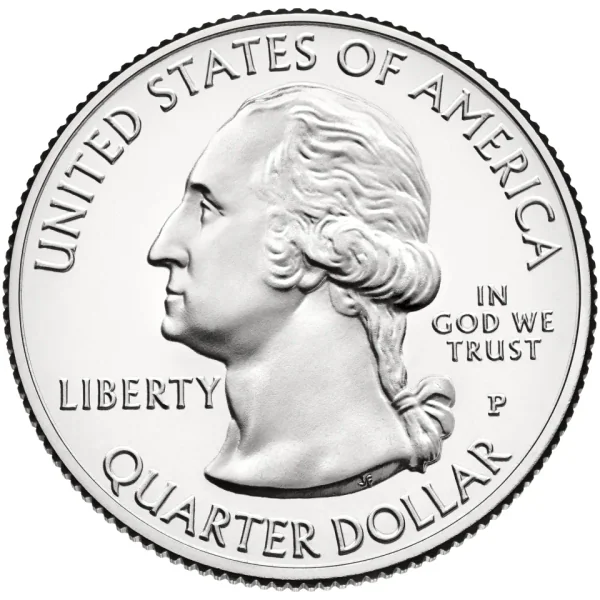
The 2013 reverse belongs to America the Beautiful, while the 2006 reverse belongs to 50 State Quarters. Their common quarter denomination and Washington portrait make confusion easy if only one face is photographed. Read the year and complete outer legend before comparing prices.
The same 2013 reverse also appears on five-ounce silver coins. Those large pieces are not ordinary 24.3 mm circulation quarters and should never be priced by the pocket-change comparison. The national park quarter guide provides the larger series context.
| Feature | What to check |
|---|---|
| 2006 issue | South Dakota / 50 State Quarters |
| 2013 issue | Mount Rushmore / America the Beautiful |
| Ordinary denomination | 25 cents |
| Ordinary clad specifications | 5.67 g / about 24.3 mm / no silver |
| Collector quarter Proofs | Clad or 90% silver; S alone is insufficient |
| Large silver issue | Separate five-troy-ounce product |
| Normal 2013 design | Workers carving the memorial |
| Error requirement | Physical diagnostics and the exact issue |
Identification
Read the year before diagnosing the picture
A 2006 quarter is not a 2013 variety. The state design shows more than the monument alone; the national-site design deliberately uses a close view of the work. Missing-looking facial detail may be an aspect of relief, wear or lighting rather than a minting defect.
Distinguish a die feature from a surface mark
A scratch cuts into or displaces the surface after striking. A documented doubled die repeats specified design relationships; a die chip adds raised metal in a particular place. These mechanisms cannot be diagnosed by calling every unusual line a misprint.
Take a complete image and a sharp close-up under two lighting angles. Do not clean or scrape the feature. Specialist comparison is appropriate when a substantial premium depends on a proposed attribution.
Separate the five-ounce coin
Measure diameter and mass before applying ordinary-quarter specifications. The five-ounce silver product shares a nominal quarter-dollar denomination but its bullion content and product format require another valuation. A large silver issue is intentional manufacture, not a quarter struck on an oversized error blank.
Condition & value
USD references checked October 28, 2026. Face value is a denomination, not an estimate for every collector version. No unsupported current retail price is assigned to a special grade or unverified error.
| Issue | Grade / condition | Value or reference | Basis | Important condition |
|---|---|---|---|---|
| 2006 or 2013 ordinary worn P/D | Normal clad issue | 25¢ baseline | Face value | Match the year |
| 2013 S collector quarter | Finish and alloy verified | Use exact product comparisons | Collector market | Clad and silver differ |
| 2013 five-ounce silver issue | Exact bullion or collector product | Five fine troy oz plus market premium | Separate denomination format | Not normal-quarter weight |
| Claimed mint error | Authenticated mechanism | Case-specific | Attribution first | No premium assumed for damage |
An alleged error price needs a completed sale for the same mechanism, not a generic search result for the date. Include certification status, surfaces, grade and the buyer-fee basis. A high asking price does not show that anyone paid it.
For ordinary circulation finds, separate the collection decision from resale economics. A pleasing reverse may be worth keeping as a design example even without a market premium. For Proofs, retain product information and compare the exact metal and finish.
Summary
First decide whether the coin is the 2006 state design, the 2013 national-site quarter or the separate large silver product. Treat carving details as design features unless a documented physical anomaly establishes something else. Preserve a genuine candidate and use matched sales rather than an unverified “misprint” label.
FAQ
Which year is the Mount Rushmore quarter?
Mount Rushmore appears on South Dakota’s 2006 state quarter and on the 2013 national-site quarter; these are distinct designs.
Why does the 2013 design look unfinished?
It deliberately depicts work on the memorial. The carving scene is not itself an error.
Is every Mount Rushmore quarter silver?
No. Normal circulation quarters are clad. Silver Proof quarters and five-ounce silver issues are separate products.
Does a scratch make it a valuable misprint?
No. Post-mint damage does not establish a mint error; a premium requires an appropriate attribution and comparison.
References
References and further reading
- U.S. Mint: 2013 design reference
- U.S. Mint: South Dakota state design
- U.S. Mint: distinct five-ounce collector product
References consulted October 28, 2026. Price tables retain the update dates stated in the text; guide estimates, face values and completed transactions are different forms of evidence.