

 App Store

COIN VALUE GUIDES · QUARTER GUIDES
Eleanor Roosevelt Quarter:Design, Value, Mint Marks and Error Claims
Identify the 2023 Eleanor Roosevelt quarter, understand its reverse, separate collector versions and check error claims against the normal design.
 HeriBase TeamPublished
In this article
Quick answer
The Eleanor Roosevelt quarter is a 2023 U.S. 25-cent coin. A normal worn P or D clad example generally begins at 25 cents. Its distinctive reverse is an intentional design, not evidence of rarity or a mint error.
An uncirculated coin, S collector strike, silver Proof or authenticated error needs its own comparison. Identify the mint, finish and metal before using an online price.
Coin photos
Basics & coin story
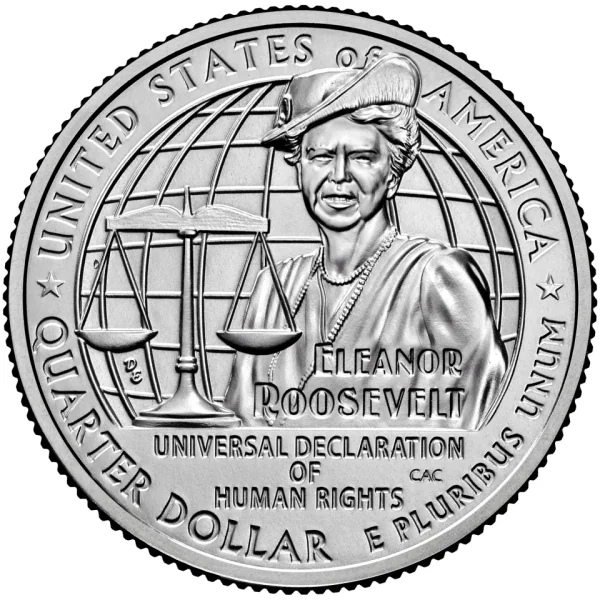
The Eleanor Roosevelt quarter connects a circulating coin to human-rights work. A globe and scales accompany Roosevelt, giving the portrait a specific subject rather than simply commemorating a former first lady.
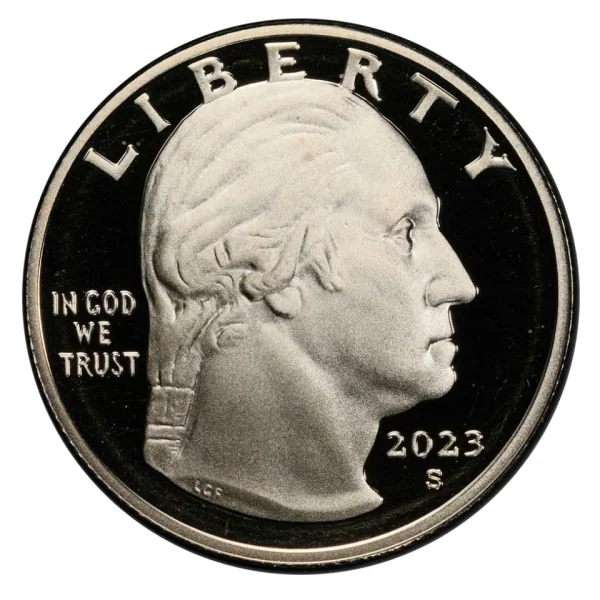
Don Everhart designed the reverse and Craig Campbell sculpted it. The Washington portrait on the other side is Laura Gardin Fraser’s design, used throughout the American Women program. The design honors Roosevelt’s role in advancing the Universal Declaration of Human Rights.
This page focuses on one reverse and its common misinterpretations. The 2023 annual quarter checklist shows the other subjects of the year. Building one example per design is different from collecting every mint and finish.
| Feature | What to check |
|---|---|
| Ordinary denomination | 25 cents |
| Normal clad mass / diameter | 5.67 g / 24.26 mm |
| Ordinary circulation metal | Copper-nickel clad; no silver |
| Mint mark position | On the Washington portrait side |
| P / D | Philadelphia / Denver |
| S | Collector issue; confirm finish and metal |
| Issue year / theme | 2023 / Eleanor Roosevelt |
| Silver Proof standard | .999 fine silver |
Identification
Read the normal reverse first
The reverse spells ELEANOR ROOSEVELT and UNIVERSAL DECLARATION OF HUMAN RIGHTS. Use those inscriptions together with the portrait, globe and scales. The ordinary design is not an error merely because it differs from an older eagle-back quarter.
A missing-looking letter may be a weak strike, grease interference, wear or damage. An isolated internet nickname is not an attribution. Photograph the complete legends under two lighting angles before comparing a specific error diagnosis.
Mint letters and Proof manufacture
P and D identify Philadelphia and Denver. S collector issues must be identified by finish and product; S alone does not establish silver, and a mirrorlike surface is not a complete Proof test.
On a loose coin, inspect both sides and the edge without scratching. Preserve any packaging and record its exact wording separately from an assumption about the metal.
Document a suspected error
First decide whether the feature is raised or recessed, whether neighboring details are displaced and whether the rim is intact. A genuine off-center strike affects the overall relationship between design and blank; a scrape removes metal after striking.
Use full-face photographs plus a close-up. Do not clean dirt out of the feature or redraw a faint line in a photograph. For a meaningful premium, match a documented variety or obtain an examination of the proposed error mechanism.
Condition & value
USD references checked October 29, 2026. Face value is the denomination; a guide estimate is not a completed sale or purchase offer. Where a matched current price was not verified, use the issue-specific comparison described below.
| Issue | Grade / condition | Value or reference | Basis | Important condition |
|---|---|---|---|---|
| P or D ordinary clad | Worn circulating coin | 25¢ baseline | Denomination | An unusual picture is not an error |
| Uncirculated clad | Preservation established | Compare exact issue and grade | Collector premium | Marks and surfaces matter |
| S collector coin | Correct finish and composition | Separate product comparison | Collector issue | S alone does not establish silver |
| Claimed major error | Mechanism authenticated | Individual matched sales | Production anomaly | Exclude post-mint damage |
Most examples encountered in change are ordinary clad coins. A seller’s large asking price is not evidence that the design is rare. Search completed records for the same mint, finish and preservation, not just the honoree or site name.
Clad and silver collector versions can share the same central design. A whole Proof set’s retail price also includes other coins and packaging, so it cannot directly value a single loose quarter.
For sorting, keep a representative ordinary example, then isolate only coins with a credible additional reason for review. The modern-quarter sorting guide distinguishes limited issues, collector products and genuine errors.
Summary
The Eleanor Roosevelt design is the starting identification, not a price guarantee. A normal worn clad coin begins at 25 cents. Evaluate collector manufacture, condition and any claimed production error separately.
FAQ
What year is the Eleanor Roosevelt quarter?
The design was issued in 2023.
Is every Eleanor Roosevelt quarter valuable?
No. Ordinary worn P and D clad examples generally begin at 25 cents. Other versions need specific comparisons.
Does S mean the quarter is silver?
No. S can occur on different collector versions; confirm the product and composition.
Can unusual raised shapes be normal?
Yes. Compare the complete official design before treating a raised feature as an error.
References
References and further reading
References consulted October 29, 2026. Price tables retain the update dates stated in the text; guide estimates, face values and completed transactions are different forms of evidence.