

 App Store

COIN VALUE GUIDES · QUARTER GUIDES
Effigy Mounds Quarter:Design, Value, Mint Marks and Error Claims
Identify the 2017 Effigy Mounds quarter, understand its reverse, separate collector versions and check error claims against the normal design.
 HeriBase TeamPublished
In this article
Quick answer
The Effigy Mounds quarter is a 2017 U.S. 25-cent coin. A normal worn P or D clad example generally begins at 25 cents. Its distinctive reverse is an intentional design, not evidence of rarity or a mint error.
An uncirculated coin, S collector strike, silver Proof or authenticated error needs its own comparison. Identify the mint, finish and metal before using an online price.
Coin photos
Basics & coin story
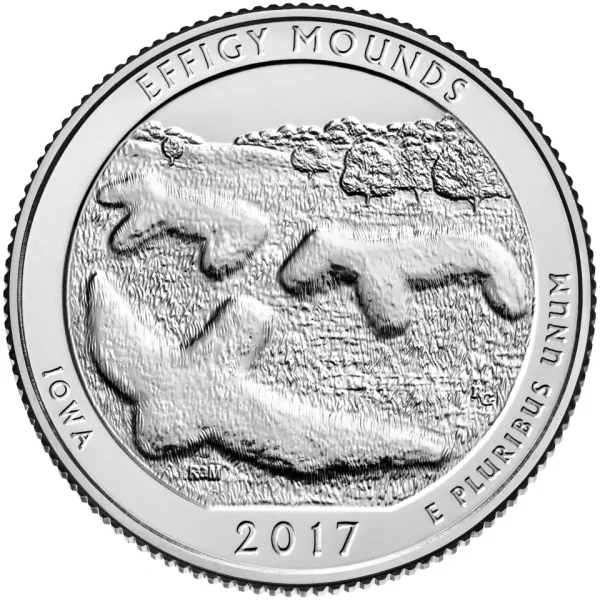
Effigy Mounds National Monument in Iowa preserves a sacred landscape of Indigenous earthworks. The quarter presents the Marching Bear Group from above, rather than depicting live animals in a conventional wildlife scene.
The National Park Service describes two bear-shaped mounds and one bird-shaped mound in the selected view. The design is the first America the Beautiful quarter of 2017. Its unfamiliar raised forms make sense when read as an aerial landscape.
This page focuses on one reverse and its common misinterpretations. The 2017 annual quarter checklist shows the other subjects of the year. Building one example per design is different from collecting every mint and finish.
| Feature | What to check |
|---|---|
| Ordinary denomination | 25 cents |
| Normal clad mass / diameter | 5.67 g / 24.26 mm |
| Ordinary circulation metal | Copper-nickel clad; no silver |
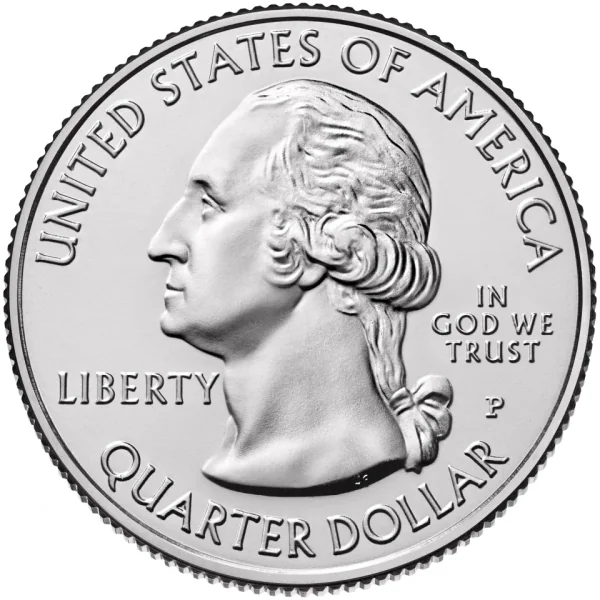
| Mint mark position | On the Washington portrait side |
| P / D | Philadelphia / Denver |
| S | Collector issue; confirm finish and metal |
| Issue year / theme | 2017 / Effigy Mounds |
| Silver Proof standard | 90% silver |
Identification
Read the normal reverse first
Read EFFIGY MOUNDS, IOWA and 2017. The smooth raised shapes are intentional representations of earthworks, not extra metal accidentally added to the coin. Compare their placement with the official reverse reference before calling them blobs or errors.
The same subject appears on a much larger five-ounce silver product. That coin is a separate manufactured object, not an ordinary quarter made valuable by the scene. The 2017 silver Proof quarter is also a different comparison from the five-ounce product.
Mint letters and Proof manufacture
P and D identify Philadelphia and Denver. S collector issues must be identified by finish and product; S alone does not establish silver, and a mirrorlike surface is not a complete Proof test.
On a loose coin, inspect both sides and the edge without scratching. Preserve any packaging and record its exact wording separately from an assumption about the metal.
Document a suspected error
First decide whether the feature is raised or recessed, whether neighboring details are displaced and whether the rim is intact. A genuine off-center strike affects the overall relationship between design and blank; a scrape removes metal after striking.
Use full-face photographs plus a close-up. Do not clean dirt out of the feature or redraw a faint line in a photograph. For a meaningful premium, match a documented variety or obtain an examination of the proposed error mechanism.
Condition & value
USD references checked October 29, 2026. Face value is the denomination; a guide estimate is not a completed sale or purchase offer. Where a matched current price was not verified, use the issue-specific comparison described below.
| Issue | Grade / condition | Value or reference | Basis | Important condition |
|---|---|---|---|---|
| P or D ordinary clad | Worn circulating coin | 25¢ baseline | Denomination | An unusual picture is not an error |
| Uncirculated clad | Preservation established | Compare exact issue and grade | Collector premium | Marks and surfaces matter |
| S collector coin | Correct finish and composition | Separate product comparison | Collector issue | S alone does not establish silver |
| Claimed major error | Mechanism authenticated | Individual matched sales | Production anomaly | Exclude post-mint damage |
Most examples encountered in change are ordinary clad coins. A seller’s large asking price is not evidence that the design is rare. Search completed records for the same mint, finish and preservation, not just the honoree or site name.
Clad and silver collector versions can share the same central design. A whole Proof set’s retail price also includes other coins and packaging, so it cannot directly value a single loose quarter.
For sorting, keep a representative ordinary example, then isolate only coins with a credible additional reason for review. The modern-quarter sorting guide distinguishes limited issues, collector products and genuine errors.
Summary
The Effigy Mounds design is the starting identification, not a price guarantee. A normal worn clad coin begins at 25 cents. Evaluate collector manufacture, condition and any claimed production error separately.
FAQ
What year is the Effigy Mounds quarter?
The design was issued in 2017.
Is every Effigy Mounds quarter valuable?
No. Ordinary worn P and D clad examples generally begin at 25 cents. Other versions need specific comparisons.
Does S mean the quarter is silver?
No. S can occur on different collector versions; confirm the product and composition.
Can unusual raised shapes be normal?
Yes. Compare the complete official design before treating a raised feature as an error.
References
References and further reading
References consulted October 29, 2026. Price tables retain the update dates stated in the text; guide estimates, face values and completed transactions are different forms of evidence.