

 App Store

COIN VALUE GUIDES · QUARTER GUIDES
2016 Quarters:Five Designs, Mint Marks and Value
Identify all 5 2016 quarter designs, separate circulation coins from collector versions and check material, mint marks and genuine error claims.
 HeriBase TeamPublished
In this article
Quick answer
The 2016 quarters have 5 different reverse designs: Shawnee, Cumberland Gap, Harpers Ferry, Theodore Roosevelt, Fort Moultrie. Ordinary worn Philadelphia and Denver clad examples generally begin at their 25-cent face value. A different reverse is part of the planned series, not a mint error.
Collector Proofs, silver issues, exceptional preservation and verified errors need their own comparisons. Do not use a record auction price for a worn pocket-change example.
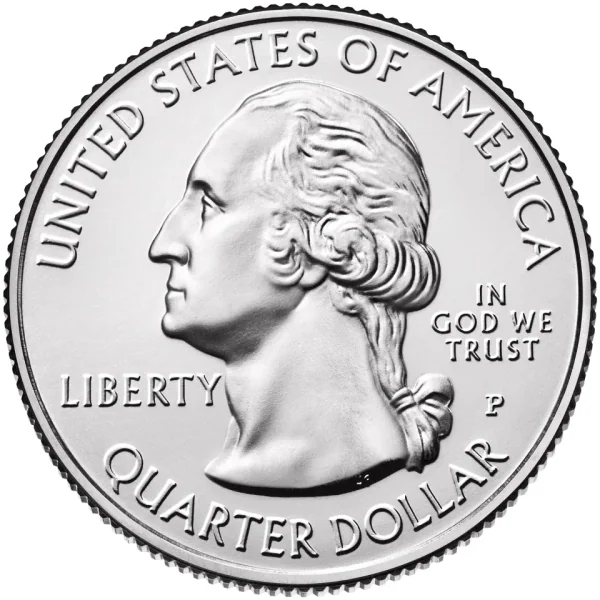
Coin photos
Basics & coin story
The 2016 releases belong to the America the Beautiful program, which honored 56 national sites from 2010 through 2021. Their reverse subjects connect a landscape or historic place to its wider story.
The common Washington portrait helps these coins work as familiar money while the reverse carries the changing subject. Statehood or historical dates within a reverse design are different from the year of issue. Read the issue year near the lower rim before using a catalog.
A one-per-design album is a different project from collecting every mint, finish and metal. Decide the goal first: a complete picture set does not require buying every Proof or the highest certified grade. The Washington quarter overview places these releases in the denomination’s longer history.
| Feature | What to check |
|---|---|
| Denomination / reverse designs | 25 cents / 5 designs |
| Ordinary clad mass / diameter | 5.67 g / approximately 24.3 mm |
| Clad construction | Copper core with copper-nickel outer layers; no silver |
| Circulation mints | Philadelphia P and Denver D |
| Collector versions | S Proofs in clad and silver; S non-Proof collector strikes |
| Silver Proof alloy | 90% silver, 10% copper |
| Mint mark position | Obverse to the right of Washington |
| Design count versus variants | One image per design does not cover every mint and finish |
Design checklist
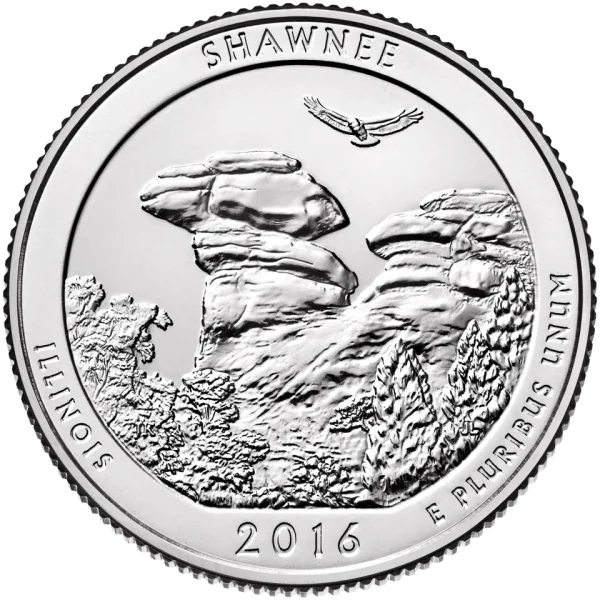
1. Shawnee — Illinois
Camel Rock and a bird form a distinctive natural-landscape composition.
Read SHAWNEE and the issue year with the central scene; the subject identifies the scheduled design.
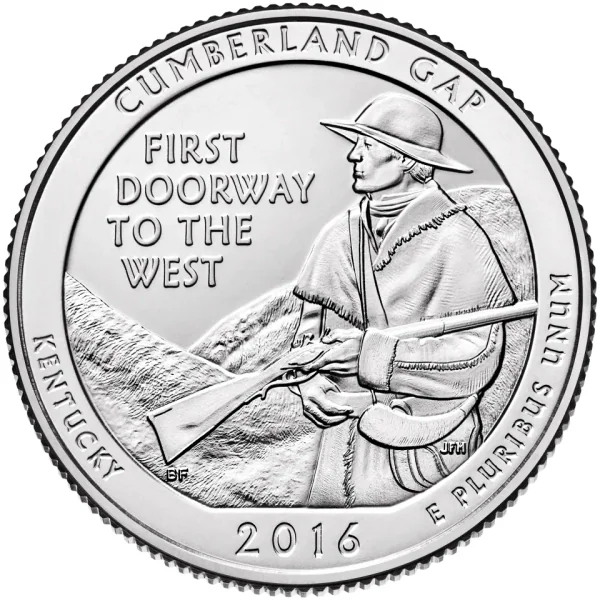
2. Cumberland Gap — Kentucky
A frontiersman looks toward the passage through the mountains.
Read CUMBERLAND GAP and the issue year with the central scene; the subject identifies the scheduled design.
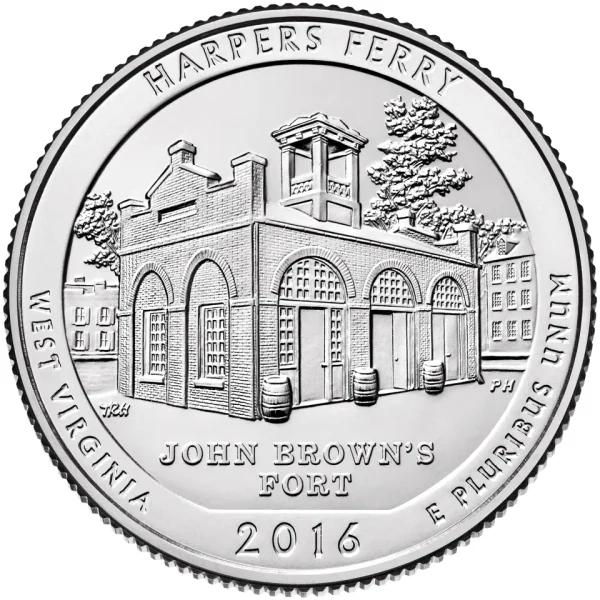
3. Harpers Ferry — West Virginia
John Brown’s Fort places a recognizable historic building at the center.
Read HARPERS FERRY and the issue year with the central scene; the subject identifies the scheduled design.
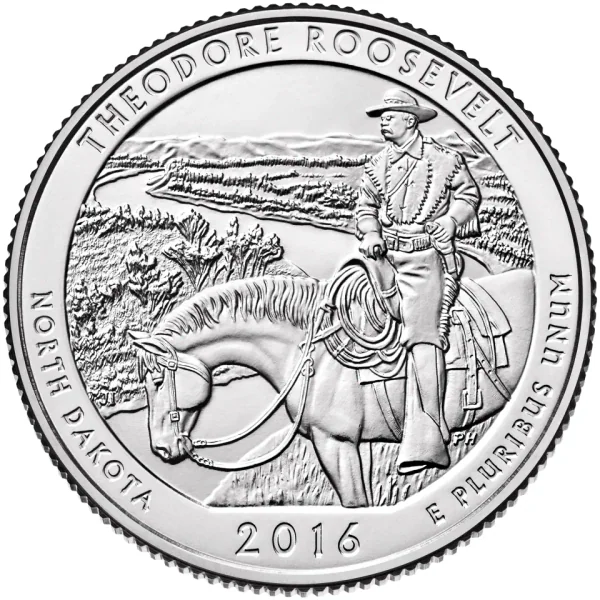
4. Theodore Roosevelt — North Dakota
A mounted Roosevelt surveys the landscape beside the Little Missouri River.
Read THEODORE ROOSEVELT and the issue year with the central scene; the subject identifies the scheduled design.
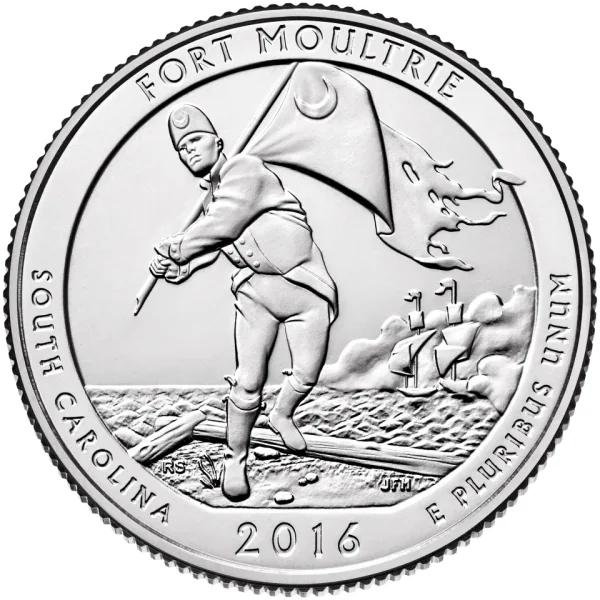
5. Fort Moultrie — South Carolina
The battle scene recalls the defense of Charleston during the Revolutionary War.
Read FORT MOULTRIE and the issue year with the central scene; the subject identifies the scheduled design.
Identification
Separate mint mark, finish and metal
Read P, D, S on the portrait side. These letters do not describe condition. Proofs are separately manufactured collector coins; mirrorlike shine caused by polishing is not Proof manufacture.
S can appear on clad and silver Proofs. In this America the Beautiful year it can also appear on non-Proof collector strikes, so an S is not a universal Proof test.
Use an edge and weight check carefully
The copper-colored band on an ordinary clad edge is expected. Toning, environmental exposure or a plated surface can change color. A calibrated scale and clear edge photograph are screening tools; neither a single color nor a rough weight establishes a wrong-planchet error.
Do not file the edge, scratch the surface or clean the coin to reveal the metal. Where the claim would create a large premium, obtain an appropriate authentication before assigning a price.
Match an error to a documented mechanism
A struck-through area, clipped planchet, doubled die and post-mint damage are different explanations. “Misprint” is a broad search term rather than a catalog attribution. Compare full-face photographs and exact diagnostics, not an isolated mark.
A scarce-looking scene is still an ordinary design unless its manufacture, preservation or a documented variety provides the distinction.
Condition & value
USD references checked October 28, 2026. Face value is a denomination, not an estimate for every collector version. No unsupported current retail price is assigned to a special grade or unverified error.
| Issue | Grade / condition | Value or reference | Basis | Important condition |
|---|---|---|---|---|
| Ordinary worn P or D clad | Circulated, normal issue | 25¢ baseline | Face value | No premium established by design alone |
| Uncirculated P or D | Exact mint and grade | Use matching completed sales | Collector market | Marks and originality matter |
| S clad Proof | Exact Proof grade and contrast | Separate Proof comparison | Collector product | Not silver merely because it has S |
| S silver Proof | Correct metal and Proof grade | Silver plus collector context | Separate issue | Not a circulation-metal error |
A price table should compare the same object. Specify the design, mint, manufacture, grade and any named variety before consulting a guide or sale. A high certified population rarity cannot be inferred from a raw coin’s shine. Dealer buying prices may also be below single-coin retail listings.
For silver, separate fine-metal content from the collectible premium. The silver melt calculator can help with supported historical issues, but modern collector Proof quarters require their own specifications and are outside its standard presets.
Keep original set information when available and compare recent sales with the same fee basis. If the coin is ordinary worn clad, a 25-cent baseline is more useful than an unsupported estimate drawn from an exceptional error sale.
Summary
Identify the 2016 reverse, then match the mint and product before estimating value. The 5 designs make a finite collecting group; they do not make every circulated example scarce. Preserve plausible variety candidates and compare the exact issue rather than the biggest auction headline.
FAQ
How many 2016 quarter designs are there?
There are 5 reverse designs: Shawnee, Cumberland Gap, Harpers Ferry, Theodore Roosevelt, Fort Moultrie.
Are ordinary 2016 quarters silver?
Normal circulation P and D coins are copper-nickel clad, not silver. Collector silver Proofs must be identified separately.
Are all 2016 S quarters silver?
No. San Francisco produced clad and silver collector issues; identify the manufacture and product rather than relying on S alone.
What makes a 2016 quarter worth more than face value?
A verified scarce issue, suitable uncirculated or Proof preservation, or an authenticated variety or mint error may bring a premium. Ordinary wear and damage do not establish one.
References
References and further reading
- U.S. Mint: annual design identification
- U.S. Mint: quarter programs and history
- U.S. Mint: coin terminology and finishes
References consulted October 28, 2026. Price tables retain the update dates stated in the text; guide estimates, face values and completed transactions are different forms of evidence.