

 App Store

COIN VALUE GUIDES · QUARTER GUIDES
2009 Quarters:Six Designs, Mint Marks and Silver Proofs
Identify all 6 2009 quarter designs, separate circulation coins from collector versions and check material, mint marks and genuine error claims.
 HeriBase TeamPublished
In this article
Quick answer
The 2009 quarters have 6 different reverse designs: District of Columbia, Puerto Rico, Guam, American Samoa, U.S. Virgin Islands, Northern Mariana Islands. Ordinary worn Philadelphia and Denver clad examples generally begin at their 25-cent face value. A different reverse is part of the planned series, not a mint error.
Collector Proofs, silver issues, exceptional preservation and verified errors need their own comparisons. Do not use a record auction price for a worn pocket-change example.
Coin photos
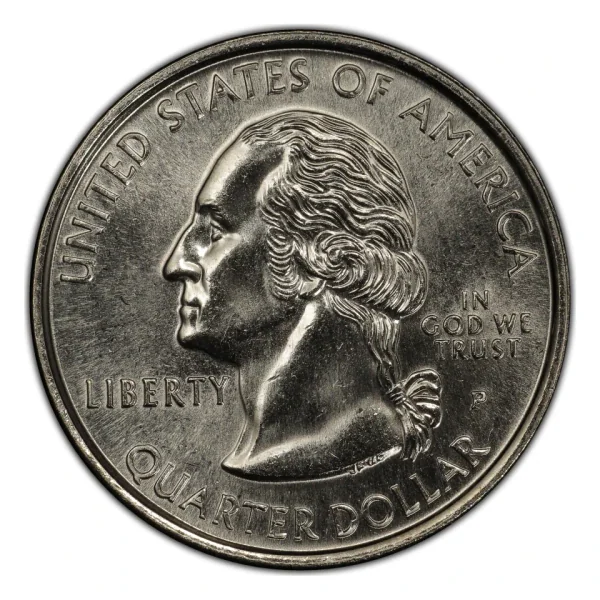
Basics & coin story
The 2009 District of Columbia and U.S. Territories program followed the fifty-state series. Its six designs represent the District and five territories; they are not six additional states.
The common Washington portrait helps these coins work as familiar money while the reverse carries the changing subject. Statehood or historical dates within a reverse design are different from the year of issue. Read the issue year near the lower rim before using a catalog.
A one-per-design album is a different project from collecting every mint, finish and metal. Decide the goal first: a complete picture set does not require buying every Proof or the highest certified grade. The Washington quarter overview places these releases in the denomination’s longer history.
| Feature | What to check |
|---|---|
| Denomination / reverse designs | 25 cents / 6 designs |
| Ordinary clad mass / diameter | 5.67 g / approximately 24.3 mm |
| Clad construction | Copper core with copper-nickel outer layers; no silver |
| Circulation mints | Philadelphia P and Denver D |
| Collector versions | S Proofs in clad and silver |
| Silver Proof alloy | 90% silver, 10% copper |
| Mint mark position | Obverse to the right of Washington |
| Design count versus variants | One image per design does not cover every mint and finish |
Design checklist
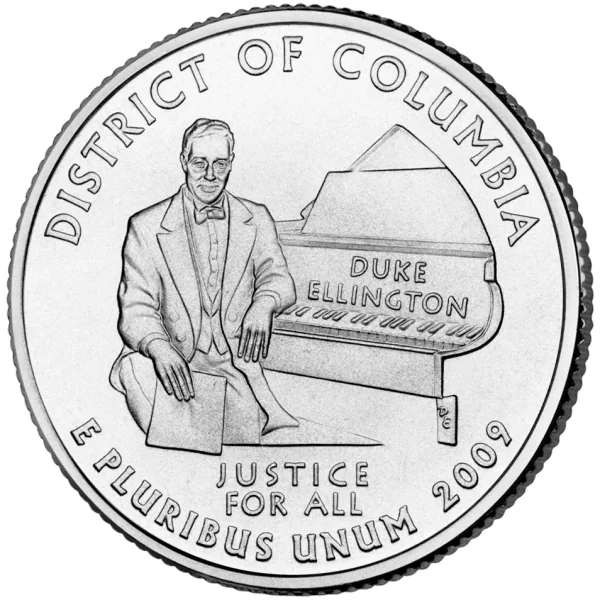
1. District of Columbia — District of Columbia
Duke Ellington sits at a piano beneath the District’s JUSTICE FOR ALL motto.
Read DISTRICT OF COLUMBIA and the issue year with the central scene; the subject identifies the scheduled design.
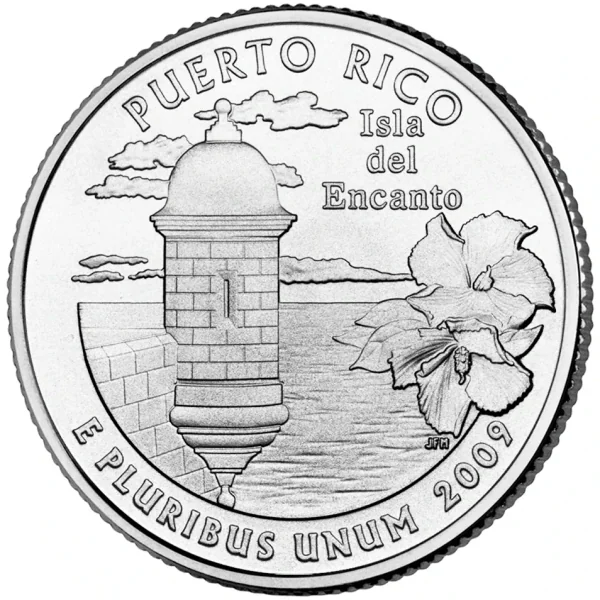
2. Puerto Rico — Puerto Rico
A sentry box, ocean view and hibiscus express the island’s setting.
Read PUERTO RICO and the issue year with the central scene; the subject identifies the scheduled design.
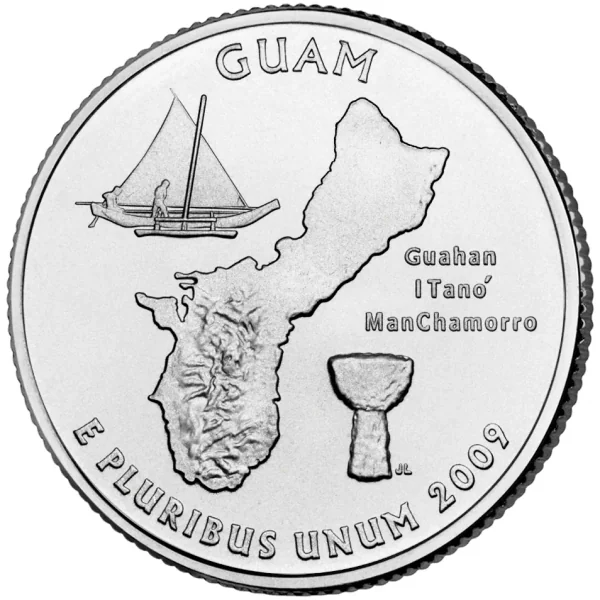
3. Guam — Guam
An outrigger canoe, latte stone and island outline appear together.
Read GUAM and the issue year with the central scene; the subject identifies the scheduled design.
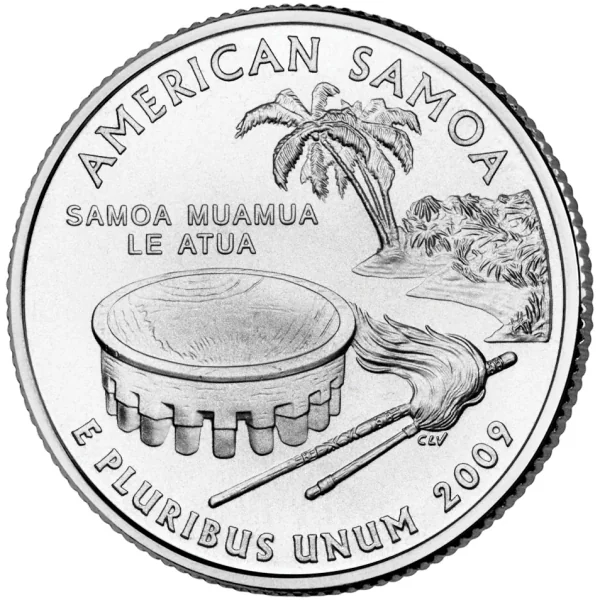
4. American Samoa — American Samoa
A ceremonial bowl, whisk and staff accompany the territory’s motto.
Read AMERICAN SAMOA and the issue year with the central scene; the subject identifies the scheduled design.
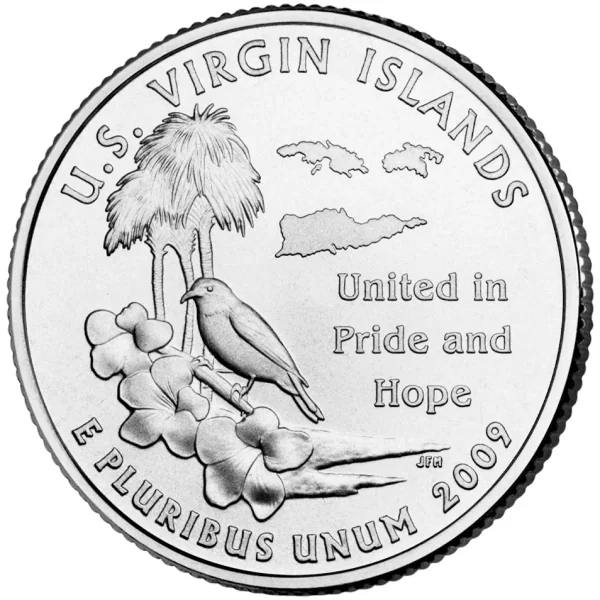
5. U.S. Virgin Islands — U.S. Virgin Islands
A bananaquit, yellow cedar and tyre palm accompany the island outlines.
Read U.S. VIRGIN ISLANDS and the issue year with the central scene; the subject identifies the scheduled design.
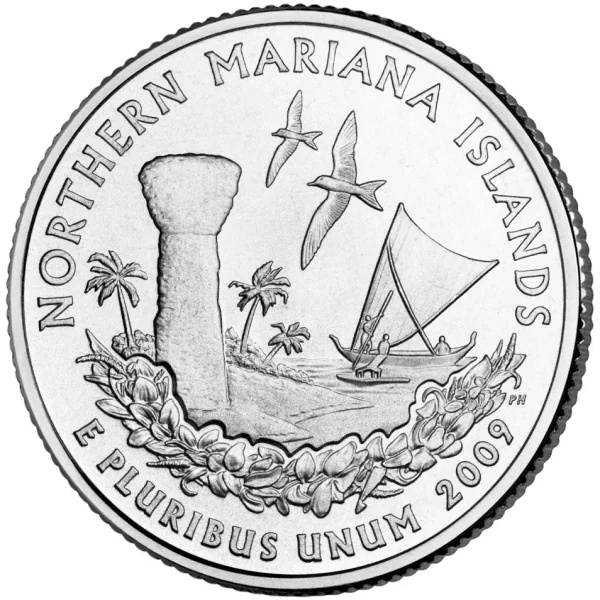
6. Northern Mariana Islands — Northern Mariana Islands
A latte stone, canoe and shore birds are framed by a floral head lei.
Read NORTHERN MARIANA ISLANDS and the issue year with the central scene; the subject identifies the scheduled design.
Identification
Separate mint mark, finish and metal
Read P, D, S on the portrait side. These letters do not describe condition. Proofs are separately manufactured collector coins; mirrorlike shine caused by polishing is not Proof manufacture.
S can appear on clad and silver Proofs. Use the matching Mint product or reliable composition examination to distinguish them.
Use an edge and weight check carefully
The copper-colored band on an ordinary clad edge is expected. Toning, environmental exposure or a plated surface can change color. A calibrated scale and clear edge photograph are screening tools; neither a single color nor a rough weight establishes a wrong-planchet error.
Do not file the edge, scratch the surface or clean the coin to reveal the metal. Where the claim would create a large premium, obtain an appropriate authentication before assigning a price.
Match an error to a documented mechanism
A struck-through area, clipped planchet, doubled die and post-mint damage are different explanations. “Misprint” is a broad search term rather than a catalog attribution. Compare full-face photographs and exact diagnostics, not an isolated mark.
A scarce-looking scene is still an ordinary design unless its manufacture, preservation or a documented variety provides the distinction.
Condition & value
USD references checked October 28, 2026. Face value is a denomination, not an estimate for every collector version. No unsupported current retail price is assigned to a special grade or unverified error.
| Issue | Grade / condition | Value or reference | Basis | Important condition |
|---|---|---|---|---|
| Ordinary worn P or D clad | Circulated, normal issue | 25¢ baseline | Face value | No premium established by design alone |
| Uncirculated P or D | Exact mint and grade | Use matching completed sales | Collector market | Marks and originality matter |
| S clad Proof | Exact Proof grade and contrast | Separate Proof comparison | Collector product | Not silver merely because it has S |
| S silver Proof | Correct metal and Proof grade | Silver plus collector context | Separate issue | Not a circulation-metal error |
A price table should compare the same object. Specify the design, mint, manufacture, grade and any named variety before consulting a guide or sale. A high certified population rarity cannot be inferred from a raw coin’s shine. Dealer buying prices may also be below single-coin retail listings.
For silver, separate fine-metal content from the collectible premium. The silver melt calculator can help with supported historical issues, but modern collector Proof quarters require their own specifications and are outside its standard presets.
Keep original set information when available and compare recent sales with the same fee basis. If the coin is ordinary worn clad, a 25-cent baseline is more useful than an unsupported estimate drawn from an exceptional error sale.
Summary
Identify the 2009 reverse, then match the mint and product before estimating value. The 6 designs make a finite collecting group; they do not make every circulated example scarce. Preserve plausible variety candidates and compare the exact issue rather than the biggest auction headline.
FAQ
How many 2009 quarter designs are there?
There are 6 reverse designs: District of Columbia, Puerto Rico, Guam, American Samoa, U.S. Virgin Islands, Northern Mariana Islands.
Are ordinary 2009 quarters silver?
Normal circulation P and D coins are copper-nickel clad, not silver. Collector silver Proofs must be identified separately.
Are all 2009 S quarters silver?
No. San Francisco produced clad and silver collector issues; identify the manufacture and product rather than relying on S alone.
What makes a 2009 quarter worth more than face value?
A verified scarce issue, suitable uncirculated or Proof preservation, or an authenticated variety or mint error may bring a premium. Ordinary wear and damage do not establish one.
References
References and further reading
- U.S. Mint: annual design identification
- U.S. Mint: quarter programs and history
- U.S. Mint: coin terminology and finishes
References consulted October 28, 2026. Price tables retain the update dates stated in the text; guide estimates, face values and completed transactions are different forms of evidence.