

 App Store

COIN VALUE GUIDES · HALF DOLLAR GUIDES
1971 Half Dollar Value:No Mint Mark, D, S Proofs and Silver Claims
Identify the first clad Kennedy half-dollar year, compare Philadelphia, Denver and San Francisco issues and avoid mistaking ordinary color for silver.
 HeriBase TeamPublished
In this article
Quick answer
A normal worn 1971 Kennedy half dollar is a copper-nickel clad coin with a 50-cent baseline, not a 40% silver half. Philadelphia regular strikes have no mint mark, Denver coins have D, and San Francisco produced S Proofs.
Collector condition, a correctly attributed doubled die or an authenticated wrong-planchet error needs separate evidence. A silver-colored face or a missing mint mark does not establish a rare silver coin.
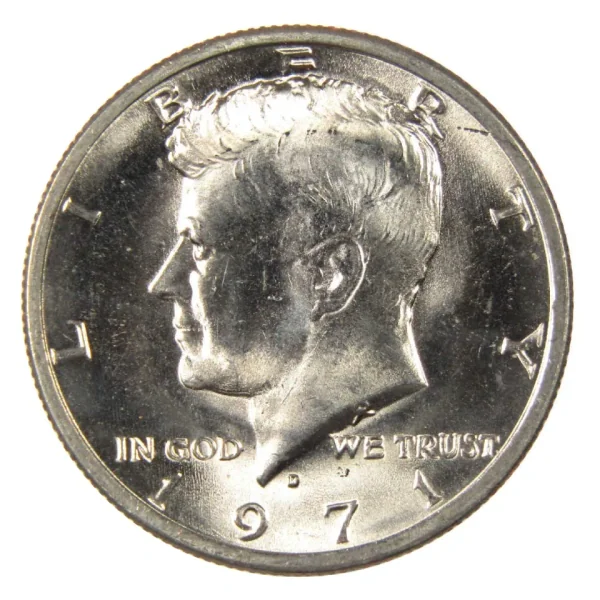
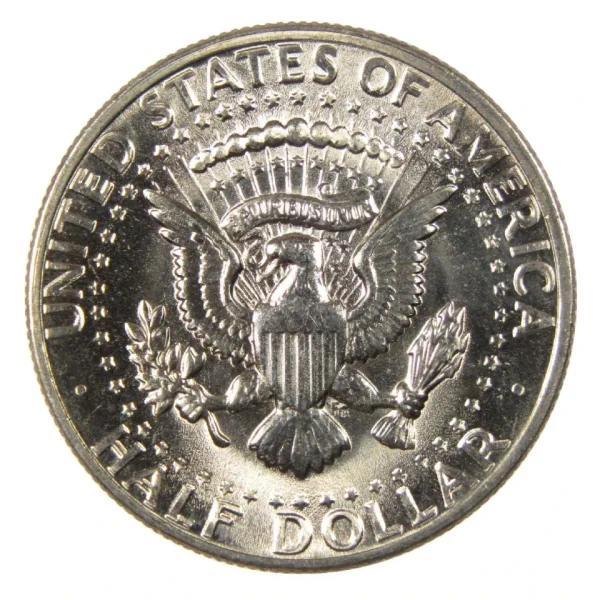
Coin photos
Basics & coin story
The Kennedy portrait began in 1964, but the metal changed over time. The 1971 issue continued the tribute while ending silver in ordinary half-dollar production. This is why a matching portrait cannot tell you the silver content.
Gilroy Roberts designed the portrait and Frank Gasparro the heraldic-eagle reverse. The date and small mint letter supply information that the familiar central design cannot.
Compare the 1970-D and 1970-S silver issues with this first clad year. The Kennedy series overview explains the broader chronology without treating all Kennedy halves as silver.
| Feature | What to check |
|---|---|
| Denomination | 50 cents |
| Regular issues | Philadelphia without mark; Denver D |
| Proof issue | San Francisco S |
| Normal construction | Copper-nickel outer layers bonded to copper core |
| Nominal mass / diameter | 11.30 g / 30.61 mm |
| Philadelphia mintage | 155,164,000 regular strikes |
| Denver mintage | 302,097,424 regular strikes |
| Silver in normal 1971 issues | None |
Identification
Locate the mint mark above the date
On 1971 halves, look below the portrait and above the date. No letter is normal for Philadelphia. Do not look in the older reverse mint-mark position and conclude the coin is an error.
Keep S Proofs separate from ordinary P and D coins. Manufacture and preservation are different: a mishandled Proof can be worn or scratched, and a bright regular strike does not become a Proof.
Screen a silver claim without damaging the coin
An ordinary clad edge often shows a copper-colored band. A calibrated weight check can support the screening process, but altered surfaces, plating and measurement error can mislead. Do not file, scratch or acid-test the coin.
If credible physical evidence suggests a wrong planchet, document both sides, the edge and the measurement. Obtain an appropriate authentication before using rare-error sales. A ringing sound alone does not establish metal composition.
Attribute doubled dies precisely
PCGS lists 1971-D doubled-die varieties including FS-101 and FS-102. Their exact lettering diagnostics matter. Flat shelf-like doubling, impact damage and a blurry photograph are not sufficient for the same attribution.
Condition & value
USD references checked October 29, 2026. Face value is the denomination; a guide estimate is not a completed sale or purchase offer. Where a matched current price was not verified, use the issue-specific comparison described below.
| Issue | Grade / condition | Value or reference | Basis | Important condition |
|---|---|---|---|---|
| 1971 Philadelphia | Ordinary circulated clad | 50¢ baseline | Denomination | No mint mark is expected |
| 1971-D | Ordinary circulated clad | 50¢ baseline | Denomination | D does not imply silver |
| 1971-S | Proof; match preservation and cameo | Separate collector comparison | Manufacture-specific | Normal 1971 Proof is clad |
| 1971-D NGC MS66 auction record | Jan. 2014 | Reported $25 | PCGS auction archive | Historical record; fee basis not established here |
| Claimed silver-planchet error | Authentication required | No unverified price assigned | Metal and error examination | Color is insufficient |
The historical $25 result is a particular certified MS66 auction record, not a current price floor. The archive’s grading service, date and condition must remain attached to the amount. Do not use an MS68 headline to value a circulated coin.
Wear, bag marks and hairlines can separate an attractive coin from a high-grade example. Examine the cheek and open fields as well as the eagle. Keep cleaning and scratches in the description rather than silently comparing a problem coin with a straight-grade guide.
For a normal circulated coin, the question is usually whether there is a collector reason to retain it, not how much silver it contains. Record any credible variety separately and compare its exact attribution before arranging an appraisal.
Summary
Start with the normal clad composition and the correct mint-and-finish category. Most worn 1971 halves begin at 50 cents; a premium must be supported by preservation, a recognized variety or an authenticated error.
FAQ
Is a 1971 half dollar silver?
Normal 1971 Kennedy halves are copper-nickel clad and contain no silver. A wrong-planchet claim requires authentication.
Is no mint mark normal in 1971?
Yes. Philadelphia regular strikes have no mint mark.
Is the 1971-S Proof silver?
The normal 1971-S Kennedy Proof is clad; S alone does not mean silver.
What makes a 1971-D half valuable?
Exceptional preservation, an attributed variety or a genuine error may create a premium. A normal worn D coin is common.
References
References and further reading
- PCGS: Philadelphia composition and mintage
- PCGS: Denver issue and listed varieties
- PCGS: historical certified MS66 sale
References consulted October 29, 2026. Price tables retain the update dates stated in the text; guide estimates, face values and completed transactions are different forms of evidence.