

 App Store

COIN VALUE GUIDES · PENNY GUIDES
1859 Indian Head Penny Value:First-Year Design, No Mint Mark and Condition
Identify the one-year laurel-wreath Indian cent, check copper-nickel composition and separate a worn example from a certified Mint State price.
 HeriBase TeamPublished
In this article
Quick answer
The 1859 Indian Head penny is the first year of the series and its only regular year with a laurel wreath and no shield on the reverse. It was struck in Philadelphia without a mint mark, in 88% copper and 12% nickel. Its collector value depends on wear, surfaces and authenticity, rather than the missing letter.
As one grade-specific reference, the PCGS certificate page for an 1859 cent graded MS63 displayed a $1,000 guide value when checked. That is a retail estimate for the stated grade, not a quote for a worn coin or the illustrated specimen.
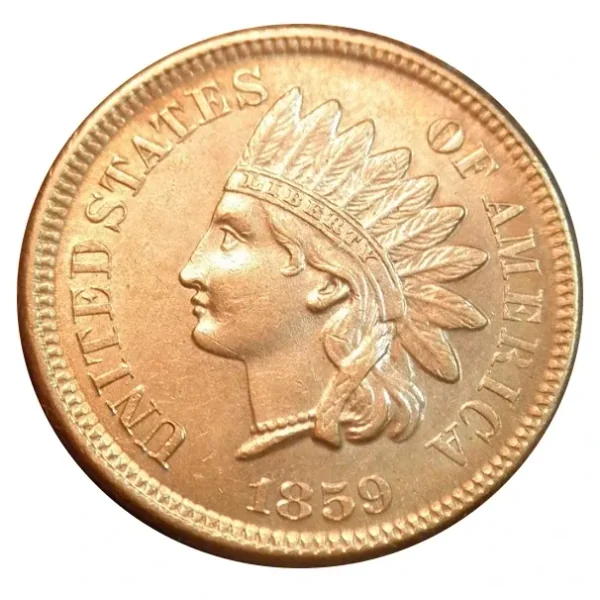
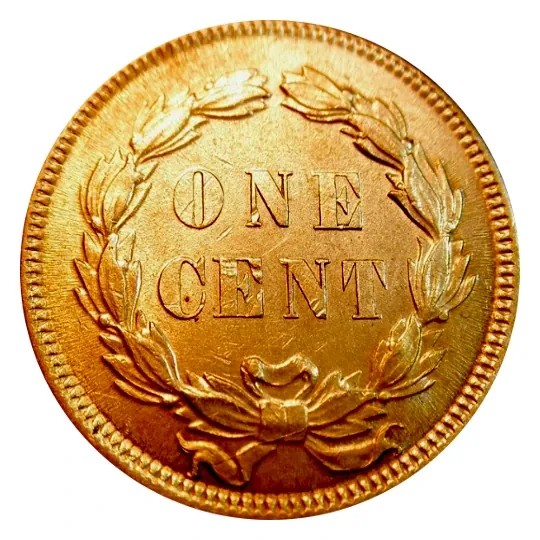
Coin photos
Basics & coin story
James Barton Longacre’s Liberty portrait replaced the Flying Eagle cent in 1859. The headdress gives the coin its familiar name; the subject is Liberty rather than an identified Native American individual. ONE CENT sits inside the reverse wreath.
The reverse changed in 1860 to an oak wreath with a shield. That makes 1859 a one-year design type even though more than 36 million regular strikes were made. A type collector may want this date without trying to assemble every later date-and-mint combination.
The Indian Head cent overview covers the complete series. This guide concentrates on the 1859 identification and condition questions; the Flying Eagle guide explains the preceding design.
| Feature | What to check |
|---|---|
| Issue | 1859 Indian Head cent; one cent |
| Mint / mark | Philadelphia / no mint mark |
| Reverse | Laurel wreath; no shield |
| Metal | 88% copper, 12% nickel |
| Nominal mass | Approximately 4.67–4.70 g |
| Diameter / edge | 19 mm / plain |
| Regular-strike mintage | 36,400,000 |
| Designer | James Barton Longacre |
Identification
Match both sides before estimating value
Look for 1859 below Liberty, then turn the coin over. The open space above ONE CENT should not contain the later shield. A different-looking wreath is the expected first-year design, not a missing-shield mint error.
No S or D belongs on a normal 1859 cent. A seller’s “no mint mark” description does not identify a special rarity. If the date looks changed, do not rely on the reverse alone to authenticate the piece.
Judge the actual surfaces
Inspect the headband, feather tips, cheek and wreath under even light. Wear removes relief gradually; a weak photograph can hide both wear and cleaning. Readable LIBERTY is useful detail, but it is not a complete grading formula.
Early copper-nickel cents can appear pale or brown. The bronze color categories used for later cents should not be transferred mechanically to this alloy. Do not polish the coin to make it match a bright catalog image.
Treat repunched dates as specific attributions
PCGS lists several repunched-date varieties for 1859. A second-looking digit must match the particular reference diagnostics; corrosion, scratches and a digital image artifact do not establish a repunched date. Preserve a full-coin image along with any close-up.
Condition & value
USD references checked October 29, 2026. Face value is the denomination; a guide estimate is not a completed sale or purchase offer. Where a matched current price was not verified, use the issue-specific comparison described below.
| Issue | Grade / condition | Value or reference | Basis | Important condition |
|---|---|---|---|---|
| Ordinary circulated 1859 | Grade and surface quality must be assessed | No verified current range supplied | Issue-specific comparison | Not the MS63 example |
| PCGS certificate 32295459 | MS63 | $1,000 guide display | PCGS certificate guide field | Not a sale or a raw-coin appraisal |
| Proof or attributed repunched date | Correct manufacture or catalog attribution | Separate comparison required | Specialized issue | A shiny surface is not Proof |
| Corroded or cleaned example | Problem surfaces | Compare equivalent problem coins | Condition adjustment | Straight-grade prices may mislead |
A seller may use an exceptional Mint State auction to advertise a heavily worn coin. The date matches, but the condition does not. First choose a realistic grade category, then compare sales with similar surfaces and the same manufacture.
The illustrated 1859 coin is an identification reference, not the certified MS63 price example. Keep those roles separate. Before paying for certification, compare the likely benefit with the grading, shipping and insurance costs.
If you are sorting an inherited collection, retain the original holder and any provenance notes. Photograph the coin before changing its storage and use the grading guide to understand the terms in comparison records.
Summary
Identify the laurel-wreath reverse, normal absence of a mint mark and early copper-nickel alloy first. Then value the actual preservation. The first-year type is collectible, but an MS63 guide entry cannot price every 1859 penny.
FAQ
Is an 1859 penny without a mint mark rare?
No mint mark is normal for Philadelphia. Condition and the one-year design type matter more than the absence of a letter.
Why does the reverse have no shield?
The 1859 regular reverse uses a laurel wreath without a shield. The oak-wreath-and-shield design followed in 1860.
Is an 1859 Indian cent bronze?
The standard issue is 88% copper and 12% nickel, rather than the later bronze alloy.
Can I use an MS63 price for my worn coin?
No. Match the grade, surfaces, manufacture and authenticity before using a guide or completed sale.
References
References and further reading
- PCGS: 1859 specifications and varieties
- PCGS: grade-specific certificate reference
- PCGS: Indian cent series history
References consulted October 29, 2026. Price tables retain the update dates stated in the text; guide estimates, face values and completed transactions are different forms of evidence.